Bullrich and Sturzenegger Consolidate Efforts to Advance Land Privatization Legislation
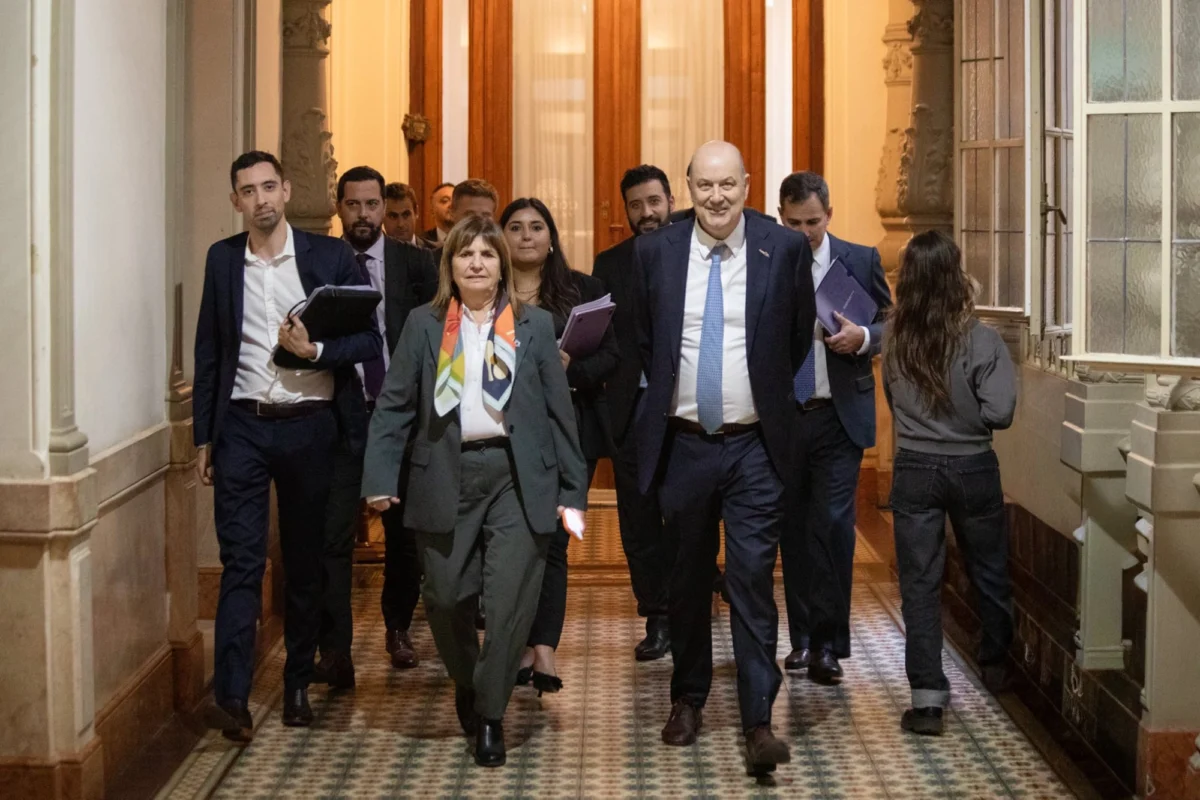
In a concerted effort to marshal legislative support, Senator Patricia Bullrich, head of the La Libertad Avanza bloc in the Senate, met with Federico Sturzenegger, the Minister of Deregulation and State Transformation, at the Senate premises. The high-level meeting, occurring amidst the winter recess, aimed to synchronize the government’s messaging and strategy for the anticipated debate and potential approval of a bill concerning the inviolability of private property. Bullrich, speaking to the press in the largely deserted Senate corridors, expressed confidence in their alignment, stating, "We have reached an agreement, so we will proceed on the 6th with the opinion that we had already agreed upon with all our allies." This declaration signals a determined push to advance the legislative agenda, with the initial week of August earmarked for critical deliberations.
The proposed legislation, while not explicitly detailing the "privatization of land" as some interpretations suggest, is understood to focus on reinforcing property rights and potentially streamlining regulations that currently govern foreign ownership of land, particularly agricultural and strategic territories. The underlying objective, as articulated by government sources, is to attract foreign investment and stimulate economic growth by providing greater legal certainty and fewer bureaucratic hurdles for both domestic and international property owners. However, such measures often invite scrutiny and debate, particularly concerning national sovereignty, environmental impact, and the equitable distribution of land resources.
Economic Realities Temper Optimism
The initial elation following a consumer price index (CPI) reading below 2% for the first time in thirteen months has been tempered by a series of economic, social, and political indicators that necessitate a more cautious approach from the government. This nuanced reality calls for a deeper, more focused effort to secure positive outcomes in the crucial upcoming two-month period. The administration, under the watchful eye of Karina Milei and with the strategic guidance of Diego Santilli overseeing the political management wing, is working in tandem with the economic team led by Luis Caputo. Their collective focus is on consolidating recent gains and mitigating potential setbacks.

The economic landscape, while showing flickers of improvement, remains fragile. The inflation figures, though a welcome development, represent a single data point in a broader economic narrative that includes persistent challenges in employment, productivity, and external debt. The government’s strategy appears to be centered on structural reforms designed to unlock long-term growth, but the immediate impact of these reforms on the daily lives of citizens remains a critical area of concern. The success of the proposed property rights legislation could be viewed as a component of this broader reform agenda, intended to signal a stable and investment-friendly environment.
Legal Proceedings and Judicial Decisions
In a separate development, Facundo Leal, the former head of Arsat, who is under investigation for alleged corruption, has been granted house arrest. This decision, issued by federal judge Sebastián Ramos with the concurrence of federal prosecutor Guillermo Marijuán, stems from Leal’s admitted drug addiction. The judge’s ruling cites Leal’s addiction as the primary reason for the shift from pre-trial detention to home confinement. Leal will reside in his Palermo apartment, under the care of his girlfriend from Mendoza, and will be electronically monitored via an ankle bracelet. This case highlights the complexities of the justice system, balancing the need for accountability with considerations for individual circumstances and rehabilitation. The investigation into Leal’s alleged corruption involves scrutiny of financial transactions and potential misuse of public funds during his tenure at Arsat, a state-owned telecommunications company.
Health Concerns for Provincial Leadership
Osvaldo Jaldo, the Governor of Tucumán, underwent a cardiac procedure in Buenos Aires and remains hospitalized. The governor was in the capital to attend scheduled meetings with Chief of Staff Diego Santilli and other national government officials. According to a medical report released by the Hospital Italiano, Jaldo arrived at the medical facility experiencing "intense pain and sweating," prompting immediate medical intervention. This unexpected health issue could potentially impact the provincial government’s operations and its engagement with national policy initiatives. Governor Jaldo’s recent activities have included efforts to secure federal funding and support for provincial development projects, underscoring the importance of his presence in national political discussions.
Fiscal Reform Initiative Submitted to Congress
The Executive Branch has submitted a legislative proposal to the Chamber of Deputies aimed at modifying the "fiscal innocence" regime, a measure announced by Minister of Economy Luis Caputo. This initiative, introduced to Congress late in the evening, seeks to encourage the formalization of undeclared "dollars under the mattress" by expanding access to the simplified income tax regime and strengthening legal guarantees for taxpayers. The specifics of its legislative path are still being determined by government authorities.
The proposed "Fiscal Innocence 2" program is designed to incentivize individuals and businesses to bring their hidden assets into the formal financial system. This could involve offering amnesty on previously undeclared income or assets, provided they are repatriated and declared within a specified period. The objective is twofold: to increase the tax base, thereby bolstering government revenue, and to stimulate economic activity by encouraging the circulation of capital that has been held privately. Such measures are often employed during periods of economic transition to improve fiscal health and provide a more stable foundation for growth. The success of this initiative will depend on the perceived fairness of the terms, the effectiveness of communication campaigns, and the overall economic confidence within the country.
International Investigation into the Argentine Football Association
The United States Justice Department is intensifying its investigation into the financial dealings of the Argentine Football Association (AFA), particularly concerning millions of dollars transferred between the AFA and shell companies. The probe centers on a commercial agreement the AFA entered into in 2021 with TourProdEnter LLC, a Florida-based company owned by Javier Faroni. This investigation, spearheaded by federal authorities in the U.S., aims to uncover potential financial improprieties, money laundering, and violations of international financial regulations.
The investigation, which has been ongoing for some time, has reportedly expanded to include contact with companies that signed substantial contracts with the AFA. The involvement of U.S. authorities underscores the international dimension of financial crime and the efforts of global law enforcement agencies to combat corruption. The AFA, as a prominent sports organization with significant financial interests, is subject to scrutiny regarding its transparency and adherence to financial regulations. The outcome of this investigation could have significant implications for the AFA’s reputation, its future commercial partnerships, and potentially lead to legal repercussions for individuals involved.
Context and Implications of the Property Rights Legislation
The push by Bullrich and Sturzenegger to advance legislation concerning property rights, often referred to in public discourse as potentially facilitating "land privatization" for foreigners, arrives at a critical juncture for Argentina. The nation has grappled for decades with issues of foreign land ownership, particularly in its vast agricultural heartland. Concerns have often been raised regarding national sovereignty, the concentration of land in foreign hands, and the potential impact on local communities and environmental sustainability.

Historically, Argentina has seen periods of both openness and restriction regarding foreign investment in land. The current government, aligned with a libertarian ideology that emphasizes free markets and reduced state intervention, appears poised to liberalize these regulations further. The stated goal is to attract capital, technology, and expertise that can enhance agricultural productivity and contribute to economic development.
However, the debate is far from settled. Critics often point to the experiences of other countries where increased foreign land ownership has led to social displacement, environmental degradation, and a perceived loss of national control over vital resources. They advocate for stringent regulations to protect national interests, ensure equitable land distribution, and promote sustainable agricultural practices.
The meeting between Bullrich and Sturzenegger suggests a strategic alignment to overcome potential legislative hurdles. Bullrich, as a seasoned politician with a strong base of support, provides legislative muscle, while Sturzenegger, as a key economic architect, offers the policy rationale. Their coordinated effort is indicative of the government’s commitment to this legislative priority.
The timing of this push is also significant. Argentina is seeking to bolster its foreign exchange reserves, attract investment to combat inflation, and create jobs. Proponents of the legislation argue that clearer property rights and streamlined foreign investment rules are essential components of this broader economic recovery strategy. They may point to comparative data from other nations where similar policies have demonstrably boosted foreign direct investment (FDI) in sectors like agriculture and real estate. For instance, countries that have enacted clear and stable legal frameworks for foreign land acquisition have often seen a surge in investment, leading to infrastructure development and job creation.

Conversely, opponents may draw on historical examples within Argentina or other Latin American nations where deregulation in this sector has been followed by negative consequences. They might cite instances of land speculation, the marginalization of smallholder farmers, or the exploitation of natural resources without adequate environmental safeguards. The potential for increased foreign ownership of land raises questions about its impact on food security, water rights, and biodiversity, particularly in ecologically sensitive regions.
The legislative process itself will likely involve intense debate and negotiation within the Senate. The "opinion" that Bullrich mentioned, which was agreed upon with allies, suggests that a preliminary consensus has been built. However, the broader chamber may present further challenges. The composition of the Senate, with its diverse political representation, means that any legislation of this magnitude will require broad-based support or at least a significant number of abstentions to pass.
The success of this legislative endeavor will hinge not only on political maneuvering but also on the government’s ability to articulate a compelling narrative that addresses public concerns and demonstrates the tangible benefits of the proposed changes. Transparency in the legislative process and a commitment to safeguarding national interests will be paramount in fostering public trust and achieving a balanced outcome. The coming weeks will be crucial in determining whether this legislative initiative can successfully navigate the complexities of Argentine politics and economic policy.

Related Posts

The Electric Vehicle Battery Health Debate Emerges as Argentina’s EV Market Accelerates

President Donald Trump Confirms Secret Departure from Turkey Amidst Assassination Threat