French environment minister to resign after passage of controversial farm bill
The French political landscape was thrown into turmoil this week following the announcement that Minister of the Environment Monique Barbut has submitted her resignation to the Élysée Palace. The move comes in the immediate wake of the National Assembly’s final passage of a contentious agricultural reform package, a legislative victory for the government that nonetheless triggered a profound crisis of conscience within the cabinet. The bill, which seeks to modernize France’s agrarian sector, has drawn sharp criticism from environmental groups and political dissenters for its controversial provisions regarding pesticide usage and water management infrastructure.
The resignation of Barbut, a figure previously respected for her commitment to climate-conscious policy, marks a significant turning point in the current administration’s tenure. Her departure reflects a widening fissure between the government’s push for economic liberalization in the rural sector and its international commitments to environmental sustainability.
The Legislative Flashpoint
The legislation at the heart of the controversy is a sweeping farm bill designed to address long-standing grievances among French farmers, who have staged numerous protests over the past eighteen months regarding high operational costs and foreign competition. To assuage these concerns, the bill includes two specific, highly polarizing clauses.

First, the legislation introduces a conditional exemption for the use of a previously banned pesticide. While the government maintains that this measure is necessary to protect specific high-value crops from localized infestations that threaten regional yields, environmental NGOs characterize it as a dangerous regression. Scientific bodies have previously argued that the chemical in question poses significant risks to local biodiversity and groundwater quality.
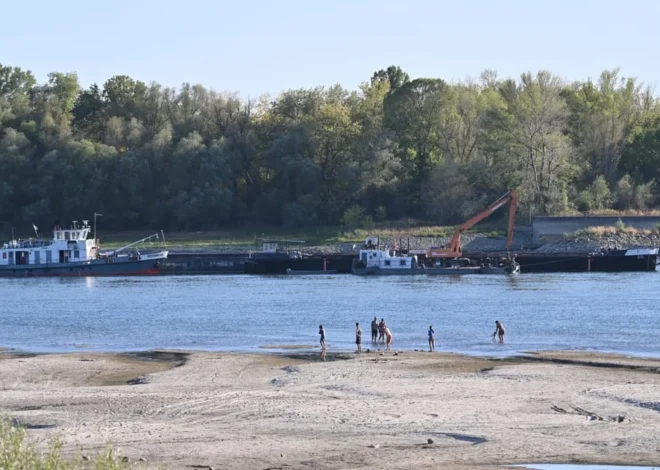
Second, the bill mandates a doubling of water storage allowances for agricultural purposes. This provision is intended to help farmers mitigate the effects of increasingly frequent summer droughts. However, opponents argue that the construction of large-scale water reservoirs—often referred to as "megabassins"—encourages intensive farming practices that exacerbate water scarcity for other users and ecosystems.
A Chronology of the Crisis
The tension surrounding this bill did not emerge overnight; it is the culmination of a decade of increasing friction between industrial agricultural interests and the European Union’s "Green Deal" objectives.
- January 2026: Following widespread protests by agricultural unions, the government promised to fast-track a reform bill to reduce "bureaucratic burdens" on farmers.
- March 2026: The initial draft of the bill is presented to the Cabinet. Minister Barbut expresses "grave reservations" regarding the relaxation of pesticide regulations.
- May 2026: Intense negotiations between the Ministry of Agriculture and the Ministry of Environment lead to a temporary impasse.
- July 15, 2026: The French Parliament votes to legalize assisted dying, a separate but equally intense legislative battle that consumed the capital’s political energy and set a precedent for high-stakes, polarized debates.
- July 20, 2026: The National Assembly narrowly passes the agricultural reform bill after invoking executive powers to bypass certain parliamentary hurdles.
- July 21, 2026: Monique Barbut officially tenders her resignation, citing an inability to align her mandate with the government’s current trajectory on ecological policy.
Data and Environmental Impact
The debate is underscored by sobering statistics regarding the state of French agriculture. According to recent data from the Ministry of Agriculture, the sector has seen a 12% decline in profitability over the last five years, largely due to input costs—fertilizer and energy—rising faster than market prices. Simultaneously, climate data from the national weather agency, Météo-France, confirms that 2025 was the hottest year on record, with water stress affecting 70% of French departments during the summer months.

Proponents of the bill argue that by doubling water storage capacity, farmers can secure their harvest yields by up to 25% during drought periods. Conversely, environmental scientists point to studies suggesting that these reservoirs lose significant water volume through evaporation and do not address the systemic need for crop diversification. The conflict is essentially a collision between short-term economic survival and long-term ecological viability.
Political Reactions and Official Responses
The resignation has sent shockwaves through the political spectrum. A spokesperson for the Prime Minister’s office issued a brief statement acknowledging the Minister’s service and expressing "respect for the difficult decisions taken in the interest of the agricultural sector." The government remains adamant that the bill is a pragmatic necessity to prevent the collapse of small-to-medium-sized family farms.
Opposition parties have seized upon the vacancy as a sign of the government’s isolation. "The departure of Minister Barbut is the final proof that this government has abandoned its environmental promises," said a spokesperson for the Green caucus in the Senate. Conversely, representatives from the right-wing National Rally have characterized the resignation as a "theatrical exit" by an "out-of-touch urban elite," arguing that the bill is a victory for the "real France" that works the land.
Broader Implications for French Policy
The departure of a high-profile environment minister creates a vacuum that the government will struggle to fill. With the current administration already facing challenges from the populist right—as evidenced by recent discourse surrounding international political endorsements—the environment portfolio has become a political minefield.

Furthermore, this resignation complicates France’s position within the European Union. As Brussels pushes for stricter environmental standards under the Common Agricultural Policy (CAP), the French government now finds itself in a position of potential non-compliance. If France proceeds with the implementation of the new, less restrictive pesticide regulations, it may face infringement proceedings from the European Commission.
The implications extend beyond policy; they represent a fundamental challenge to the social contract in rural France. As farmers demand the right to use the tools they deem necessary to remain competitive, and environmentalists demand adherence to planetary boundaries, the government is finding it increasingly difficult to act as an effective mediator.
Future Outlook: What Comes Next?
As the government initiates a search for a successor to Barbut, observers note that the appointment will be a signal of intent. Will the Élysée opt for a technocrat focused on damage control, or a political heavyweight capable of navigating the complex terrain of climate legislation and industrial pressure?
The agricultural sector remains in a state of high alert. While the bill has passed, the implementation phase will likely face a series of legal challenges. Environmental groups have already pledged to file petitions with the Council of State, the highest administrative court in France, to challenge the legality of the pesticide exemptions.

Moreover, the events of this week have accelerated the ongoing realignment of French politics. With former President François Hollande recently hinting at a return to the political fray, and the far-right continuing to test the boundaries of mainstream influence, the fallout from this agricultural bill may prove to be a defining feature of the next election cycle.
The resignation of Monique Barbut is not merely a personnel change; it is a symptom of a systemic deadlock. France is now grappling with the reality that the transition to a sustainable economy cannot be achieved through compromise if the stakeholders view those compromises as existential threats. As the nation watches to see how the government manages the aftermath, one thing remains clear: the tension between the soil and the state is far from resolved. The path forward will require not just new leadership, but a new framework for balancing the urgent economic needs of the agrarian class with the non-negotiable requirements of a changing climate.