The 2026 FIFA World Cup: A Strategic Success Paving the Way for a Golden Age of U.S. International Sporting Events
INDIANAPOLIS, Indiana – The conclusion of the 2026 FIFA World Cup has been hailed as a monumental success, not only for its immediate economic and cultural impact but also as a crucial preparatory phase for a cascade of major international sporting events set to grace the United States over the next decade. Andrew H. Giuliani, Executive Director of the White House Task Force for the World Cup, emphasized in an exclusive interview with Breitbart News that the tournament provided invaluable experience in visa processing, security protocols, and fostering federal partnerships—all indispensable assets for the forthcoming 2028 Summer Olympics in Los Angeles and beyond.
The World Cup: A Triumph of Global Engagement and National Pride
Giuliani, speaking in Indianapolis after a significant inter-agency event, underscored the profound impact of the World Cup, stating, "Over the last month and a half, Americans fell in love with the World Cup, but really, it was the world that fell in love with America again." This sentiment echoes the strategic vision articulated by President Donald Trump in 2018 during his 45th presidency, when the bid to host the World Cup was successfully secured. The President’s foresight aimed to leverage the tournament, coinciding with the nation’s 250th birthday, as a global platform to showcase American freedoms and exceptionalism. "He understood that there was this unbelievable opportunity during our 250th birthday to take a platform like the World Cup [and] be able to show the world what Americans’ freedoms mean," Giuliani elaborated.
The tournament served as a tangible manifestation of the "America First is not America only" philosophy, allowing millions of international visitors to experience the United States firsthand. "The rest of the world got to see our freedoms," Giuliani noted, suggesting that this exposure could inspire a greater appreciation for liberty worldwide. He added, "What we believe is if the rest of the world can take a little bit of that freedom back with them, how much better would this world be? It’s why American exceptionalism is real, and it’s why it affects everybody from all around the world."
The economic dividends of hosting such a massive event are substantial. Early estimates suggest that the 2026 FIFA World Cup generated billions of dollars in economic activity across the 11 U.S. host cities, including New York/New Jersey, Boston, Philadelphia, Miami, Atlanta, Kansas City, Dallas, Houston, Denver, Los Angeles, and Seattle. This includes direct spending by tourists on accommodation, dining, transportation, and retail, alongside significant job creation in hospitality, event management, and security sectors. Local businesses experienced a surge in revenue, and the global exposure provided a powerful boost to tourism and investment in these regions. The event also spurred infrastructure improvements in stadiums and transportation networks, leaving a lasting legacy for urban development.
Federal Partnerships and Youth Development Initiatives
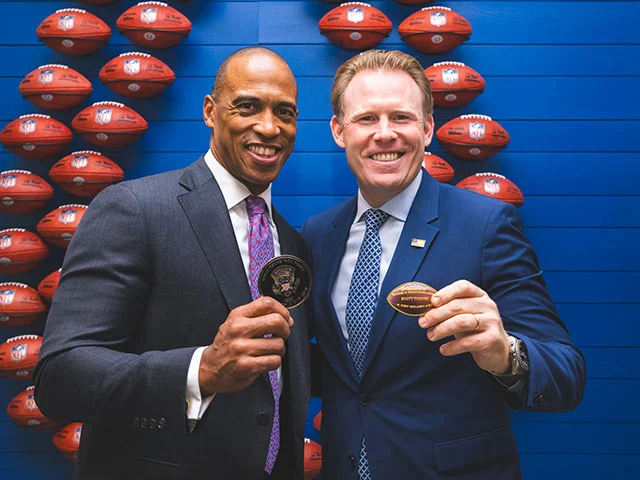
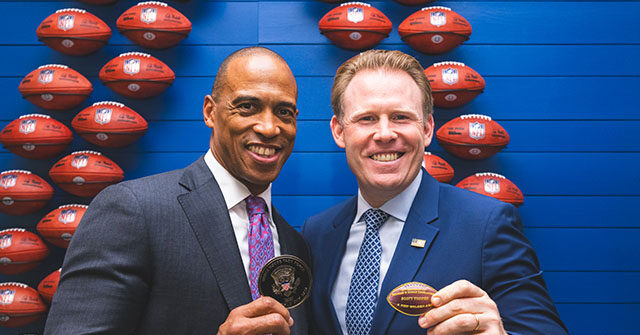
The interview in Indianapolis followed a collaborative event featuring HUD Secretary Scott Turner, where officials from the Departments of Housing and Urban Development (HUD), Health and Human Services (HHS), Education, and Labor joined forces with the National Football League (NFL). This partnership culminated in the announcement of a memorandum of understanding (MOU) designed to promote youth academic participation, healthy living, and workforce development in underserved communities across the nation.
Secretary Turner, a vocal advocate for the transformative power of sports, emphasized how athletic engagement can profoundly alter the life trajectories of young people. The MOU outlines programs focusing on after-school enrichment, mentorship initiatives, access to nutritious food, and career pathways in sports-related industries, aiming to leverage the enthusiasm generated by major sporting events for sustained community upliftment. This multi-agency approach highlights the administration’s commitment to ensuring that the benefits of hosting international events extend beyond the immediate spectacle, creating enduring positive impacts at the grassroots level. The NFL’s involvement provides not only financial support but also a robust framework for engaging youth through its established community programs and outreach.
Forging a "Golden Age of Sports" in the United States
Giuliani articulated a compelling vision for the future, declaring that the World Cup was merely "the start of this golden age of sports here in the United States of America." This era is characterized by an unprecedented lineup of high-profile global competitions, positioning the U.S. as a premier destination for international sports. Following the 2026 World Cup, the country is set to host the 2028 Summer Olympics in Los Angeles, the 2031 FIFA Women’s World Cup, upcoming Rugby and Cricket World Cups, and the 2034 Winter Games in Salt Lake City. "From a cultural perspective, it’s just the beginning. As the president says, the best is yet to come," Giuliani affirmed.
The successful execution of the World Cup serves as an invaluable blueprint for these upcoming events. The logistical complexities, security requirements, and sheer scale of accommodating millions of visitors from diverse backgrounds provide a unique training ground for federal, state, and local agencies. The collaborative frameworks established during the World Cup, involving numerous departments and agencies, will be directly transferable and scalable for future endeavors.
Strategic Preparations for the 2028 Los Angeles Olympics
One of the most critical takeaways from the World Cup, particularly in preparation for the 2028 Olympics, revolves around the "mechanical perspective," specifically the visa process and security measures. Giuliani highlighted the extensive efforts made to streamline visa applications for legitimate visitors while simultaneously ensuring that "bad actors did not get in the United States of America." This dual objective required sophisticated screening technologies, enhanced intelligence sharing among federal agencies, and a robust, yet efficient, visa issuance system.
The World Cup saw an estimated influx of over 3 million international visitors, necessitating an expedited and secure visa application process. The experience gained in managing this volume, ensuring visitors could "spend their discretionary income" and "access the country," will be crucial for the Olympics. While the general tourist lift might be less strenuous for the Olympics compared to the World Cup, Giuliani emphasized the immense challenge posed by the sheer number of athletes. "They’re going to have 15 times the amount of athletes from over 200 different countries," he noted, referring to the Olympics. This will require an even more refined and efficient visa and accreditation system for participants and their support staff, building directly on the foundation laid during the World Cup.
Security presents another significant challenge for the 2028 Games. The Olympics will unfold amidst a period of intense political activity, including presidential election campaigns and two major party conventions. This confluence of events will place immense demands on the U.S. Secret Service and other law enforcement agencies. "This will be a real big lift for the U.S. Secret Service," Giuliani acknowledged. He stressed the imperative for these agencies to "continue to build off of the partnerships that we formed here on the White House task force for the World Cup." These partnerships extend across federal agencies like the FBI, Department of Homeland Security, and Department of Defense, as well as state and local law enforcement, emergency services, and private security contractors.
Key security advancements spearheaded by the World Cup Task Force included securing $500 million for the 11 U.S. host cities’ security preparations. Furthermore, the task force advanced counter-unmanned aircraft systems (C-UAS) capabilities and championed the Safer Skies Act. This legislation empowers law enforcement to effectively respond to the growing threat posed by unauthorized drones, a critical capability for protecting large public gatherings and sensitive infrastructure during major events. The deployment of advanced radar systems, jammers, and trained personnel during the World Cup provided real-world testing and refinement for these technologies and protocols.
The White House Task Force: Leadership and Dedication
The success of the 2026 World Cup is inextricably linked to the dedicated efforts of the White House Task Force, led by Andrew H. Giuliani. His appointment in May 2025 to head federal preparations for the World Cup followed a distinguished career in public service. Giuliani first volunteered for Trump’s 2016 campaign, subsequently serving in the White House as associate director of the Office of Public Liaison from 2017 to 2019 and as special assistant to the president from 2019 to 2021. He also served as a Trump campaign surrogate in 2024, demonstrating his continued commitment to the administration’s agenda.
The task force’s mandate encompassed a vast array of responsibilities, from securing funding for host city security to coordinating federal agencies and ensuring smooth logistical operations. Giuliani highlighted the immense challenges overcome, including navigating two government shutdowns totaling over 100 days. Despite these hurdles, the team remained steadfast, demonstrating remarkable resilience and dedication. "What an incredible group of public servants that really came in mission first, dedicated to making this incredible event a crown jewel of the golden age," he commended. He specifically praised the contributions of administration officials such as Secretary Mullin, FBI Director Patel, AAG Blanche, Secretary Duffy, Secretary Rubio’s work, and Assistant Secretary Namdar, whose collective efforts were vital to the event’s success.
Giuliani reflected on his personal connection to the event, recalling his experience attending the 1994 World Cup as an eight-year-old. That memory profoundly influenced his approach to leading the task force, imbuing him with a deep understanding of the fan experience. "I remember going to a couple of matches in the Meadowlands, and I think it really did instruct me in terms of the way to do this World Cup," he stated. His focus was meticulously directed towards ensuring the safety, security, efficient visa processing, and seamless transportation, all with the aim of recreating that childlike wonder for every attendee. "So much of my focus was on the safety, security, the visa process, transportation, getting people around," Giuliani explained. "But I knew that if we could do all that work behind the scenes, kind of behind the cooking, if you will, then we would give people the opportunity to be able to view this game the way an eight-year-old would be able to view the game. And that really was a beautiful thing. Great to see the magic actually happen after all the long hours, the long days, months, years put into this."
A Memorable Conclusion and a Call for More
The 2026 FIFA World Cup culminated in a thrilling final match where Spain defeated Argentina 1-0 in extra time, claiming its second men’s World Cup championship. Spain’s dominant performance throughout the tournament was remarkable, as they never trailed, extended an unbeaten streak to 38 matches, and conceded no more than one goal in any game. The celebratory atmosphere was further elevated by the presence of President Donald Trump, who joined FIFA President Giovanni Infantino on the field to personally present Spain with their medals and the coveted trophy.
In a characteristic display of enthusiasm, President Trump then issued a resounding call for the United States to host the tournament again in the near future. "Based on the numbers, we will be requesting it again immediately," Trump declared, later adding, "We have to do this again." This sentiment underscores the administration’s belief in the profound benefits of hosting such global spectacles, both for national prestige and economic prosperity.
Broader Implications and Lasting Legacy
The successful staging of the 2026 FIFA World Cup extends far beyond the realm of sports. It represents a significant triumph in international diplomacy and soft power, projecting an image of a capable, welcoming, and vibrant United States onto the global stage. The positive interactions between millions of international visitors and American citizens foster greater understanding and goodwill, serving as a powerful counter-narrative to geopolitical tensions.
The technical and logistical expertise gained in managing an event of this magnitude will create a lasting legacy for future large-scale events, both sporting and non-sporting. The enhanced security protocols, advanced counter-drone capabilities, and refined visa processes will benefit national security infrastructure for years to come. Furthermore, the youth development initiatives launched in conjunction with the World Cup have the potential to inspire a new generation of athletes, scholars, and community leaders, ensuring that the spirit of collaboration and achievement endures long after the final whistle.
As the United States embarks on this "golden age of sports," the lessons learned and partnerships forged during the 2026 FIFA World Cup will serve as an indispensable foundation. Giuliani expressed his profound optimism, stating, "I was very excited in a couple years to be able to look at the success of the White House task force and the World Cup and see the White House task force on the Olympics even surpass that." The nation now looks forward to building on this momentum, confident in its ability to deliver world-class events that captivate global audiences and leave a positive, enduring impact.

Related Posts
Democratic Candidates Must Moderate to Win General Elections, Says Rep. Greg Stanton
Lisa Demuth Secures Republican Gubernatorial Nomination in Minnesota, Defeating Trump-Endorsed Mike Lindell