Argentina’s President Javier Milei Reflects on 2026 World Cup Reception and Political Criticisms
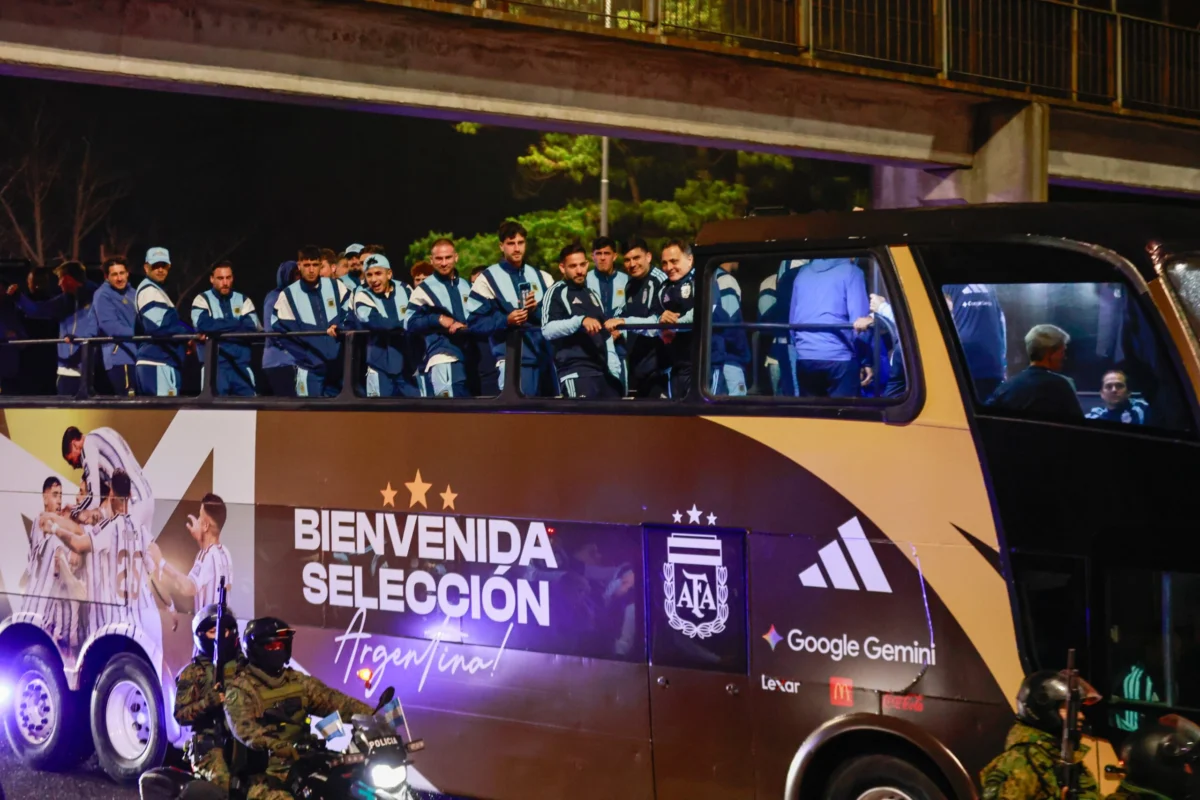
Argentine President Javier Milei has offered his perspective on the nation’s reception of the national football team following the 2026 World Cup final, revealing that his government proposed organizing extensive celebrations, a plan that ultimately was not pursued at the players’ behest. Speaking in an interview with Luis Majul on LN+, Milei elaborated on the complex dynamics surrounding the team’s return and addressed broader political commentary related to the tournament.
Government’s Offer for Post-Final Celebrations
President Milei stated that the proposed celebratory plans were a collaborative effort involving the national government, the provincial administration, and the city of Buenos Aires. "In fact, the players were given the option of six possible celebrations," Milei explained. He noted that the team, in the wake of their disappointment at not securing victory, opted against large-scale public festivities. However, he emphasized the government’s commitment to acknowledging the team’s historic achievement. "One had to prepare a tribute befitting this marvelous group, the most important in history," he asserted, referencing Argentina’s remarkable World Cup record, which includes reaching four finals and winning one in the last three tournaments. He underscored that the team’s performance and the values they displayed on the field warranted a significant national recognition.
Lionel Messi’s Departure and Player Autonomy
The President also addressed the notable decision of captain Lionel Messi to travel directly to Rosario with his family rather than accompanying his teammates immediately after the final match. Milei attributed this to the profound emotional toll of the World Cup final. "Sometimes it is very difficult to understand the historical nature of what they have achieved," he remarked. "We are human beings and can make decisions based on how we feel. It is not a moment when one feels good. There are no words to describe it. He is an artist of the game, he has done unimaginable things. The football fan has to thank him. Let us respect his decision; it is hard to know they were a step away." This statement highlights a recognition of the immense pressure and emotional burden borne by the players, particularly Messi, who had carried the hopes of a nation.
Criticism of Political Opponents
President Milei did not shy away from criticizing what he termed the "miserability" revealed by certain political factions during the World Cup. He accused unspecified "Kirchnerists" of hoping for the national team’s failure, labeling them "mononeuronal thermo" (a derogatory term implying limited intellectual capacity and ideological rigidity). He also alluded to the players’ stance on the sovereignty of the Malvinas Islands during a match against England, suggesting that their actions and the subsequent political reactions exposed deep divisions within the country. Milei further characterized the behavior of these political opponents as "inexplicable" and "very hurtful," accusing them of taking a stance "very much against the Argentine team." He went on to describe their subsequent shift in stance as a "panquequeo" (a colloquial term for a sudden change of opinion or loyalty), labeling them "psychopaths" for their perceived hypocrisy.
The Team’s Merit and Performance Analysis
In justifying the need for a national acknowledgment of the team’s efforts, Milei emphasized the players’ exceptional talent and dedication. He stated that the squad had "worked a lot" to reach the final stage of the tournament and had "always fought until the end." He also praised their "measured attitudes, even in moments where the referee had incorrect behaviors towards the national team." Reflecting on the final match itself, Milei acknowledged the adversity the team faced. "On Sunday, the match was very adverse for us, and even so, in the final minutes, we were able to tie it. The course of the game was never favorable. But they lost against a huge rival; that must also be said." This balanced assessment acknowledges both the team’s resilience and the strength of their opponent.

The Consideration of a National Holiday
The President was also questioned about the government’s consideration of declaring a national holiday following the World Cup final, a stance that appeared to diverge from his administration’s general aversion to such measures. Milei explained this potential exception by stating, "Celebrations and leisure are part of human life; one is not a machine that works 24 hours a day. That would lead to the machinery breaking down." He framed the consideration of a holiday as a response to an "extraordinary event" and contingent on the players’ decision. He reiterated that the players were "worthy of a tribute for the joys they gave to the Argentine people." He underscored the unprecedented nature of the achievement: "This is a case of extraordinary characteristics. It does not seem normal or conventional for a team to reach 3 finals out of 4. There are 195 countries in the world, and a handful participate in the World Cup, and we managed to be among the two best. They had a dark day, and luck was not with them, but the achievement is enormous, and we must be aware of that."
Recognition of Leadership
Milei specifically lauded the leadership within the Argentine squad, identifying Lionel Messi as "the best of all time" and coach Lionel Scaloni as possessing an "admirable capacity for leadership." He further suggested that Scaloni’s coaching acumen could translate to academia, stating, "I maintain that when his career as a coach concludes, there are reserved places for him in the best universities in the world, because he can give classes. Leading groups of these characteristics is not for just anyone." This praise indicates a deep respect for the individuals who guided the team through the tournament.
Elimination of Primaries (PASO)
Shifting focus to domestic policy, President Milei reiterated his long-standing stance on electoral reform, specifically the elimination of the Open, Simultaneous, and Compulsory Primary elections (PASO). He stated his determination to abolish them from the moment he assumed office. "My historical position has always been that they should not exist," he declared. Milei attributed the PASO system to former President Néstor Kirchner, describing it as an invention designed to "politically order how to design an electoral strategy, making Argentines pay for a poll." He argued that political issues should be resolved by political actors and that excessive voting processes lead to voter fatigue and reduced participation. "If you make people vote 5 times, the system saturates, and participation drops," he observed, advocating for a more streamlined electoral process.
Broader Context and Implications
The 2026 World Cup final, despite not resulting in a victory for Argentina, marked a significant moment in the nation’s sporting history. The team’s journey to the final, overcoming formidable opponents and demonstrating remarkable resilience, captured the hearts of millions. President Milei’s remarks underscore the political polarization that often accompanies major national events in Argentina. His criticism of political opponents, particularly those he associates with the previous administration, highlights the ongoing ideological battles within the country.
The debate surrounding the post-final reception and the potential for a national holiday also sheds light on the Argentine government’s approach to national celebrations and public sentiment. While generally fiscally conservative and wary of non-working days, the extraordinary nature of the team’s achievement prompted consideration of exceptional measures. This reflects a complex balancing act between economic pragmatism and the recognition of significant cultural and emotional events.
Furthermore, Milei’s comments on Lionel Messi’s personal decision and his praise for Lionel Scaloni’s leadership offer insights into the President’s view on individual autonomy and the qualities of effective leadership, even within the realm of sports. His consistent advocacy for electoral reform, particularly the abolition of the PASO, signals a commitment to restructuring Argentina’s political landscape. The implications of eliminating the PASO system are significant, potentially altering party dynamics, campaign strategies, and voter engagement in future elections. This reform, if enacted, could lead to a more concentrated electoral process, with parties selecting their candidates through internal mechanisms rather than public primaries. The reduction in the number of voting days could also be seen as an attempt to combat voter apathy and potentially increase the legitimacy of the final electoral outcomes.

Related Posts

The Electric Vehicle Battery Health Debate Emerges as Argentina’s EV Market Accelerates
President Donald Trump Confirms Secret Departure from Turkey Amidst Assassination Threat