Argentina’s Captain Lionel Messi to Forego National Team Celebrations for Club Commitments
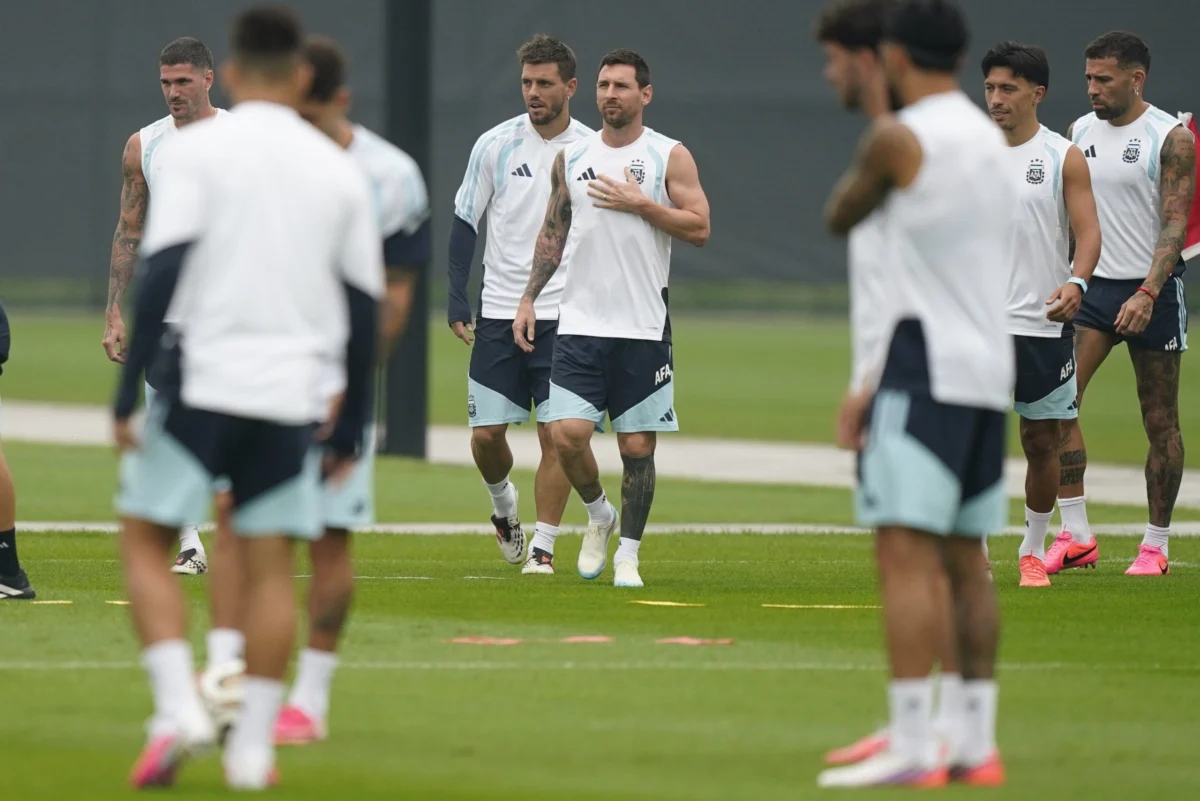
The Argentine national football team’s return to their homeland will not be a complete reunion, as several key players, including captain Lionel Messi, have opted not to travel with the main contingent following their runner-up finish in the 2026 FIFA World Cup. Messi, alongside his Inter Miami teammate Rodrigo De Paul, departed from New York to Miami, signaling an immediate reintegration into their club duties within the Major League Soccer (MLS). This decision marks a significant shift in the typical post-tournament reception for the Albiceleste, whose players often participate in extensive national celebrations upon returning to Argentina.
The departure of Messi and De Paul from the main group traveling back to Buenos Aires highlights the demanding schedule of professional football and the differing priorities of players at various stages of their careers. While the nation anticipated a unified return of the entire squad to share their hard-fought achievement, the reality is that club commitments and personal rest periods are taking precedence for a select group. This situation underscores the complex balance between national duty and club responsibilities that professional athletes, particularly those in top leagues, must navigate.
Beyond the iconic captain, a notable contingent of players will also be absent from the planned celebrations in Argentina. This group includes goalkeepers Gerónimo Rulli and Juan Musso, defenders Nicolás Paz, Marcos Senesi, Facundo Medina, and Valentín Barco, as well as midfielders Nicolás González and Juan Manuel López. Their individual decisions to bypass the national homecoming suggest a variety of personal and professional reasons, ranging from immediate club obligations to the need for recuperation before the commencement of new club seasons or international competitions. The absence of these players, though perhaps less individually impactful than Messi’s, collectively alters the scale and composition of the national team’s homecoming festivities.
Conversely, a significant portion of the squad, accompanied by the technical staff, did embark on the flight from New York, scheduled to land at Ezeiza International Airport in Buenos Aires. This group includes prominent figures such as Emiliano "Dibu" Martínez, Julián Álvarez, Enzo Fernández, Lisandro Martínez, Cristian "Cuti" Romero, Lautaro Martínez, Nahuel Molina, Alexis Mac Allister, Leandro Paredes, Nicolás Tagliafico, Gonzalo Montiel, Giovani Lo Celso, Exequiel Palacios, Giuliano Simeone, and Nicolás Otamendi. Their presence signifies a continued commitment to acknowledging the support of the Argentine public, even in the face of a disappointing final outcome. The varying travel plans underscore the logistical complexities and individual circumstances that shape the post-tournament journeys of a national team’s roster.
The aftermath of the 2026 World Cup final, which saw Spain emerge victorious over Argentina, has been marked by introspection and uncertainty, particularly surrounding the future of head coach Lionel Scaloni. Scaloni was the sole figure from the coaching staff to address the implications of the defeat in a post-match press conference. His statements hinted at a potential departure from his role, citing the immense pressure and the difficulty of replicating past successes. "I feel the need to think because I don’t know if I will be able to do something as great as this," Scaloni remarked, expressing gratitude to AFA President Claudio "Chiqui" Tapia for the opportunity. This sentiment of doubt and the contemplation of his future cast a shadow over the team’s performance, adding another layer of complexity to the post-tournament narrative.
Scaloni’s words have resonated deeply within the footballing community, raising questions about the long-term vision and stability of the Argentine national team. His tenure has been characterized by remarkable achievements, including the 2021 Copa América title and the 2022 World Cup victory, making his current uncertainty a significant talking point. The AFA, in response to the widespread fan support and the players’ efforts, issued a statement acknowledging the profound connection between the team and the Argentine people. The association emphasized that "the affection received throughout the journey, the flags, the messages, the parades, the hugs, and the unconditional support demonstrated, once again, that the National Team is the patrimony of all Argentines." This message aimed to reassure fans and highlight the enduring bond that transcends the final result.
The AFA’s statement further elaborated on the sentiment of pride and representation, stating that "each footballer felt that support on the field and each member of the delegation had the pride of representing a people who never stopped believing and accompanying." While the "dream of the bicampeonato" was not realized, the association highlighted that the experience "reaffirmed a bond that transcends any result." This carefully worded message sought to frame the subcampeonato not as a failure, but as a testament to the team’s resilience and the unwavering support of the nation. The AFA also indirectly addressed the diverging travel plans by stating that "some footballers from the squad will depart directly from the United States to various destinations to rejoin their clubs or begin their rest period," a pragmatic acknowledgment of the realities of professional football.

The decision regarding a potential national holiday to celebrate the team’s achievement was contingent on the players’ preferences. The Argentine government had indicated its willingness to declare a 24-hour holiday, but this was to be determined in consultation with the team. Sources close to the government confirmed that they were "awaiting official communication from the National Team to determine the next steps." President Javier Milei had previously affirmed that the holiday would be "depending on what the Players and the Technical Staff decide regarding the day to celebrate," aligning with the administration’s approach of deferring to the team’s wishes. This collaborative approach underscores the significance of the team’s connection with the public and the government’s desire to honor their efforts appropriately.
The final match itself was a closely contested affair, with Spain ultimately clinching the World Cup title with a 1-0 victory in extra time. The decisive goal, scored by Ferran Torres in the second period of extra time at MetLife Stadium in New Jersey, dashed Argentina’s hopes of a second consecutive World Cup triumph. Despite a valiant effort and an exceptional performance from goalkeeper Emiliano "Dibu" Martínez, who made 11 saves during the match, Argentina was unable to secure the win. The team played a significant portion of the game with ten men following the expulsion of Enzo Fernández, a setback that undoubtedly impacted their ability to maintain momentum and defend their title.
The expulsion of Enzo Fernández, who had already been cautioned, occurred when he fouled Pau Cubarsí to stop a Spanish counter-attack, resulting in his second yellow card. This red card further complicated Argentina’s task, forcing them to defend for extended periods with a numerical disadvantage. Earlier in the match, defender Lisandro Martínez had to be substituted due to a physical issue, replaced by Nicolás Otamendi. These challenges, compounded by the eventual goal conceded, led to Argentina finishing as runners-up after a hard-fought final against a superior Spanish side on the day. The referee, Slavko Vinčić, signaled the end of the match, confirming Spain’s first World Cup title in 16 years and concluding Argentina’s campaign for a repeat championship after their 2022 victory in Qatar.
The 2026 World Cup final, a rematch of sorts from historical encounters between footballing giants, was keenly anticipated. Spain, having navigated a challenging tournament path, demonstrated tactical discipline and clinical finishing when it mattered most. Their victory not only marks a significant achievement for Spanish football but also ends Argentina’s reign as world champions. The narrative of the final, characterized by resilience, dramatic turns, and the sheer intensity of a World Cup decider, will be etched in the memories of football fans worldwide. The performance of individual players, such as Dibu Martínez’s heroic saves and Enzo Fernández’s crucial, albeit costly, contributions, adds to the rich tapestry of the match.
The broader implications of the divergent travel plans extend beyond immediate celebrations. For players like Messi and De Paul, the immediate return to Inter Miami signifies a commitment to their club’s ongoing season and their roles as key figures in MLS. This allows them to maintain their form and contribute to their club’s objectives without significant disruption. For the players returning to Argentina, the reception, though potentially smaller in scale than initially envisioned, still represents a vital opportunity to connect with their passionate fanbase and acknowledge their support. The AFA’s role in managing these varied departures and arrivals highlights the logistical complexities of managing a national team’s roster, especially one comprised of players distributed across various leagues and continents.
The decision-making process regarding the national holiday also reflects a modern approach to sports celebrations, where the wishes and well-being of the athletes are increasingly taken into account. This contrasts with past eras where national governments might have unilaterally declared holidays to mark sporting triumphs. The current approach fosters a sense of partnership and mutual respect between the sporting bodies, the government, and the athletes themselves. The delay in confirming the holiday also suggests that the players’ return and their subsequent discussions about celebrations are paramount.
In conclusion, while the Argentine national team may not have secured the ultimate prize in the 2026 FIFA World Cup, their journey and performance have undoubtedly left an indelible mark. The complex logistics of their return, the introspective mood surrounding the coaching staff, and the ongoing dialogue between the AFA, the government, and the players themselves paint a multifaceted picture of a nation grappling with both the elation of reaching a final and the disappointment of falling short. The individual choices of players like Lionel Messi to prioritize club commitments over immediate national celebrations underscore the evolving landscape of professional football and the constant negotiation between national pride and club responsibilities. The enduring spirit of Argentine football, however, remains undiminished, as evidenced by the unwavering support of its fans and the continued commitment of its players.

Related Posts

The Electric Vehicle Battery Health Debate Emerges as Argentina’s EV Market Accelerates
President Donald Trump Confirms Secret Departure from Turkey Amidst Assassination Threat