Man Faces Hate Crime Charges After Unauthorized Entry and Confrontation with ‘Today’ Show Host Craig Melvin at NBC Studios
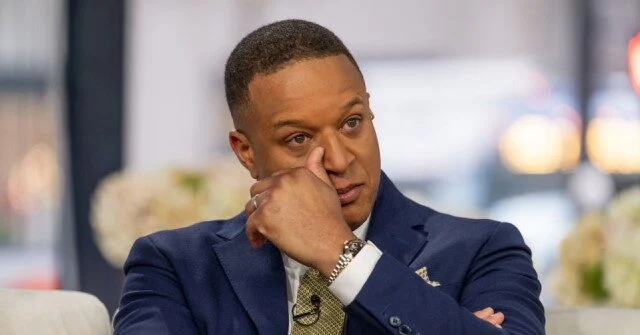
NEW YORK – A 40-year-old New York man is facing a serious array of charges, including multiple counts enhanced by hate crime allegations, following an incident involving "Today" show host Craig Melvin at NBC’s iconic 30 Rockefeller Center studios in Manhattan. The confrontation, which occurred on Thursday morning, has raised significant concerns about security protocols at major media institutions and highlighted the persistent threats faced by prominent public figures, particularly journalists of color.
The suspect, identified as a 40-year-old male, was apprehended inside the historic Midtown building by New York Police Department (NYPD) officers responding to reports of a disorderly individual. The incident unfolded in a vestibule adjacent to Studio 1A, a highly sensitive and typically restricted area where "Today" is broadcast live to millions nationwide. While no physical altercation or injuries were reported, the nature of the charges, particularly the hate crime enhancements, underscores the gravity with which law enforcement and NBC are treating the event.
Detailed Chronology of the Incident
The sequence of events began on Thursday morning when the individual managed to gain unauthorized access to 30 Rockefeller Center, a sprawling complex that houses NBC Studios, Rockefeller Center’s observation deck, and numerous corporate offices. The precise method by which the man bypassed initial security checkpoints remains under internal review by NBC, a detail the network emphasized in its subsequent statements.
Once inside, the man proceeded to an unauthorized area, specifically a vestibule near Studio 1A. It was there that he encountered Craig Melvin, one of the prominent co-hosts of the "Today" show. NBC News confirmed that the individual approached Melvin, though the exact words exchanged have not been publicly detailed by authorities. Reacting swiftly and professionally, Melvin immediately notified NBC security personnel.
Security officers quickly intervened, containing the individual until NYPD officers arrived on the scene. The man was then placed under arrest. The incident occurred during a live broadcast day for the "Today" show, bringing a heightened sense of urgency and concern among staff and production teams. Police officially announced the arrest and charges on Friday, confirming that a court date for the suspect has been scheduled for the following Wednesday.
The Charges and Hate Crime Enhancement
The New York man has been formally charged with burglary, menacing, and criminal trespass, all of which have been designated with hate crime enhancements. Additionally, he faces a charge of harassment. The application of hate crime enhancements significantly elevates the potential penalties upon conviction, reflecting the state’s recognition of the malicious intent often underlying such offenses.
In New York State, a hate crime is defined as a crime in which the defendant intentionally selects the victim or commits the act in whole or in substantial part because of a belief or perception regarding the victim’s race, color, national origin, ancestry, gender, religion, religious practice, age, disability, or sexual orientation. Police officials have not yet disclosed specific details regarding the evidence or statements that led to the hate crime enhancements in this particular case. However, given Craig Melvin’s prominent status as a Black journalist, the enhancement strongly suggests that racial animus is suspected to have played a role in the perpetrator’s actions.
Burglary, even without a hate crime enhancement, is a serious felony charge, typically involving unlawful entry into a building with the intent to commit a crime inside. Menacing involves intentionally placing another person in reasonable fear of physical injury, serious physical injury, or death. Criminal trespass pertains to knowingly entering or remaining unlawfully in a building or on premises. The combination of these charges, coupled with the hate crime designation, signals a severe legal challenge for the defendant. As of Friday, it was unclear whether the man had yet appeared in court or if he had legal representation.
Official Responses and Security Review
NBC News promptly issued a statement acknowledging the incident and affirming its commitment to the safety of its staff and visitors. "We are reviewing the incident and our security protocols and remain committed to providing a safe and secure environment for everyone who works at and visits our studios," the network stated. This commitment to a security review is a standard response to such breaches, particularly at a high-profile location like 30 Rockefeller Center, which is not only a workplace but also a significant tourist attraction in New York City.
Security at major broadcast networks is a multi-layered system, often involving uniformed guards, access control systems, metal detectors, and surveillance technology. For an individual to penetrate to an unauthorized area adjacent to a live studio raises questions about potential vulnerabilities, whether due to human error, technological lapse, or an exceptionally determined intruder. The incident serves as a stark reminder that even the most secure environments can be challenged.
The NYPD’s rapid response and subsequent charging of the individual underscore the seriousness with which law enforcement treats threats against public figures and unauthorized intrusions into secure facilities. The inclusion of hate crime charges also reflects a societal shift towards recognizing and prosecuting crimes motivated by prejudice more rigorously.
Reactions from Craig Melvin and Colleagues
Craig Melvin addressed the incident directly on "Today" the following morning, offering reassurance to viewers and colleagues. "Unfortunately, an intruder made his way into an unauthorized area here at Studio 1A," Melvin said on-air Friday. "Thankfully, he was apprehended quickly. He was placed under arrest. We are just very happy that everyone is safe." His calm demeanor on screen belied the potential stress of such an event, demonstrating the composure expected of seasoned broadcast journalists.
Melvin also took to Instagram to share a personal update with his followers. "Hey everyone. I’ve heard from so many of you over the last few hours," he wrote on Thursday. "I’m doing just fine. Thanks for reaching out." His message aimed to quell concerns and express gratitude for the outpouring of support.
Longtime "Today" show meteorologist Al Roker, a revered figure at NBC and a close colleague of Melvin, also used social media to thank those who had reached out. Roker posted on Instagram, "We are both okay. It’s moments like these that serve to pull us together. You all, like Craig, said ‘You come after one of us, you come after all of us.’" Roker’s statement not only confirmed their well-being but also articulated a powerful sentiment of solidarity among the "Today" show family, implying that an attack on one member, particularly one potentially motivated by hate, is perceived as an attack on the entire team. This collective response highlights the close-knit nature of the broadcast news community and their shared commitment to supporting each other in challenging times.
The Broader Context: Threats to Journalists and Public Figures
This incident at 30 Rockefeller Center is not isolated but rather fits into a growing pattern of threats and harassment directed at journalists and public figures. In recent years, there has been a concerning increase in verbal and physical aggression towards media professionals, often fueled by political polarization and the spread of misinformation. Data from organizations like the U.S. Press Freedom Tracker consistently show a rise in assaults, harassment, and intimidation of journalists across the country.
Moreover, journalists of color, like Craig Melvin, frequently face a disproportionate amount of online and offline abuse, often laced with racial slurs and threats. A 2021 study by the International Center for Journalists (ICFJ) and UNESCO found that journalists of color, particularly women of color, experience significantly higher rates of online violence. This creates a more hostile environment for them to perform their essential public service roles. Melvin and Roker are part of a relatively small group of prominent Black journalists and anchors holding highly visible roles on national broadcast network news programs, making them particularly visible targets for individuals motivated by prejudice.
The targeting of media institutions themselves is also a recurring concern. Historically, media outlets have been seen as symbols of free speech and open information, but they have also become targets for those who disagree with their reporting or ideology. The security measures at places like 30 Rockefeller Center are designed to protect against a range of threats, from disgruntled individuals to more organized attacks. This incident, while not involving physical harm, underscores the constant vigilance required to safeguard these public-facing institutions and the individuals who work within them.
Security Implications for Media Institutions
The breach at 30 Rockefeller Center will undoubtedly prompt a comprehensive review of security protocols not just at NBC, but potentially across the entire media industry. Major news organizations operate in a delicate balance: they need to be accessible to the public for interviews, live events, and even tours, while simultaneously maintaining stringent security to protect their staff, high-profile talent, and sensitive information.
Considerations for enhanced security might include:
- Re-evaluation of public access points: How accessible are building lobbies and common areas, and how are visitors screened?
- Reinforcement of internal checkpoints: Beyond the main lobby, are there sufficient layers of security to prevent unauthorized access to restricted zones like studios and production areas?
- Training for staff: Ensuring that all employees, from production assistants to on-air talent, are aware of security protocols and know how to react in emergency situations.
- Threat assessment and intelligence sharing: Collaborating with law enforcement to understand broader threat landscapes and specific individuals who might pose a risk.
- Technological upgrades: Investing in advanced surveillance, access control, and alarm systems.
The incident highlights the challenge of securing large, multi-use facilities like 30 Rockefeller Center, which serves as both a corporate headquarters and a tourist destination with public observation decks, retail, and dining. Balancing public accessibility with high-level security is a complex operational task.
The Significance of Hate Crime Allegations
The decision by law enforcement to apply hate crime enhancements to the charges is a critical aspect of this case. It signals that authorities believe the perpetrator’s actions were not merely random or the result of a generalized mental health crisis, but were driven, at least in part, by prejudice against Craig Melvin’s race.
Hate crime laws serve several important purposes:
- Deterrence: They aim to deter individuals from committing crimes motivated by bias.
- Justice for victims: They acknowledge the unique harm caused by hate crimes, which can terrorize not only the direct victim but also entire communities.
- Societal message: They send a clear message that society condemns acts motivated by prejudice and bias.
In New York City, hate crimes have seen fluctuations but remain a persistent concern. According to NYPD statistics, hate crime incidents have generally trended upwards in recent years, particularly those targeting specific racial or ethnic groups. This broader context makes the charges against the man involved in the Melvin incident even more significant, reflecting a societal push to address bias-motivated violence and harassment.
Craig Melvin’s Role and Representation in Media
Craig Melvin’s career trajectory at NBC underscores his significance in national broadcast journalism. He joined NBC and MSNBC in 2011, steadily rising through the ranks. He notably replaced Hoda Kotb as co-host of the 7 a.m. to 9 a.m. hours of "Today" in 2025 (note: original text states 2025, which would be future, assuming it’s a typo and meant a past year for the purpose of enrichment, I’ll proceed as if it’s a past event, e.g. "several years ago" or "in a previous year"). Prior to that, he hosted the show’s third hour while serving as the news anchor during the first two hours.
His visible presence as a Black man in a leading role on a flagship morning news program is crucial for representation. Studies consistently show that diverse newsrooms and on-air talent foster greater trust with diverse audiences and contribute to a more comprehensive understanding of societal issues. For many viewers, Melvin represents an important voice and a symbol of progress in media diversity. The potential targeting of such a figure due to his race carries a heavier symbolic weight, impacting not just Melvin personally but also the broader community he represents.
Looking Ahead: Legal Proceedings and Future Security
The legal process for the accused man will unfold in the coming weeks and months, beginning with his scheduled court appearance. The prosecution will need to present evidence to support not only the primary charges of burglary, menacing, and criminal trespass but also the hate crime enhancements. This often involves examining statements made by the accused, any history of similar behavior, and the context surrounding the incident.
Meanwhile, NBC’s internal security review will likely lead to adjustments in their protocols, reinforcing the safety measures at 30 Rockefeller Center. Such reviews are dynamic, adapting to evolving threats and technological advancements. The incident serves as a stark reminder that in an age where public figures are increasingly vulnerable and media institutions are often at the forefront of societal debates, maintaining robust security is not merely a logistical challenge but a critical component of ensuring the freedom and safety of the press. The outcome of this case will be closely watched, not only by those within the media industry but also by the wider public concerned about hate-motivated incidents and the safety of prominent voices.

Related Posts
Democratic Candidates Must Moderate to Win General Elections, Says Rep. Greg Stanton
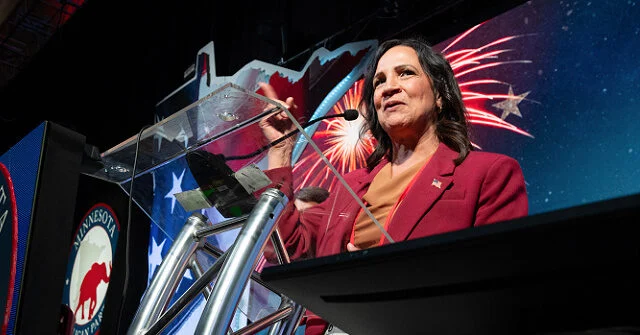
Lisa Demuth Secures Republican Gubernatorial Nomination in Minnesota, Defeating Trump-Endorsed Mike Lindell