Uganda Military Crackdown Escalates as Human Rights Watch Reports Arbitrary Detentions and Media Suppression Under Museveni Administration
The government of Uganda, under the long-standing leadership of President Yoweri Museveni, has intensified its use of the national military to silence political opposition and dismantle the country’s independent media landscape, according to a comprehensive report released today by Human Rights Watch (HRW). Since mid-June 2026, the Uganda People’s Defence Force (UPDF) has been implicated in a series of unlawful seizures, incommunicado detentions, and the subsequent hand-over of critics for what legal experts describe as "bogus" or politically motivated prosecutions. These actions appear to be part of a coordinated strategy to insulate the presidency and the leadership of the military—specifically General Muhoozi Kainerugaba, the president’s son—from public scrutiny and legal accountability.
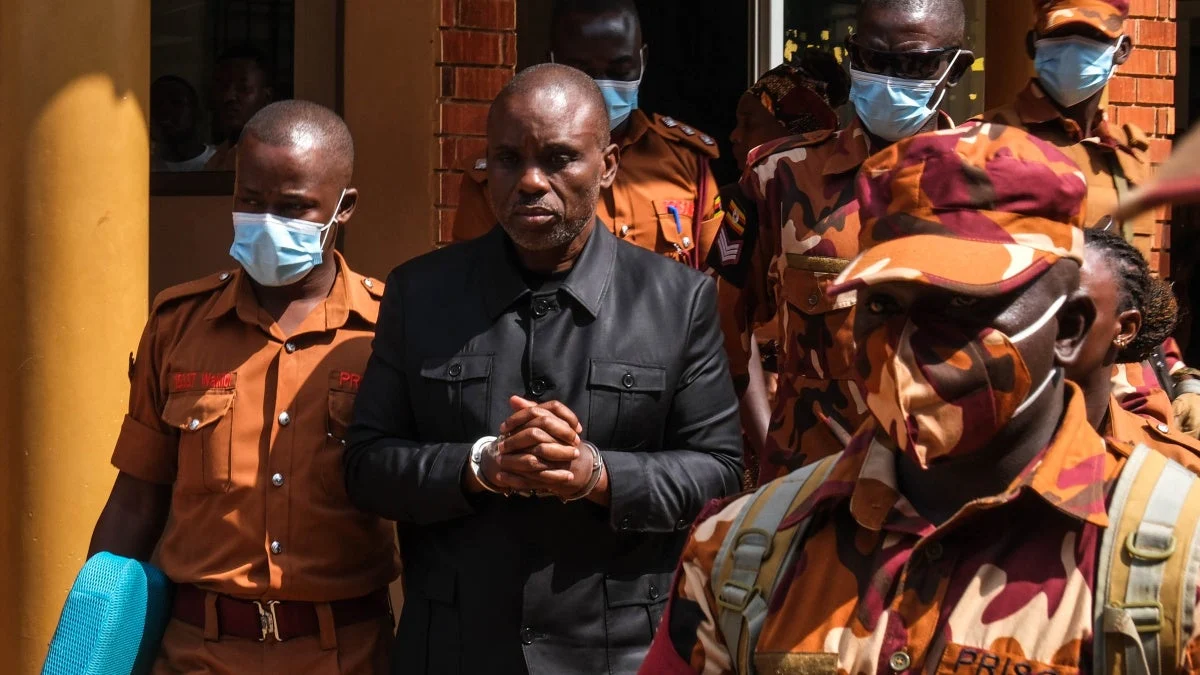
The recent wave of repression marks a significant escalation in the East African nation’s domestic policy, transitioning from police-led enforcement to direct military intervention in civil and political matters. HRW documentation reveals that at least five high-profile critics have been abducted by security forces in less than a month, while the nation’s largest independent media conglomerate remains under a military-enforced siege. Carine Kaneza Nantulya, deputy Africa director at Human Rights Watch, characterized the situation as a direct assault on the rule of law. "President Museveni’s government is increasingly using the military as a cudgel against dissent and criticism," Nantulya stated. "They should stop using security forces to take out critics and instead respect Uganda’s Constitution and Ugandans’ rights, security, and due process."
A Chronology of Targeted Detentions
The current crackdown began in earnest on June 15, 2026, when armed soldiers conducted a raid on the Kampala home of Erias Lukwago, a prominent lawyer and the Lord Mayor of the capital city. Lukwago serves as the legal representative for Dr. Kizza Besigye, a perennial opposition figure currently embroiled in a treason trial that human rights groups have termed fraudulent. At the time of his abduction, Lukwago was preparing to serve a legal summons on General Muhoozi Kainerugaba as part of a lawsuit alleging death threats made by the General against Besigye.
General Kainerugaba, who serves as the Chief of the UPDF, had previously utilized the social media platform X (formerly Twitter) to threaten anyone attempting to serve him with legal papers. Following Lukwago’s disappearance, the General appeared to confirm the unlawful detention through a series of posts, boasting that he held the lawyer in a "basement." He further shared a photograph depicting a blindfolded individual believed to be Lukwago. Family members later reported that Lukwago was subjected to physical assault during his two-day incommunicado detention before being surfaced at a police station and charged with treason-related offenses.
The ripple effects of Lukwago’s arrest extended beyond Uganda’s borders. On June 22, Martha Karua, a former Kenyan Minister for Justice and lead counsel for Besigye’s defense, was detained at Entebbe International Airport. Karua had traveled to Uganda specifically to observe the legal proceedings against her colleague. Despite her diplomatic and professional standing, she was held for several hours and summarily deported to Kenya, a move viewed by observers as an attempt to isolate Ugandan opposition figures from regional legal support.
The timeline of state-led intimidation continued through late June:
- June 26: Timothy Kalyegira, a veteran journalist and outspoken government critic, was intercepted by a vehicle belonging to the UPDF Special Forces Command. Kalyegira reported being taken to a basement where he was interrogated regarding his perceived "hatred" for the First Family. He was later charged with operating digital news outlets without a license.
- June 28: Miria Matembe, a former cabinet minister and veteran activist, was seized by soldiers in Kampala. Her detention followed a YouTube interview in which she criticized the military’s treatment of Lukwago. General Kainerugaba again took to social media to claim responsibility, writing, "That one, [Matembe] I have her too." She was subsequently charged with "promoting sectarianism," a vaguely defined offense frequently used to target political dissidents.
- July 11: Muwanga Kivumbi, the deputy president of the National Unity Platform (NUP)—Uganda’s primary opposition party—was seized by armed soldiers near a roadblock on the outskirts of Kampala. Kivumbi, who was already out on bail for previous politically motivated charges, remains a central figure in the struggle for civic space in the country.
Institutional Suppression and the Siege of Nation Media Group
Beyond the targeting of individuals, the Ugandan government has moved to systematically dismantle the infrastructure of free expression. Since June 28, 2026, the military has maintained a perimeter around the premises of the Nation Media Group (NMG), the largest independent media house in the country. The siege followed an explicit order from General Kainerugaba to shut down the company’s television and newspaper operations, citing "negative coverage" of the presidency.
The closure of NMG represents a watershed moment for Ugandan journalism. By utilizing the military to bypass regulatory bodies like the Uganda Communications Commission, the executive branch has signaled that the security apparatus now supersedes civilian oversight of the press. This media blackout is compounded by a broader campaign against civil society. Since January 12, 2026, the government has indefinitely suspended the operations of at least 10 non-governmental organizations (NGOs). These groups include election-monitoring bodies, human rights advocates, and media watchdogs, effectively blinding the international community to the ground-level realities of the 2026 electoral cycle.
The legislative framework for this crackdown was solidified in May 2026, when President Museveni assented to the Protection of Sovereignty Act. While framed as a measure to protect the nation from foreign interference, the law imposes draconian controls on "foreign funding" and empowers the state to label activists and journalists as "agents of foreign entities." Legal analysts argue the Act is designed to starve the domestic human rights movement of resources and provide a legal veneer for the criminalization of international cooperation.
Violations of Domestic and International Law
The actions documented by Human Rights Watch stand in stark contrast to both the Ugandan Constitution and the country’s international treaty obligations. Under the Uganda People’s Defence Force Act, soldiers are permitted to arrest civilians only under very specific and limited circumstances. None of the recent detentions—ranging from "promoting sectarianism" to "operating digital news outlets"—fall within the military’s legal jurisdiction. Furthermore, the Ugandan Constitution mandates that all detainees be held in recognized, legally authorized facilities, a requirement ignored in the cases of "basement" detentions and incommunicado holdings.
Internationally, Uganda is a signatory to the International Covenant on Civil and Political Rights (ICCPR) and the African Charter on Human and People’s Rights. These treaties strictly prohibit arbitrary arrest, torture, and enforced disappearances. The report from HRW highlights a disturbing trend of "ill-treatment," specifically citing the case of Andrew Nabimanya. Nabimanya, an opposition supporter, testified that during his five-day military detention, he was stripped, photographed, and had blood forcibly drawn from him by soldiers who warned him against posting anti-government content online.
The weaponization of the criminal justice system is perhaps the most enduring concern for the rule of law. By using the military to conduct arrests and then handing suspects to the police for "bogus" prosecutions, the state creates a cycle of detention that exhausts the resources and morale of the opposition.
Implications for the Future of Ugandan Democracy
The current trajectory suggests a narrowing of the democratic path as Uganda approaches a period of potential political transition. The prominence of General Muhoozi Kainerugaba in these operations is particularly noteworthy. As the President’s son and the head of the military, his direct involvement in the detention of critics suggests a merging of familial, political, and military interests. This consolidation of power appears aimed at ensuring a smooth, albeit forced, continuity of the Museveni dynasty.
The international community has begun to voice concern, though critics argue that diplomatic pressure has been insufficient. In 2022, President Museveni publicly pledged to hold security agencies accountable for human rights abuses, yet HRW notes there is no public evidence of any military officer being prosecuted for the recent wave of abductions. Instead, the passage of the Protection of Sovereignty Act suggests the government is preparing to insulate itself further from external criticism.
The long-term impact of these actions is likely to be the total erosion of the "middle ground" in Ugandan politics. With the media silenced, NGOs suspended, and lawyers arrested for performing their duties, the avenues for peaceful reform are being systematically closed. Human Rights Watch has called on Uganda’s international partners to move beyond rhetoric and press for tangible accountability, specifically citing the need to enforce the Prevention and Prohibition of Torture Act of 2012 and the Human Rights (Enforcement) Act of 2019.
"No military officer should be able to carry out serious violations with impunity," Kaneza Nantulya concluded. The current climate in Kampala, characterized by military roadblocks and "basement" detentions, serves as a stark reminder of the fragility of constitutional protections in the face of an emboldened security state. Without a significant shift in government policy or a robust international response, the precedent set in June and July 2026 may define the Ugandan political landscape for years to come.

Related Posts
Human Rights Watch Calls for Investigation into Death of Detainee Following Removal from Najaf Hospital by Iraqi Drug Police
Human Rights Watch Urges UN Security Council to Extend Lebanon Peacekeeping Mission Amid Escalating Conflict and Humanitarian Crisis