Iran Suspends Commitments to Washington MoU Amid Escalating US Attacks
Tehran, Iran – July 18, 2026, 13:39 BST – Iran’s Deputy Foreign Minister, Kazem Gharibabadi, announced today that Tehran has formally suspended its commitments under the memorandum of understanding (MoU) with Washington, citing continued US military aggressions and violations of the agreement. The declaration marks a significant deterioration in the already fraught relationship between the two nations, which have been locked in a direct conflict widely referred to as the "War on Iran" since late 2025.
Tehran’s Rationale for Suspension
Gharibabadi’s statement, delivered from the Iranian capital, was unequivocal: "The US has violated and suspended all its commitments within the framework of the Islamabad MoU." He further elaborated that Iran’s decision to suspend its own obligations was a direct consequence of these persistent American breaches, asserting that Tehran is currently "busy defending the country" against ongoing hostilities. This announcement effectively dismantles one of the last remaining diplomatic channels and de-escalation frameworks between the two adversaries, signaling a potential intensification of the conflict. The deputy foreign minister did not specify the exact nature of the US violations, but Iranian state media has consistently reported on a series of aerial bombardments, cyberattacks, and naval maneuvers attributed to American forces in recent weeks, particularly targeting Iranian strategic infrastructure and military installations.
The Genesis of the Islamabad Memorandum of Understanding
The Islamabad MoU, signed in early 2026, represented a fragile attempt to establish some form of operational understanding amidst the escalating "War on Iran." Brokered by a consortium of neutral nations, primarily Pakistan, with tacit support from regional powers like Oman and Qatar, the agreement was intended to prevent the conflict from spiraling into an even wider regional conflagration. While its full text was never publicly disclosed, diplomatic sources at the time indicated that the MoU included provisions for humanitarian corridors, limitations on certain types of offensive weaponry, and a commitment to maintain open communication channels to de-escalate unforeseen incidents. For Iran, a key aspect was believed to be a halt to targeted cyberattacks against its critical infrastructure and a reduction in the frequency and intensity of aerial reconnaissance and strike missions. For the US, the MoU reportedly sought guarantees against Iranian proxy actions in the Gulf and Red Sea, along with assurances regarding the safety of international shipping. The very existence of such an agreement, however tenuous, underscored the international community’s profound concern over the direct military engagement between the US and Iran.
The Escalation to "War on Iran"
The current "War on Iran" is the culmination of decades of mistrust and escalating tensions, reaching a critical juncture in late 2025. Following a series of highly contested maritime incidents in the Strait of Hormuz, including the alleged targeting of a US naval vessel by Iranian-backed forces and a retaliatory cyberattack that crippled Iranian oil export facilities, both nations found themselves on a collision course. The direct military confrontation commenced with limited US airstrikes against Iranian Revolutionary Guard Corps (IRGC) bases in retaliation for what Washington described as "unprovoked acts of aggression." Tehran responded with missile launches targeting US interests in the region, including military bases in Iraq and Saudi Arabia. This tit-for-tat escalation quickly spiraled, leading to sustained military operations by both sides, transforming a long-standing proxy rivalry into a direct, overt conflict. The term "War on Iran" gained traction in international media to describe the full-scale military engagements that have since characterized the conflict, moving beyond localized skirmishes to encompass broader strategic objectives.
A History of Distrust and Diplomatic Breakdown

The path to the current conflict is deeply rooted in a history of profound ideological differences and geopolitical competition. The US withdrawal from the Joint Comprehensive Plan of Action (JCPOA), also known as the Iran nuclear deal, in 2018 under the Trump administration, is widely considered a pivotal moment that reignited tensions. This move led to the re-imposition of crippling sanctions on Iran, severely impacting its economy and fostering a sense of grievance in Tehran. Subsequent Iranian steps to expand its nuclear program, coupled with continued regional proxy engagements, further exacerbated the situation. Throughout the early 2020s, multiple attempts at de-escalation and renewed diplomatic engagement failed, often hampered by hardline stances on both sides and a deep lack of trust. Incidents like the assassination of Qassem Soleimani in 2020 and subsequent retaliatory actions kept the region on edge, illustrating the precarious balance that ultimately collapsed into direct warfare by 2025. The Islamabad MoU was therefore a desperate, last-ditch effort by international mediators to pull the two nations back from the brink, a mission that now appears to have failed.
Public Sentiment and Symbolic Defiance in Tehran
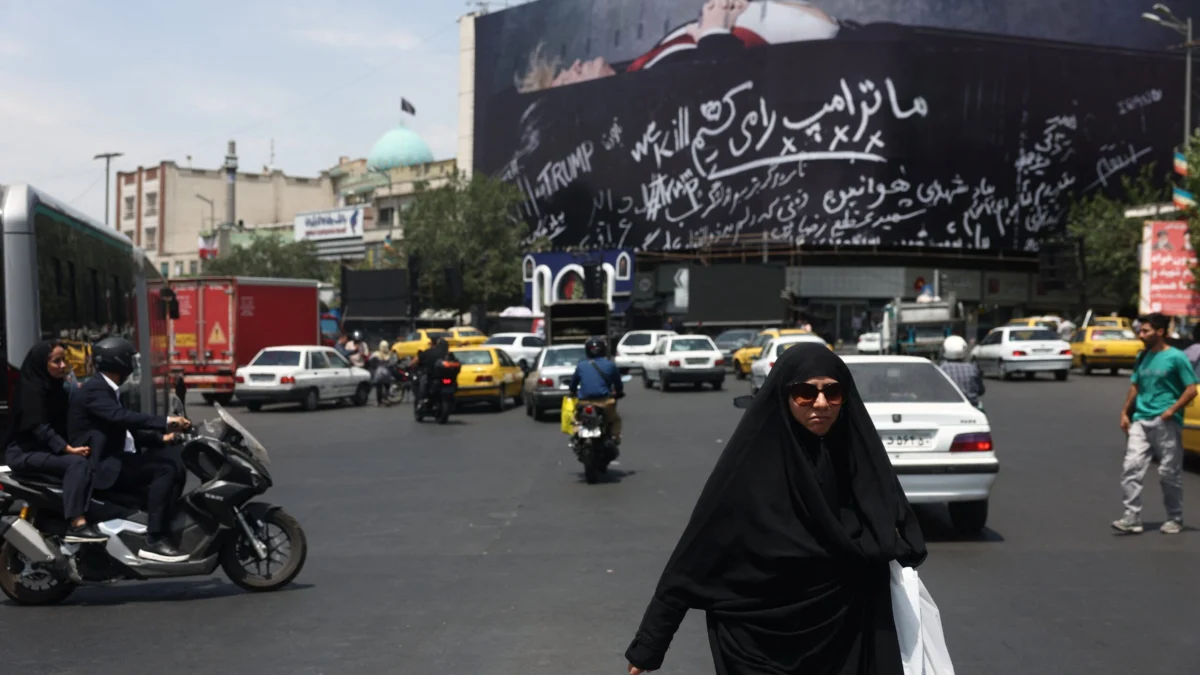
The mood in Tehran, as depicted in recent images, reflects a blend of defiance and profound national solidarity. A striking billboard prominently displayed in the capital in July 2026, featuring an image interpreted as a coffin bearing the likeness of former US President Donald Trump, serves as a powerful symbol of the deep-seated animosity and national resolve. While Trump is no longer in office, his legacy, particularly the decision to withdraw from the JCPOA and initiate the "maximum pressure" campaign, is seen by many Iranians as a direct precursor to the current conflict. The billboard, widely circulated by international news agencies, underscores the Iranian government’s attempt to rally public support against a perceived external aggressor and to project an image of unwavering resistance, even in the face of ongoing military pressure. Such public displays are consistent with Iran’s long history of using symbolic gestures to communicate both domestic resolve and international condemnation.
International Reactions and Calls for De-escalation
The suspension of the Islamabad MoU has been met with dismay by the international community. United Nations Secretary-General António Guterres issued a statement urging both Washington and Tehran to "re-engage in dialogue and uphold any and all existing agreements that can serve as a basis for de-escalation." He emphasized the urgent need to protect civilian lives and ensure humanitarian access in the conflict zones. The European Union, through its High Representative for Foreign Affairs and Security Policy, expressed "deep regret" at the development, calling on both parties to "exercise maximum restraint" and warning that further escalation could have "catastrophic consequences for regional and global stability." Russia and China, while often critical of US actions, have also called for a return to diplomatic solutions, with Moscow specifically noting that "the breakdown of communication channels only serves to deepen mistrust and prolong suffering." Regional powers, particularly those with significant economic ties to both the US and Iran, have expressed grave concern about the ripple effects on energy markets and maritime security, fearing a broader destabilization of the Middle East.
Implications for Peace and Regional Stability
The formal suspension of the Islamabad MoU carries profound implications for any future prospects of peace and for the stability of the Middle East. Firstly, it effectively removes a crucial, albeit imperfect, framework for communication and de-escalation, leaving little room for incident management or confidence-building measures. This raises the specter of increased miscalculation and unintended escalation, as there are now fewer mechanisms to prevent minor clashes from erupting into larger engagements. Secondly, it signals Iran’s hardening stance, indicating a reduced willingness to engage in any form of negotiation as long as US military actions persist. This could lead Tehran to intensify its defensive and retaliatory measures, potentially drawing more regional actors into the conflict.
Economically, the news is likely to send further shockwaves through global energy markets. The Strait of Hormuz, a critical chokepoint for global oil shipments, remains vulnerable to disruptions, and any escalation could lead to significant price spikes and supply chain issues. Humanitarian organizations are also bracing for the worst, as the breakdown of the MoU could complicate efforts to deliver aid to affected populations, especially if provisions for safe passage or localized ceasefires were part of the agreement.
Moreover, the suspension underscores the challenge facing international mediators. With both sides seemingly unwilling to adhere to even minimal de-escalation protocols, the diplomatic toolbox appears increasingly barren. The focus may now shift from de-escalation to containment, a strategy that carries its own set of risks and uncertainties in a region already grappling with multiple complex crises. The declaration by Deputy Foreign Minister Gharibabadi is not merely a diplomatic announcement; it is a stark indicator that the "War on Iran" is likely to deepen, with its tragic human cost and destabilizing geopolitical repercussions set to expand further across the Middle East and beyond. The path forward appears fraught with peril, with no clear diplomatic off-ramp in sight.

Related Posts
Over 150 Israeli Settlers Storm Al-Aqsa Compound and Perform Prayers, Violating Status Quo Under Police Protection.
UN Report Highlights Over 900 Obstacles Hampering West Bank Aid Amid Escalating Humanitarian Crisis