International Justice Day Highlights Global Fight for Accountability Amid Growing Political Resistance to the International Criminal Court
The global community marks International Justice Day every July 17, commemorating the anniversary of the 1998 adoption of the Rome Statute, the foundational treaty that established the International Criminal Court (ICC). As the world’s only permanent international court with the jurisdiction to prosecute individuals for the most heinous crimes—genocide, war crimes, crimes against humanity, and the crime of aggression—the ICC represents a historic shift toward global accountability. However, the 2024-2026 period has emerged as a definitive crossroads for the institution. While the court continues to advance landmark cases involving Libya and the Philippines, it simultaneously faces unprecedented diplomatic and legislative hostility from the United States, raising critical questions about the future of the international rule of law and the safety of human rights defenders.
The Genesis of International Justice: From Nuremberg to the Rome Statute
The concept of a permanent international criminal tribunal is rooted in the aftermath of World War II. The Nuremberg and Tokyo trials established the precedent that individuals, including heads of state, could be held legally responsible for state-sponsored atrocities. For decades during the Cold War, the momentum for a permanent court stalled, until the ethnic cleansings in the former Yugoslavia and the genocide in Rwanda in the early 1990s forced the United Nations Security Council to establish ad hoc tribunals.
These temporary courts proved that international prosecution was possible but highlighted the need for a standing body to avoid the "victor’s justice" critique and to ensure a permanent deterrent against future atrocities. On July 17, 1998, at a diplomatic conference in Rome, 120 states voted in favor of the Rome Statute. The treaty officially entered into force on July 1, 2002, after the 60th ratification, formally birthing the ICC. Today, 124 countries are parties to the statute, though notable non-signatories include the United States, Russia, China, and India, creating a complex geopolitical landscape where the court’s reach is often contested.
The Escalation of Transatlantic Tension: US Policy and the ICC
In recent months, the relationship between the United States and the ICC has reached a new nadir. This week, US Secretary of State Marco Rubio announced a strategic campaign aimed at "dismantling" the court’s influence. This rhetoric follows a series of legislative moves in Washington designed to shield US citizens and allies from ICC scrutiny. The primary point of contention involves the ICC’s investigations into potential war crimes in territories where the US has strategic interests or where non-member states are involved.
Critics of the US position, including major international human rights organizations, argue that Washington is attempting to create a bifurcated system of justice—one that applies to its adversaries but provides "get-out-of-jail-free" cards for its allies. This tension is not new; the US has a long history of "unsigning" the Rome Statute and passing domestic laws like the American Service-Members’ Protection Act, often colloquially referred to as the "Hague Invasion Act," which authorizes the use of military force to liberate any American or citizen of a US-allied country being held by the ICC.
The recent threats of sanctions against ICC officials, including Prosecutor Karim Khan, have drawn sharp rebukes from United Nations experts and ICC member states in Europe and the Global South. These sanctions, often reserved for terrorists and gross human rights violators, are seen by proponents of the court as an ideological weapon used to erode the independence of the judiciary.
Advancing Accountability: Landmark Cases in Libya and the Philippines
Despite the political headwinds, the ICC’s judicial machinery continues to move forward. In a significant development for North African justice, the ICC recently greenlit the first case from its Libya investigation to move to trial. The situation in Libya was referred to the ICC by the UN Security Council in 2011 following the violent crackdown on anti-government protesters. This new trial phase represents a decade of investigative work into the inner workings of the former Gaddafi regime and the various factions that have vied for power since, signaling to victims that the passage of time does not equate to immunity.
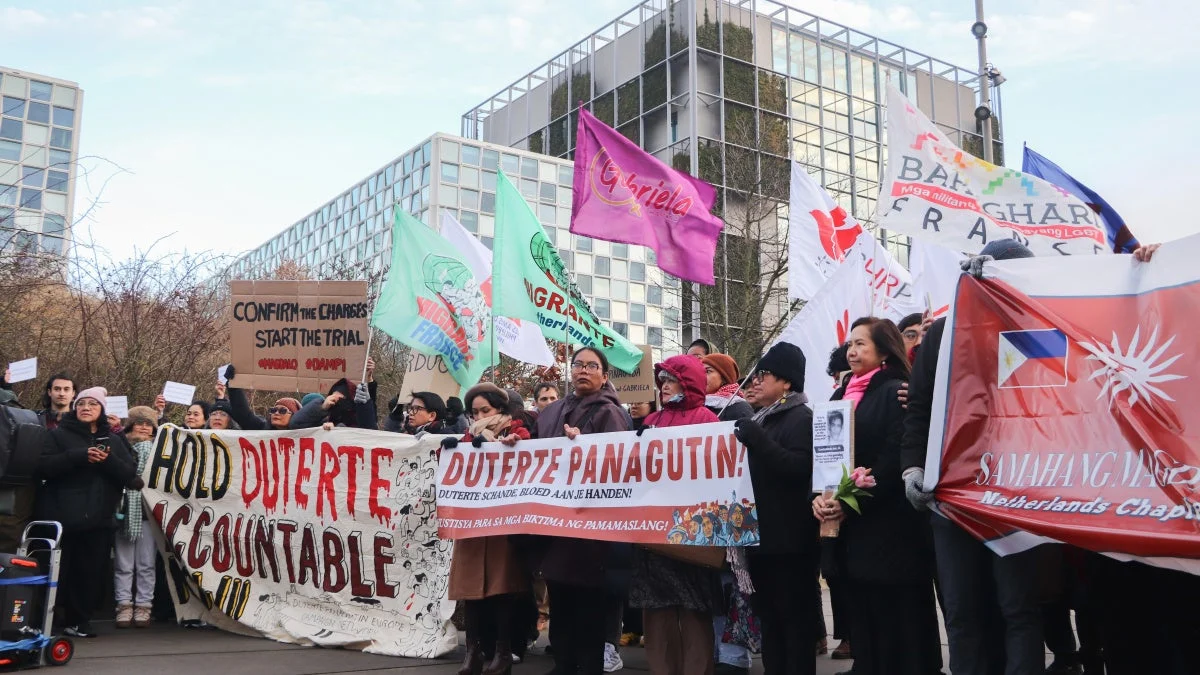
Furthermore, the international legal community is focused on the upcoming trial of former Philippine President Rodrigo Duterte, scheduled to begin in November. The case centers on alleged crimes against humanity committed during Duterte’s controversial "war on drugs." Since 2016, human rights organizations estimate that between 12,000 and 30,000 people, mostly from impoverished urban areas, were killed in extrajudicial executions by police and state-sponsored vigilantes.
The Duterte case is a litmus test for the ICC’s "principle of complementarity," which dictates that the ICC only intervenes when national legal systems are "unwilling or unable" to prosecute. While the Philippine government has claimed its domestic courts are functional, the ICC’s Pre-Trial Chamber concluded that domestic investigations were insufficient and did not cover the scale of the systematic killings. The trial represents a rare instance of a high-ranking former official being held to account for domestic policy-related violence on an international stage.
The Rise of Universal Jurisdiction and Domestic Reforms
Beyond the walls of the ICC in The Hague, the spirit of International Justice Day is being upheld through the principle of universal jurisdiction. This legal doctrine allows national courts to prosecute individuals for serious international crimes regardless of where the crime was committed or the nationality of the perpetrator.
- Myanmar: Since the 2021 military coup and the preceding genocide against the Rohingya, domestic justice in Myanmar has been non-existent. In response, survivor groups and civil society organizations have successfully filed cases in Argentina and Germany. These efforts rely on the testimony of refugees and digital evidence of atrocities to secure arrest warrants against military leaders who might otherwise never face a judge.
- Sudan: Amidst the ongoing civil war and the history of atrocities in Darfur, activists are utilizing universal jurisdiction in Kenya and various European nations to track the financial assets and movements of paramilitary leaders, seeking to cut off the resources that fuel conflict.
- Syria: While a referral of the Syrian conflict to the ICC has been blocked by vetoes in the UN Security Council, the "Koblenz Trial" in Germany marked the first time a Syrian state official was convicted of crimes against humanity. Currently, there are efforts to establish a more formal transitional justice process within Syria, though these remain fraught with security challenges and political instability.
- Lebanon: In a rare domestic breakthrough, two members of the Lebanese Parliament recently introduced a framework law to define and penalize war crimes and crimes against humanity. If passed, this legislation would bridge the gap between Lebanese domestic law and international standards, allowing for the prosecution of historical and contemporary crimes that have long been covered by amnesty laws.
Data and Statistics: The State of Global Justice
The scale of the ICC’s mandate is reflected in its current workload. As of mid-2024, the ICC has:
- 31 cases brought before the court, with some cases having multiple defendants.
- 17 ongoing investigations in countries including the Democratic Republic of the Congo, Central African Republic, Mali, Georgia, and Palestine.
- 10 preliminary examinations to determine if a full investigation is warranted.
- Issued 40 arrest warrants, though 16 individuals remain at large, highlighting the court’s reliance on state cooperation for enforcement.
The Trust Fund for Victims (TFV), an independent body associated with the ICC, currently supports over 450,000 victims through physical and psychological rehabilitation and socio-economic support. However, the court’s annual budget of approximately €187 million is frequently cited by experts as inadequate for the global scale of atrocities it is expected to address, especially when compared to the multi-billion dollar budgets of national justice departments in the West.
Official Reactions and the Global Response
The escalation of US rhetoric has triggered a wave of support for the ICC from its member states. The Assembly of States Parties (ASP), the court’s management oversight body, issued a statement reaffirming its "unwavering commitment to uphold and defend the principles and values enshrined in the Rome Statute."
European Union foreign policy officials have also spoken out, noting that the ICC is a "pillar of the international rules-based order." In a joint statement, several human rights NGOs, including Human Rights Watch and Amnesty International, warned that attacking the ICC emboldens autocrats worldwide. "When powerful nations signal that the law does not apply to them or their friends, they dismantle the very shield that protects the most vulnerable populations," the statement read.
Broader Impact and the Future of Accountability
The implications of the current assault on the ICC extend far beyond the courtroom. If the international justice system is weakened by the withdrawal of support or the imposition of sanctions by major powers, the global community risks returning to an era of total impunity. The deterrent effect of the ICC, while difficult to quantify, relies on the perceived inevitability of justice. When that inevitability is undermined by political maneuvering, the cost of committing atrocities decreases for those in power.
However, the resilience of the system is found in the "justice ecosystem"—a network of survivors, investigators, and local lawyers who continue to document crimes in the face of immense personal risk. The progress in Lebanon and the creative use of universal jurisdiction in Myanmar demonstrate that the desire for justice is not merely a Western legal export but a universal human demand.
As International Justice Day concludes, the message from the global legal community is clear: the road to accountability is long and fraught with political obstacles, but the framework established in Rome 26 years ago remains the most viable path toward a world where the rule of law supersedes the rule of force. Governments are being urged not only to celebrate the day in spirit but to provide the concrete legal, financial, and diplomatic support necessary to ensure that "never again" becomes a judicial reality rather than a political slogan.

Related Posts
Human Rights Watch Calls for Investigation into Death of Detainee Following Removal from Najaf Hospital by Iraqi Drug Police
Human Rights Watch Urges UN Security Council to Extend Lebanon Peacekeeping Mission Amid Escalating Conflict and Humanitarian Crisis