Macron and Merz signal urgent economic pivot as Franco-German alliance faces 2027 political uncertainty
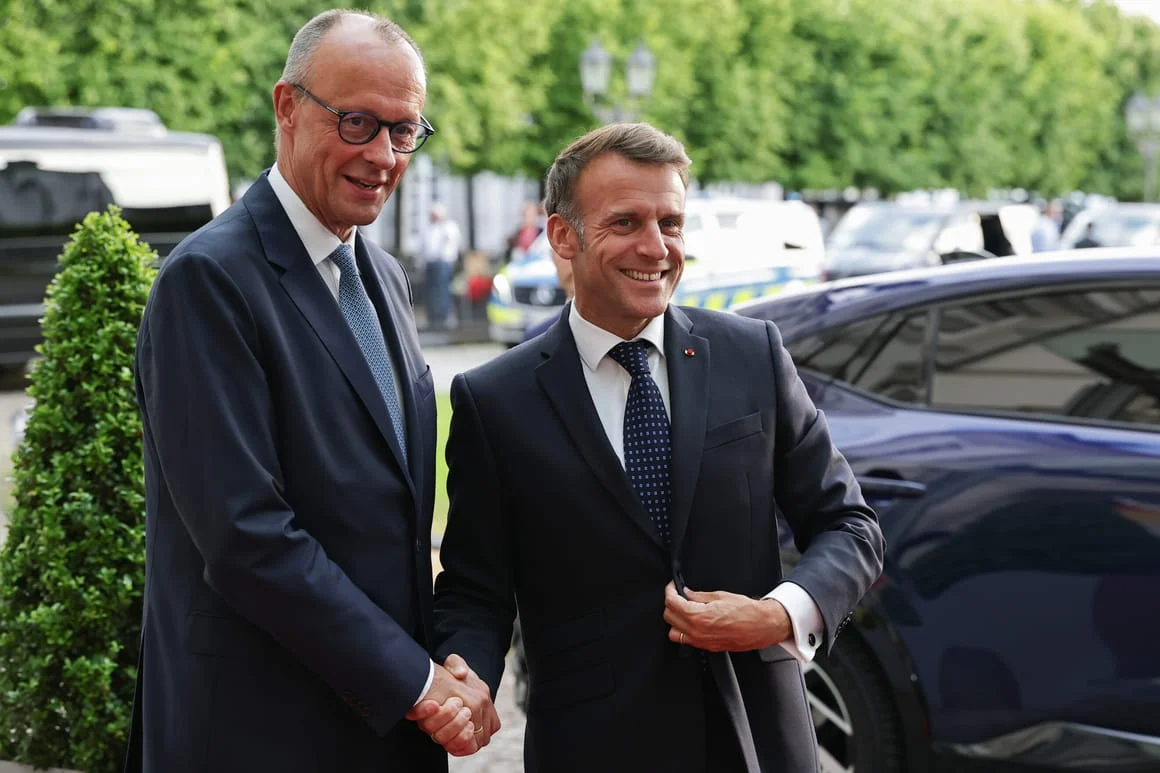
Berlin and Paris have entered a high-stakes period of legislative acceleration, with French President Emmanuel Macron and German Chancellor Friedrich Merz concluding a two-day ministerial summit in Berlin with a pledge to finalize major EU policy frameworks before the end of 2026. While the meeting was ostensibly focused on the immediate economic pressures facing the eurozone, the subtext of the gathering was dominated by the impending 2027 French presidential election and the potential rise of the National Rally.
The leaders outlined a roadmap to address three critical pillars: mitigating the impact of subsidized Chinese exports, settling the bloc’s seven-year Multiannual Financial Framework (MFF), and accelerating the development of a U.S.-style capital markets union. Both administrations framed this urgency as a reaction to global volatility, citing security threats from Russia, a changing transatlantic dynamic, and the need to protect the European single market from external economic shocks.
A Chronology of Diplomatic Urgency
The current push for policy finalization follows a tumultuous eighteen months in European politics. Since the beginning of 2026, the Franco-German relationship has been characterized by both cautious cooperation and underlying tension.
In early 2026, the European Commission began drafting proposals for the next MFF, recognizing that the current budget cycle, which concludes in 2027, would require a complex consensus among the 27 member states. By March 2026, discussions in Brussels turned toward "future-proofing" the budget, with many member states expressing concern over the potential for a political shift in Paris.
The momentum accelerated significantly in July 2026, when a Paris appeals court cleared a path for Marine Le Pen to contest the 2027 election, overturning previous assumptions that legal hurdles would preclude her candidacy. This development triggered an immediate shift in the diplomatic climate in Berlin, where Chancellor Merz—having taken office amidst a changing German political landscape—sought to formalize agreements that would be difficult for any future French administration to unilaterally dismantle.
Economic Realignment: Confronting the China Challenge
The ministerial council underscored a notable shift in the German approach to Beijing. Historically, Berlin has been the most cautious capital in the EU regarding trade disputes with China, wary of jeopardizing its massive automotive and manufacturing export sector. However, the joint declaration issued on Friday indicates a newfound alignment with the French position, which has long favored a more aggressive, protectionist trade defense mechanism.
The new policy objective is to empower the European Commission to launch more frequent and robust trade probes into Chinese state-subsidized industries, particularly in the electric vehicle and green-tech sectors. This shift suggests that the "mercantilist" view—where trade security is prioritized over total export volume—has gained traction in the German Chancellery.
According to data from the European Commission’s Directorate-General for Trade, the EU’s trade deficit with China reached record highs in 2025, driven largely by high-tech goods. By seeking a coordinated approach, Macron and Merz hope to leverage the collective bargaining power of the Single Market to impose countervailing duties, a strategy that would have been unthinkable for a German leader a decade ago.
The MFF and the Spectre of 2027
The most pressing item on the agenda remains the MFF. The EU budget is not merely a balance sheet; it is the primary instrument of European integration. With the National Rally having historically campaigned on the promise of "national preference" and a reduction in contributions to the EU’s central coffers, the current negotiations are being treated as a defensive measure.

If a Euroskeptic government were to take power in Paris, the ability to pass a long-term budget would be severely compromised. Consequently, the push to ratify the MFF by the end of 2026 is effectively an attempt to "lock in" European spending priorities for the remainder of the decade.
When questioned on the political risk of a transition in the Élysée, President Macron urged observers to avoid deterministic outlooks. "Be wary of polls," Macron stated, noting that his own trajectory in 2017—where he was initially viewed as an unlikely outsider—serves as a reminder of the volatility of the French electorate. His comments were an attempt to project stability, yet they failed to mask the deep-seated concern among EU diplomats who fear that a change in leadership could lead to a paralysis of the "Franco-German engine."
Implications for the Capital Markets Union
Beyond trade and budgets, the commitment to a capital markets union represents an attempt to solve Europe’s chronic under-investment problem. EU leaders have long lamented that while Europe produces world-class innovation, much of the capital required to scale those businesses flows to the United States.
By integrating national capital markets, Paris and Berlin aim to create a more unified financial ecosystem capable of competing with Wall Street. However, this proposal has historically met resistance from smaller member states that fear it would concentrate financial power in Frankfurt and Paris. To move forward, Macron and Merz will need to engage in extensive shuttle diplomacy with the rest of the bloc to ensure that the union is perceived as a benefit to all, rather than a consolidation of Franco-German hegemony.
Institutional Analysis: The Limits of Cooperation
Despite the public display of unity, the reality of the Franco-German partnership remains fraught with internal contradictions. In recent months, the two nations have been at odds over defense procurement, specifically the future of joint fighter jet projects, and the implementation of the Mercosur trade agreement.
Analysts note that while the current administration in Berlin is more ideologically aligned with Macron’s vision of "strategic autonomy" than its predecessors, the underlying economic interests of the two nations often diverge. Germany remains a manufacturing-heavy economy sensitive to energy costs, while France continues to push for a more state-led, interventionist approach to industrial policy.
The "big promises, little time" narrative of the summit reflects a broader struggle within the European Union. As the bloc approaches a new electoral cycle, the pressure to demonstrate that the EU can deliver tangible economic results is paramount. If Macron and Merz fail to meet their year-end deadlines, they risk leaving a vacuum that could be exploited by political forces that have built their platforms on the rejection of the current European order.
Looking Toward the Future
The success of the initiatives launched this week will be measured in the coming months as they move from joint declarations to legislative reality. For Chancellor Merz, the challenge is to maintain domestic support for a deeper European integration that his voters may view with skepticism. For President Macron, the task is to solidify his legacy and secure the institutional foundations of the EU before the French presidential campaign fully consumes the national discourse.
As the summit closed, the message from both leaders was one of pragmatism. By decoupling the necessity of economic reform from the political volatility of the upcoming election, they have attempted to insulate the EU’s core projects from the vagaries of national ballot boxes. Whether this strategy succeeds in the face of shifting political tides in France and beyond remains the most significant question for the European project as it enters the final months of 2026.