President Trump Unveils Extensive Files Alleging Chinese Election Interference and Widespread Vulnerabilities in U.S. Elections
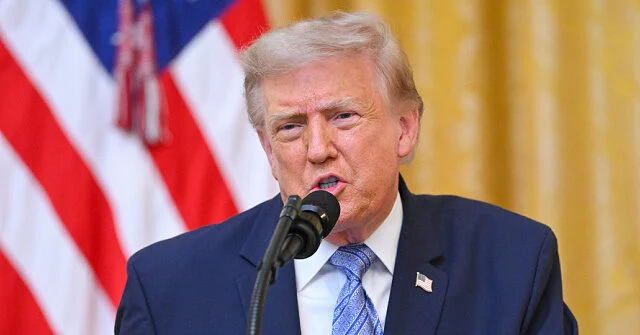
President Donald Trump on Thursday unveiled a comprehensive tranche of declassified files, asserting they detail significant Chinese interference in American elections, particularly in 2020, alongside exposing major vulnerabilities within the nation’s electoral systems. The revelations, which the President emphasized had undergone review by "top intelligence agency chiefs," laid out numerous critical areas of concern, with China at the forefront of the allegations. Documents cited by the White House were reportedly made available for public review, providing a basis for the President’s pronouncements.
Key Allegations Unveiled by the President
During his address, President Trump delineated a series of grave concerns across several categories, underpinned by the released documents. These categories included: massive Chinese illicit acquisition of U.S. voter data, an alleged "deep state" cover-up of this interference, systemic vulnerabilities in election infrastructure, specific instances of voter fraud, and the registration of hundreds of thousands of non-citizens to vote in federal elections. Each claim was presented with a degree of specificity, purporting to be supported by intelligence findings and investigative reports.
Claims of Chinese Electoral Interference
Central to President Trump’s allegations was the assertion that the People’s Republic of China (PRC) illicitly acquired an astonishing 220 million U.S. voter files. This breach, according to the President, represents "what is believed to be the largest compromise of election data in history." The compromised information was said to include highly sensitive personal details such as names, addresses, phone numbers, political party preferences, and other data crucial for voter registration and potential illicit activities. President Trump stated, "That information includes names, addresses, phone numbers, political party preferences, and other sensitive data that would be needed to register to vote and engage in other nefarious activities, which is exactly what was happening."
He further underscored the gravity of this alleged data loss, labeling it an "unprecedented election security nightmare." Compounding the concern, intelligence purportedly indicated that China had assigned a dedicated "data exploitation unit" specifically to leverage this newly acquired trove of information. This unit’s alleged purpose would be to analyze and utilize the data for strategic influence, potentially targeting specific demographics or manipulating electoral outcomes. The scale of 220 million voter files represents a significant portion of the entire U.S. electorate, raising profound questions about the integrity of voter data security and the potential for foreign adversaries to gain deep insights into American political preferences and demographics.
The ‘Deep State’ and Allegations of Intelligence Suppression
A second, equally potent area of concern articulated by President Trump involved an alleged "deep state" cover-up concerning the extent of China’s meddling. He claimed that members within the U.S. intelligence community actively worked to suppress and downplay information regarding China’s "sinister election meddling," effectively concealing it from both the President and the American public. "Compounding the travesty, the second set of documents we are releasing reveals that members of the deep state… in our intelligence agency worked to actively suppress and downplay information about the extent of China’s sinister election meddling, covering it up from both the president and the American people like nobody thought was possible," Trump stated.
To substantiate this, the President cited purported CIA reporting from mid-2018, which explicitly stated, "In mid 2018, the Chinese Communist Party’s policy was to leverage all domestic and foreign elements that were opposed to the U.S. president in an effort to reduce the U.S. president’s votes and make him resign or prevent his re-election." This specific quote suggests a deliberate, strategic intent by the CCP to influence U.S. presidential elections.
Furthermore, President Trump claimed that "raw intelligence obtained by the FBI in 2020, yet buried by rogue bureaucrats, stated that China’s activities even included an attempt to manufacture illegal ballots for Joe Biden." This specific allegation, if substantiated, would point to a direct and egregious attempt at electoral fraud by a foreign power. He added that crucial reports regarding "China’s election targeting" were conspicuously omitted from his daily presidential briefings during his first term. "Documents show that during this period, dozens of significant CIA and NSA reports about China’s election targeting were kept out of the presidential briefing. These were briefings I would get almost every day," he explained. An email among intelligence analysts was also cited, allegedly admitting that they had "deliberately massaged the presidential daily briefing to withhold information regarding Chinese activities related to the election." These allegations paint a picture of deliberate obfuscation and a concerted effort by elements within the intelligence apparatus to control the flow of critical information to the nation’s highest office.
Vulnerabilities in Election Infrastructure
The third set of documents, according to President Trump, "proves that for many years Americans were blatantly lied to about the security of our election infrastructure, including electronic voting machines and ballot counting systems, dishonest almost all." He asserted that these systems are inherently "vulnerable and they’re easily compromised," a fact he claims was known by individuals within the government. The President highlighted a series of previously classified U.S. intelligence community assessments and other reports, purportedly demonstrating that the government has long been aware of the extreme exposure of these machines to attack.
He quoted one such assessment: "we judge that the United States adversaries, including at a minimum Russia, China, Iran, North Korea, as well as non-state groups, have the capability to compromise U.S. election infrastructure." This assessment underscores a long-standing concern within the intelligence community regarding the susceptibility of election systems to foreign interference, a concern that has prompted numerous federal and state initiatives to bolster cybersecurity. The debate over the security of electronic voting machines versus paper ballots has been a contentious one for years, with cybersecurity experts often advocating for auditable paper trails. President Trump also referenced documents allegedly showing the CIA obtained reporting of a specific plot by the "corrupt Maduro regime in Venezuela" to "digitally rig their own country’s elections in 2020," suggesting a blueprint for similar vulnerabilities elsewhere.
Specific Allegations of Voter Fraud
The fourth set of documents, President Trump stated, showed "significant evidence of fraud" that was "buried and covered up." He pointed to FBI files detailing evidence of alleged fraud within a large-scale voter registration operation in Michigan. He recounted an incident in 2020 where Michigan State Police raided a Democrat "Get Out the Vote" organization in Muskegon, and "were so concerned by what they found… that they contacted the FBI in Detroit."
According to the President, documents from this investigation revealed that "some canvassers admitted to FBI agents that they signed voter registration forms in other people’s names, submitted fraudulent registration for people who did not exist, and received gift cards tied to their number of applications that they produced." He summarized this as "pay, play, and cheat." Such allegations, if proven, would represent direct electoral fraud at the registration stage, undermining the foundational principle of legitimate voter rolls. Voter registration fraud, while distinct from ballot fraud, can have cascading effects by introducing ineligible voters into the system or inflating registration numbers.
Non-Citizen Voting Concerns
Finally, President Trump announced the release of a Department of Homeland Security (DHS) investigation that allegedly uncovered hundreds of thousands of non-citizens registered to vote in federal elections. He stated, "According to the DHS review, state voter rolls, and public records, they identified approximately 278,000 non-citizens who are registered to vote in federal elections." He added a caveat that "Since Democrat states refuse to share their voter files, the real number is actually much higher than that. Yet, even this limited analysis found more than a quarter of a million foreigners illegally registered to vote."
The registration and voting by non-citizens in federal elections is illegal under U.S. law. While states have varying mechanisms for verifying voter eligibility, maintaining accurate voter rolls is a perpetual challenge due to population mobility, data lags, and the sheer volume of records. The figure of 278,000 non-citizens, if confirmed, would represent a substantial breach of electoral law, raising questions about the effectiveness of voter roll maintenance procedures across states.
Broader Context of Election Security Debates
The President’s address comes amidst a backdrop of ongoing, often contentious, debates surrounding election integrity in the United States, particularly since the 2020 presidential election. Concerns about foreign interference in elections have been a recurring theme since 2016, with U.S. intelligence agencies consistently warning about the intent and capabilities of adversaries like Russia, China, and Iran to influence democratic processes. The Cybersecurity and Infrastructure Security Agency (CISA), a component of the DHS, has actively worked with state and local election officials to enhance the security of election systems, consistently affirming the overall resilience of the 2020 election against widespread fraud or foreign manipulation, even while acknowledging targeted attempts.
The claims regarding "deep state" actions resonate with a segment of the public skeptical of government institutions and intelligence agencies. The process of declassification, particularly of sensitive intelligence, is typically a meticulous one, involving multiple layers of review to protect sources, methods, and ongoing operations. Unilateral declassification or the selective release of intelligence can be controversial, often leading to disputes over context and interpretation.
Anticipated Reactions and Calls for Evidence
These sweeping allegations are anticipated to trigger immediate and strong reactions from various stakeholders. Current and former intelligence officials may be pressed to either corroborate the declassified findings or offer alternative interpretations, potentially citing the complexities of intelligence analysis and the protocols governing the dissemination of sensitive information. Opposition political figures and organizations are likely to demand full transparency and independent verification of the claims, while potentially criticizing the timing and nature of the release as politically motivated.
Election officials nationwide are expected to reiterate their confidence in the integrity of their state-level systems, while also acknowledging ongoing efforts to enhance security and address any legitimate vulnerabilities. Cybersecurity experts will likely scrutinize the technical details of the alleged voter data breach and election machine vulnerabilities, offering their professional assessments. Calls for congressional hearings and independent investigations into the veracity of these claims are also highly probable. The U.S.-China relationship, already strained, could face further complications if these allegations of extensive interference are officially confirmed and acted upon.
Implications for U.S. Democracy
The President concluded his address by stating that the information detailed throughout shows "an election system so broken and so vulnerable that no one can possibly defend it." If substantiated, the claims of foreign acquisition of voter data, intelligence suppression, systemic vulnerabilities, and specific instances of fraud could have profound implications for public trust in democratic institutions and the future of election security policy. The ongoing debate over election integrity highlights a fundamental challenge for democratic nations: balancing accessibility with security, and maintaining public confidence in the electoral process in an increasingly complex and digitally interconnected world. The release of these documents is set to intensify this national conversation, demanding thorough scrutiny and a comprehensive response from all branches of government and the public.

Related Posts
Democratic Candidates Must Moderate to Win General Elections, Says Rep. Greg Stanton

Lisa Demuth Secures Republican Gubernatorial Nomination in Minnesota, Defeating Trump-Endorsed Mike Lindell