Former Vice President Harris Challenges Trump’s Election Integrity Claims Ahead of Primetime Address, Urges Voter Engagement
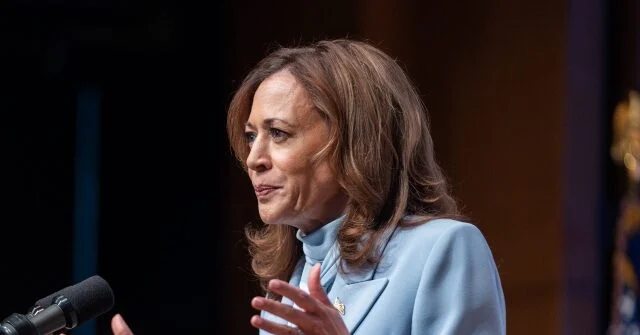
In a pre-emptive strike against anticipated claims of election fraud, former Vice President Kamala Harris issued a series of statements defending the integrity of the 2020 presidential election and urging Americans to participate actively in the upcoming November elections. Her remarks came shortly before former President Donald Trump delivered a primetime address focusing on what he termed vulnerabilities in the nation’s electoral system. This exchange underscored the deeply polarized debate surrounding election integrity that continues to shape American political discourse.
Harris’s statements, disseminated across social media platforms, directly challenged Trump’s narrative. "Before the president gets on television tonight to peddle lies and conspiracy theories, here is what you need to know: The 2020 election was not stolen. We won, and he lost," Harris asserted. This direct rebuttal set the tone for her broader message, which aimed to reinforce public confidence in democratic processes while simultaneously criticizing what she characterized as efforts to suppress voter turnout.
Harris’s Defense of 2020 and Warnings on Voter Suppression
The former Vice President elaborated on her concerns, specifically targeting legislative efforts she described as voter suppression. "The SAVE Act is voter suppression. It is part of a larger agenda of conservatives trying to steal power from the people," Harris stated. While the specific "SAVE Act" she referenced was not immediately detailed, her comment likely refers to a range of proposed or enacted state-level election laws championed by conservatives that aim to tighten voter access, such as stricter voter ID requirements, limitations on mail-in voting, or purges of voter rolls. Democrats and voting rights advocates frequently argue that such measures disproportionately affect minority voters, low-income individuals, and students, thereby suppressing turnout.
Harris further broadened her critique to encompass the former Trump administration’s perceived policy failures and alleged attempts to divert public attention. She contended, "Donald Trump and his administration have done nothing to bring down the cost of housing, health care, child care, food, or gas. Donald Trump and his administration got America into a war the people do not want. He is attempting to distract you from that reality." This linkage of election integrity claims to broader economic and foreign policy issues positioned Trump’s address as a political maneuver rather than a genuine concern for democratic principles.
Her concluding remarks focused on empowering voters, portraying Trump’s rhetoric as an attempt to undermine faith in the electoral system. "The president is scared of your power, and he wants you to believe your vote does not matter. He wants you to lose confidence in our electoral system so you stay home this November. He knows how discontent the American people are, and he wants to make sure that you do not vote. Because if the people vote in their numbers, Republicans will lose," Harris declared. She ended with a call to action, urging citizens to visit IWillVote.com to check their voter registration and polling locations, framing voting as a crucial step to "put a real check on this corrupt and cruel administration."
Trump’s Allegations on Election Integrity and Voter Rolls
Shortly after Harris’s remarks, former President Trump delivered his primetime address, reiterating long-standing claims about systemic vulnerabilities and irregularities in U.S. elections. Central to his address was the assertion that non-citizens are illegally registered to vote in significant numbers. He cited a Department of Homeland Security (DHS) review that, according to Trump, identified "approximately 278,000 noncitizens on voter rolls." He added that this figure was likely understated because "Democrat-led states refused to share their voter files," hindering a comprehensive analysis.
Trump also raised concerns about foreign governments potentially accessing large amounts of U.S. voter data, warning that "voting machines and ballot-tabulation systems are vulnerable to hacking and manipulation." He further alleged that voter rolls include "hundreds of thousands of noncitizens and deceased people" and criticized the absence of "voter-identification or proof-of-citizenship requirements" in some elections. These claims have been a consistent theme in Trump’s post-2020 election rhetoric, forming the basis of his arguments for more stringent election security measures.
The Broader Context: A Recurring Debate on Election Security
The dueling narratives from Harris and Trump are not new; they are deeply rooted in a decades-long American political debate over election integrity, voter access, and the balance between preventing fraud and ensuring broad participation. Historically, Democrats have largely emphasized voter access and combating suppression, while Republicans have often prioritized preventing voter fraud through stricter requirements. The 2020 presidential election, however, brought this debate to an unprecedented level of intensity and polarization.
Following the 2020 election, former President Trump and his allies launched numerous legal challenges, alleging widespread fraud and irregularities. These claims were overwhelmingly rejected by state and federal courts, including the Supreme Court, and found no substantial evidence by election officials, non-partisan auditors, and even Trump’s own Department of Justice and Homeland Security agencies. Despite these findings, a significant portion of the Republican electorate continues to believe the 2020 election was illegitimate, fueling ongoing calls for electoral reform.
This sustained doubt has led to a flurry of legislative activity at the state level. Since 2020, numerous states, predominantly those controlled by Republicans, have passed new election laws. While proponents argue these laws enhance security and public confidence, critics contend they erect barriers to voting, particularly for marginalized communities. Measures such as stricter voter ID laws, limits on mail-in ballot drop boxes, changes to voter registration deadlines, and expanded partisan poll watcher powers have been at the forefront of these debates.
Fact-Checking Claims: Non-Citizen Voting and Voter ID
Trump’s central claim about hundreds of thousands of non-citizens on voter rolls warrants closer examination. While it is illegal for non-citizens to vote in federal elections, and mechanisms exist to prevent this, extensive research and government reviews have consistently found that instances of non-citizen voting are exceedingly rare and do not occur at a scale that would impact election outcomes. Studies by organizations like the Brennan Center for Justice and academic researchers have concluded that allegations of widespread non-citizen voting are largely unfounded. When such instances are identified, they are typically due to administrative errors or misunderstandings rather than deliberate fraud, and are often quickly rectified. The "278,000 noncitizens" figure cited by Trump, purportedly from a DHS review, would represent an unusual outlier if substantiated by independent, public data. Election experts would typically scrutinize the methodology of such a review, particularly how "non-citizens" are identified and cross-referenced with voter rolls, as databases may not always be perfectly aligned or up-to-date.
Similarly, concerns about voter ID laws are central to the election integrity debate. Proponents argue that photo ID requirements are a common-sense measure to prevent in-person voter impersonation, akin to showing ID for other everyday transactions. Opponents, including former Vice President Harris, argue that such laws disproportionately disenfranchise eligible voters who may lack the specific forms of identification required, such as the elderly, students, low-income individuals, and racial minorities. Obtaining a government-issued photo ID can involve costs, travel, and documentation that pose significant burdens for some populations. While in-person voter impersonation is statistically rare, the debate over voter ID often centers on its perceived impact on turnout versus its actual effectiveness in preventing fraud. Many states have varying degrees of voter ID laws, ranging from no ID required to strict photo ID requirements.
The Role of Foreign Interference: A Shifting Narrative
An interesting aspect of the current discourse is the evolving focus on foreign interference. Harris herself, in 2020, expressed concerns about external meddling in U.S. elections. She stated that Russia had interfered in the 2016 presidential election and believed foreign interference would occur again in 2020, with Russia "at the front of the line." When asked by CNN host Dana Bash if such interference could cost Joe Biden the White House, Harris replied, "Theoretically, of course, yes." This highlights a bipartisan concern over foreign influence, albeit with differing emphasis. While Democrats have often focused on disinformation campaigns and hacking aimed at influencing voter perceptions, Trump’s current claims often lean towards foreign entities having direct access to or manipulating voter data and voting machines. Both concerns, however, underscore a shared vulnerability in the digital age.
The intelligence community has consistently warned about efforts by foreign adversaries, particularly Russia, China, and Iran, to interfere in U.S. elections through disinformation, cyberattacks, and influence operations. These efforts aim to sow discord, undermine public confidence in democratic institutions, and sway election outcomes. The distinction between these sophisticated influence operations and claims of direct manipulation of voting systems or voter rolls by foreign governments is crucial for a nuanced understanding of election security.
The "SAVE Act" and the Landscape of Election Legislation
While the specific "SAVE Act" referenced by Harris might be a specific piece of legislation or a symbolic term, it represents a broader category of election reform bills that have been debated and, in some cases, enacted across the country. These bills often include provisions for stricter voter ID, limitations on mail-in voting, restrictions on ballot collection, and enhanced voter roll purges. For example, some states have moved to restrict the use of drop boxes for ballots or shortened early voting periods. Proponents argue these measures are necessary to restore public trust and prevent fraud, while opponents criticize them as thinly veiled attempts to suppress votes and create unnecessary hurdles for eligible citizens.
The legislative landscape surrounding elections is highly dynamic, with numerous bills proposed and passed annually. The Brennan Center for Justice, for instance, tracks voting legislation nationwide, often categorizing bills as either expanding or restricting access to the ballot. The ongoing struggle over these laws is not merely technical; it reflects fundamental disagreements about the nature of democracy, who should vote, and how easy or difficult it should be to cast a ballot.
Implications for Voter Confidence and Democratic Participation
The competing narratives from former Vice President Harris and former President Trump have significant implications for voter confidence and democratic participation, particularly as the nation approaches another critical election cycle. When high-profile political figures consistently question the legitimacy of election results or the integrity of the voting process, it can erode public trust in institutions that are foundational to democracy.
Harris’s strategy aims to preemptively counter what she views as disinformation, thereby bolstering voter confidence and encouraging participation. By framing Trump’s claims as an attempt to scare voters into staying home, she seeks to mobilize the electorate. Conversely, Trump’s persistent allegations, even without widespread evidentiary support, can foster cynicism among his supporters and potentially lead to lower turnout among those who believe their vote won’t count or that the system is rigged. This creates a challenging environment for election administrators, who must work to ensure secure and accessible elections while simultaneously combating misinformation.
The polarization of election integrity discourse also makes it difficult for a unified national effort to address genuine security concerns. While there is broad consensus on the need to protect elections from foreign interference and cyber threats, disagreements over domestic electoral reforms often overshadow these shared goals. The current political climate demands that citizens remain vigilant, fact-check claims, and actively engage in the electoral process to safeguard democratic norms.
Looking Ahead to November: Mobilization and Disinformation
As the November elections draw closer, the themes articulated by Harris and Trump are expected to intensify. Campaigns on both sides will likely focus heavily on voter mobilization, but also on shaping the narrative around election integrity. Democrats will continue to emphasize voter access and the importance of every vote, while Republicans will likely push for what they deem essential security measures.
The role of social media platforms in disseminating and amplifying these messages will remain critical. Misinformation and disinformation can spread rapidly, further complicating efforts to inform the public accurately. Election officials, journalists, and civic organizations will face the ongoing challenge of providing factual information and context to voters amidst a cacophony of competing claims.
Ultimately, the future of American democracy hinges on the ability of its citizens to discern truth from falsehood, maintain confidence in legitimate electoral processes, and exercise their right to vote. The pronouncements by former Vice President Harris and former President Trump serve as a stark reminder of the ongoing battle for the narrative of election legitimacy and the profound stakes involved in ensuring a free, fair, and credible election in the months ahead. The call to action from Harris, to check voter registration and location, underscores the fundamental democratic principle that participation remains the most potent response to challenges to the electoral system.

Related Posts
Democratic Candidates Must Moderate to Win General Elections, Says Rep. Greg Stanton
Lisa Demuth Secures Republican Gubernatorial Nomination in Minnesota, Defeating Trump-Endorsed Mike Lindell