
US Escalates Strikes Against Iran for Sixth Consecutive Night Amidst Strait of Hormuz Tensions and War Crime Warnings
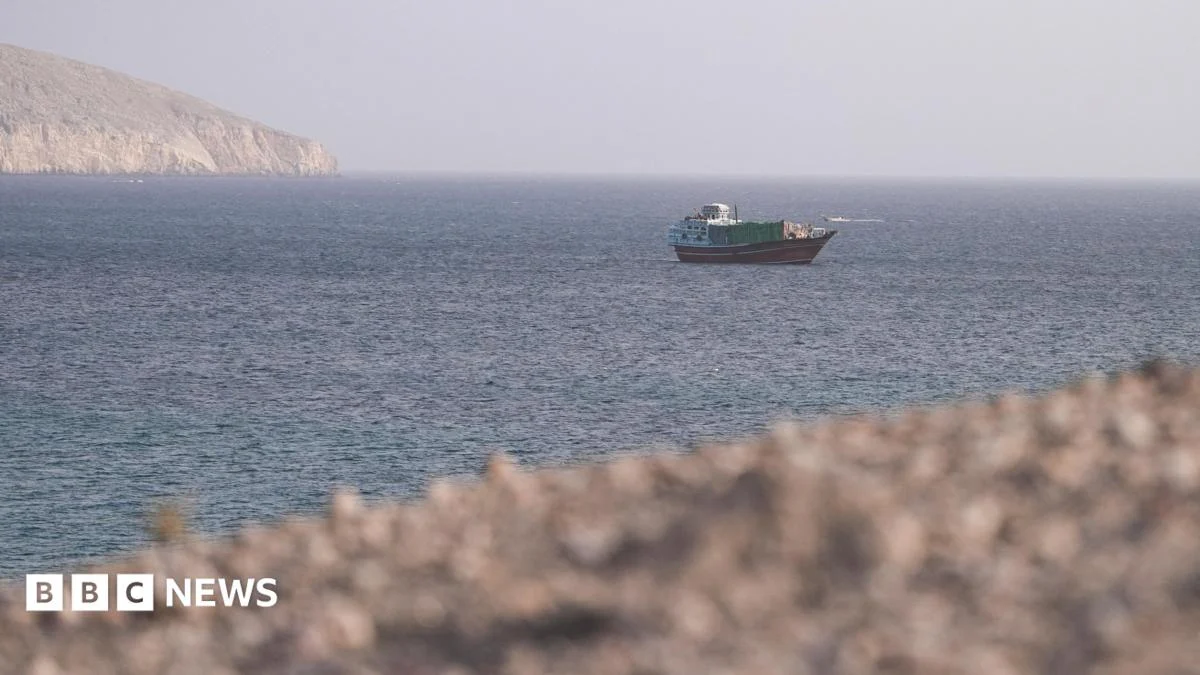
The United States has intensified its military actions against Iran, launching a sixth consecutive night of strikes as both nations vie for control of the strategically vital Strait of Hormuz. US Central Command (Centcom) confirmed the latest wave of attacks, stating their objective was to "further degrade Iranian military capabilities." This escalation comes as Centcom also reported boarding a vessel as part of a renewed blockade targeting the strait, a critical chokepoint for global oil transit.
Iranian state media swiftly reported that US missiles had struck multiple locations, including close to the island of Qeshm, strategically positioned near the Strait of Hormuz, as well as the port city of Bandar Abbas and Bushehr, home to Iran’s only nuclear power plant. In a potentially significant escalation, Iran also claimed that two bridges in Hormozgan province had been hit. The BBC has independently verified an attack on at least one bridge situated to the west of Bandar Abbas in Hormozgan province, confirming the targeting of civilian infrastructure.
A Deepening Crisis: Six Nights of Strikes
The current series of strikes represents a significant intensification of hostilities, building upon a period of heightened tensions and a previous US blockade. Centcom’s statement regarding the "degradation" of Iranian military assets underscores Washington’s intent to apply sustained pressure. The targeting of areas near Qeshm and Bandar Abbas suggests an effort to disrupt Iranian naval operations and logistical capabilities within and around the Strait of Hormuz, which Iran has previously threatened to close in response to perceived aggressions.
The reported strikes near Bushehr, a site of immense strategic sensitivity due to its nuclear power plant, introduce a dangerous new dimension to the conflict. While specific details on the proximity of the strikes to the plant remain contested, any military action in the vicinity of such a facility carries inherent risks of accidental damage or environmental catastrophe, potentially drawing broader international condemnation. The alleged targeting of bridges, verified in one instance, also raises serious questions about adherence to international humanitarian law.
International Law and War Crime Allegations
The deliberate targeting of civilian infrastructure, such as bridges and power plants, has drawn stark warnings from international bodies. Earlier this week, US President Donald Trump had threatened to strike Iran’s bridges and power plants if the country did not return to negotiations. This threat echoed a similar statement made by President Trump in April, which prompted a strong rebuke from UN Human Rights Chief Volker Türk. Türk unequivocally stated at the time that "deliberately attacking civilians and civilian infrastructure is a war crime."
The 1949 Geneva Conventions, foundational treaties on humanitarian conduct in armed conflict, explicitly prohibit attacks on sites considered essential for the survival and well-being of civilian populations. This includes critical infrastructure like power generation facilities and transportation networks. The verified attack on a bridge in Hormozgan province, if proven to be a deliberate act against non-military infrastructure, would undoubtedly reignite these serious legal and ethical concerns on the international stage, potentially leading to calls for investigations and accountability. The proximity of strikes to the Bushehr nuclear power plant further complicates this legal landscape, given the catastrophic potential of damage to such a facility.
The Strategic Importance of the Strait of Hormuz
At the heart of this escalating confrontation lies the Strait of Hormuz, a narrow waterway separating Iran and Oman, connecting the Persian Gulf with the Arabian Sea and the broader Indian Ocean. This chokepoint is arguably the world’s most critical oil transit route, through which approximately 20% of the world’s total petroleum liquids consumption and roughly 30% of all seaborne traded crude oil and refined petroleum products pass daily. An estimated 17 million barrels per day (bpd) of crude oil and condensate, and 3 million bpd of refined petroleum products, transit the strait, alongside significant volumes of liquefied natural gas (LNG) from Qatar.
Iran has long asserted its historical and strategic control over the Strait, frequently threatening to close it in response to sanctions or military pressure. Such a closure would have immediate and catastrophic repercussions for global energy markets, sending oil prices soaring and disrupting international trade on an unprecedented scale. The US blockade, aimed at preventing Iranian vessels from transiting, and Iran’s retaliatory threats to block the entire strait, highlight the intense struggle for dominance over this vital maritime artery. The boarding of an oil tanker in the Gulf of Oman by US marines, alongside the redirection of three commercial vessels attempting to "run the blockade," signifies a robust enforcement of this US policy, further tightening the economic noose around Iran.
Chronology of Rising Tensions
The current surge in hostilities is not an isolated event but rather the culmination of a protracted period of friction between Washington and Tehran. The "preliminary deal to end the war," though not explicitly named in the current reporting, likely refers to broader diplomatic efforts or understandings that have repeatedly frayed under the weight of mutual mistrust and escalating actions.
- April (Earlier this year): US President Donald Trump first threatened to bomb civilian infrastructure in Iran, including bridges and power plants, if the country did not return to talks. This statement prompted UN Human Rights Chief Volker Türk’s warning about potential war crimes.
- April 13 to June 18: Centcom conducted a previous blockade of Iranian ports. During this period, US forces reportedly disabled nine Iranian ships and redirected more than 140 vessels attempting to run the blockade, demonstrating a significant commitment to maritime interdiction.
- Tuesday Night: The US initiated a renewed blockade of Iran’s ports, marking the beginning of the current intense phase of operations.
- Thursday Morning: Tehran claimed it had struck US military bases in Jordan, Kuwait, and Bahrain, indicating a coordinated regional response to US pressure. Concurrently, the US reported inflicting a six-hour wave of strikes on multiple locations within the Strait of Hormuz. These exchanges followed a stern warning from President Trump for Iran to "better behave" or face further military action if it did not return to negotiations.
- Thursday Evening onward: The US launched its sixth consecutive night of strikes, as detailed in the current report, targeting locations near Qeshm, Bandar Abbas, Bushehr, and bridges in Hormozgan province.
This rapid sequence of events underscores a dangerous tit-for-tat dynamic, where each action by one side provokes a stronger reaction from the other, pushing the region closer to an all-out conflict.
Diplomatic Standoff Amidst Military Action
Despite the intensifying military confrontation, the White House maintains that diplomatic channels remain open. White House Press Secretary Karoline Leavitt stated on Thursday that President Trump "remained open to talks with Iran." She clarified, "The president will hold them accountable when they turn their back on the words that they state to the United States. But he is always open to diplomacy at the very same time." Leavitt also indicated that Iran had expressed its continued desire to make a deal with the US, adding, "We’re talking to them, but again, the president is not going to allow them to fire on ships in the strait without paying a consequence for that."
This rhetoric presents a complex picture: an outstretched hand for dialogue coupled with an iron fist of military deterrence. For Iran’s part, its top negotiator, Mohammad Bagher Ghalibaf, conveyed a more defiant stance to state media. He asserted that Tehran had "no reason" to abide by any agreement that did not directly benefit the country. Ghalibaf further emphasized that Iran’s national security was intrinsically linked to maintaining what he described as "Iranian arrangements" in the Strait of Hormuz, signaling Tehran’s unwavering resolve to protect its perceived rights and influence over the critical waterway. The stark contrast between these diplomatic positions, juxtaposed with ongoing military engagements, highlights the profound challenges to de-escalation.
Economic and Geopolitical Repercussions
The escalating attacks and the effective closure of the Strait of Hormuz have immediate and severe implications for global energy markets. With approximately one-fifth of the world’s oil supply transiting the strait, its continued closure or severe disruption would trigger a dramatic spike in crude oil prices, impacting economies worldwide. Shipping insurance premiums for vessels operating in the region have already reportedly surged, making transit riskier and more expensive, further constraining trade. Major international shipping companies are likely to reconsider routes or even halt operations in the area, leading to significant delays and supply chain disruptions.
Geopolitically, the crisis threatens to destabilize an already volatile Middle East. The reported Iranian strikes on US bases in Jordan, Kuwait, and Bahrain underscore the regional nature of the conflict and the risk of drawing in other actors. Regional allies of the United States, such as Saudi Arabia and the United Arab Emirates, whose oil exports are heavily reliant on the Strait of Hormuz, would view its closure with extreme alarm. International bodies, including the United Nations Security Council, are likely to face increasing pressure to intervene, mediate, or even impose sanctions to prevent a full-scale regional war. Russia and China, with significant economic interests in the region and complex relationships with both the US and Iran, would also be closely monitoring developments, potentially seeking to leverage their influence. The long-term implications could include a reorientation of global energy supply routes, a further militarization of the Gulf, and a re-evaluation of international maritime security protocols.
Looking Ahead: Paths to De-escalation?
The current trajectory of military escalation and entrenched diplomatic positions offers little immediate hope for a swift resolution. The challenge lies in finding a path to de-escalation that allows both sides to save face while addressing their core security and economic concerns. For the US, this involves ensuring freedom of navigation through the Strait of Hormuz and preventing Iran from developing capabilities it deems threatening. For Iran, it means securing its national interests, alleviating the burden of sanctions, and asserting its sovereignty over a vital waterway.
Any potential path to de-escalation would likely require robust international mediation, perhaps involving European powers or other neutral parties, to establish a framework for renewed dialogue. A mutual cessation of military activities, particularly those targeting civilian infrastructure or critical maritime routes, would be a crucial first step. However, with the rhetoric hardening and military actions escalating, the immediate future of the Strait of Hormuz and the broader US-Iran relationship remains fraught with peril, with the global community bracing for potential further reverberations.

Related Posts
Zambia on Edge: Opposition Leader Arrested Amid Allegations of Insurrection Plot and Election Tensions
Rescuers search for survivors of powerful Indonesia earthquake

