Zelenskyy announces spy chief as new interim defense minister
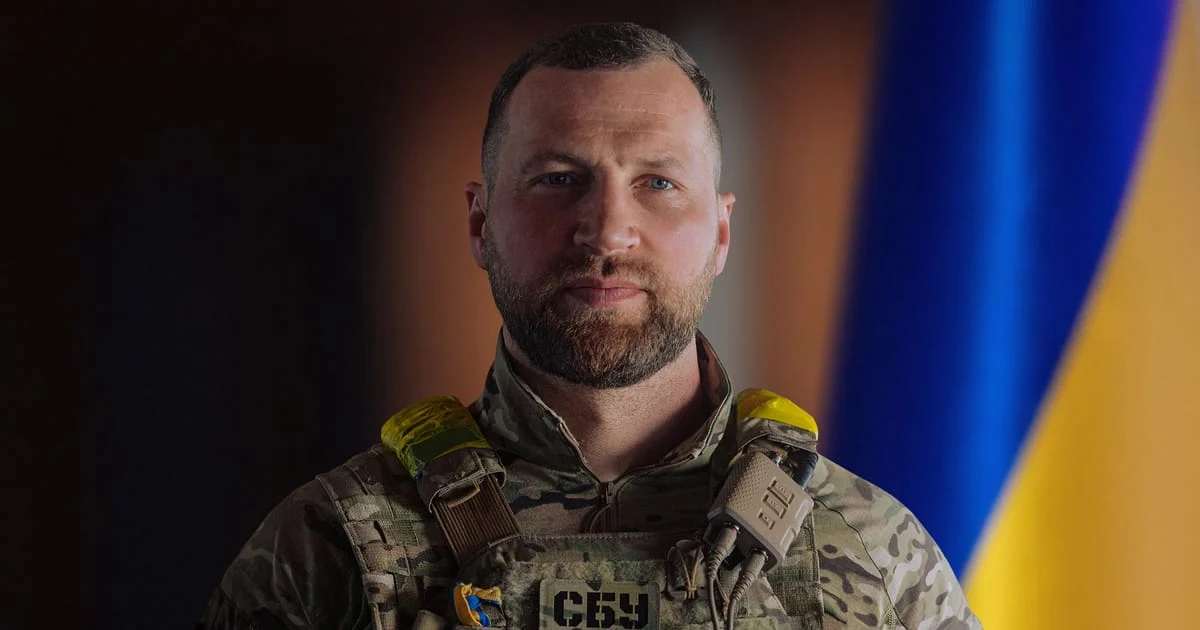
The appointment comes in the immediate wake of the dismissal of Mykhailo Fedorov, whose six-month tenure as defense minister was characterized by ambitious digital transformation efforts but marred by friction with the military high command. Khmara, who has served as the acting head of the Security Service of Ukraine (SBU) since the beginning of the year, is expected to bridge the gap between battlefield operations and intelligence-led procurement.
The Legislative Path to Appointment
Under the current framework of Ukrainian law, an individual is prohibited from holding the position of defense minister while simultaneously serving as an active member of the intelligence or security apparatus. To facilitate the formal appointment, the President’s office has confirmed that Khmara is expected to formally retire from his military service in the coming days.
Once this administrative separation is complete, President Zelenskyy intends to submit a formal request to the Verkhovna Rada—Ukraine’s parliament—to approve Khmara as the permanent Minister of Defense. This process is viewed by political analysts as a procedural formality, given the current administration’s consolidation of executive power and the pressing need for stability within the defense sector during wartime.
Chronology of the Defense Ministry Leadership
The turnover in the Ministry of Defense reflects the volatility and the extreme pressures of the current conflict. To understand the gravity of the shift, one must examine the rapid succession of leadership over the past eighteen months:
- Early 2024: Yevhenii Khmara is appointed as the acting head of the Security Service of Ukraine, focusing on internal security and counter-intelligence operations.
- Early 2024: Mykhailo Fedorov assumes the role of Minister of Defense, tasked with modernizing procurement and integrating AI-driven technologies into the defense apparatus.
- August 2024: Tensions reach a breaking point between the Ministry of Defense and senior military commanders regarding the speed of technological implementation and departmental bureaucracy.
- Wednesday, August 2024: President Zelenskyy formally dismisses Mykhailo Fedorov, citing the need for a "new approach" in the face of evolving battlefield conditions.
- Thursday, August 2024: The President announces Yevhenii Khmara as the interim replacement, emphasizing a pivot toward "technological combat operations."
Rationale Behind the Leadership Change
The official communication from the President’s office regarding Khmara’s appointment focuses heavily on the modernization of warfare. In a statement released on social media, Zelenskyy noted: "Khmara has gained extensive and, in many respects, unprecedented experience with technological combat operations. This is exactly where our defense efforts should be focused during this war."
The implication is clear: the administration believes the Ministry of Defense must transition from a traditional administrative body into a hub of innovation that mirrors the agile nature of modern, drone-centric, and data-driven warfare. Fedorov, while credited with digitizing the Ukrainian bureaucracy, reportedly faced resistance from the military establishment, who viewed his rapid reforms as disruptive to established command structures. Sources close to the ministry have indicated that Fedorov’s inability to reconcile his technological vision with the traditionalist approach of top-ranking generals ultimately led to his removal.
Strategic Implications of the SBU-Defense Link
By selecting a high-ranking intelligence official to lead the Ministry of Defense, Zelenskyy is effectively tightening the coordination between the nation’s security agencies and its armed forces. This convergence is not unprecedented, but its timing suggests a move to reduce "information silos" that have historically hampered battlefield responsiveness.
Analysts suggest that Khmara’s background in the SBU provides him with a unique advantage in managing the sensitive logistics of military aid, counter-espionage in procurement, and the oversight of classified weapon development programs. However, this move also carries potential risks. Critics of the appointment argue that placing an intelligence officer at the helm of the ministry could lead to a militarization of the civil service and potentially alienate international partners who prioritize democratic oversight and the separation of intelligence and defense powers.
Data and Defense Sector Performance
Ukraine’s defense sector has faced significant pressure to deliver results amid a grueling war of attrition. According to recent data, the Ministry of Defense has been managing a budget that has increased by nearly 300% since the start of the full-scale invasion, with a massive influx of international financial and military support.
Key metrics for the incoming minister will include:
- Procurement Efficiency: Reducing the time between budget allocation and the delivery of assets to the front line.
- Anti-Corruption Measures: Maintaining transparency in a high-velocity spending environment where audit capabilities are often outpaced by demand.
- Technological Integration: Standardizing the use of unmanned aerial vehicles (UAVs) and electronic warfare (EW) systems across all branches of the armed forces.
The challenge for Khmara will be to maintain this high-tempo procurement while ensuring that the internal conflicts that plagued his predecessor are minimized.
Reaction from Military and Political Spheres
The reaction from the Ukrainian political establishment has been largely supportive, with many lawmakers emphasizing the necessity of unity during the current counter-offensive phase. However, within the military hierarchy, the sentiment is more cautious. Officers on the ground have expressed hope that the new minister will act as a facilitator for frontline needs rather than an additional layer of bureaucratic oversight.
"The soldiers do not care about the title of the minister; they care about the availability of ammunition, the reliability of communication systems, and the accuracy of our intelligence," said one military analyst familiar with the current reshuffle. "If Khmara can deliver the technology we need, he will have the full support of the command. If he gets bogged down in internal SBU-style power games, the morale of the sector will suffer."
Future Outlook and Policy Priorities
As Khmara prepares to step into his role, his immediate priorities will be defined by the urgent requirements of the front lines. The Ministry of Defense is currently tasked with balancing the need for massive artillery supplies with the requirement for long-range precision weapons and advanced surveillance capabilities.
Furthermore, the appointment of an SBU-hardened leader suggests that the government is preparing for a long-term conflict where information warfare and cyber-defense will be just as critical as conventional munitions. The integration of the SBU’s intelligence-gathering capabilities with the Ministry of Defense’s operational mandate could result in a more cohesive response to Russian asymmetric tactics.
In the coming weeks, the focus will shift to how Khmara manages the bureaucratic transition. His ability to retain essential personnel from Fedorov’s reform team while simultaneously addressing the concerns of the military top brass will serve as a bellwether for his effectiveness. For President Zelenskyy, this appointment is a calculated gamble: betting that a veteran of the security services possesses the discipline and the strategic foresight to turn the Ministry of Defense into the most efficient and technologically advanced arm of the Ukrainian state.
As the war progresses, the success of this transition will be measured not in the number of reforms announced, but in the measurable impact on the battlefield and the sustained support of Ukraine’s international allies. The international community, particularly Western defense ministries that provide the bulk of Ukraine’s material support, will be watching closely to see if this leadership shift results in greater transparency and efficacy in the administration of aid.