François Hollande Plots Political Resurgence as France Approaches 2027 Presidential Crossroads
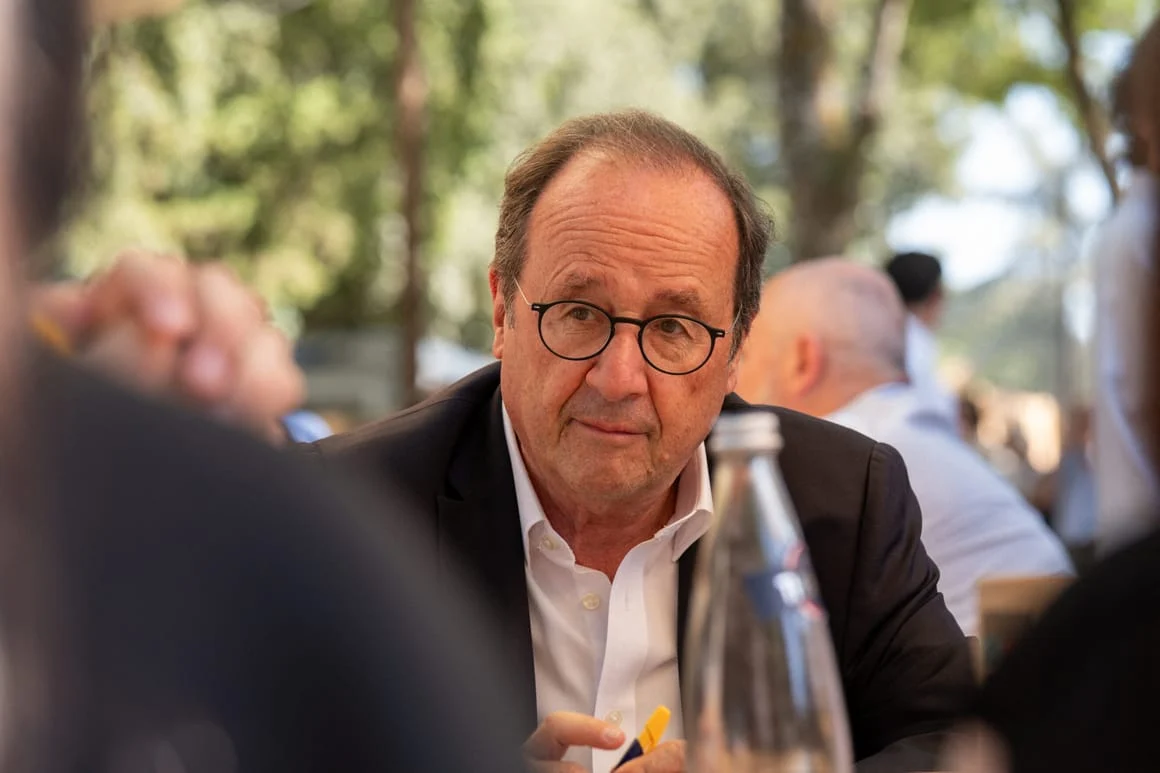
The French political landscape, currently defined by deep polarization and an increasingly fragmented center, is facing the prospect of a high-stakes return by a familiar figure. François Hollande, who presided over the Élysée Palace from 2012 to 2017, has begun signaling a desire to re-enter the national stage. During a private garden party at the French Senate in mid-July 2026, the 71-year-old former president suggested to a gathering of influential allies and public officials that he remains a viable candidate for the 2027 presidential election. For Hollande, the rationale is simple: he possesses the institutional experience and historical perspective necessary to steer France through a period of profound geopolitical and domestic uncertainty.
A Legacy of Institutional Memory
Hollande’s potential candidacy is predicated on the argument that the current political climate—characterized by volatile parliamentary shifts and the rising influence of populist movements—requires a leader who understands the mechanics of the French state. Supporters close to the former president suggest he views himself as a "stabilizing force" in an era where the traditional center-left has struggled to maintain a coherent identity.
During the July gathering, attendees reported that Hollande emphasized his tenure, noting that he understands the gravity of the office and the demands of global leadership. His message was aimed at dispelling the notion that his previous term, which concluded in 2017, was the final chapter of his political career. Instead, he framed the upcoming 2027 race as a moment for voters to look past the political theater and focus on the pragmatic realities of governance.
Chronology of a Political Transformation
The trajectory of François Hollande’s public standing since 2017 serves as a unique case study in political rehabilitation.
- 2012–2017: Hollande serves as the 24th President of the French Republic. His term is marked by significant economic reforms, the Charlie Hebdo and November 2015 terrorist attacks, and the signing of the Paris Climate Agreement. He exits office with a historically low four percent approval rating.
- 2017–2022: A period of relative political silence. Hollande largely retreats from the center of the Socialist Party, focusing on memoirs and public speaking while the party undergoes a period of existential crisis.
- 2023–2025: As the French center-left struggles to find a unified voice against the rising influence of the far-right, Hollande begins to reappear in public discourse, offering critiques of government policy and participating in economic forums.
- June 2026: Hollande hints at "getting ready" for the 2027 election, sparking intense speculation in the French media.
- July 2026: The Senate garden party confirms his intent to remain a serious contender in the internal deliberations of the French left.
The Data Gap: Popularity vs. Electability
The central challenge for Hollande is the stark disparity between his improved personal approval ratings and his actual electoral viability. According to a July 2026 survey conducted by the pollster Ifop, Hollande currently ranks second among 50 prominent French public figures, with 49 percent of respondents expressing a positive view of him. This represents a remarkable turnaround from the end of his presidency, suggesting that time has softened the public’s perception of his tenure.
However, political analysts point out that "likeability" does not translate directly into "electability." Despite his high favorability, polling data consistently shows Hollande capturing less than 10 percent of the projected vote in a hypothetical first-round scenario. In the complex landscape of the French presidential election, where the top two candidates move to a runoff, a single-digit polling performance would effectively disqualify him from reaching the final stage.
The Competitive Landscape of the Left
The French left is currently a crowded field of competing ideologies and personal rivalries. Jean-Luc Mélenchon, the perennial firebrand of the radical left, remains a dominant figure, though his polarizing rhetoric continues to alienate centrist voters. Meanwhile, Raphaël Glucksmann, a member of the European Parliament, has emerged as a formidable challenger within the center-left. Glucksmann is widely viewed as a candidate capable of bridging the gap between traditional social-democratic values and modern environmental and social concerns.

The Socialist Party’s upcoming closed primary, scheduled for October 2026, represents a critical junction. While Hollande has indicated that he does not wish to participate in the primary process, he is clearly positioning himself to step in should the selected candidate falter. He is banking on the possibility that the eventual nominee will appear insufficient to meet the challenges of the campaign, thereby creating a "vacuum" that only a seasoned veteran like himself can fill.
Economic and Global Implications
The context of the 2027 election is dictated by a precarious economic environment. France is navigating high debt levels, stagnant productivity growth, and the ongoing pressures of transitioning to a green economy. Furthermore, France’s role within the European Union has been tested by shifting alliances and the need for a more robust European defense strategy.
Hollande’s supporters argue that his experience with the 2015 Paris Agreement and his handling of the eurozone crisis provide him with the necessary credibility to manage these complex international files. Conversely, critics argue that his return would be a regression—a nostalgic attempt to return to a pre-2017 model of governance that failed to address the systemic anxieties that fueled the rise of Marine Le Pen’s National Rally.
Official Responses and Political Strategy
While the Socialist Party has not officially commented on the prospect of a Hollande return, party insiders have expressed concern that a split in the left-wing vote could mirror the disastrous results of previous election cycles. The strategy for the Socialists appears to be focused on coalescing around a single candidate—whether that be Glucksmann or another consensus figure—to prevent the fragmentation that would inevitably lead to a runoff between the far-right and the current establishment.
Hollande’s decision to bypass the primary suggests he is counting on an "emergency" narrative. By positioning himself as an outsider to the party’s internal selection process, he hopes to appeal to a broader cross-section of the electorate that feels disconnected from both the radical left and the centrist administration.
The Road Ahead
As the year draws to a close, the pressure on François Hollande to formalize his intentions will intensify. His strategy is a high-risk, high-reward gamble. If he waits too long, he risks being sidelined by the official party machinery. If he enters the fray too early, he risks being dismantled by opponents who are eager to remind the electorate of the reasons he left office with such low ratings a decade ago.
The 2027 election is set to be one of the most unpredictable in the history of the Fifth Republic. With the far-right firmly established as a primary contender for the runoff, the left is fighting for survival. Whether Hollande is the catalyst for a resurgence or merely a disruptive footnote in the history of the Socialist Party will depend on his ability to convince the French public that his vision for the future is not just a reflection of the past. For now, the former president remains a "useful" ghost in the room, waiting for the political climate to shift in his favor.