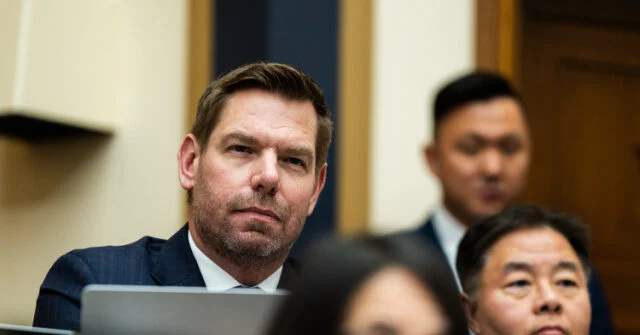
Sexual Assault Allegations Rock Rep. Eric Swalwell’s Gubernatorial Bid as Staffers Express "Horror" and Political Allies Withdraw Support
The political landscape surrounding Representative Eric Swalwell (D-CA) has been significantly altered following a wave of sexual assault allegations, prompting a rare public condemnation from his own congressional and campaign staffers, who collectively expressed their "horror" and solidarity with the accusers. This unprecedented internal dissent, coupled with the swift withdrawal of endorsements from prominent Democratic figures, has cast a long shadow over Swalwell’s gubernatorial aspirations and ignited a broader conversation about accountability in public office. The allegations, detailed across multiple reputable news outlets, describe a pattern of alleged misconduct that has sent shockwaves through California’s political establishment.
A Unified Stance: Staffers Speak Out Against Rep. Swalwell
In a powerful and unusual move, a collective of staffers working in Rep. Eric Swalwell’s congressional office and on his gubernatorial campaign released a letter to Politico, articulating their profound dismay and solidarity with the women who have come forward. The letter, attributed by a senior campaign staffer to "more than a dozen unnamed staffers," declared them "horrified" by the sexual assault allegations leveled against the California Democrat. This internal rebellion, often a rare occurrence in tightly controlled political operations, underscored the gravity and widespread concern generated by the accusations.
The staffers’ statement was unequivocal: "As leaders of teams working for Eric Swalwell, we’re horrified by the recent reporting in the San Francisco Chronicle and by CNN. We stand with our former colleague, and the other women who have come forward. We believe you should stand with them, too." This direct appeal to the public and political figures to support the accusers represents a significant breach in the traditional wall of loyalty expected within a politician’s inner circle. They further asserted that "The behavior detailed in these reports is abhorrent, beneath the dignity of those serving in public office and betrays the trust of all Californians."
Crucially, the letter also addressed the practical dilemma faced by current staffers, acknowledging their ongoing responsibilities while explicitly disavowing any perceived endorsement of Swalwell. "We also understand that we lead teams who need guidance and stability now, more than ever," the letter continued. "We are focused on supporting our colleagues during this challenging time. Any decision of staff members to remain in their roles in the interim should not be viewed as support for Eric Swalwell." This nuanced position highlights the difficult situation in which political staff find themselves when their principal faces serious allegations, balancing professional obligations with moral convictions. Such a public statement from within an active campaign and congressional office signals a profound crisis of confidence and a potential turning point in the unfolding scandal.
Chronology of Allegations: A Detailed Account
The staffers’ letter followed a series of damning reports that first surfaced in the San Francisco Chronicle and subsequently in CNN, detailing multiple alleged incidents of sexual misconduct by Rep. Swalwell. The primary accuser, a former staffer whose identity has been protected, provided a harrowing account of alleged assaults spanning several years.
According to the San Francisco Chronicle, the former staffer described two distinct incidents in 2019. In the first instance, she alleged that Swalwell, who is married and 17 years her senior, attempted to kiss her in her car while driving him home from a donor meeting. Weeks later, while driving him to another event, she claimed Swalwell exposed himself, pulled out his penis in the car, and requested oral sex, which she stated she performed in a parking lot. These initial allegations paint a picture of alleged workplace harassment and coercion.
The narrative escalated with a third alleged incident in September 2019. The woman recounted that Swalwell invited her for drinks, after which she became so severely intoxicated that she has no memory of the remainder of the night. She stated she woke up naked in Swalwell’s hotel bed, experiencing the physical effects of vaginal intercourse. Following this alleged incident, she noted that Swalwell distanced himself from her, and their professional relationship subsequently faded. The profound memory gaps and the discovery of herself naked in a superior’s hotel room raise serious questions about consent and power dynamics within a professional setting.
Five years later, in April 2024, the accuser encountered Swalwell again at a charity gala where he was being honored. Despite no longer working for him, she met him for drinks afterward. She described becoming so inebriated during this encounter that she could recall only fragmented memories of the night, including pushing Swalwell away and explicitly telling him, "No," while he allegedly forced himself on her. This account of a repeated alleged assault, under circumstances of severe intoxication, adds another layer of gravity to the accusations, highlighting the alleged persistence of the behavior.
CNN’s subsequent reporting corroborated the former staffer’s accounts and revealed further allegations. The outlet stated that "three other women" also came forward, detailing "alleged various kinds of sexual misconduct" by Swalwell. While the specifics of these additional allegations were not fully detailed in the provided information, their existence suggests a broader pattern of alleged behavior, amplifying the concerns raised by the initial accuser and lending further weight to the staffers’ collective statement of "horror." The confluence of multiple accusers and detailed accounts from a former staffer has created a formidable challenge for Rep. Swalwell’s political future.
Political Earthquake: Endorsements Withdrawn and Calls for Resignation
The detailed allegations swiftly triggered a political earthquake within the Democratic Party, leading to a rapid succession of prominent figures withdrawing their endorsements for Swalwell’s gubernatorial campaign and openly calling for him to terminate his bid. This strong and unified reaction from his Democratic colleagues underscores the severity of the accusations and the party’s increasing intolerance for alleged sexual misconduct, particularly in the wake of the #MeToo movement.
Among the first to act were several influential Democrats in California and beyond. Sens. Adam Schiff (D-CA) and Ruben Gallego (D-AZ), along with Reps. Ted Lieu (D-CA) and Jared Moskowitz (D-FL), issued separate statements publicly rescinding their support. Their unified message was clear: the allegations are too serious to ignore and demand Swalwell’s full attention outside of a political campaign. Schiff, a fellow Californian and a high-profile figure in national Democratic politics, pulling his endorsement carries significant weight, as does Lieu, another key Democratic voice from the state. Gallego and Moskowitz, representing different geographical and ideological factions within the party, further demonstrate the broad consensus forming against Swalwell.
Perhaps the most impactful statement came from former House Speaker Nancy Pelosi, a towering figure in Democratic politics and a fellow Californian. Pelosi, known for her measured and strategic political moves, issued a statement asserting that the woman who "made serious allegations" against the Congressman "must be respected and heard." Going further, Pelosi added, "This extremely sensitive matter must be appropriately investigated with full transparency and accountability." Her most direct intervention, however, was her unequivocal advice to Swalwell: "As I discussed with Congressman Swalwell, it is clear that is best done outside of a gubernatorial campaign." This direct call from a party matriarch to end his campaign is a political death knell for most candidacies, signaling that Swalwell has lost the faith and support of even the highest echelons of his own party.
The withdrawal of these endorsements is not merely symbolic; it represents a significant blow to Swalwell’s campaign infrastructure, fundraising capabilities, and overall credibility. Endorsements from such figures often translate into campaign donations, volunteer support, and crucial voter outreach. Losing them not only deprives a campaign of these vital resources but also sends a clear signal to other potential supporters and voters that the candidate is no longer deemed viable or ethical. The political fallout suggests that the Democratic Party, particularly in California, is taking a firm stance on allegations of sexual assault, prioritizing accountability and the integrity of its candidates over political expediency.
Background and Context: Swalwell’s Political Trajectory
To fully appreciate the impact of these allegations, it’s essential to understand Rep. Eric Swalwell’s political background and aspirations. Swalwell, 43, has served as the U.S. Representative for California’s 14th congressional district since 2013, having previously represented the 15th district. A former prosecutor, he quickly rose through the ranks in Washington, gaining national prominence through his frequent appearances on cable news and his role on the House Intelligence Committee, where he was a vocal critic of former President Donald Trump.
His public profile was further elevated by a brief presidential campaign in 2020, during which he championed gun control and generational change. Though his presidential bid did not gain significant traction, it demonstrated his ambition for higher office and his desire to play a larger role on the national stage. After withdrawing from the presidential race, Swalwell set his sights on the California governorship, a highly coveted position in one of the nation’s largest and most influential states. His campaign for governor was seen as a natural progression for a young, media-savvy Democrat with a strong progressive voting record.
The allegations thus strike at the core of his carefully cultivated public image as a champion of justice and a rising star in the Democratic Party. His previous role as a prosecutor and his outspoken advocacy for ethical governance create a stark contrast with the nature of the allegations now against him. The timing of the allegations, coming amidst an active gubernatorial campaign, amplifies their immediate impact, forcing a reckoning that could derail not only his current political ambitions but potentially his entire career. The scrutiny on Swalwell is intensified by his previous positions of power and trust, both as a legislator and a former law enforcement official.
Legal and Ethical Frameworks: Pathways to Accountability
The serious nature of the allegations against Rep. Swalwell raises questions about the various legal and ethical avenues for investigation and accountability. In the United States Congress, allegations of misconduct against members are typically handled by the House Committee on Ethics. This bipartisan committee is responsible for investigating alleged violations of House rules, standards of conduct, and federal laws. A complaint can be filed by a member of Congress, an employee, or a citizen, though formal investigations often require a member’s sponsorship. The committee has the power to recommend sanctions ranging from reprimands to expulsion, depending on the severity of the findings.
Beyond the internal congressional process, the allegations could also potentially lead to criminal investigations if the accusers choose to pursue them through law enforcement agencies. Sexual assault, particularly when involving intoxication and alleged non-consensual acts, falls under criminal jurisdiction. Such investigations would be conducted independently of any congressional ethics review and could result in legal charges. The "Me Too" movement has significantly shifted public and institutional responses to such allegations, emphasizing the importance of believing and supporting accusers while ensuring due process. This cultural shift has led to greater scrutiny of public figures and a lower tolerance for alleged misconduct, regardless of political affiliation or power.
The statements from Swalwell’s staffers and prominent Democrats highlight the ethical dimensions of the controversy. The staffers’ emphasis on "behavior…beneath the dignity of those serving in public office" speaks to the moral compass expected of elected officials. Pelosi’s call for "full transparency and accountability" underscores the imperative for public trust in institutions and their leaders. These frameworks, both formal and informal, are crucial in navigating such sensitive cases, aiming to provide justice for alleged victims while upholding the principles of fairness and integrity. The dual pressures of ethical considerations within the political sphere and potential legal repercussions create a complex and challenging environment for Swalwell.
Broader Impact and Implications for California Politics
The unfolding scandal surrounding Rep. Eric Swalwell carries significant implications not only for his individual career but also for California politics and the Democratic Party more broadly. In a state known for its progressive values and its leading role in social justice movements, allegations of sexual assault against a prominent Democrat resonate deeply.
Impact on Swalwell’s Gubernatorial Campaign: The immediate and most apparent impact is on Swalwell’s gubernatorial campaign. Withdrawing endorsements from key political figures, including the influential Nancy Pelosi, makes his path to the governorship exceedingly difficult, if not impossible. Fundraising will likely dry up, and his ability to attract volunteers and build grassroots support will be severely hampered. The public outcry and the internal dissent from his own staff indicate a profound erosion of trust and credibility, which are essential for any successful political campaign. The calls for him to end his campaign are not just suggestions but strong signals that the party views his continued candidacy as a liability.
Impact on the Democratic Party: The scandal poses a challenge for the Democratic Party in California and nationally. As the party that often champions women’s rights and accountability for sexual misconduct, it faces pressure to demonstrate that it holds its own members to the same high standards. The swift withdrawal of endorsements and Pelosi’s direct call for an end to the campaign reflect an attempt by the party to manage the fallout and reinforce its commitment to these principles. Failure to address such allegations decisively could damage the party’s credibility, especially among women voters and activists.
Precedent for Accountability: This situation could set a significant precedent for how sexual assault allegations against powerful political figures are handled within the Democratic Party. The willingness of staffers to speak out publicly, even anonymously, signals a growing empowerment among political employees to demand ethical conduct from their superiors. It also highlights the increasing expectation that political leaders will be held accountable for alleged misconduct, regardless of their political standing or electoral ambitions. The #MeToo movement has fundamentally altered the landscape, making it more difficult for politicians to dismiss or weather such accusations without significant consequences.
Public Trust and Political Discourse: The allegations and subsequent reactions also contribute to the ongoing national conversation about public trust in elected officials and the culture of accountability. Such high-profile cases often lead to broader societal discussions about power dynamics, consent, and the mechanisms available for victims to come forward. For California, a state often at the forefront of social change, this scandal will test its commitment to these values and its ability to ensure justice and transparency in its political processes. The outcome of this situation will undoubtedly be closely watched by political observers, advocacy groups, and the public alike, shaping perceptions of accountability in politics for years to come.

Related Posts
Democratic Candidates Must Moderate to Win General Elections, Says Rep. Greg Stanton
Lisa Demuth Secures Republican Gubernatorial Nomination in Minnesota, Defeating Trump-Endorsed Mike Lindell