Donald Trump Recounts Intervention in Legendary NBA Star Brawl Involving Kobe Bryant at 1998 All-Star Weekend
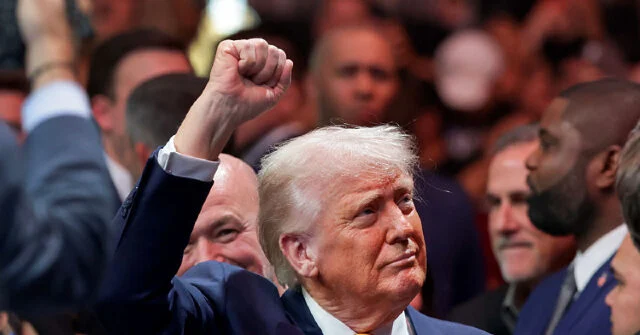
Former President Donald Trump recently offered a vivid recounting of a previously rumored incident, confirming his direct involvement in breaking up a physical altercation between several prominent NBA stars, including the late Kobe Bryant, during the 1998 NBA All-Star Weekend in New York City. The revelation came during a discussion with internet personality and boxer Jake Paul at a rally in Kentucky, where Trump candidly discussed his personal history with confrontations, highlighting a moment that intertwines high-stakes professional sports, celebrity culture, and an unexpected act of intervention by a future political leader.
The Revelation and its Context
The conversation between Trump and Paul delved into the former president’s past, touching upon his readiness to engage in disputes, a characteristic he has often projected throughout his public life and political career. When asked by Paul if he had ever been in a fight, Trump confirmed a long-standing, somewhat mythical tale that had circulated within sports and celebrity circles for years. His confirmation provided specific details, cementing the story’s place in the annals of both NBA lore and Trump’s personal narrative.
Trump’s response was delivered with a blend of anecdote and reflection. "That was a long time ago. Yeah, well, I was breaking up a fight, which sometimes is more dangerous than being in a fight," he stated, adding, "But I like Kobe. Kobe was having a hard time with somebody, and it worked out fine. But yeah, I broke it up—probably not a smart thing to do. Historically, it’s never good to break up fights." This statement not only confirmed the event but also offered a glimpse into Trump’s perception of the situation, emphasizing the inherent risks of intervening in physical confrontations, particularly those involving professional athletes of considerable stature.
The exchange with Jake Paul, a figure known for his own controversial and high-profile boxing matches and online presence, created a unique platform for this historical anecdote to resurface. It underscored the enduring public fascination with behind-the-scenes glimpses into the lives of celebrities and powerful figures, especially when those narratives involve unexpected displays of courage or intervention. The nature of the platform also highlighted how modern political figures often engage with new media personalities to disseminate messages and connect with diverse audiences.
The Fabled Encounter: 1998 NBA All-Star Weekend in New York
To fully appreciate the significance of Trump’s account, it is essential to contextualize the event within its specific time and place. The 1998 NBA All-Star Weekend, held in New York City, was a major cultural and sporting event. New York, a global hub of entertainment and finance, often amplified the star power and cultural impact of such gatherings. The NBA itself was at a significant juncture, riding a wave of global popularity largely fueled by the iconic presence of Michael Jordan and the emergence of a new generation of dynamic, young stars.
The mid-to-late 1990s represented a period of immense growth for the league, with All-Star Weekends becoming more than just basketball games; they were spectacles that attracted celebrities, business moguls, and media attention from around the world. Players often stayed in luxurious hotels, frequented exclusive parties, and navigated a demanding schedule of events, media appearances, and social engagements. It was within this vibrant, high-energy environment that the reported incident occurred, specifically in the confined space of a hotel elevator.
The selection of New York City for the All-Star festivities added another layer of intrigue. As a prominent real estate developer and media personality in New York, Donald Trump was a fixture in the city’s high society and often found himself at major events, seamlessly blending with sports figures, entertainers, and other influential individuals. His presence at such an event would have been entirely in character for his public profile at the time.
The Combatants and the Catalyst
The individuals involved in the altercation represent a fascinating cross-section of NBA talent and personalities from that era. According to writer Jeff Pearlman, who reportedly covered the incident, the fight involved Kobe Bryant, Charles Oakley, and Jayson Williams.
Kobe Bryant: In 1998, Kobe Bryant was a rising star, only in his second season in the NBA with the Los Angeles Lakers. Drafted directly out of high school in 1996, Bryant had already demonstrated flashes of the incredible talent and competitive drive that would define his legendary career. He was a prodigious scorer and an electrifying presence on the court, earning his first All-Star selection that year at just 19 years old, making him the youngest All-Star in NBA history at the time. Despite his burgeoning fame, his relative youth in the league meant he was still navigating the complex social dynamics of professional basketball, particularly the unwritten rules of respect and hierarchy between veterans and rookies/sophomores. His incredible self-confidence, while a hallmark of his greatness, could sometimes be perceived as aloofness or disrespect by older players.
Jayson Williams: Jayson Williams, a forward for the New Jersey Nets, was a veteran known for his charismatic personality, rebounding prowess, and sometimes volatile nature. By 1998, he had established himself as a solid contributor in the league, known for his energetic play and engaging off-court persona. However, Williams also had a reputation for being outspoken and was fiercely protective of the established order and respect protocols within the NBA. His career would later be tragically cut short by legal troubles and a serious injury. The perceived slight from a young, ascendant star like Bryant could have been a significant trigger for Williams, who embodied an older generation’s expectation of deference from younger players.
Charles Oakley: Charles Oakley, then a power forward for the New York Knicks, was one of the league’s most respected and feared enforcers. Known for his toughness, physical play, and unwavering loyalty to his teammates, Oakley was a quintessential "old school" player. He commanded respect both on and off the court and was not one to shy away from confrontation. His presence in the elevator, even if initially as an observer, would have added immense tension and potential for escalation to any brewing conflict. Oakley’s reputation as a protector and a tough guy meant that his involvement, or even just his proximity, signaled the seriousness of the situation.
The catalyst for the altercation, as reported, was a perceived lack of respect from Bryant towards Williams. The narrative suggests that Williams became irritated with Bryant for not greeting him in a "respectable enough fashion." This seemingly minor social interaction quickly escalated, highlighting the often-fragile dynamics within the competitive world of professional sports, where ego, respect, and hierarchy play significant roles. For a seasoned veteran like Williams, a perceived slight from a young star, regardless of his talent, could be seen as a challenge to the established order.
The Elevator Confrontation Unfolds
The incident reportedly took place in the confined space of a hotel elevator, a setting that inherently amplifies tension and reduces options for de-escalation. The combination of very large, highly competitive professional athletes, strong personalities, and a perceived slight created a volatile situation. Williams, fueled by his irritation, reportedly swung at Bryant, igniting a physical brawl.
The image of three NBA players—one a future legend, another a respected veteran, and the third a notorious enforcer—engaged in a physical confrontation within the tight confines of an elevator is striking. Such an event would have been incredibly dangerous, not only due to the physical capabilities of the individuals involved but also the potential for serious injury in such a restricted space. The force and intensity of professional athletes, even in a non-professional context, far exceed that of an average person, making any physical altercation extremely hazardous.
Trump’s Intervention: A Risky Endeavor
It was into this volatile scene that Donald Trump reportedly stepped. At the time, Trump was primarily known as a prominent real estate magnate and a New York celebrity, a figure who frequented high-profile events and was accustomed to commanding attention. His decision to intervene in a physical altercation between multiple professional athletes, as he himself acknowledged, was fraught with risk.
"I was breaking up a fight, which sometimes is more dangerous than being in a fight," Trump recalled. This assessment is acutely accurate. Stepping between combatants, especially those with the physical prowess of NBA players, can put the intervener in a precarious position, vulnerable to unintended blows or becoming a target themselves. Yet, Trump reportedly did so, attempting to de-escalate the situation and separate the athletes. His direct quote, "I broke it up—probably not a smart thing to do. Historically, it’s never good to break up fights," offers a self-aware reflection on the impulsiveness and danger of his actions.
The specific details of how Trump intervened are not elaborated upon in his recent retelling, but the mere act of stepping into such a situation speaks to a certain boldness or perhaps a lack of fear of confrontation that has been a consistent aspect of his public persona. Whether it was through verbal command, physical separation, or a combination of both, his intervention ultimately led to the cessation of the fight.
The Aftermath and Enduring Legacy
Following Trump’s intervention, the situation "worked out fine," as he stated, implying that the altercation was successfully defused without further incident or serious injury. The story, however, did not immediately become front-page news. Instead, it seems to have circulated as an urban legend within sports and celebrity circles, occasionally surfacing in anecdotal accounts or biographies, such as those by Jeff Pearlman. The fact that it remained largely unconfirmed by Trump until recently added to its mythical quality.
The re-emergence of this story, directly from Trump himself, serves to validate a long-held rumor and adds a curious footnote to both his personal history and NBA lore. For fans of Kobe Bryant, it provides another layer to the narrative of his early career, showcasing the challenges and intense dynamics he faced as a young superstar. For followers of Donald Trump, it reinforces a particular image of him as a decisive, fearless individual, willing to confront difficult situations head-on.
The incident’s persistence in public memory, even in its unconfirmed state, highlights the enduring power of celebrity anecdotes, especially those that involve unexpected acts of bravery or conflict resolution. Such stories often become part of the larger tapestry of a public figure’s legend, shaping perception and contributing to their narrative.
Broader Implications: Celebrity, Sports, and Political Narratives
The confirmed story of Trump breaking up a fight between NBA stars carries several broader implications, touching upon the intersection of celebrity culture, sports history, and political narrative building.
Firstly, it underscores the often-unseen dynamics of high-profile events. While the public sees the polished performances and official engagements, incidents like this remind us of the human element – the egos, tensions, and spontaneous conflicts that can arise even among highly disciplined athletes. The confined space of an elevator, a mundane setting, became the stage for a dramatic, unscripted confrontation involving some of the biggest names in sports.
Secondly, the anecdote contributes to Donald Trump’s carefully cultivated public image. Throughout his career, he has often presented himself as a strong, decisive leader, unafraid of confrontation and capable of resolving complex situations. His recounting of this event, whether consciously intended or not, aligns with this persona, reinforcing the narrative of a man who takes action when others might hesitate. In a political context, such stories can be used to illustrate character traits deemed desirable by supporters, portraying him as a tough, hands-on individual.
Thirdly, the incident serves as a poignant reminder of Kobe Bryant’s early career challenges. Before he became the universally revered "Black Mamba," Bryant faced the difficult transition from high school prodigy to NBA superstar, often navigating perceived slights and challenges from older, more established players. This elevator incident, if indeed rooted in a generational clash over respect, provides a micro-illustration of the broader struggles young stars often face in asserting their place within a league of seasoned professionals. His tragic passing in 2020 lends an additional layer of historical weight to any anecdote involving him.
Finally, the story highlights the fascinating way in which public figures’ lives intersect. Donald Trump, a real estate mogul, interacting with NBA legends in a private moment that later becomes a public anecdote, showcases the fluid boundaries between different spheres of celebrity and influence. It’s a reminder that even outside the official spotlight, influential individuals move within interconnected social ecosystems, leading to unexpected encounters and memorable stories.
In conclusion, Donald Trump’s recent confirmation of his intervention in a 1998 NBA All-Star Weekend elevator brawl involving Kobe Bryant, Jayson Williams, and Charles Oakley, brings to light a legendary anecdote. This incident not only adds a unique chapter to the personal histories of those involved but also offers valuable insight into the cultural dynamics of the NBA in the late 90s, the enduring nature of celebrity lore, and how such personal narratives can subtly shape public perception and political identity. It stands as a testament to the unpredictable nature of high-profile events and the unexpected moments that often become etched into the broader cultural memory.

Related Posts
Democratic Candidates Must Moderate to Win General Elections, Says Rep. Greg Stanton
Lisa Demuth Secures Republican Gubernatorial Nomination in Minnesota, Defeating Trump-Endorsed Mike Lindell