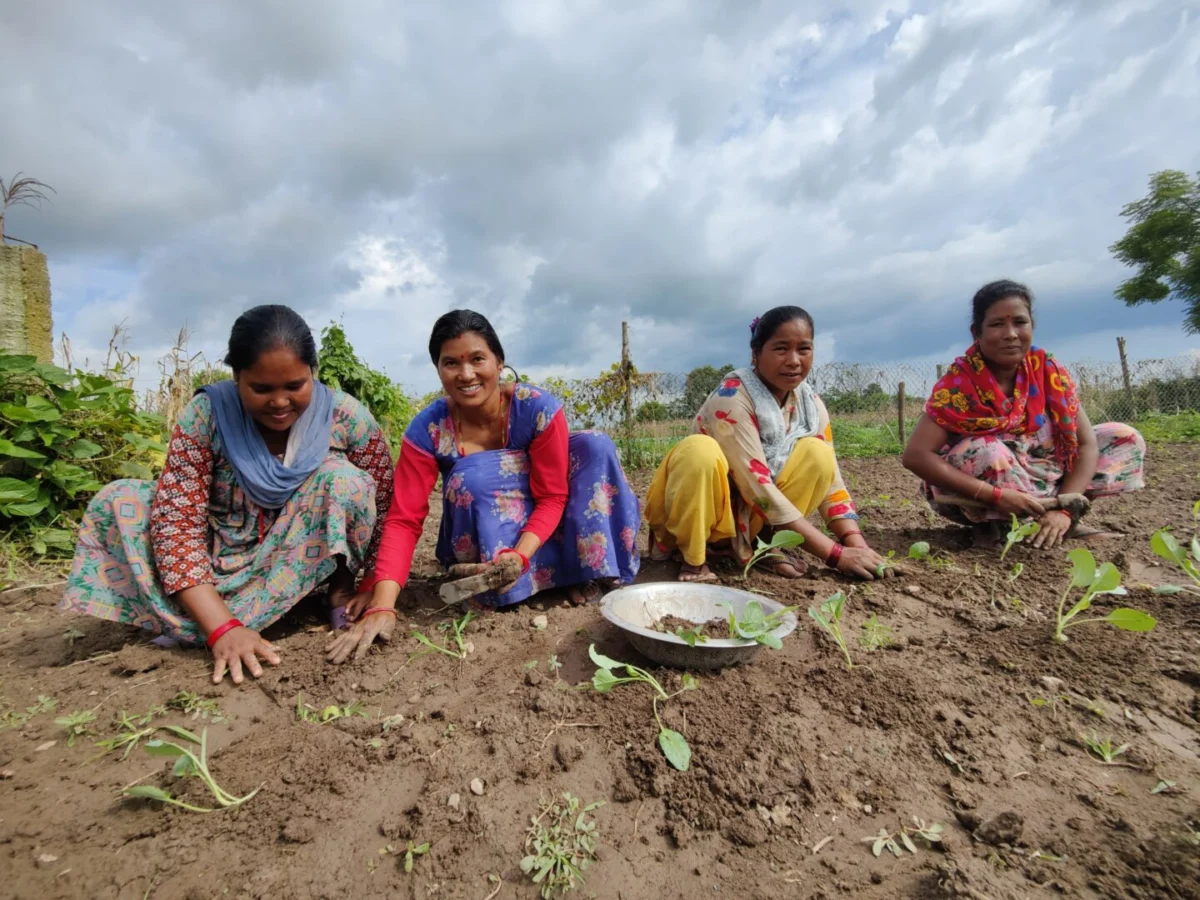
Women the world over are stopping energy projects that harm the climate and environment, and building regenerative futures
On International Women’s Day 2026, a comprehensive series of reports from global environmental monitoring groups and grassroots coalitions highlights a definitive shift in the landscape of climate activism: the leading role of women in successfully halting large-scale fossil fuel and extractive projects. From the coastal waters of South Africa to the dense rainforests of the Amazon and the legal chambers of the European Union, women-led movements are no longer just participating in climate discourse; they are dictating the terms of global energy transitions. This movement has evolved from localized protests into a sophisticated, interconnected network of legal, financial, and community-based resistance that prioritizes "regenerative futures"—models of development that restore ecosystems rather than merely sustaining their current state of degradation.
The State of Women-Led Resistance in 2026
As of March 2026, data from the Global Environmental Justice Atlas indicates that women lead or co-lead more than 65% of the most successful environmental "blockadia" movements—instances where civil society has successfully delayed or permanently stopped high-carbon infrastructure. These projects include coal mines, offshore oil rigs, and large-scale hydroelectric dams that threaten local biodiversity and indigenous sovereignty.
The effectiveness of these movements is attributed to a strategy that combines frontline physical resistance with high-level litigation and shareholder activism. In the first quarter of 2026 alone, three major fossil fuel expansion projects in Southeast Asia and Latin America were mothballed following legal challenges spearheaded by women’s legal collectives. These collectives have successfully argued that environmental degradation constitutes a violation of the fundamental right to a healthy environment, a principle that has gained significant legal weight following the landmark UN resolutions of the mid-2020s.
A Chronology of Key Victories (2022–2026)
The current momentum is the result of a multi-year escalation in organized female-led activism. A timeline of these pivotal moments illustrates the transition from defensive action to proactive systemic change.
- December 2022 – February 2023: Indigenous women in the Ecuadorian Amazon secured a series of court rulings that prohibited new oil drilling in the Yasuní National Park. This period marked the beginning of "The Amazonian Guard," a women-led frontline group that utilized drone technology and legal mapping to document illegal incursions.
- June 2024: The "Mothers of the Delta" in Nigeria successfully lobbied the International Criminal Court (ICC) to recognize "ecocide" as a framework for investigating oil spills in the Niger Delta. This led to a multi-billion dollar settlement aimed at land restoration rather than simple cash payouts.
- March 2025: A coalition of European women’s organizations won a landmark case in the European Court of Human Rights, establishing that government failure to meet 2030 emissions targets disproportionately affects the health and longevity of elderly women, forcing a radical revision of national energy plans in four EU member states.
- January 2026: The "Solar Sisters" initiative in East Africa reached a milestone of installing 50,000 community-owned microgrids. This project demonstrated that decentralized, women-managed energy systems could provide more reliable power than centralized fossil fuel grids.
Supporting Data: The Gender-Climate Nexus
The shift toward women-led climate action is supported by an emerging body of data from the Intergovernmental Panel on Climate Change (IPCC) and UN Women. Research published in late 2025 suggests that when women are involved in local resource management, carbon sequestration outcomes improve by an average of 30%.
Furthermore, financial analysis from the 2026 Green Finance Summit reveals that "gender-just transition" funds—investment vehicles specifically targeting women-owned renewable energy startups—have outperformed traditional green bonds by 12% over the last three years. This is largely due to the lower risk profile of community-integrated projects which face fewer local disputes and regulatory hurdles.
Statistical breakdowns also show that women are disproportionately impacted by climate-induced displacement, making up 80% of those displaced by climate-related disasters globally. This "vulnerability paradox" has transformed into a powerful motivator for leadership; those with the most to lose have become the most effective architects of systemic resilience.
Official Responses and International Recognition
The success of these movements has drawn reactions from various international bodies. In a statement released today, Sima Bahous, Executive Director of UN Women, noted that "the leadership of women in environmental defense is not merely a matter of equity; it is a matter of survival. The data is clear: climate policies designed and implemented with women at the center are more durable, more ambitious, and more effective."

Conversely, some industry groups have expressed concern over the "increasingly sophisticated" nature of these blockades. A spokesperson for the Global Energy Council (GEC) stated that while the industry supports a transition, the "rapid-fire legal challenges and community vetoes" led by grassroots organizations are creating "uncertainty in the energy markets."
However, the response from the scientific community remains overwhelmingly supportive. Dr. Elena Rodriguez, a lead author of the 2026 Synthesis Report on Climate Mitigation, argued that "the ‘regenerative’ approach championed by these women-led groups—which focuses on soil health, reforestation, and circular economies—is exactly the kind of holistic thinking that traditional technocratic climate policy has lacked."
The Shift Toward Regenerative Futures
A central tenet of this global movement is the move away from "extractivism" toward "regeneration." While traditional green energy models often focus on replacing coal with large-scale wind or solar farms (which still require significant mineral extraction), the regenerative model promoted by many women-led groups emphasizes:
- Circular Resource Loops: Ensuring that the materials used in renewable technologies are fully recyclable and ethically sourced.
- Agroecology: Integrating food production with energy generation to restore soil carbon and ensure local food security.
- Community Sovereignty: Shifting ownership of energy infrastructure from multinational corporations to local cooperatives.
In the Global South, this has manifested in the "Green Belt" resurgence, where millions of hectares of degraded land are being restored through traditional indigenous knowledge combined with modern ecological science. In the Global North, this is seen in the "Retrofit Revolution," where women-led cooperatives are transforming urban housing into energy-positive assets.
Broader Impact and Implications for 2030
The implications of this shift are profound for the 2030 Sustainable Development Goals (SDGs). The success of women in stopping harmful projects has created a "carbon lock-out" effect, where it is becoming financially unviable for banks to provide insurance or capital for new fossil fuel ventures due to the high probability of community-led legal delays.
Analysis by the International Energy Agency (IEA) suggests that if the current trend of women-led resistance continues, an additional 1.5 gigatons of CO2 emissions could be avoided by 2030, purely through the prevention of planned fossil fuel expansions. This "activism-based mitigation" is now being factored into global climate models as a primary driver of emissions reductions.
Furthermore, the focus on regenerative futures is reshaping the global economy. By prioritizing local resilience over global commodity chains, these movements are building a buffer against the supply chain shocks expected as climate change intensifies. The "regenerative" model is proving to be not only more environmentally sound but also more economically stable in a volatile world.
Conclusion: A New Paradigm of Leadership
As the world reaches the midpoint of the decade, the narrative of climate action has moved beyond the halls of COP summits and into the hands of women on the frontlines. The transition from "protesting against" to "building for" has defined this new era. The projects being stopped are not just being replaced by cleaner versions of the same systems, but by entirely new ways of relating to the planet.
The rise of women as the primary arbiters of energy policy and environmental protection represents a fundamental shift in global power dynamics. By centering care, restoration, and community health, these movements are providing a blueprint for a world that does not just survive the climate crisis but emerges from it with more equitable and resilient social structures. As 2026 progresses, the "regenerative future" is no longer a theoretical concept; it is a lived reality being built, one stopped pipeline and one started microgrid at a time.

Related Posts
Climate Change and Rapid Urbanization Fuel Devastating West African Floods as Scientists Warn of Increasing Future Risks

UN Maritime Court Rejects Deep Sea Mining Firms Bid to Halt Investigation into Contractual Breaches