Trump Warns of Attack on All of Iran’s Power Plants if Strait of Hormuz Isn’t Freed
Former U.S. President Donald Trump issued a stark ultimatum to Iran, demanding the complete and unhindered opening of the Strait of Hormuz within 48 hours, or face the destruction of its power generation facilities. The former president broadcast this warning via his social media platform, Truth Social, setting a firm deadline for Tehran to guarantee the unimpeded flow of traffic through the strategically vital waterway.
"If Iran does not fully open, without threats, the Strait of Hormuz within 48 hours from this moment, the United States will attack and destroy its various power plants, starting with the largest!" Trump declared in his post, underscoring the gravity of his threat. This declaration signals a potential escalation of tensions in a region already grappling with significant geopolitical instability.
The Strait of Hormuz, a narrow chokepoint between the Persian Gulf and the Gulf of Oman, is a critical artery for global energy supplies. Approximately one-fifth of the world’s total petroleum liquids supply passes through this vital maritime passage, making any disruption a significant concern for international markets and global energy security. Iran has previously threatened to disrupt shipping in the strait, a move that would have far-reaching economic consequences.
Trump’s assertion of the U.S. having "obliterated Iran from the map" also resurfaced in his statements, alongside a critique of journalism. He specifically targeted David Sanger, a journalist he characterized as a "low-level analyst," for questioning his administration’s objectives in relation to Iran. Trump maintained that U.S. military actions achieved their goals "weeks ahead of schedule," asserting that Iran’s leadership has been dismantled, its navy and air force destroyed, leaving them defenseless and eager for a deal, a sentiment he clearly rejects.
These pronouncements come amidst a period of heightened conflict and diplomatic maneuvering in the Middle East, with significant events unfolding across the region.
Escalation of Attacks and Civilian Casualties
Recent events have seen a significant increase in attacks, with reports of at least 75 individuals injured in the southern Israeli city of Arad due to a missile strike. The United Hatzalah, an Israeli medical emergency response organization, confirmed the casualty figures, highlighting the human cost of the escalating hostilities.
In a related development, the International Atomic Energy Agency (IAEA) reported that the nuclear facilities in Dimona remained undamaged following an attack. "Information from states in the region indicates that no abnormal levels of radiation have been detected," the IAEA stated, offering a measure of reassurance regarding nuclear safety. IAEA Director General Rafael Grossi reiterated the imperative for "maximum military restraint, particularly in the vicinity of nuclear facilities," a call underscoring the inherent risks of conflict near sensitive sites.

Israeli Response and Strategic Outlook
Israeli Prime Minister Benjamin Netanyahu characterized the recent missile attacks on Dimona and Arad, which resulted in over 100 injured, as a "very difficult night in the struggle for our future." Speaking via the social media platform X, he expressed solidarity with the mayors of Dimona and Arad and reinforced emergency and rescue forces. Netanyahu issued a firm warning: "We are determined to continue attacking our enemies on all fronts."
Emergency services in Israel responded to a new Iranian attack, with missile fragments and projectiles impacting Dimona and the nearby city of Yerucham, resulting in at least 50 injuries. Hours later, a subsequent attack targeted Arad, located approximately 25 kilometers northeast of Dimona, with emergency services reporting around 70 injured. Magen David Adom, the Israeli equivalent of the Red Cross, dispatched personnel to the affected areas.
Regional Diplomatic Repercussions
In a significant diplomatic move, Saudi Arabia declared several Iranian diplomats "persona non grata." The Saudi Ministry of Foreign Affairs announced that the security attaché and his assistant, along with three other embassy employees, were required to depart within 24 hours. Saudi Arabia has consistently condemned Iranian attacks against Gulf states and has been actively responding to Iranian missile and drone threats. Earlier on Saturday, Saudi Arabia reported downing several Iranian drones targeting its eastern province.
Italian Political Landscape Under Strain
The ongoing conflict has presented a complex challenge for Italian Prime Minister Giorgia Meloni. Facing internal political pressures from a technical judicial reform referendum that she personally championed, and simultaneously navigating a tactical distancing from her ally Donald Trump amidst an increasingly unpopular war, Meloni finds herself at a critical juncture. The conflict’s impact on Italy’s already fragile economy is beginning to manifest dramatically.
War’s Prolonged Nature and Election Considerations
The conflict’s protracted nature could influence Prime Minister Benjamin Netanyahu’s decision on when to call for new elections in Israel. With the war intensifying on multiple fronts and no clear end in sight, adversaries in Iran and Lebanon may inadvertently shape this decision. The stakes are exceptionally high: a successful resolution could solidify Netanyahu’s legacy as Israel’s longest-serving leader and potentially quell demands for accountability following the October 7, 2023, attacks by Hamas, which triggered the current regional conflict.
U.S. Military Actions and Strategic Objectives
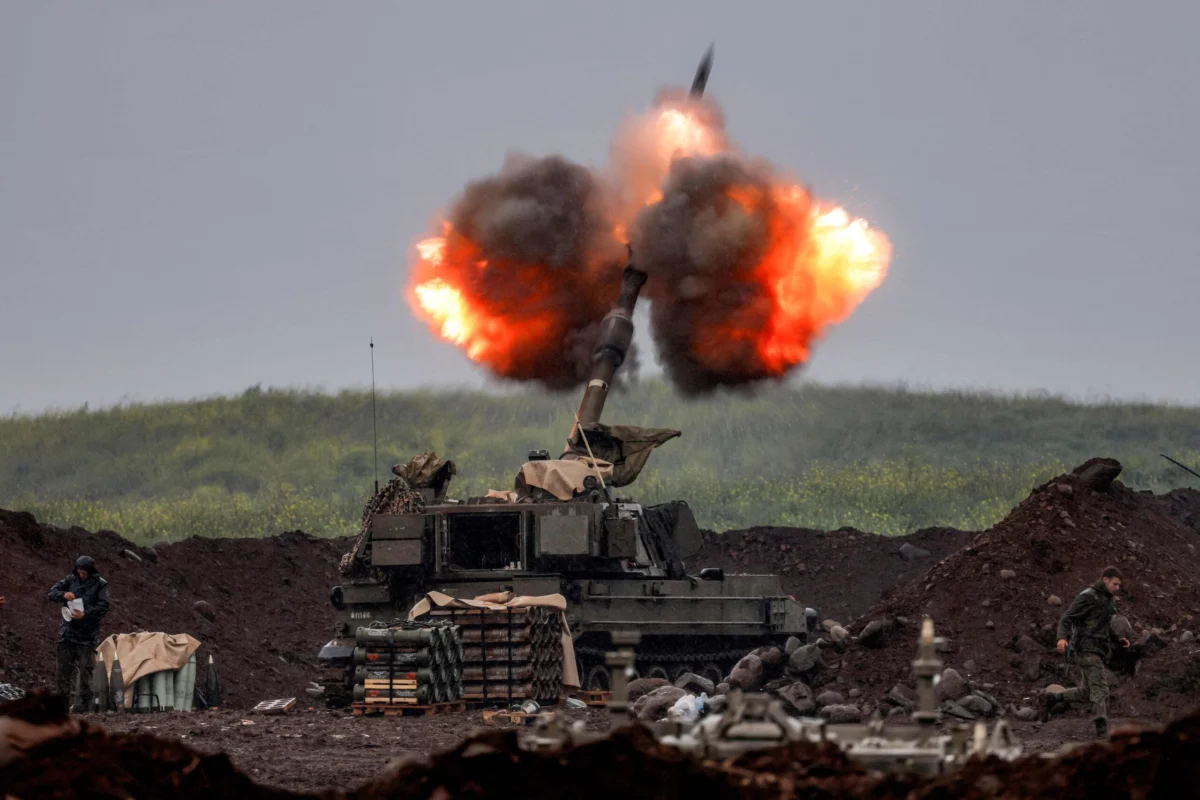
The U.S. military reported destroying an Iranian bunker equipped with weapons that posed a threat to oil and gas shipments through the Strait of Hormuz. This action occurred while Iran was observing the end of Ramadan, reportedly without the presence of its supreme leader, Mojtaba Khamenei. Iran’s blockade of the Strait of Hormuz, a passage crucial for approximately one-fifth of global oil and liquefied natural gas consumption, was initiated in response to attacks by Israel and the United States on February 28.
Admiral Brad Cooper, commander of U.S. Central Command, stated via video on X that Iran’s capability to threaten the Strait of Hormuz had been "reduced" following the week’s airstrike on an underground facility storing cruise missiles. He elaborated, "We not only destroyed the facility but also eliminated intelligence support sites and missile radar repeaters used to monitor ship movements."
Congressional Scrutiny of U.S. Strategy
As the conflict with Iran continues, members of the U.S. Congress are beginning to question the strategy, timeline, and cost of the war. President Donald Trump’s engagement in the conflict without explicit congressional backing has drawn increasing scrutiny. Three weeks into the fighting, the human and financial toll is becoming evident, with at least 13 U.S. service members killed and over 230 wounded. The administration’s request for an additional $200 billion for the war effort, coupled with deployments of thousands of American soldiers amidst ongoing attacks on allied nations and no discernible exit strategy, is fueling congressional concern.

U.S. Policy on Iranian Oil Sanctions
In an effort to stabilize global energy prices amidst growing tensions in the Middle East, the Trump administration has decided to partially relax sanctions on Iranian oil. This move aims to strike a balance between its campaign against Iran and the need to alleviate pressure on U.S. consumers. The administration issued a 30-day authorization permitting the sale of crude oil already loaded onto vessels at sea, with the objective of easing the strain on global supply chains.
However, Iran’s oil ministry spokesperson, Saman Ghoddoosi, countered this by stating on X that Iran "basically has no surplus crude oil stored at sea or available to supply to other international markets," suggesting the U.S. Treasury Department’s announcement was intended to offer false hope to buyers.
International Concerns and Expert Analysis
International analyst Julián Schvindlerman, speaking on LN+, analyzed the developments in the Middle East conflict, emphasizing that "the war is a war of oil" with significant implications for global stability. He highlighted Donald Trump’s communications as a decisive factor in security strategy and the movement of financial markets.
Iran’s Broader Threats and Domestic Crackdown
In the midst of escalating regional tensions, Iran has adopted a defiant stance. The nation’s supreme leader issued a message, and threats were made to attack recreational and tourist destinations frequented by its enemies. Concurrently, concerns are mounting over a potential wave of executions within Iran. A 19-year-old wrestling star and two other young men were reportedly hanged this week, raising alarms among human rights groups. These executions are seen by some as an attempt to quell public dissent while the government faces external pressures. Human rights organizations report that over 100 individuals may face the death penalty, stemming from the crackdown on nationwide protests in January.
Diplomatic and Military Developments
The U.S. Department of State announced rewards of up to $10 million for information leading to the whereabouts of Iranian leaders. The list provided by the Trump administration includes 14 individuals, including Mojtaba Khamenei, son of the former Supreme Leader Ali Khamenei, and other less publicly known officials.
Hezbollah, a Lebanese pro-Iranian movement, claimed to have engaged in ground combat with Israeli forces in two southern Lebanese border towns. The group reported "direct clashes" using light and medium weapons, as well as rockets, in the town of Khiam, lasting for four hours.
The International Atomic Energy Agency (IAEA) confirmed that the nuclear research center at the Negev Nuclear Research Center in Dimona suffered no damage. The agency stated, "Information from states in the region indicates that no abnormal levels of radiation have been detected." Director General Rafael Grossi reiterated the need for "maximum military restraint, particularly in the vicinity of nuclear facilities."
The Israeli Ministry of Defense, under Minister Israel Katz, warned that the "intensity of the attacks" on Iran would "increase considerably" in the coming days. Katz stated that Israeli forces and the U.S. military would significantly intensify their bombings against the Iranian regime and its supporting infrastructure.

Iran’s Natanz nuclear enrichment plant was reportedly hit in an airstrike on Saturday, according to the official Mizan news agency. The report specified no radiation leaks. Natanz, Iran’s primary enrichment site, had been impacted earlier in the conflict, with satellite imagery suggesting damage to several buildings. The UN’s nuclear watchdog had previously indicated no expected "radiological consequences" from earlier incidents.
The U.S. military asserted that Iran’s ability to threaten the Strait of Hormuz had been "reduced" following airstrikes on an underground facility storing cruise missiles. Admiral Brad Cooper, head of U.S. Central Command, stated on X that the operation not only destroyed the facility but also eliminated intelligence support sites and missile radar repeaters used for monitoring vessel movements.
The U.S. Army also claimed to have destroyed an Iranian bunker equipped with weapons that threatened the transport of oil and gas through the Strait of Hormuz. This action occurred while Iranians were observing the end of Ramadan.
Broader Implications and Analysis
Thomas L. Friedman, in an analysis for La Nación, expressed ambivalent feelings about the war against Iran, doubting that aerial destruction of Iran could foster internal change towards a more decent government. He suggested that President Donald Trump might have benefited from consulting others before initiating military action.
Guillermo Idiart, also contributing to La Nación, warned that "if this conflict persists, it will be the mother of all energy crises," highlighting the profound global economic implications.
The conflict’s reach extended to the joint Anglo-American base on the island of Diego Garcia in the Indian Ocean, reportedly targeted by two Iranian ballistic missiles. This launch, according to Mehr news agency, signifies a substantial escalation in Iran’s confrontation with the United States and suggests a greater missile range than previously estimated.
The Israeli military reported that Iran launched a long-range missile capable of traveling approximately 4,000 kilometers. The Israel Defense Forces noted that the Iranian regime had previously expressed intentions to develop such missiles, which pose a threat to numerous countries across Europe, Asia, and Africa.
Conclusion
The escalating conflict in the Middle East presents a complex web of military actions, diplomatic tensions, and potential economic repercussions. Former President Trump’s direct threats, coupled with ongoing attacks and responses from various regional actors, underscore the precarious state of international security. The international community remains watchful, with concerns ranging from energy market stability and civilian casualties to the broader implications for regional and global peace. The coming days and weeks will likely reveal the full extent of these developments and their lasting impact.

Related Posts

The Electric Vehicle Battery Health Debate Emerges as Argentina’s EV Market Accelerates
President Donald Trump Confirms Secret Departure from Turkey Amidst Assassination Threat