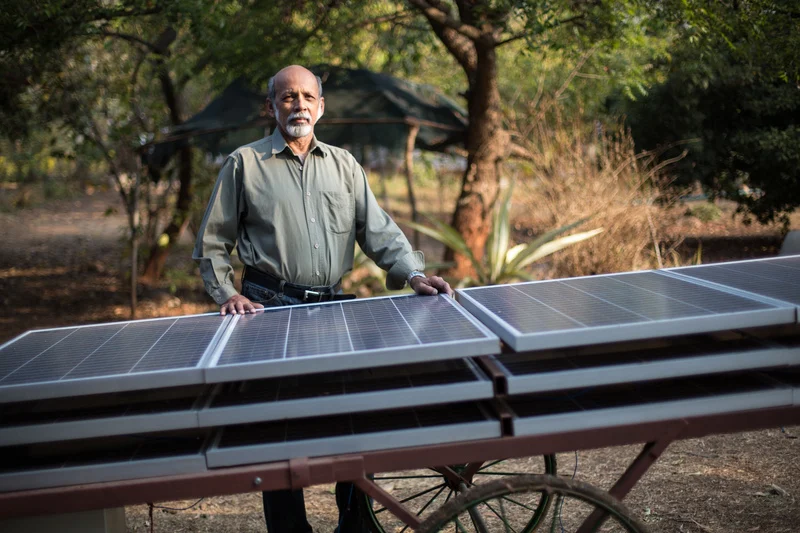
While most analysts hailed the 2035 goals, some said they are too easy to meet given the progress India is already making.
The Indian government’s latest submission of its 2035 Nationally Determined Contributions (NDCs) has sparked a polarized debate among global climate policy experts, economists, and environmentalists. While the new targets represent a significant leap from previous commitments, a growing chorus of analysts argues that the milestones are conservative, potentially lagging behind the country’s actual industrial and technological momentum. This latest climate roadmap, released in late March 2026, aims to solidify India’s position as a leader of the Global South while balancing the immense energy demands of its developing economy.

The 2035 goals focus on three primary pillars: a further reduction in the emissions intensity of the Gross Domestic Product (GDP), a substantial increase in the share of non-fossil fuel-based electricity capacity, and the creation of an additional carbon sink through enhanced forest and tree cover. Specifically, the government has proposed a 65% to 70% reduction in emissions intensity compared to 2005 levels by 2035. However, with the nation already surpassing several of its 2030 milestones years ahead of schedule, the "ambition gap" has become a focal point for international scrutiny.
A History of Outperforming Targets
To understand the current skepticism regarding the 2035 goals, one must look at India’s historical performance under the Paris Agreement. In its initial 2015 NDCs, India committed to reducing emissions intensity by 33-35% by 2030. By 2023, the government reported that it had already achieved a 33% reduction, effectively meeting the lower end of its target seven years early.

Similarly, India’s pledge to achieve 40% of its installed electric power capacity from non-fossil fuel sources by 2030 was met in 2021. This prompted an upward revision during the COP26 summit in Glasgow, where Prime Minister Narendra Modi announced the "Panchamrit" (five nectar elements) plan, which included a target of 500 gigawatts (GW) of non-fossil energy capacity by 2030.
Current data from the Central Electricity Authority (CEA) suggests that India’s renewable energy installations—driven largely by aggressive solar and wind auctions—are on track to potentially exceed 550 GW by 2030. Consequently, analysts from groups like the Centre for Science and Environment (CSE) and the Institute for Energy Economics and Financial Analysis (IEEFA) suggest that a 2035 target that does not significantly exceed current trajectories essentially codifies "business as usual" rather than driving "transformative ambition."

The 2035 Roadmap: Key Metrics and Projections
The newly unveiled 2035 NDCs include several specific targets intended to guide the next decade of Indian industrial policy:
- Emissions Intensity: A target of 65-70% reduction from 2005 levels. Critics point out that internal projections suggest a 62% reduction is likely by 2030, leaving very little "stretch" for the five years between 2030 and 2035.
- Non-Fossil Capacity: The 2035 goal aims for 60-65% of total power capacity to come from non-fossil sources. Given that the 2030 target is 50%, this represents a modest 2% annual increase in the early 2030s.
- Carbon Sink: India maintains its goal of creating an additional carbon sink of 2.5 to 3 billion tonnes of CO2 equivalent through forest and tree cover. This remains one of the more challenging targets due to land-use pressures and urbanization.
Supporting data from the Ministry of New and Renewable Energy (MNRE) indicates that solar power costs in India have plummeted to among the lowest in the world, frequently hitting rates below ₹2.50 (approx. $0.03) per unit. This economic reality is driving private sector adoption faster than government mandates in some regions.

The "Too Easy" Argument: Technological and Economic Momentum
The primary criticism leveled against the 2035 goals is that they do not account for the exponential growth of green technologies. For example, the decentralized solar movement—typified by portable solar pumping systems for farmers—has transformed rural energy consumption. These systems, once considered niche, are now being deployed by the millions under the PM-KUSUM scheme.
Furthermore, India’s burgeoning Green Hydrogen Mission aims to make the country a global hub for the production and export of clean hydrogen. With billions of dollars in subsidies and private investment from conglomerates like Reliance Industries and the Adani Group, the industrial sector’s carbon footprint could drop much faster than the 2035 goals anticipate.

"Setting targets that are easily achievable might provide a sense of diplomatic success, but it risks slowing down the policy innovation needed to decarbonize ‘hard-to-abate’ sectors like steel and cement," noted a senior analyst at a New Delhi-based climate think tank. "If the market is already delivering a 65% reduction, the national goal should be 75% to provide the necessary regulatory signals for deeper investment."
Geopolitical Constraints and Energy Security
The Indian government’s defense of the 2035 goals rests on the principle of "Common But Differentiated Responsibilities" (CBDR). Officials argue that as a developing nation with low per-capita emissions, India must maintain flexibility to ensure energy security for its 1.4 billion citizens.

The recent global energy volatility—exacerbated by the ongoing Iran war—has reinforced the government’s cautious approach. The conflict in the Middle East has upended global oil markets, leading the International Energy Agency (IEA) to slash demand forecasts by nearly a million barrels per day as nations scramble for alternatives. For India, this has meant a double-edged sword: a renewed urgency to transition to electric vehicles (EVs) and renewables, but also a temporary reliance on domestic coal to ensure grid stability when international oil and gas prices spike.
Additionally, the European Union’s Carbon Border Adjustment Mechanism (CBAM) has introduced a new variable. As the EU begins to tax carbon-intensive imports like Indian steel and aluminum, the Indian government is under pressure to help domestic industries decarbonize. However, officials argue that international climate finance remains woefully inadequate. The Global Environment Facility (GEF) recently reported a funding shortfall, raising only $3.9 billion against a higher projected need, leaving many Global South nations with limited fiscal space to pursue aggressive "stretch" goals.

Chronology of India’s Climate Commitments
- 2015 (Paris Agreement): India commits to a 33-35% reduction in emissions intensity and 40% non-fossil power capacity by 2030.
- 2021 (COP26, Glasgow): Prime Minister Modi announces the 2070 Net Zero target and increases 2030 goals (500 GW non-fossil capacity).
- 2022 (Updated NDCs): Formalization of Glasgow pledges, including a 45% emissions intensity reduction by 2030.
- 2023-2024 (Rapid Implementation): India achieves its 2030 emissions intensity target early; solar capacity grows by record margins.
- March 2026: India submits its 2035 NDCs, setting a 65-70% intensity reduction target.
Broader Implications and the Road to COP31
The debate over India’s ambition is more than just a matter of domestic policy; it has profound implications for the global effort to limit warming to 1.5 degrees Celsius. As the world’s third-largest emitter of greenhouse gases, India’s trajectory dictates the feasibility of global climate models.
If India’s targets are indeed "too easy," the danger is that the global "Stocktake"—the process by which the UN assesses collective progress—will show a misleadingly positive picture while the actual atmospheric concentration of CO2 continues to rise at dangerous levels. Conversely, by setting achievable goals, India ensures it never misses a target, maintaining its credibility on the international stage at a time when other major powers, including the United States, face internal political pressure to scale back climate action.

The 2035 goals will likely be a centerpiece of discussions at COP31, which Türkiye has recently announced will be held in Antalya in November 2026. As nations prepare for that summit, the focus will shift from "pledging" to "implementation." India’s proponents argue that a "realistic" 2035 goal is better than a "lofty" one that lacks a roadmap.
However, the reality of climate change—manifesting in India through increasingly frequent heatwaves and erratic monsoons—may eventually force the government’s hand. While the 2035 goals are now set in stone for the current reporting cycle, the rapid pace of technological change and the shifting geopolitical landscape suggest that India’s actual progress will likely continue to outrun its official promises. Whether that is a failure of ambition or a triumph of practical execution remains the defining question of India’s climate journey.

Related Posts
Constitutional Court of South Africa Bars Shell Oil Exploration in Landmark Victory for Environmental and Community Rights

The Battle for Saldanha Bay: South Africa’s Ambitious Ocean Economy Strategy Faces Legal and Environmental Reckoning