US slams Czech Republic over low defense spending
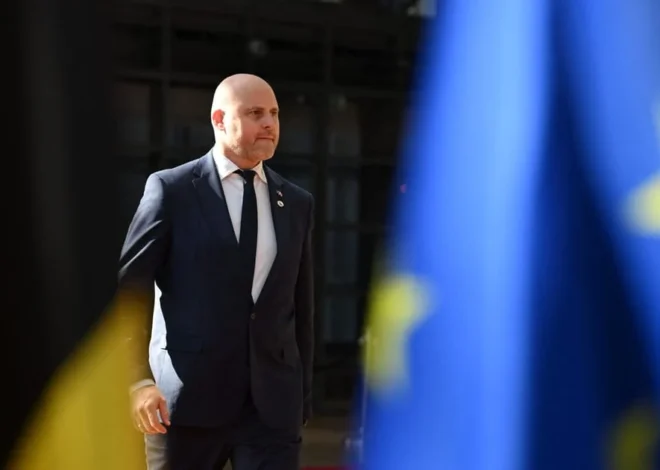
The geopolitical landscape across Europe is undergoing a period of intense volatility, defined by shifting alliances, escalating military commitments, and a growing friction between the United States and its NATO partners. At the center of this latest diplomatic storm is the Czech Republic, where the new government under Prime Minister Andrej Babiš is facing direct, public condemnation from Washington over its failure to meet the alliance’s increasingly ambitious defense spending mandates. While Babiš has cultivated an image as a populist firebrand—frequently compared to former U.S. President Donald Trump—the realities of his administration’s fiscal policy are clashing with the strategic requirements of a NATO that has moved to a 5-percent-of-GDP defense spending benchmark.
The Washington-Prague Divide: A Fiscal Confrontation
The criticism leveled against Prague is not merely a request for increased budget allocations; it represents a fundamental disagreement over the burden-sharing model within the Atlantic Alliance. U.S. diplomats have made it clear that the era of "free-riding" is over. With the global security environment deteriorating, Washington is demanding that all members, regardless of their domestic political leanings or economic constraints, reach the 5-percent target.
For Prime Minister Babiš, this creates a significant political paradox. His political brand is built on prioritizing national sovereignty and domestic economic stability. Yet, the pressure from the U.S. State Department is putting his administration in a corner, forcing him to choose between his populist rhetoric and the long-term security guarantees provided by the United States. Analysts suggest that the U.S. administration is using the Czech case as a litmus test for other Eastern European nations, signaling that the current climate of "hard security" requires sacrifice that transcends local political narratives.

Escalating Regional Tensions and Supply Chain Disruptions
The pressure on the Czech Republic does not exist in a vacuum; it is part of a broader, interconnected crisis involving the ongoing conflict with Iran and its downstream effects on the transatlantic defense industrial base. The situation in Poland serves as a stark illustration of these logistical anxieties. Warsaw, which has been one of the most proactive members in increasing its defense budget, now faces a paradoxical threat: the success of its military modernization program is being hampered by the very conflict it sought to prepare for.
As the U.S. and various Gulf partners engage in an active defense campaign against Iranian strikes—relying heavily on Patriot PAC-2 and PAC-3 interceptor missiles—the global supply of these critical assets has tightened. The Polish government, led by Defense Minister Władysław Kosiniak-Kamysz, has publicly acknowledged that the intensity of the current regional conflict is likely to cause significant delays in the delivery of U.S.-made weapons systems. This bottleneck is creating a dangerous vacuum in European defense, where the demand for hardware is at an all-time high, but the supply chains are being diverted toward immediate operational theaters.
Chronology of the Strategic Shift
The current state of affairs is the culmination of several key events that have reshaped the NATO posture since the beginning of 2026:
- Early February 2026: Reports emerge regarding the intensification of Iranian long-range strike capabilities, prompting a surge in demand for Western missile defense systems in the Middle East.
- Late February 2026: The U.S. Department of Defense announces a prioritization of existing stocks to support frontline allies and strategic partners, effectively deprioritizing non-urgent deliveries to European partners.
- March 3, 2026: French President Emmanuel Macron publicly questions the legality of U.S. strikes on Iranian targets, marking a deepening rift within the Western alliance regarding military operations outside of the traditional NATO mandate.
- March 3, 2026: Norway initiates overtures toward France regarding nuclear cooperation, signaling a shift toward a more autonomous "European pillar" of defense that operates independently of U.S. political volatility.
- March 6, 2026: Polish officials confirm that delays in U.S. weapons shipments are expected to last through the end of the year, potentially impacting the modernization timeline of the Polish Armed Forces.
- March 12, 2026: The U.S. administration formally rebukes the Czech government for its defense spending levels, highlighting that the 5-percent threshold is non-negotiable for regional stability.
European Sovereignty and the Macron Doctrine
The friction is not limited to the Czech Republic’s budget or Poland’s logistics. A deeper philosophical divide is emerging, spearheaded by France. President Emmanuel Macron’s recent comments, in which he labeled U.S. strikes on Iran as "outside international law," represent a significant departure from the traditional post-WWII consensus. By aligning with Spain’s Prime Minister Pedro Sánchez in questioning the legal foundation of U.S. actions, Macron is signaling that European leaders are no longer willing to provide automatic, unconditional support for U.S.-led military interventions.

This skepticism is driving a quiet, yet profound, shift in defense cooperation. Norway’s interest in nuclear talks with France is perhaps the most significant indicator of this trend. For decades, the U.S. nuclear umbrella was the sole guarantor of European security. If nations like Norway are exploring alternatives or additional layers of cooperation with Paris, it suggests that the "Atlantic Bridge" is beginning to fray. European leaders are increasingly viewing the U.S. as a partner that is both indispensable and unpredictable, prompting a "sovereignty-first" approach to their own security architectures.
Analysis of Implications: The 5-Percent Benchmark
The 5-percent-of-GDP target for defense spending is a massive fiscal undertaking for any modern economy. To put this in perspective, most NATO members struggled for years to hit the previous 2-percent target. Moving to 5 percent requires a total restructuring of national budgets, often at the expense of social programs, healthcare, and infrastructure.
The impact of this policy on the Czech Republic could be severe. If Babiš attempts to meet these demands, he risks alienating his domestic base, which largely expects him to focus on inflation and the cost of living. If he refuses, he risks a cooling of relations with Washington, which could translate into a loss of influence within the alliance and reduced access to U.S. defense technology.
Moreover, the "guns vs. butter" debate is now central to the European political discourse. When defense budgets are ballooned to 5 percent, the fiscal space for green energy transitions, digital infrastructure, and aging populations evaporates. This is creating a internal tension within the EU, as countries with high social spending are forced to reconcile their welfare models with the demands of an militarized geopolitical environment.

Official Responses and Diplomatic Posturing
While the rhetoric remains sharp, the behind-the-scenes reality is one of intense negotiation. The U.S. position, as relayed through diplomatic channels, is that the burden of defending the liberal order is too heavy for one nation to carry. By pressuring states like the Czech Republic, the U.S. is attempting to force a transition where European nations take primary responsibility for their own territorial defense.
Conversely, the responses from European capitals have been measured but firm. There is a palpable frustration that U.S. policy in the Middle East is inadvertently making the European continent less secure by creating logistical bottlenecks and diplomatic rifts. The Polish government’s public acknowledgment of weapons delays is a calculated move to pressure Washington to find a solution, rather than simply accepting the status quo.
Conclusion: A Turning Point for the Alliance
The current state of the NATO alliance is at a critical juncture. The combination of fiscal pressure on members like the Czech Republic, the logistical strain of global operations on the defense supply chain, and the burgeoning desire for European strategic autonomy suggests that the alliance is in a period of fundamental transformation.
The coming months will be decisive. If the Czech Republic and other "low-spending" members fail to align with the new, higher expectations set by Washington, the political cohesion of NATO will likely continue to degrade. Simultaneously, if the U.S. continues to prioritize operations that alienate its key European partners, the movement toward a more fragmented, multipolar security arrangement—one where Europe is increasingly looking to its own resources—will accelerate. The challenge for all parties is to manage these transitions without triggering a systemic collapse of the security structures that have maintained peace for over three-quarters of a century. As it stands, the diplomatic "slam" directed at Prague is merely the latest, and perhaps most public, symptom of a much deeper, systemic shift in the global order.