US pressure puts World Bank’s climate plan at risk
The current impasse threatens to derail years of progress in aligning global capital with the goals of the Paris Agreement. As the World Bank’s largest shareholder, the United States holds unique leverage, including a de facto veto over major policy shifts and a roughly 16% share of voting power. The shift in Washington’s stance has sent shockwaves through the diplomatic community, leaving European allies and Global South representatives scrambling to preserve the Bank’s role as a primary engine for the global green transition.

The Shift in US Policy and the Fossil Fuel Mandate
The primary catalyst for the current stalemate is a series of directives from the US Treasury Department, which now emphasizes "energy security and affordability" over decarbonization. US negotiators have argued that the World Bank’s current climate conditionalities—which often restrict funding for coal, oil, and natural gas projects—are "impediments to economic growth" for developing nations.
Specifically, the US delegation has proposed three major changes to the World Bank’s operating manual:

- The Removal of Greenhouse Gas Reduction Targets: Eliminating the requirement that at least 35% of the Bank’s multi-year lending be dedicated to climate-related projects.
- Expansion of Fossil Fuel Financing: Reopening the door for large-scale investments in natural gas infrastructure and "high-efficiency" coal plants, particularly in regions facing acute energy poverty.
- Deregulation of Environmental Safeguards: Streamlining the "Environmental and Social Framework" to expedite project approvals, which critics argue will lead to a surge in high-carbon industrial ventures.
This policy pivot is framed by Washington as a pragmatic response to the ongoing global energy crisis. With the conflict in the Middle East—specifically the Iran war—upending global oil markets and driving prices to record highs, the US administration argues that the World Bank must prioritize immediate energy supply over long-term atmospheric stability.
A Chronology of the Stalemate (2025–2026)
The collapse of the climate talks did not happen in a vacuum. It is the culmination of nearly a year of escalating tensions within the World Bank Group.

- October 2025: During the Annual Meetings in Washington, climate activists staged high-profile protests as rumors surfaced that the US was drafting a "Energy Sovereignty" proposal. Protesters notably dressed as World Bank President Ajay Banga and US President Donald Trump, highlighting the perceived pressure on the Bank’s leadership to capitulate to US demands.
- January 2026: A preliminary draft of the World Bank’s 2026–2030 Climate Change Action Plan was leaked. The draft showed a significant softening of language regarding the phase-out of fossil fuels, reportedly at the behest of US executive directors.
- March 2026: The G7 finance ministers met in London, where a clear rift emerged. While the UK, France, and Germany reaffirmed their commitment to the "Green Evolution," the US representative refused to sign a joint communique that mentioned "net-zero targets" for multilateral development banks.
- April 16, 2026: Closed-door negotiations at the World Bank headquarters in Washington are formally suspended. Sources close to the talks indicate that the "stalling" is no longer a matter of semantics but a fundamental disagreement on the Bank’s core mission.
Data and Financial Projections at Risk
The financial implications of a US-led retreat from climate targets are staggering. Under the leadership of Ajay Banga, the World Bank had previously committed to scaling up its climate finance to $40 billion annually. If the US successfully scraps these targets, analysts at the International Institute for Sustainable Development (IISD) estimate that as much as $150 billion in planned green investment could be diverted or canceled over the next four years.
Furthermore, the "multiplier effect" of World Bank lending is at risk. Typically, for every dollar the World Bank invests in a renewable energy project, it mobilizes approximately $10 in private sector capital. By pivoting back to fossil fuels, the Bank risks alienating private investors who have increasingly adopted Environmental, Social, and Governance (ESG) mandates.

Current data suggests that the Global South remains the most vulnerable to this policy shift. In 2025, climate-related disasters cost developing nations an estimated $450 billion in economic losses. Without the World Bank’s "concessional" (low-interest) lending for adaptation, many of these nations will be forced to take on high-interest commercial debt to rebuild from floods, droughts, and storms, further exacerbating the global debt crisis.
International Reactions and Geopolitical Fallout
The reaction from the international community has been one of deep concern, though some nations see an opportunity in the US pivot.

The European Union: EU officials have signaled that they may look to the European Investment Bank (EIB) or the European Bank for Reconstruction and Development (EBRD) to fill the leadership vacuum. "If the World Bank ceases to be a climate bank, it ceases to be relevant to the 21st century," said a senior EU diplomat. There are growing calls within Brussels to implement the Carbon Border Adjustment Mechanism (CBAM) more aggressively to penalize imports from countries that utilize the World Bank’s proposed fossil fuel expansion.
The Global South and Brazil: In Brazil, lawmakers are pushing for a different kind of sovereignty. As the US and China compete for rare earth minerals essential for green technologies, Brazilian legislators are advocating for state-owned developers to manage their own mining resources. This "resource nationalism" is partly a response to the instability of international climate finance; nations feel they must secure their own economic futures if the World Bank’s support becomes conditional on US political cycles.

The Global Environment Facility (GEF): The GEF, which serves as a financial mechanism for several UN environmental conventions, is already feeling the pinch. Recent reports show that the GEF raised $3.9 billion ahead of its funding deadline—nearly $1 billion below its previous budget. This shortfall is attributed to donor governments, led by the US, redirecting funds toward defense and traditional energy infrastructure.
Implications for World Bank President Ajay Banga
World Bank President Ajay Banga finds himself in an increasingly untenable position. Appointed with a mandate to "fix" the Bank and tackle global challenges like climate change, Banga must now navigate a board of directors that is fundamentally divided. If he aligns too closely with the US, he risks a revolt from European and Global South shareholders, as well as a loss of institutional credibility. If he resists, the US could withhold capital increases or "General Capital Increases" (GCI) that the Bank desperately needs to expand its lending capacity.

Observers note that Banga’s "Evolution Roadmap" was intended to be his legacy. The roadmap aimed to expand the Bank’s mission from "poverty reduction" to "poverty reduction on a livable planet." The removal of the "livable planet" component would essentially revert the Bank to its 20th-century model, a move that climate scientists warn is incompatible with preventing the most catastrophic effects of global warming.
The Road Ahead: A Fragmented Financial Order
The stalling of these talks suggests a broader fragmentation of the global financial order. If the World Bank cannot reach a consensus on climate, experts predict the rise of "parallel" institutions. We may see a surge in the influence of the New Development Bank (the "BRICS Bank") or increased bilateral lending from China’s Belt and Road Initiative, which may not carry the same environmental or transparency requirements as the World Bank.

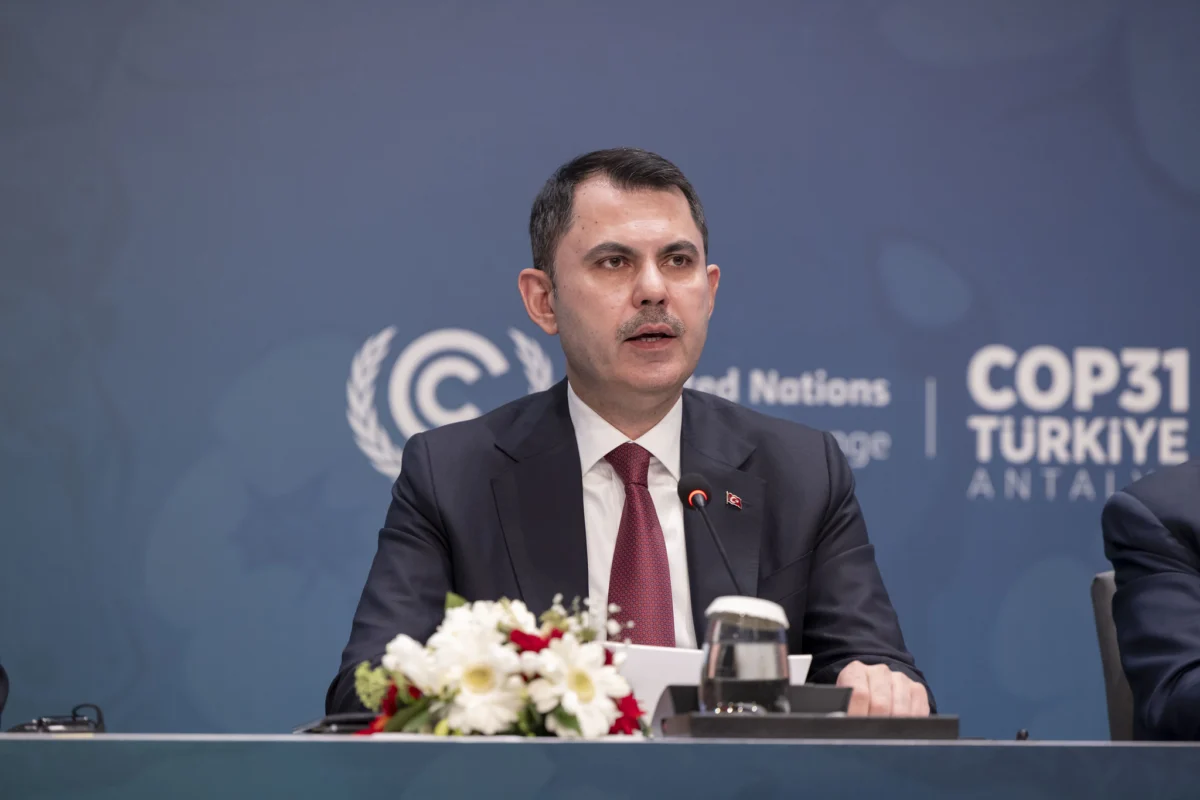
The next critical juncture will be the G20 summit and the lead-up to COP31. With Türkiye recently setting the dates for COP31 in Antalya and appointing an Australian cattle farmer as a youth champion, the stage is set for a contentious debate over the future of climate finance. The central question remains: can the world’s premier development institution survive a fundamental disagreement between its largest shareholder and the rest of the planet?
As of April 16, 2026, the answer remains unclear. The "closed-door" nature of the talks continues to frustrate transparency advocates, while the physical realities of a warming planet—rising sea levels, failing crops, and intensifying storms—continue to outpace the slow, bureaucratic, and now stalled machinery of international diplomacy. The standoff in Washington is more than a policy dispute; it is a battle for the soul of global development in an era of unprecedented environmental crisis.

Related Posts
Constitutional Court of South Africa Bars Shell Oil Exploration in Landmark Victory for Environmental and Community Rights
The Battle for Saldanha Bay: South Africa’s Ambitious Ocean Economy Strategy Faces Legal and Environmental Reckoning