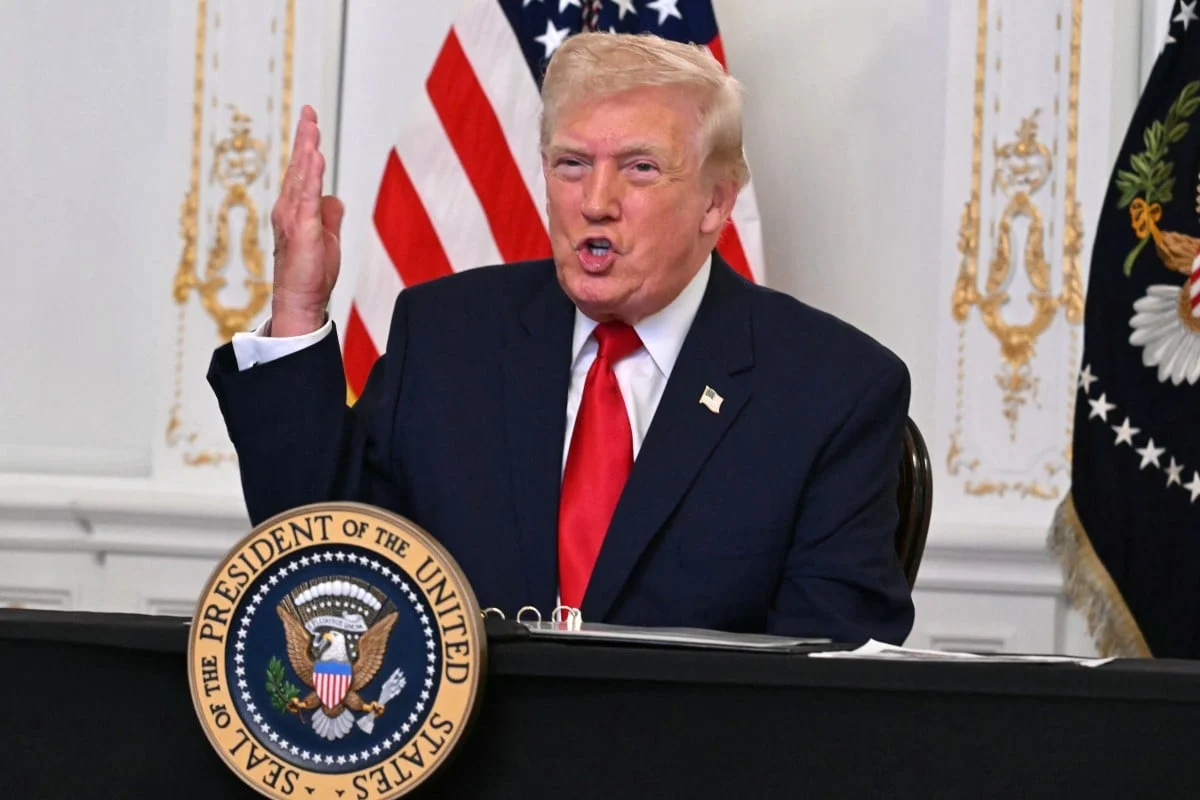
US President Donald Trump suspends planned strikes on Iranian energy infrastructure following productive diplomatic talks
In a significant de-escalation of regional tensions, United States President Donald Trump announced on Monday that he has ordered a temporary suspension of planned military strikes against Iranian energy infrastructure. The decision follows what the White House described as "very good and productive" high-level communications between Washington and Tehran aimed at reaching a comprehensive resolution to the ongoing hostilities in the Middle East.
Writing on his Truth Social platform, President Trump confirmed that the United States and Iranian representatives have engaged in sustained, intensive dialogues over the past 48 hours. These discussions, according to administration officials, have focused on establishing a framework for long-term stability and addressing the volatile security situation that has plagued the region for months.
The Five-Day Moratorium and Strategic Objectives
The directive issued by the President mandates that the Department of War postpone any offensive military actions targeting Iranian power plants, oil refineries, and distribution nodes for an initial period of five days. This window is intended to facilitate further negotiations, with the President noting that the suspension remains strictly "subject to the success" of the ongoing meetings scheduled throughout the week.
The sudden shift in policy represents a departure from the administration’s previous rhetoric, which had signaled an impending kinetic response to recent escalations in the region. By targeting energy infrastructure, the U.S. had previously intended to exert maximum economic pressure on Tehran; however, the shift toward diplomatic engagement suggests a strategic pivot to prevent a broader, uncontrolled conflict that could destabilize global energy markets.
Chronology of the Recent Escalation
The current crisis did not emerge in a vacuum. To understand the gravity of the President’s recent order, one must look at the timeline of events leading up to this diplomatic opening:
- Mid-November 2025: Tensions began to mount following a series of maritime incidents and regional proxy skirmishes that threatened the security of critical shipping lanes.
- Late November 2025: Intelligence reports indicated an increase in Iranian military readiness, prompting the United States to reposition naval and aerial assets in the Persian Gulf.
- Early March 2026: A sharp rise in regional military posturing led the Trump administration to draw up contingency plans for targeted strikes against Iranian infrastructure, citing the need to deter further provocations.
- March 21–22, 2026: Diplomatic backchannels, reportedly facilitated by neutral regional intermediaries, began a series of high-stakes, intensive talks between American and Iranian officials.
- March 23, 2026: Following these discussions, President Trump officially announced the five-day strike moratorium, citing the "tenor and tone" of the ongoing dialogue as sufficient cause for restraint.
Economic and Global Implications
The threat of U.S. military strikes against Iranian energy infrastructure had already sent shockwaves through international markets. Iran remains a critical player in the global oil market, and any disruption to its production capacity has historically led to immediate spikes in crude oil prices. Analysts observe that the market’s sensitivity to these developments is extreme, given that a significant percentage of the world’s daily oil consumption passes through the Strait of Hormuz.
Should the talks fail and military operations resume, energy experts project a potential increase in oil prices by as much as 15% to 20% within the first 48 hours of conflict. This would place significant inflationary pressure on the U.S. economy and global trading partners. Conversely, the success of the current diplomatic initiative could lead to a stabilization of energy prices and a reduction in the "war premium" currently baked into oil futures.
Perspectives from the International Community
While the United States has maintained a firm stance on its right to self-defense and the protection of its regional interests, the international community has expressed a cautious optimism regarding the five-day pause. European allies, who have long advocated for a diplomatic solution, have urged both Washington and Tehran to utilize this window to establish sustainable de-escalation protocols.
Observers in the Middle East are also monitoring the situation closely. Several regional powers have indicated that a full-scale conflict would be catastrophic for the stability of the entire region. "The suspension of strikes is a welcome, albeit temporary, relief," said an analyst based in a neighboring Gulf state. "The challenge now is to transform a five-day tactical pause into a durable strategic agreement."
Challenges to Long-Term Resolution
Despite the positive developments, significant hurdles remain. The core issues fueling the friction—ranging from nuclear non-proliferation to the influence of regional proxy groups—are deeply entrenched. Previous attempts at long-term diplomacy have often stalled due to a lack of mutual trust and competing geopolitical goals.
The "Department of War" terminology used by the President in his announcement has also drawn attention from legal and political analysts, who note the shift in administrative language regarding military operations. The reliance on this five-day window to achieve "a complete and total resolution" is viewed by some as an ambitious, if not optimistic, timeline. The success of these talks will likely depend on whether both sides are prepared to offer verifiable concessions.
Analysis of Military Posture
From a military standpoint, the postponement does not imply a withdrawal of forces. The United States maintains a robust defensive posture in the region, ensuring that the capability to strike remains ready should the current diplomatic efforts be perceived as a tactical ploy by Tehran to regroup. Military planners are maintaining what they term a "high state of readiness," emphasizing that the suspension is a policy choice, not a technical or logistical necessity.
The use of "Department of War" in official communications—a terminology shift from the long-standing "Department of Defense"—has fueled speculation regarding a potential change in the administration’s strategic doctrine. Whether this reflects a purely rhetorical preference or a substantive shift in how the U.S. intends to engage with its adversaries remains a subject of intense debate within Washington policy circles.
Looking Ahead
As the five-day period progresses, the world awaits further updates from the White House. The administration has promised to provide additional details as the situation evolves. For now, the global focus remains on the secret negotiations and the potential for a breakthrough that could reshape the security architecture of the Middle East.
The next 96 hours are critical. If the current momentum is maintained, the potential for a broader regional conflict may be averted, providing a rare opportunity to address the underlying causes of hostility through negotiation rather than force. However, should the talks falter, the specter of military intervention will once again loom over the region, with consequences that would be felt far beyond the borders of the Middle East.
As of Monday afternoon, no official statement has been released by the Iranian government regarding the specifics of the talks, though the lack of an immediate, aggressive rebuttal is viewed by many as a positive sign that the diplomatic process is moving forward in good faith.
Reporting by Adetutu Sobowale.