
Global Markets Rebound as Trump Announces "Productive" US-Iran Talks, Halting Oil Price Surge
Global financial markets experienced a significant reversal of fortunes on Monday, with oil prices plunging and major stock indices rebounding sharply, following an unexpected announcement from US President Donald Trump. The President declared that the United States and Iran had engaged in "very good and productive" discussions aimed at de-escalating the burgeoning conflict in the Middle East, signaling a temporary reprieve from escalating tensions that had gripped investors over the weekend. This diplomatic overture immediately tempered fears of a protracted military confrontation, which had previously sent crude oil prices soaring and triggered widespread market anxiety.
The immediate aftermath of President Trump’s statement saw the price of Brent crude oil, the international benchmark, sink by a dramatic 13%. This steep decline came after Brent had earlier in the day surged to a high of $113 a barrel, reflecting the profound uncertainty that had permeated trading floors. Concurrently, major European stock markets, which had opened with significant losses, quickly recovered. London’s FTSE 100 index, initially down more than 2%, rallied to close 0.5% higher. Similarly, Germany’s Dax index, which had fallen by approximately 2%, finished the day up 1.6%, while France’s Cac index also reversed its losses to gain 1.2%. The shift underscored the market’s acute sensitivity to geopolitical developments, particularly those threatening global energy supplies.
The Weekend Escalation and Trump’s Shift
The dramatic market swings were a direct response to a weekend of escalating rhetoric. On Saturday, President Trump had issued a stark warning, threatening to "obliterate" Iranian power plants if the vital Strait of Hormuz shipping route, a chokepoint for a significant portion of the world’s oil and liquefied natural gas (LNG), was not reopened. This threat was a response to earlier statements from Tehran, which had indicated it would target key infrastructure in the region should its own interests be threatened or if the strait were blockaded. Iran’s Revolutionary Guard Corps had previously demonstrated capabilities to disrupt maritime traffic in the Persian Gulf, intensifying concerns about regional stability.
These bellicose exchanges had deeply rattled financial markets at the close of the previous week and into Monday morning trading. Investors had braced for the possibility of an extended military conflict between the US and Iran, a scenario with potentially catastrophic implications for global energy supplies and the broader world economy. The Strait of Hormuz, through which roughly 20% of the world’s total petroleum consumption and a substantial amount of LNG typically passes, represents an indispensable artery for international trade. Any sustained disruption to this waterway would inevitably lead to severe global fuel shortages and unprecedented price hikes, impacting industries from transportation to manufacturing and driving up consumer costs worldwide.
IEA’s Dire Warning and Historical Parallels
The gravity of the situation was underscored by Fatih Birol, the head of the International Energy Agency (IEA), who issued a stern warning earlier on Monday from an event in Australia. Birol cautioned that the unfolding conflict had the potential to plunge the world into its worst energy crisis in decades. Drawing stark comparisons, he likened the current predicament to the oil shocks of the 1970s, which were triggered by geopolitical events in the Middle East and led to widespread economic instability, and the more recent energy disruptions caused by Russia’s 2022 invasion of Ukraine.
"This crisis as things stand is now two oil crises and one gas crash put all together," Birol stated, highlighting the multi-faceted nature of the energy challenges. His comments reflected concerns not only over crude oil supply but also over the availability and pricing of natural gas, a critical fuel for power generation and industrial processes. The IEA, which advises major industrialised nations on energy policy, has a mandate to ensure global energy security and its chief’s remarks served as a powerful reminder of the delicate balance governing international energy markets. The agency typically coordinates responses to supply disruptions, including the release of strategic petroleum reserves, but the scale of a potential Hormuz closure would present an unprecedented challenge.
The Diplomatic Breakthrough and its Immediate Impact
The pivot in President Trump’s tone, from aggressive threats to an announcement of "very good and productive" talks, dramatically altered the market sentiment. In a series of social media posts, Trump declared his decision to "POSTPONE ANY AND ALL MILITARY STRIKES AGAINST IRANIAN POWER PLANTS AND ENERGY INFRASTRUCTURE" for an initial five-day period. This temporary halt suggested a window for diplomatic engagement, providing a glimmer of hope that a full-scale military confrontation might be averted, at least for the immediate future.
While details of these "talks" remained sparse, their mere announcement was enough to trigger a wave of relief across financial centers. Investors, previously fleeing risky assets, quickly moved back into equities, driving up stock prices. The sharp reversal in oil prices indicated that the market had significantly priced in a high probability of military action and supply disruption, and the removal of that immediate threat led to a rapid unwinding of those positions. This volatility highlights how geopolitical risk premiums are built into commodity prices and how quickly they can dissipate with signs of de-escalation.
Asian Markets Bear the Brunt of Initial Fears
Before Trump’s crucial announcement, Asian markets had already closed for the day, reflecting the full extent of the weekend’s geopolitical anxieties. Consequently, they experienced heavy falls. Japan’s Nikkei 225 index closed down 3.5%, while South Korea’s Kospi index sank a substantial 6.5%. These two nations are particularly vulnerable to disruptions in the Strait of Hormuz due to their heavy reliance on imported oil and gas that typically transits through the waterway. Both countries are major industrial powers with limited domestic energy resources, making their economies highly sensitive to global energy price fluctuations and supply chain security.
For Japan, which imports nearly all its oil and LNG, and South Korea, a significant importer and refining hub, the prospect of a prolonged conflict in the Middle East posed an existential economic threat. Their manufacturing sectors, vital to global supply chains, depend on stable and affordable energy inputs. The initial market reaction in Asia underscored the disproportionate impact that Middle Eastern instability can have on energy-dependent economies thousands of miles away, illustrating the interconnectedness of global energy security.
Broader Economic and Geopolitical Implications
The sudden de-escalation, even if temporary, carries significant implications beyond immediate market reactions.
- For the Global Economy: A sustained period of high oil prices, as feared earlier, would have acted as a major drag on global economic growth. Higher energy costs would fuel inflation, reduce consumer spending power, and increase operational costs for businesses, potentially pushing vulnerable economies into recession. The reprieve offered by the talks, therefore, provides some breathing room, though underlying uncertainties remain.
- For US-Iran Relations: The fact that "talks" were even acknowledged, despite the previous inflammatory rhetoric, suggests a potential shift in diplomatic strategy. Whether these discussions can lead to a more enduring resolution of long-standing grievances, including Iran’s nuclear program, its regional activities, and US sanctions, remains to be seen. The five-day postponement of strikes could be a test of sincerity from both sides.
- Regional Stability: The Middle East remains a volatile region, and the US-Iran standoff is just one facet of its complex geopolitical landscape. While a direct confrontation might be averted for now, the underlying tensions and proxy conflicts continue. The announcement could encourage other regional and international actors to redouble diplomatic efforts, perhaps through mediation by countries like Oman or Switzerland, which have historically played roles in US-Iran communications.
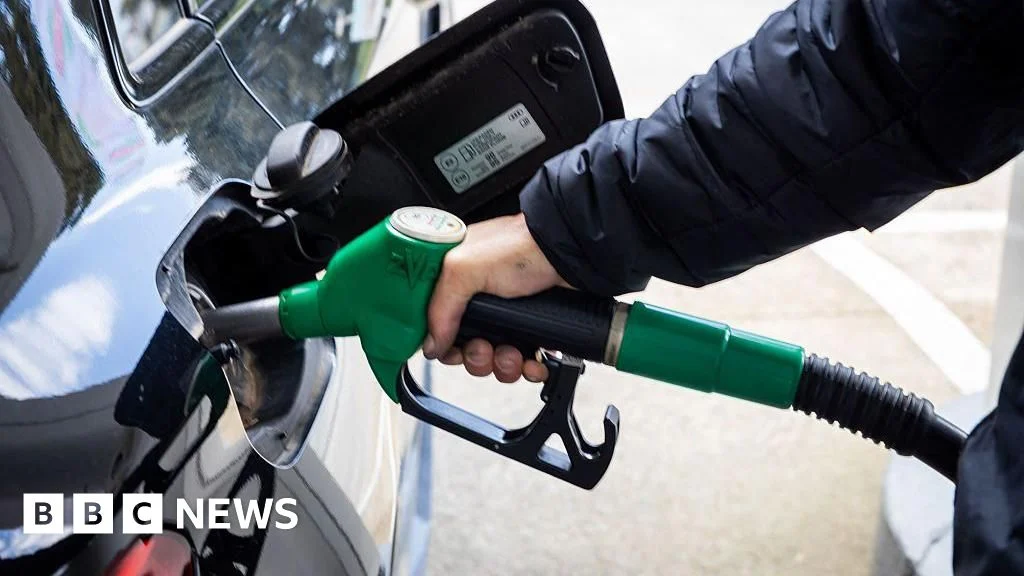
- Energy Security: The incident serves as a stark reminder of the world’s vulnerability to disruptions in key maritime chokepoints. It may prompt renewed discussions about diversifying energy sources, investing in renewable energy, and bolstering strategic reserves in the long term, reducing reliance on volatile regions. The image of a fuel nozzle at a service station, illustrating everyday energy use, powerfully connects these high-level geopolitical events to the daily lives of citizens.
Expert Analysis and Future Outlook
Market analysts and geopolitical experts remain cautiously optimistic. While the immediate threat of military action has receded, the deep-seated animosity and conflicting interests between Washington and Tehran persist. "This is a significant de-escalation, but it’s a fragile one," commented Dr. Eleanor Vance, a senior economist specializing in energy markets. "The market is breathing a sigh of relief, but investors will be looking for concrete signs of sustained dialogue and tangible progress, not just a temporary halt to military threats."
Other analysts pointed out that the sheer speed of the market’s reaction underscores the immense amount of capital that was positioned for conflict. "When you see Brent crude swing 13% in a matter of hours, it tells you how much risk was priced in," said Mark Henderson, a geopolitical risk consultant. "The challenge now is for diplomacy to deliver a credible path forward, because any renewed escalation would likely see an even more violent market reaction, given the whipsaw effect we’ve just witnessed."
The map of the Strait of Hormuz, often featured in discussions of Middle Eastern tensions, serves as a constant visual reminder of the strategic geography at play. Its narrow confines, flanked by Iran and Oman, make it inherently vulnerable to geopolitical maneuvering, and its closure would have ripple effects across the globe.
In conclusion, President Trump’s announcement of "very good and productive" talks with Iran has provided a critical, albeit potentially temporary, pause in a rapidly escalating conflict. The immediate market response, with oil prices plummeting and stock markets rallying, highlights the immense relief felt by investors at the prospect of averted military action. However, the path to a lasting resolution remains fraught with challenges, and the global community will be keenly watching for further diplomatic developments to ensure that this fragile de-escalation translates into genuine, sustained stability in one of the world’s most critical regions for energy security. The coming days will be crucial in determining whether this diplomatic opening can truly pave the way for a more peaceful resolution or if it merely delays an inevitable confrontation, leaving global markets on tenterhooks.

Related Posts
Zambia on Edge: Opposition Leader Arrested Amid Allegations of Insurrection Plot and Election Tensions

Rescuers search for survivors of powerful Indonesia earthquake

