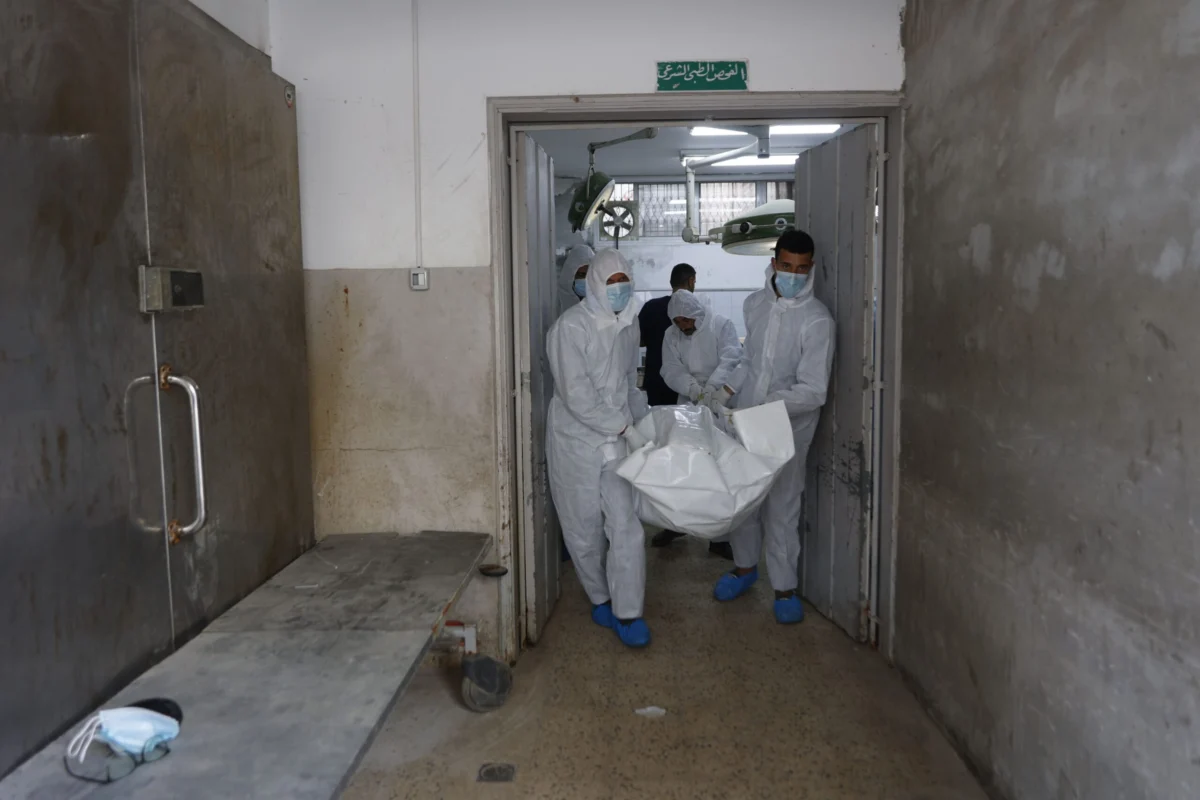
The Legal Limbo of Gaza: A Growing Crisis of the Disappeared and Missing
In Gaza, the bureaucratic process of registering a death—an administrative routine once taken for granted—has disintegrated into a profound legal crisis. Where once a hospital medical report served as the gateway to civil documentation, the systematic collapse of infrastructure, mass displacement, and the pervasive impact of ongoing conflict have rendered the simple act of confirming a death nearly impossible. This administrative failure has trapped tens of thousands of families in a precarious "legal gray zone," where the absence of a loved one is not merely a personal tragedy but an insurmountable barrier to economic survival, legal guardianship, and social security.
The crisis is rooted in the seismic shifts that began in October 2023. As intense bombardment destroyed civil registry offices and hospital record-keeping systems, the state’s capacity to verify casualties vanished. For families, the loss of a relative is often compounded by the inability to obtain a death certificate, leaving them unable to access bank accounts, claim pensions, or resolve inheritance matters. Ahmed Masoud, head of the legal department at the Palestinian Center for the Missing and Forcibly Disappeared, characterizes the situation as an unfolding catastrophe that denies families the basic recognition of their losses.
A Statistical Portrait of Disappearance
The scale of this phenomenon is unprecedented in recent history. Research conducted by the Institute for Social and Economic Progress (ISEP), in partnership with the Palestine Reporting Lab, highlights the sheer magnitude of the crisis. Through a survey of 600 individuals across 53 distinct locations within the Gaza Strip, researchers estimate that more than 51,000 people have been reported missing at some point since October 2023. Of those, between 14,000 and 15,000 individuals remain completely unaccounted for.
The demographic and economic impact is equally devastating. Among households reporting a missing person, 42.9 percent state that the individual was the primary breadwinner. This loss, coupled with the inability to produce a death certificate, creates a ripple effect of poverty and instability. Nearly 30 percent of these families face significant challenges in securing legal guardianship of children, while others struggle with basic civil functions: 14.3 percent report an inability to marry or divorce, and 33.3 percent are barred from accessing bank accounts held by the missing party.
Chronology of a Collapsing System
The timeline of this crisis tracks the erosion of Gaza’s civil administrative capacity. Before October 2023, the Ministry of Interior in Gaza maintained a standardized, albeit complex, system for recording vital statistics. However, as the conflict escalated, the destruction of municipal buildings and the targeting of digital archives led to a rapid loss of data.
- October 2023: The onset of the current conflict leads to the immediate disruption of civil record-keeping as hospitals are overwhelmed and local government functions cease under fire.
- November 2023: Recognizing the growing backlog, local authorities in Gaza propose a temporary policy to classify those missing for more than six months as deceased. This initiative is intended to facilitate the release of assets to destitute families.
- December 2023: The Palestinian Authority (PA) in Ramallah issues a directive declaring the Gaza-based policy illegal. Citing existing legal statutes, the PA maintains that the threshold for declaring a missing person dead is four years of being unaccounted for.
- January 2024: The PA cabinet announces the formation of a national task force to address the issue, launching a digital registration portal. To date, however, the implementation of this task force remains limited, and the mechanism for issuing binding legal documentation is not fully operational.
The Human Cost: De Facto Orphans and Economic Strife
The human impact of this administrative vacuum is particularly acute for children and women. Nedal Jarada, who leads the Al Amal Institute for Orphans, has coined the term "de facto orphans" to describe children whose parents have disappeared but whose deaths cannot be verified. These children exist in a state of suspended animation, ineligible for many orphan-support programs that require legal proof of parental death.
"These are the most painful cases," Jarada notes. "For many families, even receiving confirmation that their loved one has been killed is easier than living with the complete, agonizing uncertainty of not knowing."

For women, the consequences often extend into social and physical vulnerability. Legal aid centers, such as the Women’s Affairs Center in Gaza, have documented instances where the lack of a "protector" or a death certificate makes women targets for exploitation. Samah Al-Shareif, a lawyer at the center, reports that women are frequently denied access to their husbands’ pensions or bank accounts, with financial institutions demanding either a death certificate or the physical presence of the spouse—both of which are impossible to provide. This isolation leaves many without a social shield, rendering them susceptible to extortion by individuals preying on their desperation for food, aid, or documentation.
Legal Implications and Structural Barriers
The tension between the administrative requirements in Ramallah and the lived reality in Gaza underscores the political and legal fragmentation of Palestinian governance. The insistence on a four-year waiting period for a "presumption of death" reflects a pre-war legal framework entirely unsuited to a high-intensity conflict zone. Legal experts argue that this creates a fundamental conflict between formal law and human rights, as thousands are denied the ability to manage their affairs during a time of extreme survival pressure.
Furthermore, the lack of a unified, transparent database exacerbates the chaos. While some civil society organizations have begun to manually track the disappeared, these efforts are decentralized and lack the official seal required by banks, courts, or international aid agencies. The proposal to implement "certificates of absence"—a model used in other post-conflict or disaster-stricken regions—has gained traction among rights advocates. Such certificates would grant families limited power to act on behalf of the missing without definitively declaring them dead, thereby preserving the potential for their return while addressing immediate humanitarian needs.
The Path Forward: Challenges to Reform
The path to resolving this crisis is hindered by three primary factors: the ongoing military blockade, the lack of coordination between disparate governing bodies, and the absence of a comprehensive national policy. Without a centralized, secure, and technologically supported system for tracking the disappeared, the number of "legal ghosts" in Gaza will continue to rise.
Human rights organizations emphasize that any database created must prioritize data security and integrity. The inclusion of genetic samples or verified witness testimony could provide a path toward legitimacy, but such initiatives require resources that are currently unavailable. Moreover, the psychological burden on survivors cannot be overstated; 91.7 percent of those surveyed reported experiencing constant, severe anxiety, and 68 percent stated that formal recognition of their relative’s status—even if it meant confirming a death—would be essential to their ability to move forward with their lives.
As the conflict persists, the "legal gray zone" continues to expand, ensnaring new families every day. The administrative failure to document the missing is not merely a bureaucratic hurdle; it is a profound failure to protect the rights of those left behind. Without urgent intervention, the legal consequences of this war will echo for years, long after the physical violence subsides, leaving a generation of families unable to close the chapter on their missing loved ones and unable to access the basic protections afforded by a functioning state.
In the final assessment, the legal recognition of the missing is a matter of both human dignity and social stability. Whether through the issuance of temporary certificates of absence or the streamlining of death verification protocols, the current status quo remains untenable. Until the state addresses the needs of those caught in the administrative limbo, the survivors of Gaza will remain trapped in a state of suspended existence, deprived of the legal tools necessary to navigate the wreckage of their lives.

Related Posts

The Las Vegas Cybersecurity Summit and the Escalating Threat of Autonomous Digital Exploitation

New York City Council members and privacy advocates launch legislative campaign to ban biometric facial recognition at public entertainment venues