US-Made Armed Maritime Drone Recovered and Destroyed on Turkish Black Sea Coast
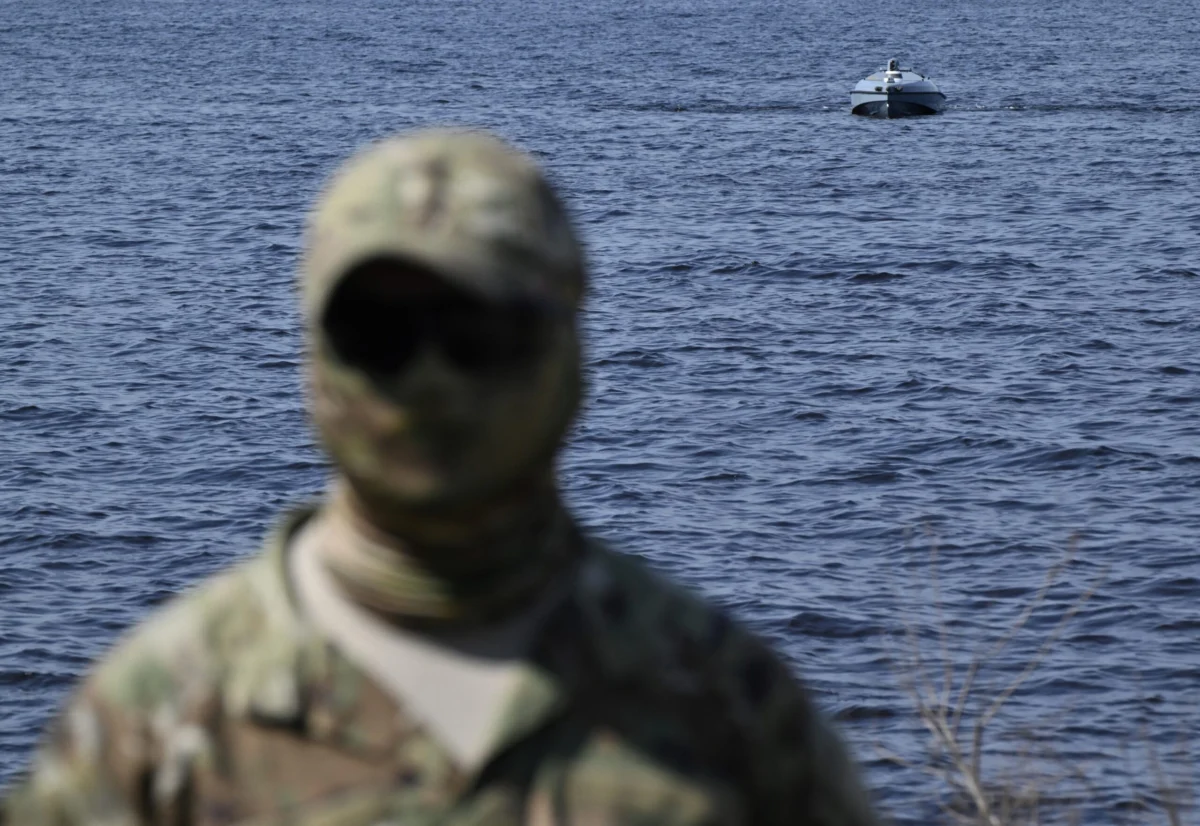
On March 20, 2026, a sophisticated, armed unmanned surface vessel manufactured by the American defense contractor Sierra Nevada Corporation was discovered washed ashore on Turkey’s Black Sea coast, triggering a high-priority security operation and a controlled offshore detonation. The vessel, identified as a variant of the AEGIR-W platform, came to rest on a public beach in the Yüceler neighborhood of the Ünye district, located within the Ordu province. The appearance of a Western-manufactured, combat-ready maritime drone in Turkish waters represents a notable shift in the ongoing naval dynamics of the Black Sea, a region that has seen a dramatic increase in autonomous warfare since the escalation of regional hostilities in 2022.
Chronology of the Recovery and Neutralization Operation
The incident began on the morning of March 20, 2026, when local residents walking along the shoreline in Ünye spotted a sleek, metallic-grey craft wedged against the sand. Recognizing the object as potentially military in nature, locals promptly alerted the Gendarmerie and provincial security forces. Within hours, the Yüceler beach was cordoned off to prevent civilian access, as the possibility of an onboard explosive payload posed a significant risk to the local population.
By the morning of March 21, specialized units from the Turkish Navy’s Explosive Ordnance Disposal (EOD) teams arrived at the site to conduct a comprehensive technical inspection. Initial assessments confirmed that the vessel was not merely a surveillance platform but was configured for offensive operations. The inspection revealed that the craft remained operationally active, with its internal systems likely still powered, and more critically, it was carrying a live warhead.
Faced with the volatility of the onboard explosives and the difficulty of safely dismantling the internal detonation mechanisms on a public beach, the Ordu Governorate, in consultation with the Ministry of National Defense, authorized a controlled destruction. The Turkish Navy towed the AEGIR-W approximately four kilometers away from the shoreline into deeper waters. At a safe distance from coastal infrastructure and civilian maritime traffic, the EOD teams executed a controlled detonation, neutralizing the threat and sending a massive plume of water into the air, an event witnessed by observers from the safety of the Ünye cliffs.
Technical Specifications of the AEGIR-W Platform
The AEGIR-W is part of a modular family of unmanned surface vessels developed by Sierra Nevada Corporation (SNC) to meet the growing demand for low-cost, high-impact maritime denial capabilities. Designed for high-threat environments where manned vessels would face unacceptable risks, the AEGIR-W is characterized by its endurance and versatility.
Measuring just under ten meters in length, the vessel is constructed from high-density polyethylene (HDPE). This material choice is significant for two reasons: it provides high durability against the corrosive effects of saltwater and impacts, and it offers a lower radar cross-section compared to traditional steel-hulled vessels, making it more difficult for conventional coastal surveillance systems to detect.
The platform is powered by a high-efficiency diesel combustion engine, enabling it to reach sprint speeds in excess of 25 knots. According to manufacturer specifications, the AEGIR-W is designed for long-range missions, capable of traveling up to 500 nautical miles at a sustained cruising speed. Its primary utility as a "kamikaze" or strike drone is underscored by its payload capacity; the vessel can carry up to 300 kilograms of explosives or specialized sensor equipment.
In terms of command and control, the AEGIR-W features a dual-mode operational architecture. It can be operated via direct human-in-the-loop control using satellite communication links, or it can function fully autonomously using pre-programmed waypoints and onboard AI for obstacle avoidance and target recognition. The SNC product line also includes the AEGIR-F, a variant optimized for stealth and electronic warfare, and the AEGIR-H, which is designed for extended range and larger payloads.
Historical Context and Regional Proliferation
The discovery in Ordu marks the fifth time since September 2025 that an out-of-control naval drone has been found on Turkish shores. However, this event is distinguished by the origin of the technology. The four previous incidents involved Magura-family USVs, which are of Ukrainian design and manufacture. The Magura V5 has been a cornerstone of Ukrainian maritime strategy, used extensively to target Russian naval assets in the Black Sea.
The presence of a Sierra Nevada Corporation vessel suggests a broadening of the technological footprint in the Black Sea theater. While Western nations have provided significant intelligence and defensive support to regional actors, the physical appearance of an American-made offensive USV on the Turkish coast raises questions regarding the supply chains and operational deployment of these systems.
Since February 2022, the Black Sea has transitioned into a primary laboratory for 21st-century naval warfare. The traditional dominance of large surface combatants, such as frigates and cruisers, has been challenged by the cost-effective and asymmetric threat posed by USVs. This "democratization" of naval power allows smaller forces to project threat far beyond their immediate coastlines, complicating the security calculus for all littoral states, including Turkey, Russia, Romania, Bulgaria, and Georgia.
Official Responses and Security Implications
The Ordu Governorate issued a concise statement following the detonation, emphasizing the priority of public safety and the professionalism of the Turkish Navy’s response. While the statement confirmed the vessel’s origin as a Sierra Nevada Corporation product, it did not speculate on how the drone came to be adrift or its intended target.
A spokesperson for the Turkish Ministry of National Defense noted that the military is currently analyzing the debris recovered from the site—where possible—to understand the vessel’s point of origin and the cause of its failure. "The safety of our coastal waters and the protection of our citizens remain our paramount concerns," the spokesperson stated. "We are monitoring the proliferation of unmanned systems in the Black Sea closely and are taking all necessary measures to ensure that our territorial integrity is not compromised by drifting or malfunctioning maritime hardware."
While Sierra Nevada Corporation has not issued a specific comment on the Ordu incident, the company has previously touted the AEGIR family as a critical tool for "distributed maritime operations." Inferred reactions from diplomatic circles suggest a growing concern over the "drift" problem—where autonomous systems lose communication with their operators due to electronic warfare, mechanical failure, or fuel exhaustion, subsequently becoming hazardous "ghost ships" in international shipping lanes.
Analysis of Strategic Impacts
The washing ashore of an armed AEGIR-W highlights several critical issues for regional security and international maritime law:
1. The Hazard of Drifting Munitions:
The Black Sea is one of the world’s busiest maritime corridors for grain and energy exports. The presence of "lost" armed drones poses a direct threat to commercial shipping. Unlike traditional sea mines, which are stationary, a drifting USV with a 300kg warhead is a mobile, unpredictable hazard. The fact that this is the fifth such incident in six months suggests that the failure rate or the intensity of deployment is reaching a level that requires a coordinated regional response.
2. Technological Escalation:
The transition from locally produced drones (like the Magura) to high-end Western platforms (like the AEGIR) indicates an escalation in the technical sophistication of the conflict. The AEGIR-W’s autonomous capabilities mean that even if communication is jammed, the vessel may continue its mission or enter a "fail-safe" drift mode, which clearly failed to prevent it from reaching a civilian beach in Turkey.
3. Turkey’s Role and the Montreux Convention:
Turkey occupies a unique position as the guardian of the Bosphorus and Dardanelles straits under the Montreux Convention. While Turkey has sought to maintain a balance between its NATO obligations and its role as a regional mediator, the frequent appearance of combat drones on its beaches puts pressure on Ankara to increase its maritime patrols and potentially seek firmer guarantees from belligerents and their suppliers regarding the containment of autonomous systems.
4. The Future of Maritime Denial:
The incident underscores the effectiveness of USVs in denying sea control. However, it also exposes the limitations of current autonomous technology. Reliability in harsh maritime environments remains a significant hurdle. For defense contractors like Sierra Nevada Corporation, the recovery of a largely intact vessel by a third party (Turkey) may also raise concerns regarding "technology drift" and the potential for reverse engineering if such systems fall into the wrong hands.
As the Turkish Navy continues its investigation, the international community will be watching closely to see if this leads to new protocols for the deployment of unmanned systems in contested waters. For the residents of Ünye, the event serves as a stark reminder that the technological frontlines of modern warfare are no longer confined to distant battlefields but can wash up on their very shores.

Related Posts
Pentagon Forges Landmark Seven-Year Agreements with Boeing and RTX to Accelerate Standard Missile-3 Production and Stabilize Defense Supply Chains
Boeing Unveils Ultra Low-Cost Seeker to Enhance Missile Inventory and Combat Cost Challenges in Modern Warfare