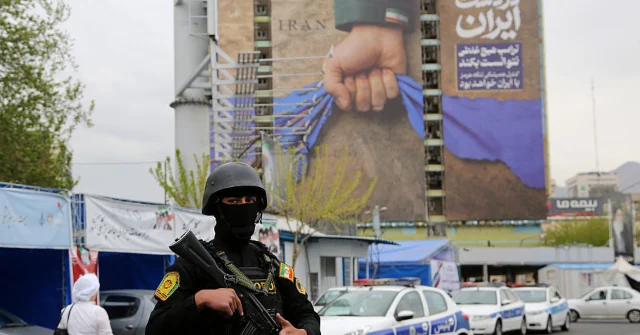
U.S. Imposes Sweeping Naval Blockade on Iran, Threatening Cataclysmic Economic Collapse and Global Market Ripples
The United States has initiated a comprehensive naval blockade targeting all Iranian ports and coastal areas, a move poised to deliver a staggering blow to the Iranian economy and severely constrain the financial resources available to the regime for sustaining its military and internal security apparatus. This dramatic escalation in the U.S. "maximum pressure" campaign against Tehran officially commenced at 10:00 a.m. Eastern time on Monday, following a clear declaration by U.S. Central Command (CENTCOM) on Sunday. While no formal public statement marked the exact moment the deadline passed, CENTCOM’s previous communications unequivocally outlined the impending enforcement, signaling a new and more aggressive phase in the long-standing tensions between Washington and Tehran.
Operational Details and Enforcement Protocols
CENTCOM’s directive emphasized the impartial enforcement of the blockade against vessels of all nations seeking to enter or depart Iranian ports and coastal regions. This encompasses all Iranian ports situated along the Arabian Gulf and the Gulf of Oman, effectively aiming to cut off Iran’s maritime trade arteries. Crucially, CENTCOM affirmed that its forces would not impede freedom of navigation for vessels merely transiting the strategically vital Strait of Hormuz en route to and from non-Iranian ports. This distinction is vital for upholding international maritime law concerning transit passage while simultaneously isolating Iran’s commercial access and exports.
To ensure maritime safety and compliance, CENTCOM advised all ships operating within the region to diligently monitor "Notice to Mariners" broadcasts and to establish contact with U.S. naval forces via bridge-to-bridge channel 16 when navigating the approaches to the Gulf of Oman and the Strait of Hormuz. These protocols are standard procedures for naval operations in international waters, designed to prevent misunderstandings, avoid accidental confrontations, and ensure orderly passage for legitimate, non-Iranian traffic.
Adding another layer to the enforcement, President Donald Trump had previously issued a more expansive warning, indicating that the U.S. Navy would also "seek and interdict every vessel in international waters that has paid a toll to Iran." This particular directive, however, was notably absent from the CENTCOM statement, which focused solely on preventing access to and from Iranian ports. Should the U.S. Navy pursue the interdiction of every international vessel suspected of paying such "ransom" for safe passage through the Strait of Hormuz—a practice Iran has been accused of employing—the operation would undoubtedly become significantly larger in scale and far more delicate in its execution, potentially increasing the risk of international incidents and diplomatic complexities.
Reinforcing the U.S. stance and broadening the international notification, the UK Maritime Trade Operations (UKMTO), a British Royal Navy information-sharing center for commercial shipping, issued its own alert to mariners on Monday. This alert confirmed that access to Iran’s ports and oil terminals was now restricted for ships flying any flag. This restriction applies across the entirety of Iran’s coastline, explicitly including locations along the Arabian Gulf, Gulf of Oman, and the Arabian Sea east of the Strait of Hormuz. The UKMTO bulletin further clarified that "transit passage through the Strait of Hormuz to or from non-Iranian destinations is not reported to be impeded by these measures." Nevertheless, the advisory cautioned that vessels might encounter an increased military presence, directed communications, or "right-of-visit procedures" during their passage through these sensitive waters.
The term "right-of-visit procedures" carries significant implications under international maritime law, traditionally involving the U.S. Navy boarding a suspicious vessel to ascertain its compliance with the blockade and ensure it is not engaged in illicit trade with Iran. This procedure, while legal under certain circumstances, can be a flashpoint for disputes. For neutral vessels already docked at Iranian ports, UKMTO indicated a "limited grace period" has been granted to allow for their departure, aiming to mitigate immediate disruption to innocent third-party shipping and prevent humanitarian issues for crews.
Targeting Iran’s Economic Lifelines: The Jask Terminal
A critical strategic aspect of this blockade is its explicit inclusion of Jask, an alternative oil terminal located on Iran’s Gulf of Oman coast. Iran had invested heavily in Jask with the strategic aim of bypassing the Strait of Hormuz and its primary oil export hub, Kharg Island. This infrastructure development was intended to mitigate the vulnerability of Iran’s oil exports to potential blockades or disruptions within the Strait, which is a narrow and easily defensible choke point. Despite substantial financial commitments from Tehran and years of development, Jask has historically struggled to handle more than a minuscule fraction of Iran’s total oil exports, underscoring its limited capacity as a viable alternative to Kharg Island, which can load millions of barrels per day. By explicitly including Jask in the blockade, the U.S. demonstrates a clear intent to seal off virtually all of Iran’s seaborne trade, leaving minimal avenues for evasion and maximizing economic pressure.
Cataclysmic Economic Projections for Iran
The potential economic fallout for Iran is projected to be nothing short of catastrophic. Miad Maleki, a Senior Fellow at the Foundation for Defense of Democracies (FDD), a Washington D.C.-based non-partisan research institute, and a vocal proponent of President Trump’s military strategy, provided a detailed analysis of the blockade’s likely impact. His assessment, drawing on extensive knowledge of Iran’s economy and infrastructure, projects that the blockade "would cost Iran approximately $276 million per day in lost exports and disrupt $159 million per day in imports, a combined economic damage of about $435 million per day, or $13 billion per month." To put this into perspective, Iran’s estimated GDP in recent years has hovered around $300-$400 billion, meaning this blockade could wipe out a significant percentage of its economic activity if sustained.
Maleki’s analysis highlights Iran’s profound dependency on maritime routes, noting that the country possesses no viable alternative overland or pipeline routes for the vast majority of its oil and petrochemical products. Historically, Iran has explored pipeline options to neighboring countries, but these have either been unfeasible or insufficient for its export volumes. Furthermore, only an estimated 10 percent of its non-oil trade can realistically be rerouted or shipped in ways that might evade the stringent U.S. blockade, likely through overland smuggling routes or small-scale transactions that cannot compensate for lost large-volume maritime trade. While humanitarian cargoes are anticipated to be permitted, the overall reduction in imports would severely strain the availability of essential goods, raw materials for domestic industries, and consumer products.
A particularly dire consequence identified by Maleki relates to Iran’s limited fuel storage capacity. With existing storage facilities already estimated to be filled to about 60 percent capacity—a result of previous sanctions limiting exports—the regime would be compelled to begin shutting down its oil wells within approximately 13 days of the blockade’s commencement. The long-term implications of this are severe: once shut down, these oil wells are prone to rapid degradation due to issues like water seepage, pressure loss, and technical challenges, making their reactivation costly, difficult, and in some cases, permanently damaging. Maleki calculated that "forced shut-ins could permanently destroy 300,000 to 500,000 barrels per day of production capacity," translating to an irreversible loss of "$9 billion to $15 billion per year in revenue, gone forever." Such a permanent reduction in production capacity would cripple Iran’s future economic prospects, regardless of any potential lifting of sanctions, as the physical infrastructure for wealth generation would be diminished.
The timing of this blockade compounds Iran’s existing economic vulnerabilities. The country’s economy has been in a precarious state for years, exacerbated by high inflation, unemployment, and systemic corruption. This fragility was exemplified by the January uprising, which, though brutally suppressed by the Tehran regime, was significantly fueled by the collapse of the national currency, the rial, and widespread public dissatisfaction over economic hardship. Maleki warns that the blockade is highly likely to push Iran into a state of "terminal hyperinflation." He underscored this point by noting Iran’s recent issuance of its largest banknote ever, the 10 million rial note, which is valued at only approximately $7 in U.S. currency, illustrating the extreme devaluation of its currency and the erosion of purchasing power for ordinary Iranians. In his stark conclusion, Maleki stated, "The blockade makes continued resistance economically impossible," suggesting the financial squeeze will eventually force Tehran to alter its regional and nuclear policies.
Geopolitical Context: The "Maximum Pressure" Campaign and Historical Precedents
This naval blockade is the latest, and arguably most aggressive, phase of the Trump administration’s "maximum pressure" campaign against Iran. This policy was initiated following the U.S. withdrawal from the Joint Comprehensive Plan of Action (JCPOA), commonly known as the Iran nuclear deal, in May 2018. The administration argued that the JCPOA was flawed, did not adequately address Iran’s ballistic missile program, or its regional destabilizing activities, including its support for various proxy groups across the Middle East such as Hezbollah in Lebanon, Houthi rebels in Yemen, and various militias in Iraq and Syria.
Since the JCPOA withdrawal, the U.S. has systematically re-imposed and expanded sanctions targeting Iran’s oil exports, banking sector, and other critical industries. The objective has been to starve the Iranian regime of the financial resources it uses to fund its nuclear ambitions, support terrorist organizations, and maintain internal repression. Previous sanctions had already significantly curtailed Iran’s oil exports from over 2.5 million barrels per day before 2018 to as low as a few hundred thousand barrels per day at various points, forcing Iran to rely on clandestine shipments and creative financing. This full-scale naval blockade represents a qualitative leap, moving beyond financial sanctions to direct physical interdiction of trade, effectively aiming to zero out Iran’s seaborne commerce, which constitutes the vast majority of its external trade.
The Strait of Hormuz, a narrow waterway between the Persian Gulf and the Gulf of Oman, is globally recognized as a critical choke point for international oil shipments. Approximately 20% of the world’s petroleum, and a significant portion of liquefied natural gas (LNG), passes through this strait daily, making it indispensable for global energy security. Iran has historically threatened to close the strait in response to perceived threats or sanctions, a threat that has always been met with strong international condemnation due to its potential to trigger a global energy crisis. The current U.S. blockade, while permitting transit passage for non-Iranian traffic, inherently carries the risk of confrontation and further destabilization in one of the world’s most sensitive maritime regions, given Iran’s past aggressive actions in the Gulf.
Global Market Repercussions and Energy Security Concerns
While the blockade is designed to inflict maximum pressure on Iran, its implications extend far beyond the Iranian economy, posing significant challenges to global markets. The loss of Iran’s oil and other exports, even if they were already diminished by prior sanctions, will undoubtedly affect world energy markets. Analysts predict likely bumps in global gas prices and potential overall inflation for American and international consumers, as any reduction in supply tends to push prices upward. However, U.S. officials and supporters of the blockade argue that this impact would be less severe for Americans than allowing Iran to unilaterally close the Strait of Hormuz to all Persian Gulf oil traffic, a scenario that would trigger an immediate and profound global energy crisis with far higher price spikes.
The reopening of the Strait of Hormuz to non-Iranian traffic, a stated benefit of the current U.S. operation, is also expected to help alleviate a critical shortage of much-needed fertilizer shipments to farmers across the globe. Many countries rely on the Persian Gulf for these essential agricultural inputs, and previous disruptions had severely impacted global food security. This secondary benefit highlights the complex interplay of maritime security, geopolitical strategy, and global supply chains that extend beyond energy.
However, not all analysts are optimistic about the immediate benefits for global energy markets or the stability of shipping. Trita Parsi of the Quincy Institute for Responsible Statecraft, a prominent think tank advocating for a less interventionist U.S. foreign policy, voiced concerns to Al Jazeera News. Parsi warned that "Anything that currently takes more oil off the market will push prices up, which in turn will push gas prices further." He predicted that oil prices, which were hovering around $100 per barrel, could surge above $150 if the Houthis, Iran’s terrorist proxies in Yemen, were to replicate their 2024 tactic of attacking ships in the Red Sea and the Bab al-Mandeb Strait. Such actions would further restrict crucial shipping lanes like Bab al-Mandeb, exacerbating global energy supply anxieties and potentially leading to a broader maritime crisis.
Other analysts, also speaking to Al Jazeera, expressed a doleful outlook, suggesting that even with the Strait technically "reopened" for non-Iranian traffic, international shipping companies might largely avoid it due to lingering fears of Iranian piracy or retaliatory actions. This "fear factor" could minimize the intended benefits of renewed Persian Gulf oil exports, keeping insurance premiums high and shipping costs elevated, effectively maintaining a de facto disruption even without explicit Iranian closure. The memories of past attacks on tankers and drones in the region still weigh heavily on maritime operators.
Iran’s Resilience and a Pre-Blockade Cash Infusion
A complicating factor in assessing the immediate impact of the blockade is the U.S.-Israel-Iran ceasefire, which technically still has nine days remaining. The full economic and geopolitical ramifications may therefore be difficult to ascertain until the end of April, when the terms of the ceasefire conclude and Iran’s potential responses might become clearer.
Furthermore, a recent report from South Korea’s Chosun Ilbo highlighted a significant, albeit temporary, financial reprieve for Iran just prior to the blockade. The U.S. Treasury Department had granted a temporary license for Iran to sell crude oil stocks that had been awaiting shipment for at least 30 days. This waiver was intended to mitigate the global economic damage anticipated from the previous Strait of Hormuz shutdown, releasing approximately 140 million barrels of oil onto the world market. While this quantity was insufficient to cover even two days of worldwide demand, it provided Iran with a substantial cash infusion, as it sold its oil at premium prices to eager buyers desperate for supply amidst global market uncertainty.
Chosun Ilbo calculated the revenue from these expedited oil exports at an estimated $4 billion to $5 billion U.S. dollars. This figure is staggering when juxtaposed against Iran’s annual defense budget, which typically ranges from $8 billion to $10 billion. Essentially, this temporary reprieve effectively provided Iran with half of its annual defense spending in a relatively short period. This significant cash cushion raises concerns among analysts that Iran may have amassed sufficient funds to continue financing its military operations and internal repression apparatus through the initial weeks, and perhaps even months, of the U.S. blockade, potentially delaying the full economic impact intended by the "maximum pressure" strategy and allowing Tehran to weather the initial storm.
Humanitarian Concerns and Long-Term Outlook
The allowance for "humanitarian cargoes" is a critical component of the blockade, aiming to prevent a full-scale humanitarian crisis within Iran. However, distinguishing between humanitarian and non-humanitarian goods can be complex in practice, and the broader economic collapse predicted by experts like Maleki could still lead to severe shortages of essential goods, medicines, and food, even if direct humanitarian aid is permitted. The long-term degradation of Iran’s oil infrastructure and the hyperinflationary spiral could lead to widespread public discontent, potentially fueling further internal unrest similar to the January uprising, posing a direct threat to the regime’s stability.
The strategic implications for regional stability are immense. The blockade increases the potential for direct confrontation between U.S. and Iranian forces, particularly if Iran attempts to challenge the enforcement or retaliate against shipping in other regional waterways through its proxies. Regional powers like Saudi Arabia and the UAE, historical rivals of Iran, will be closely watching, potentially offering tacit support to the U.S. operation while also bracing for any potential Iranian retaliation that could impact their own energy infrastructure or shipping lanes. The international community, including major oil-importing nations in Asia and Europe, will be closely watching for any signs of de-escalation or, conversely, further military actions that could trigger a wider conflict.
As the world enters this new phase of U.S.-Iran tensions, the effectiveness of the blockade in compelling a change in Iranian behavior remains to be seen. Its success will be measured not only by its immediate economic impact but also by its ability to alter Iran’s strategic calculations without triggering a broader regional conflict. The coming weeks, particularly after the current ceasefire expires, will be crucial in determining the trajectory of this high-stakes geopolitical gambit. The global energy markets, regional powers, and the Iranian populace alike brace for the profound consequences of this unprecedented naval action, which promises to reshape the dynamics of the Middle East.

Related Posts
Democratic Candidates Must Moderate to Win General Elections, Says Rep. Greg Stanton

Lisa Demuth Secures Republican Gubernatorial Nomination in Minnesota, Defeating Trump-Endorsed Mike Lindell