Carbon accounting can help tackle the hidden emissions of war
The Immediate Impact: The Destruction of Shahid Beheshti University
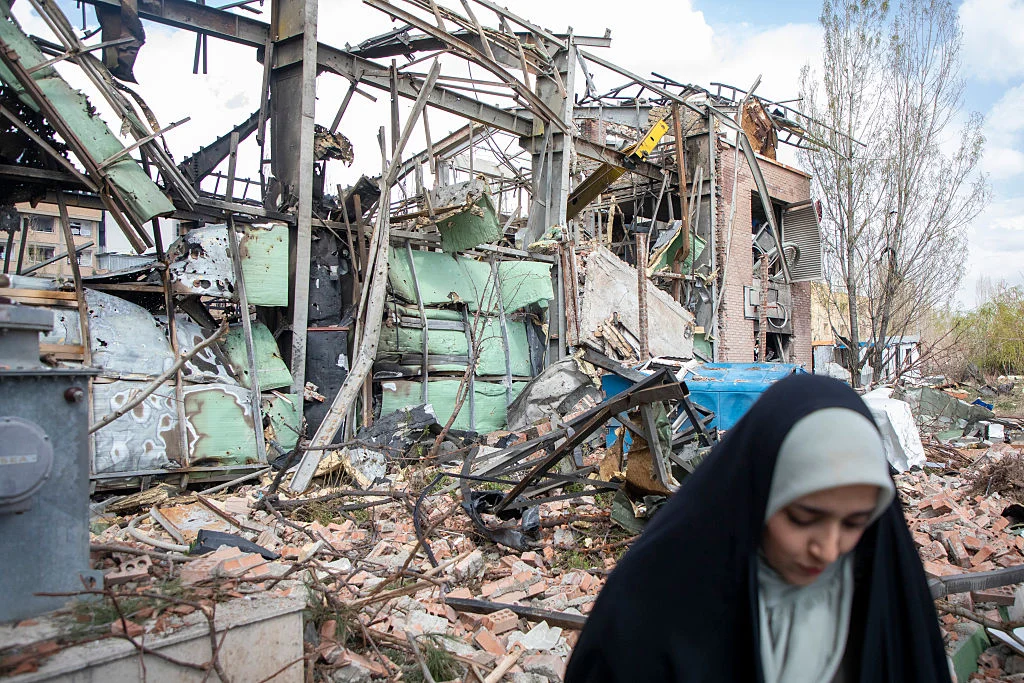
On the morning of April 4, 2026, a targeted missile strike leveled a significant portion of the Shahid Beheshti University campus, specifically focusing on the research facilities dedicated to high-energy physics. The laboratory, a cornerstone of Iran’s scientific community, was involved in advanced research regarding plasma containment and laser-driven technologies. While the immediate humanitarian toll is still being assessed by local authorities, the environmental consequences were instantaneous. The explosion and subsequent fires released an estimated 15,000 metric tons of carbon dioxide equivalent (CO2e) into the atmosphere within hours, primarily from the combustion of specialized chemical agents, building materials, and the high-energy equipment housed within the facility.

Furthermore, the destruction of specialized scientific equipment—often composed of rare earth metals and manufactured through energy-intensive processes—represents a "sunk carbon" loss. The lifecycle emissions required to produce the precision instruments destroyed in the strike were estimated to be equivalent to the annual energy consumption of several thousand Iranian households. The loss of this infrastructure also halts research into potential clean energy solutions, such as plasma-based waste-to-energy systems and advanced fusion containment, highlighting a secondary climate cost: the delay of the technological transition required to mitigate global warming.
A Chronology of Escalation and Environmental Toll
The April 4 strike did not occur in a vacuum but followed a series of escalating tensions in the region that have seen a steady increase in military sorties and defensive maneuvers.

- January 2026: Regional tensions flare following a breakdown in maritime security negotiations. Military exercises in the Persian Gulf see a 40% increase in fuel consumption by naval vessels compared to the previous year.
- February 15, 2025 – March 2026: A sustained increase in border skirmishes leads to the deployment of heavy mechanized divisions. Environmental monitors report a significant spike in nitrogen dioxide (NO2) levels along transit corridors.
- April 4, 2026: The missile strike on Tehran occurs at approximately 03:15 local time. Fires burn for over 24 hours, complicating air quality in a city already struggling with seasonal smog.
- April 5, 2026: Satellite imagery from environmental NGOs confirms the total destruction of the laser and plasma wing, noting a thermal plume that extended several kilometers.
- April 6, 2026: The international community begins quantifying the "reconstruction debt"—the carbon emissions that will be generated when and if the university is rebuilt.
Quantifying the Carbon Footprint of Modern Warfare
The strike in Tehran is a microcosm of a much larger, global phenomenon. According to data compiled by the Conflict and Environment Observatory (CEOBS), military operations globally account for an estimated 5.5% of total greenhouse gas emissions. However, because the 1997 Kyoto Protocol and the 2015 Paris Agreement made the reporting of military emissions voluntary, the true figure is likely much higher.
Modern conflict is an industrial-scale emitter. A single long-range missile strike, like the one witnessed on April 4, involves a supply chain of immense carbon intensity. From the mining of propellant chemicals to the high-heat manufacturing of specialized alloys, the "cradle-to-grave" carbon cost of a single precision-guided munition can exceed 50 metric tons of CO2. When scaled to the level of a sustained military campaign, the emissions can surpass those of mid-sized industrialized nations.

For example, research into recent conflicts has shown that the first year of large-scale hostilities can produce upwards of 100 million metric tons of CO2e. This includes direct fuel consumption by tanks and jets, the release of greenhouse gases from damaged industrial sites, and the massive "carbon debt" of reconstruction. In Tehran, the reconstruction of the Shahid Beheshti University facility will require thousands of tons of cement and steel—two of the most carbon-intensive industries on the planet.
The Financial Diversion: Climate Finance vs. Defense Spending
One of the most insidious "material" costs of war is the diversion of capital. As nations pivot toward "war footing," budgets originally earmarked for climate adaptation and renewable energy transitions are frequently cannibalized to fund defense procurement. This shift is reflected in the recent performance of the Global Environment Facility (GEF).

Recent reports indicate that the GEF has raised $3.9 billion ahead of its latest funding deadline, a figure that sits $1 billion below its previous budget. This shortfall comes at a critical juncture when developing nations require unprecedented levels of nature and climate funding. Donor governments, citing the need for increased security spending in an unstable geopolitical landscape, have scaled back their environmental commitments. The $1 billion gap represents a lost opportunity to protect millions of hectares of forest or to de-risk renewable energy projects in the Global South.
This trend is visible globally:

- Italy: The government recently announced a delay in its coal phase-out timeline, citing rising gas prices and the need for energy security amidst regional instability.
- India: In a surprising move, New Delhi withdrew its bid to host the COP33 climate talks, signaling a shift in domestic priorities as it navigates a complex regional security environment.
- Colombia: The nation has pledged to exit the Investor-State Dispute Settlement (ISDS) system after facing a barrage of lawsuits from fossil fuel companies, a move that highlights the friction between national climate goals and the legal protections afforded to international energy capital during periods of economic volatility.
Broader Implications and the Reconstruction Paradox
The destruction of the Tehran laboratory underscores the "reconstruction paradox." When civilian and scientific infrastructure is destroyed in war, the subsequent rebuilding process is rarely "green." Emergency reconstruction often prioritizes speed and low cost over carbon efficiency. The result is a secondary surge in emissions that can last for a decade after the guns fall silent.
Moreover, the "climate cost of war" includes the destruction of carbon sinks. While the strike on Shahid Beheshti University was an urban event, other conflicts in 2025 and 2026 have seen the widespread burning of forests and the drainage of wetlands for tactical advantages. In South America, the struggle to halt deforestation remains fraught; while Brazil has led a roadmap to rescue global pledges to protect the Amazon, the encroachment of illegal mining and cattle ranching—often exacerbated by lawlessness in conflict-prone areas—continues to undermine these efforts.

In the United Kingdom, recent investigations have linked "green" jet fuel imports to Amazon deforestation, revealing how the desperation for energy security and "sustainable" alternatives can inadvertently fuel ecological destruction elsewhere. This interconnectedness means that a missile strike in Tehran or a skirmish in Eastern Europe has ripples that affect the carbon balance of the entire planet.
Official Responses and International Outcry
The reaction to the April 4 strike has been divided along predictable geopolitical lines, yet a growing coalition of environmental scientists and climate diplomats is demanding a new framework for "conflict-related emissions."

An Iranian spokesperson for the Department of Environment characterized the strike as "environmental terrorism," noting that the destruction of the university’s research would set back the nation’s domestic carbon-reduction targets by at least five years. Meanwhile, UN climate envoys have expressed "grave concern" over the rising trend of targeting educational and scientific institutions, which are essential for the global transition to a low-carbon economy.
Climate activists have used the Tehran incident to call for a mandatory inclusion of military emissions in the UN Framework Convention on Climate Change (UNFCCC) reporting. "We can no longer afford to treat the military as a carbon-neutral entity," said a representative from a prominent European climate think tank. "Every bomb dropped and every lab destroyed is a withdrawal from our global carbon budget that we cannot afford to pay."

Conclusion: The Path Forward in an Unstable World
The events of April 6, 2026, serve as a reminder that the climate crisis and global security are inextricably linked. The "measurable and material" cost of war is now being documented by satellites, atmospheric sensors, and economic analysts with unprecedented precision. As the world watches the fallout from the Shahid Beheshti University strike, the narrative is shifting from war as a purely humanitarian and political tragedy to war as a primary driver of planetary heating.
To meet the goals of the Paris Agreement, the international community must address the "security-climate nexus." This involves not only protecting scientific infrastructure from the ravages of conflict but also ensuring that climate finance is shielded from the fluctuations of defense spending. As seen in Nepal, where a revolution in electric vehicle adoption has provided a buffer against oil crises caused by global instability, the transition to green technology can actually enhance national security. However, for such successes to become the global norm, the "hypothetical" cost of war must be recognized for what it truly is: a tangible, escalating threat to the survival of the biosphere.

Related Posts
Constitutional Court of South Africa Bars Shell Oil Exploration in Landmark Victory for Environmental and Community Rights

The Battle for Saldanha Bay: South Africa’s Ambitious Ocean Economy Strategy Faces Legal and Environmental Reckoning