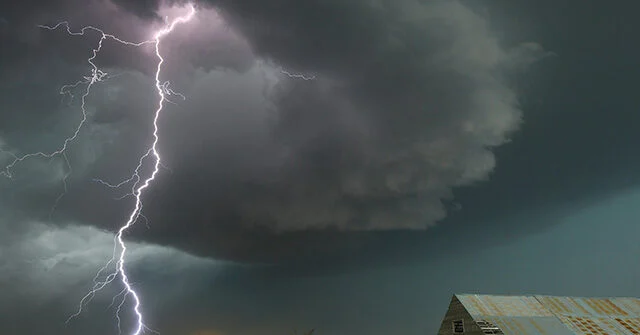
Oklahoma Couple’s Harrowing Tornado Escape Underscores Urgency of Storm Preparedness Amidst Widespread Damage in Ponca City
A terrifying encounter with a possible tornado in Ponca City, Oklahoma, on Friday saw a local couple and their pets narrowly escape harm by taking refuge in an underground storm shelter, highlighting the critical importance of swift action and preparedness in severe weather events. Shari and Dwain Short’s dramatic dash for safety, captured on video, has since circulated, serving as a stark reminder of the unpredictable and destructive power of severe storms that frequently impact the region. The incident left their community grappling with significant property damage, downed power lines, and widespread debris, though remarkably, no serious injuries have been reported in the immediate aftermath.
The Terrifying Friday Night: A Race Against the Storm
The evening of Friday, May 24, 2024, began like many others in Oklahoma during tornado season, with skies darkening and an increasing sense of unease as weather alerts began to sound. For Shari and Dwain Short, residents of Ponca City, the warning became acutely real as the atmosphere around their home rapidly transformed. Footage recorded outside their residence vividly depicts the escalating tension: the once-clear sky quickly grew ominous, adopting a heavy, bruised grey hue. The wind, initially a mere whisper, began to whip with increasing ferocity, causing the mature trees surrounding their property to sway violently, bending almost to their breaking point under the unseen force.
As the storm’s intensity mounted, the Shorts initiated their well-practiced emergency plan. The video shows Shari Short opening the heavy, reinforced door to their underground storm shelter—a vital safeguard for countless Oklahomans residing in "Tornado Alley." The urgency in her movements was palpable as the wind intensified its assault. Moments later, Dwain Short emerged, cradling one of their beloved dogs, and quickly descended into the subterranean refuge, his wife following closely behind. The critical instant arrived as Dwain attempted to secure the heavy door; the wind, as if sensing their vulnerability, surged dramatically, momentarily hindering his efforts. He emerged briefly, battling against the gale, before successfully retreating back into the shelter just as the full brunt of the storm unleashed its fury.
The scene outside their shelter instantly devolved into chaos. Debris, indistinguishable in the violent gusts, began to fly through the air. The camera, presumably mounted to capture the impending storm, shook violently, its feed momentarily interrupted by flashes of light—likely electrical discharges from damaged power infrastructure—as gust after gust hammered their property. The chilling video concludes with a final, blinding flash across the sky, leaving the viewer to imagine the sheer power of the weather event that had just enveloped the Shorts’ home and the wider Ponca City community. This harrowing sequence underscored the split-second decisions and physical challenges faced by individuals caught in the path of a rapidly developing severe weather system.
Ponca City Reels from Severe Weather: Community Impact and Initial Aftermath
In the hours immediately following the storm, the extent of the damage across Ponca City began to emerge. While the Shorts’ personal ordeal highlighted the immediate danger, the broader community faced a landscape of destruction. Reports from local news outlets, including KOCO and News On 6, indicated that at least one tornado was believed to have touched down in the area, although official confirmation from the National Weather Service was still pending. Regardless of the precise meteorological classification, the impact was undeniable: numerous homes suffered damage, ranging from roof compromises to structural integrity issues. Power lines were downed across the city, plunging thousands into darkness and complicating initial assessment and recovery efforts. Streets became impassable in many areas, choked with scattered debris, including tree limbs, fencing, and pieces of damaged structures.
Despite the widespread material damage and the sheer force of the storm, a profound sense of relief permeated the community as initial reports confirmed no serious injuries. This remarkable outcome, given the storm’s intensity, was a testament to the effectiveness of warning systems, community preparedness, and the resilience of residents who took appropriate shelter. Shari Short, reflecting on their traumatic experience, articulated this sentiment in a heartfelt social media post on Sunday, encapsulating the prevailing gratitude. "Friday night was one of those moments that will stick with us forever," she wrote, acknowledging the severe hit their community had endured. "Our community took a hard hit from severe weather, and by the grace of God, we were spared from any serious injuries. That alone is something I will never take for granted." Her words resonated deeply with many, underscoring the invaluable nature of human life over material possessions. "Houses can be rebuilt. Fences can go back up. Cars can be replaced. But people… people cannot. And for that, I am so incredibly thankful," she concluded, a powerful message that quickly became a focal point for the community’s nascent recovery efforts. Local emergency services and utility companies mobilized swiftly, initiating damage assessments and beginning the arduous process of clearing roads and restoring essential services. Neighbors, even those with damage to their own properties, began checking on one another, illustrating the strong community bonds that often emerge in the face of adversity.
NWS Survey Underway to Confirm Tornado Activity
The precise nature of the severe weather event that struck Ponca City remains a subject of ongoing investigation by the National Weather Service (NWS). While local reports and the sheer scale of the damage strongly suggest the presence of a tornado, the NWS follows a rigorous protocol to officially classify such events. Trained damage assessment teams from the NWS are expected to survey the affected area in the coming days, meticulously examining patterns of destruction to determine whether the damage was caused by a tornado or by powerful straight-line winds.
This distinction is crucial for several reasons. Tornadoes, characterized by rotating columns of air, leave behind distinct cyclonic damage patterns, often with debris scattered in convergent directions. Straight-line winds, while capable of causing significant destruction, typically result in debris being blown in a single, consistent direction. Accurate classification is vital for meteorological analysis, helping forecasters refine prediction models and improve the specificity of future warnings. It also contributes to historical weather data, which informs long-term climate studies and disaster preparedness strategies. Local emergency management officials in Kay County are working in close coordination with the NWS, providing logistical support for the survey teams and compiling comprehensive reports of the damage to public and private infrastructure. This information will be critical for potential state and federal disaster declarations, which could unlock crucial funding and resources for the long-term recovery of Ponca City. Utility companies, meanwhile, are prioritizing the restoration of power, navigating challenging conditions posed by downed lines and debris, with residents advised to exercise caution and report any hazards to appropriate authorities.
Oklahoma: A Hub of Tornado Activity
Oklahoma’s geographical position places it squarely within "Tornado Alley," a region in the central United States particularly susceptible to powerful and frequent tornadoes. This phenomenon is primarily due to the unique convergence of atmospheric conditions: warm, moist air from the Gulf of Mexico clashes with cool, dry air from the Rocky Mountains and cold, dry air from Canada. This atmospheric instability, combined with varying wind speeds and directions at different altitudes (wind shear), creates the ideal environment for the formation of supercell thunderstorms, which are often precursors to tornadoes.
The state experiences an average of 50-60 tornadoes annually, with peak season typically running from April through June, though severe weather can occur at any time of year. Historically, Oklahoma has been home to some of the most destructive tornadoes on record, leading to a deep-seated culture of storm preparedness among its residents. The National Weather Service plays a pivotal role in public safety, utilizing advanced Doppler radar systems to detect rotating storms and issuing timely tornado watches (meaning conditions are favorable for tornadoes) and tornado warnings (meaning a tornado has been sighted or indicated by radar). These warnings, disseminated through various channels including emergency alerts on phones, television, and radio, provide precious minutes for residents to seek shelter. The tragic lessons learned from past events, such as the devastating 1999 Bridge Creek-Moore tornado, have underscored the absolute necessity of robust warning systems and accessible, secure storm shelters.
The Lifesaving Role of Storm Shelters
The experience of Shari and Dwain Short serves as a powerful testament to the lifesaving efficacy of storm shelters in regions prone to tornadic activity. Their quick retreat into their underground shelter undoubtedly saved them and their pets from severe injury or worse, as the immediate impact of the storm hit their property with violent force. Storm shelters come in various forms, but all are designed to provide a safe haven from extreme wind and flying debris. Underground shelters, like the Shorts’, are often considered the most secure, as they offer protection from direct wind forces and projectile impacts by placing occupants below ground level. These structures are typically reinforced with concrete or steel and feature heavy, airtight doors capable of withstanding immense pressure.
Beyond underground options, many homes, especially newer constructions in tornado-prone areas, incorporate "safe rooms" within the house. These are purpose-built, reinforced rooms designed to meet FEMA standards for tornado protection, offering near-absolute protection from extreme winds and debris, even when the rest of the house is destroyed. The effectiveness of these shelters cannot be overstated; they transform a situation of extreme peril into one of relative safety, buying critical time for individuals and families to weather the storm. The existence of a comprehensive family emergency plan, which includes identifying a designated shelter location, practicing drills, and having an emergency kit, further enhances preparedness. Public awareness campaigns by local and state emergency management agencies in Oklahoma consistently stress the importance of these measures, advocating for every household to have a plan and, ideally, access to a storm shelter.
Looking Ahead: Recovery and Resilience
As Ponca City begins the arduous process of recovery, the focus shifts from immediate survival to long-term rebuilding and community support. The challenges ahead are significant, encompassing the extensive clean-up of debris, the repair and reconstruction of damaged homes and infrastructure, and the restoration of full power and utilities to all affected areas. For many residents, the psychological toll of such a traumatic event can be profound, often requiring time and support to process the fear and loss experienced. Local government agencies, non-profit organizations, and community volunteers will play crucial roles in coordinating relief efforts, providing assistance to those displaced, and helping residents navigate the complexities of insurance claims and rebuilding processes.
Despite the immediate devastation, the spirit of resilience that characterizes communities in Tornado Alley is already evident in Ponca City. Neighbors are helping neighbors, local businesses are offering support, and the collective determination to rebuild stronger is palpable. Shari Short’s powerful message—that human lives are irreplaceable, while material possessions can be restored—will likely serve as a guiding principle during the recovery phase. This perspective fosters a sense of unity and reminds everyone of what truly matters. The incident in Ponca City serves as a powerful, real-time case study in the ongoing importance of robust weather forecasting, effective warning systems, and personal preparedness in the face of increasingly severe and unpredictable weather patterns. As the community looks to the future, the lessons learned from Friday’s terrifying ordeal will undoubtedly reinforce the resolve to enhance safety measures and strengthen the bonds of community.

Related Posts
Democratic Candidates Must Moderate to Win General Elections, Says Rep. Greg Stanton
Lisa Demuth Secures Republican Gubernatorial Nomination in Minnesota, Defeating Trump-Endorsed Mike Lindell