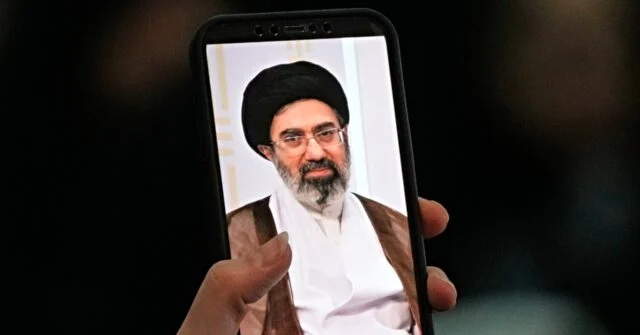
The Enigma of Iran’s New Supreme Leader, Mojtaba Khamenei, Deepens Amid Reports of Injury, Isolation, and Power Consolidation
Reports from anonymous alleged U.S. and Israeli security officials, relayed through prominent mainstream media outlets this weekend, indicate that Iran’s newly appointed Supreme Leader, Mojtaba Khamenei, is "wounded, isolated, and not responding to messages being relayed to him." This assessment casts a pall over an already volatile geopolitical landscape, particularly as the region grapples with the ongoing "Operation Epic Fury," which, according to a Sunday report in the Washington Post, has devolved into a brutal contest for control over the strategically vital Strait of Hormuz, with Iran reportedly holding a dominant position.
The Swift and Mysterious Succession
Mojtaba Khamenei’s ascent to the supreme leadership two weeks ago was both swift and shrouded in controversy, coming on the heels of the sudden and violent death of his father, Ayatollah Ali Khamenei. The elder Khamenei, who had served as Supreme Leader since 1989, held immense spiritual and political authority, his death creating an immediate power vacuum. Mojtaba’s appointment, quickly sanctioned by the Assembly of Experts, raised eyebrows due to his relative lack of public profile and the opaque circumstances surrounding his father’s demise, which some analysts suggest involved "decapitation strikes" targeting key figures within the Iranian establishment. The rush to install a successor, particularly one with Mojtaba’s background, hinted at an urgent need to project continuity and stability amidst internal and external pressures. His previous role was largely behind-the-scenes, managing his father’s office and finances, and he was known to wield significant influence within the IRGC and the Basij paramilitary forces, albeit informally.
However, the current intelligence reports suggest that far from stabilizing the nation, Moj Mojtaba’s dubious condition has exacerbated the crisis. The Washington Post‘s analysis highlighted that his status as an incommunicado figurehead has inadvertently paved the way for "surviving clerics and leaders of Iran’s powerful Islamic Revolutionary Guard Corps (IRGC) to consolidate their grip on the country." This consolidation represents a significant shift in Iran’s internal power dynamics, potentially moving the country further towards a military-clerical hybrid rule, with the IRGC assuming an even more dominant role in governance and strategic decision-making.
International Intelligence Scramble to Ascertain Status
The international community, particularly U.S. and Israeli intelligence agencies, is actively engaged in efforts to ascertain Mojtaba Khamenei’s true condition and whereabouts. The Times of Israel (TOI) reported on Monday that U.S. and Israeli intelligence teams are "working to detect traces of Khamenei as he remains unseen since being declared the new supreme leader." This intensive surveillance underscores the critical importance placed on understanding the true leadership structure of Iran, a key player in regional and global security.
Adding to the mystery, the New York Post on Saturday cited intelligence from the CIA and Mossad suggesting that while Khamenei is believed to be "alive," his "whereabouts and condition remain a puzzling mystery" to both outside observers and, critically, to many within Iran itself. A U.S. official, expressing the bewilderment within intelligence circles, remarked, "It’s beyond weird. We don’t think the Iranians would have gone through all this trouble to choose a dead guy as the supreme leader, but at the same time, we have no proof that he is taking the helm." This sentiment captures the profound uncertainty gripping policymakers and analysts, who are accustomed to a more predictable, albeit often adversarial, leadership structure in Tehran. The absence of concrete evidence of his active leadership creates a dangerous vacuum, making it difficult to predict Iran’s future actions or engage in meaningful diplomatic or deterrent strategies.
The "Puppet Figurehead" Theory
Amidst the conflicting signals, a leading theory emerging from intelligence assessments is that Mojtaba Khamenei, even if alive, is not an active leader but rather a symbolic figurehead. The Jerusalem Post on Saturday quoted a "well-informed source" who posited that Khamenei is likely alive but "is being used as a puppet figurehead by the Islamic Revolutionary Guard Corps (IRGC)." The source further elaborated, "The more likely scenario is that the Revolutionary Guards are controlling him, not the other way around. In a few days, we will probably know more."
This "puppet" scenario aligns with the observed consolidation of power by the IRGC, a highly influential and well-armed branch of Iran’s military that exerts significant control over the country’s economy, politics, and ideological direction. Should the Supreme Leader, traditionally the ultimate authority in Iran, be incapacitated or controlled, the IRGC would effectively become the primary decision-maker, potentially leading to more aggressive regional policies and a harder line against perceived internal and external threats. This shift could have profound implications for ongoing regional conflicts, nuclear negotiations, and the internal stability of Iran.
Symbolic Absences and Dubious Communications
The lack of any tangible public presence from Mojtaba Khamenei has been particularly striking. He has ostensibly released two brief written statements since his appointment, but without any conclusive proof of his authorship. More significantly, he conspicuously failed to make a public appearance, or issue either a video or audio address, for the Persian New Year holiday of Nowruz on Friday. Nowruz is a deeply significant cultural and national holiday in Iran, and his father, Ayatollah Ali Khamenei, had delivered a televised address every year for the occasion since 1989. This unbroken tradition, abruptly halted, sent a powerful message of disarray and uncertainty to the Iranian populace and international observers alike.
The dissident news service IranWire further noted that a sprawling ten-page document, attributed to Mojtaba Khamenei, was released on Friday. However, its content and timing raised more questions than answers. The document was described as "largely focused on justifying the transfer of power, explaining a policy of ‘media silence’ during wartime, and outlining efforts to manage relations with neighboring countries to prevent the conflict from widening." IranWire suggested the document aimed to "frame the ongoing war as a religious struggle and rally support among the more devout segments of society, particularly within the IRGC and Basij, who may have been shaken by recent ‘decapitation’ strikes."
Perhaps the most improbable claim within this document was the assertion that Mojtaba Khamenei has been moving unseen among the people of Iran during the war, covertly "eavesdropping on their conversations to determine the true attitude of the Iranian people." This highly unlikely narrative, bordering on the fantastical, further fueled suspicions that the document was a fabrication designed to project an image of active leadership and divine connection, rather than a genuine communication from the new Supreme Leader. It underscores a desperate attempt by the regime to control the narrative and maintain a semblance of legitimacy in the face of widespread confusion and skepticism.
The Era of AI-Generated Deception
The efforts to project an image of an active leader extend beyond dubious written statements. The Wall Street Journal (WSJ) reported on Saturday that the Iranian regime has resorted to releasing "archival, faked, and A.I.-generated images" of the new Supreme Leader. These attempts at digital deception, however, "do not appear to have fooled anyone." Even the profile photo on Khamenei’s purported X social media account is allegedly an A.I. creation.
The use of artificial intelligence and manipulated media by a state apparatus to create a virtual leader highlights the profound crisis of legitimacy and control within Iran. In an age of widespread digital literacy, such crude attempts at deception are quickly exposed, further eroding public trust and undermining the regime’s authority. It also points to the sheer inability, or unwillingness, of those in power to present the actual Mojtaba Khamenei to the public, reinforcing the notion of his severe incapacitation or complete absence from active leadership.
Broader Implications: Operation Epic Fury and the Strait of Hormuz
The internal turmoil surrounding Iran’s leadership takes place against the backdrop of "Operation Epic Fury," an intensifying regional conflict that has pushed the Strait of Hormuz into the spotlight. The Strait, a narrow chokepoint between the Persian Gulf and the Gulf of Oman, is one of the world’s most critical maritime passages for oil shipments, with approximately one-fifth of global petroleum consumption passing through it daily. Control over this waterway grants immense strategic leverage, capable of disrupting global energy markets and triggering international economic crises.
The Washington Post‘s assessment that Iran "holds most of the cards" in the struggle for Hormuz suggests a significant shift in regional military balance, or at least a highly effective Iranian strategy to assert dominance in this crucial area. This could involve a combination of sophisticated anti-ship missile capabilities, drone swarms, naval mine warfare, and the presence of fast-attack craft operated by the IRGC Navy. A weakened or absent Supreme Leader, however, complicates the command and control structure necessary for such complex military operations, potentially empowering the IRGC to act with greater autonomy, or conversely, creating vulnerabilities due to internal discord.
The situation presents a multifaceted challenge for the United States and its allies. The opacity surrounding Iran’s leadership makes it difficult to predict how the country will respond to provocations or engage in de-escalation efforts. A powerful, unchecked IRGC could lead to more aggressive actions in the Strait of Hormuz, potentially escalating "Operation Epic Fury" into a wider conflict. Furthermore, the internal instability could breed dissent and unrest within Iran, a scenario that both the regime and its adversaries are closely monitoring. The coming days and weeks are expected to shed more light on the true state of Mojtaba Khamenei and, by extension, the future trajectory of Iran.

Related Posts
Democratic Candidates Must Moderate to Win General Elections, Says Rep. Greg Stanton
Lisa Demuth Secures Republican Gubernatorial Nomination in Minnesota, Defeating Trump-Endorsed Mike Lindell