Six US Airmen Killed as KC-135 Tanker Crashes in Western Iraq During Operation Epic Fury
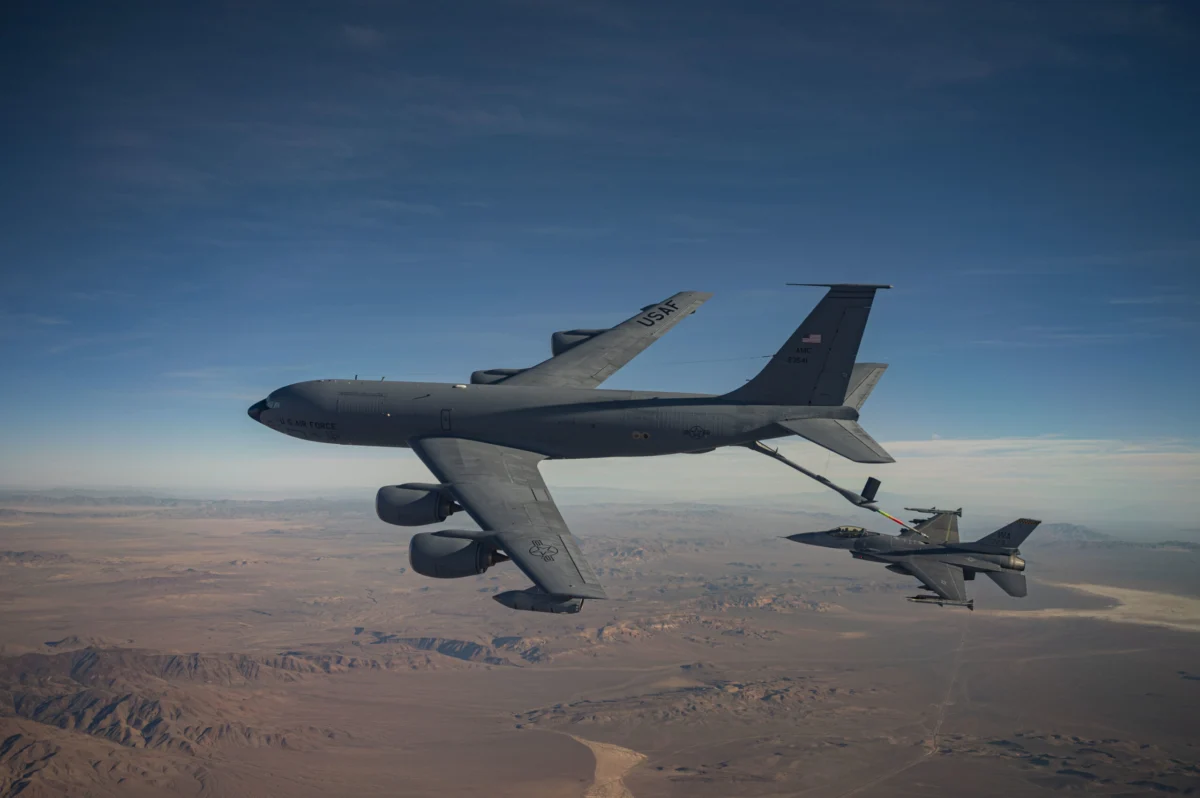
U.S. Central Command confirmed late Thursday that a U.S. Air Force KC-135 Stratotanker crashed in friendly airspace in western Iraq, resulting in the deaths of all six crew members on board. The incident occurred during active combat operations associated with Operation Epic Fury, the ongoing U.S.-led military campaign directed against Iranian interests and proxy forces in the region. According to official military statements, the loss of the aircraft was not the result of hostile fire from enemy forces, nor was it a consequence of friendly fire, marking a significant non-combat tragedy in a theater already characterized by high operational intensity and mounting hardware attrition.
The crash took place in a sector of western Iraq that serves as a critical corridor for U.S. and coalition air assets transitioning between regional hubs and active engagement zones. Initial reports from U.S. Central Command (CENTCOM) indicate that two aircraft were involved in the flight operation at the time of the mishap. While one aircraft—the KC-135—went down, the second aircraft involved in the incident managed to land safely at a nearby installation. The identity of the second aircraft and its specific role in the mission have not been publicly disclosed, though the nature of the KC-135’s mission usually involves close-proximity maneuvers with strike fighters or other transport vessels for aerial refueling.
Details of the Incident and Immediate Response
The loss of the KC-135 and its six-person crew was first signaled by a brief communique from CENTCOM, which noted that the command was "aware of the loss" of the aircraft. As search and recovery teams reached the crash site in the rugged terrain of western Iraq, the grim reality of the situation became clear. There were no survivors. The names of the deceased airmen are being withheld for at least 24 hours pending the notification of next of kin, a standard Department of Defense protocol.
"The incident was not due to hostile fire or friendly fire," the CENTCOM release emphasized, seeking to dispel immediate speculation regarding Iranian anti-aircraft capabilities or the recurring issue of misidentification among allied forces. While the exact cause remains under investigation, military aviation experts suggest that mechanical failure, pilot fatigue, or environmental factors are the primary areas of focus. The safe landing of the second aircraft suggests that whatever led to the crash of the Stratotanker may have been localized to that specific airframe or occurred during a critical phase of flight where the two aircraft were operating in tandem.
This crash represents the deadliest single incident for the U.S. Air Force since the commencement of Operation Epic Fury earlier this month. The loss of six highly trained crew members—typically consisting of a pilot, co-pilot, navigator, and boom operator, along with additional mission specialists—is a heavy blow to the tanker community, which serves as the "backbone" of global U.S. air power.
The Rising Toll of Operation Epic Fury
The crash occurs against a backdrop of rapidly escalating costs and casualties. Operation Epic Fury, which entered its second week this month, has seen a dramatic increase in the tempo of aerial engagements. Just days ago, the Pentagon informed Congress that the price tag for the operation had topped $11 billion in its first six days alone. This astronomical cost reflects the high volume of precision-guided munitions being expended and the massive logistical requirements of maintaining a continuous "air bridge" over the Middle East.
The human cost is also mounting. With the loss of the six airmen on Thursday, a total of 13 U.S. service members have been killed in action or in direct support of combat operations since the campaign began. Additionally, approximately 140 troops have been wounded, with eight listed in severe condition. These figures do not include non-combat deaths, such as the March 6 passing of an Army National Guard officer and New York City police officer who died in a non-combat incident in Kuwait.
The downed KC-135 is the fourth manned U.S. aircraft lost this month. On March 1, the Air Force suffered a significant blow when three F-15E Strike Eagles were shot down over Kuwait. In a tragic error, a Kuwaiti F/A-18, operating as part of the regional coalition, misidentified the American jets and engaged them with air-to-air missiles. While all six crew members in that incident successfully ejected and were recovered, the loss of three advanced multi-role fighters underscored the extreme "fog of war" currently permeating the region.
The KC-135 Stratotanker: A Legacy Under Pressure
The Boeing KC-135 Stratotanker has been the primary aerial refueling platform for the United States Air Force for over sixty years. First entering service in the late 1950s, the airframe is a derivative of the Boeing 707 and has been modernized repeatedly to keep pace with contemporary requirements. Despite its age, the KC-135 remains indispensable; without its ability to offload thousands of pounds of fuel mid-flight, U.S. strike packages would be unable to reach targets deep within Iranian territory from bases in Iraq, Kuwait, or Qatar.
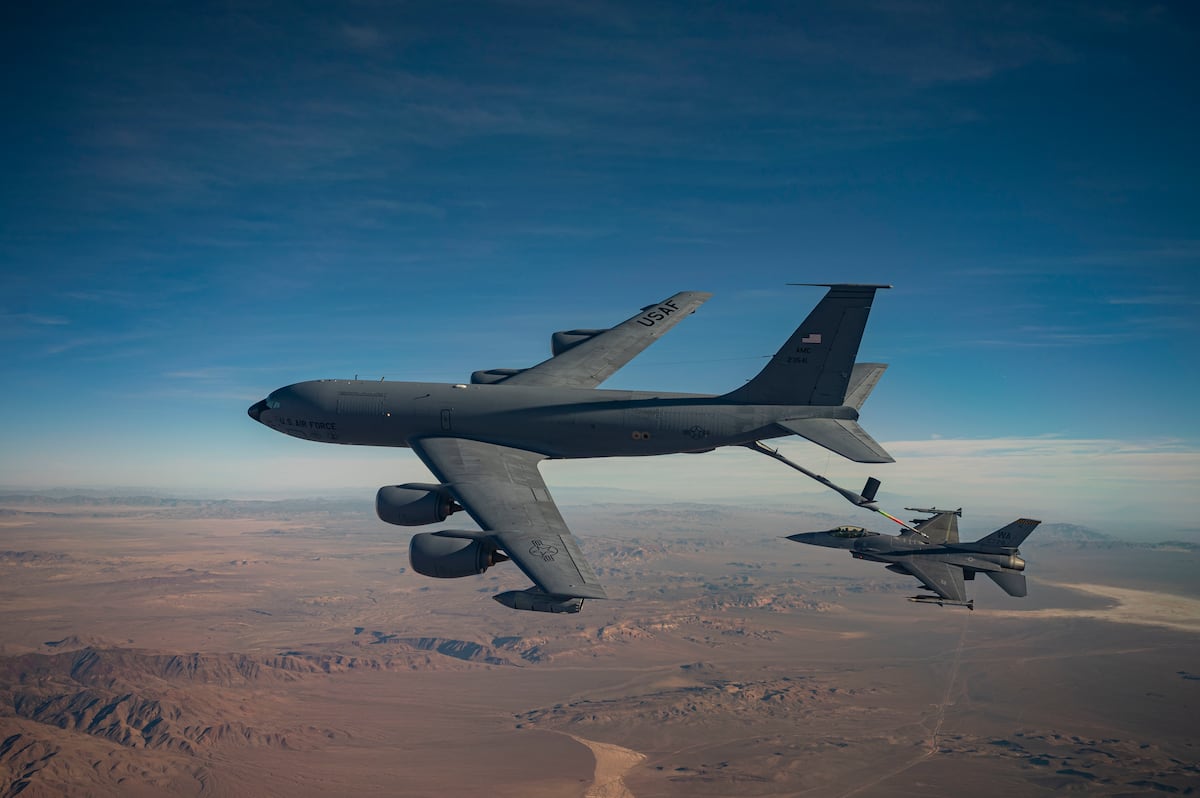
However, the age of the fleet is a perennial concern for defense planners. Many of the KC-135s currently flying in the CENTCOM area of operations were built in the 1960s. The high operational tempo of Operation Epic Fury places immense stress on these airframes. In high-heat environments like the Middle East, engines and hydraulic systems are pushed to their limits. Aerial refueling is inherently dangerous, requiring two aircraft to fly in a precise formation at high speeds, often in turbulent air or under the cover of darkness.
A typical KC-135 mission involves the "boom operator" at the rear of the tanker manually guiding a refueling probe into a receptacle on the receiving aircraft. Any mechanical failure during this process, or a sudden loss of engine power, can lead to catastrophic mid-air collisions or loss of control. While CENTCOM has not confirmed a mid-air collision, the mention of a second aircraft landing safely suggests the investigation will look closely at the proximity of the two planes at the time of the accident.
Strategic and Geopolitical Implications
The loss of a tanker is more than a tactical setback; it is a strategic vulnerability. Tankers are "force multipliers." The loss of one KC-135 reduces the number of sorties that can be flown by F-35s, F-15s, and B-52s. If the investigation reveals a systemic mechanical issue with the KC-135 fleet, the Air Force could be forced to ground portions of the fleet for safety inspections, which would effectively paralyze air operations against Iran.
Furthermore, the crash in western Iraq—an area theoretically secured by friendly forces—highlights the dangers of operating in a high-intensity conflict zone even away from the front lines. The airspace over Iraq and the Persian Gulf is currently among the most crowded and contested in the world. With U.S., coalition, and various local air forces operating in close quarters, the margin for error is razor-thin.
Politically, the growing casualty list is likely to increase scrutiny on the Biden administration’s objectives in Operation Epic Fury. With 13 dead and 140 wounded in just two weeks, questions regarding the duration and endgame of the conflict are expected to intensify on Capitol Hill. The $11 billion expenditure in the first week has already drawn fire from fiscal hawks, and the loss of a multi-million dollar tanker and its crew will only add to the pressure.
Official Responses and Investigative Outlook
In the wake of the crash, officials at the Pentagon expressed their condolences to the families of the fallen airmen. "We ask for continued patience to gather additional details and provide clarity for the families of service members," the CENTCOM statement read, reflecting the sensitive nature of casualty notification and the complexity of the ongoing investigation.
An Air Force Safety Investigation Board (SIB) is expected to be convened immediately. These boards are tasked with identifying the root cause of mishaps to prevent future occurrences. Unlike Accident Investigation Boards (AIBs), which are made public, SIBs are often privileged to encourage witnesses and crews to speak freely about potential errors or mechanical flaws.
The investigation will likely look at several factors:
- Maintenance Records: Given the age of the KC-135, investigators will scrutinize recent repairs and any known "deferred maintenance" items that might have contributed to a catastrophic failure.
- Flight Data and Cockpit Voice Recorders: If recovered, the "black boxes" will provide critical telemetry on engine performance and crew communications in the moments leading up to the crash.
- The Second Aircraft’s Testimony: The crew of the aircraft that landed safely will be the primary witnesses to the event, providing insight into the tanker’s behavior before it went down.
- Environmental Factors: While western Iraq is generally flat, high winds and dust storms can create hazardous flying conditions, particularly during refueling maneuvers.
Conclusion
The crash of the KC-135 in western Iraq is a sobering reminder of the inherent risks of military aviation, even in the absence of direct enemy fire. As Operation Epic Fury continues to demand high sortie rates and relentless pressure on both man and machine, the strain on the U.S. Air Force’s aging tanker fleet is becoming increasingly evident.
The loss of six airmen adds a tragic chapter to the opening weeks of the conflict with Iran. For the families of the deceased and the broader military community, the focus remains on the recovery of the fallen and the search for answers. For defense planners, the incident necessitates a reevaluation of operational risks in a theater where the cost of engagement—both in blood and treasure—is rising at an alarming rate. As the investigation proceeds, the air operations over Iraq and Iran will continue, but the shadow of Thursday’s loss will undoubtedly loom over the cockpits of every crew flying into the contested skies of the Middle East.

Related Posts
Pentagon Forges Landmark Seven-Year Agreements with Boeing and RTX to Accelerate Standard Missile-3 Production and Stabilize Defense Supply Chains
Boeing Unveils Ultra Low-Cost Seeker to Enhance Missile Inventory and Combat Cost Challenges in Modern Warfare