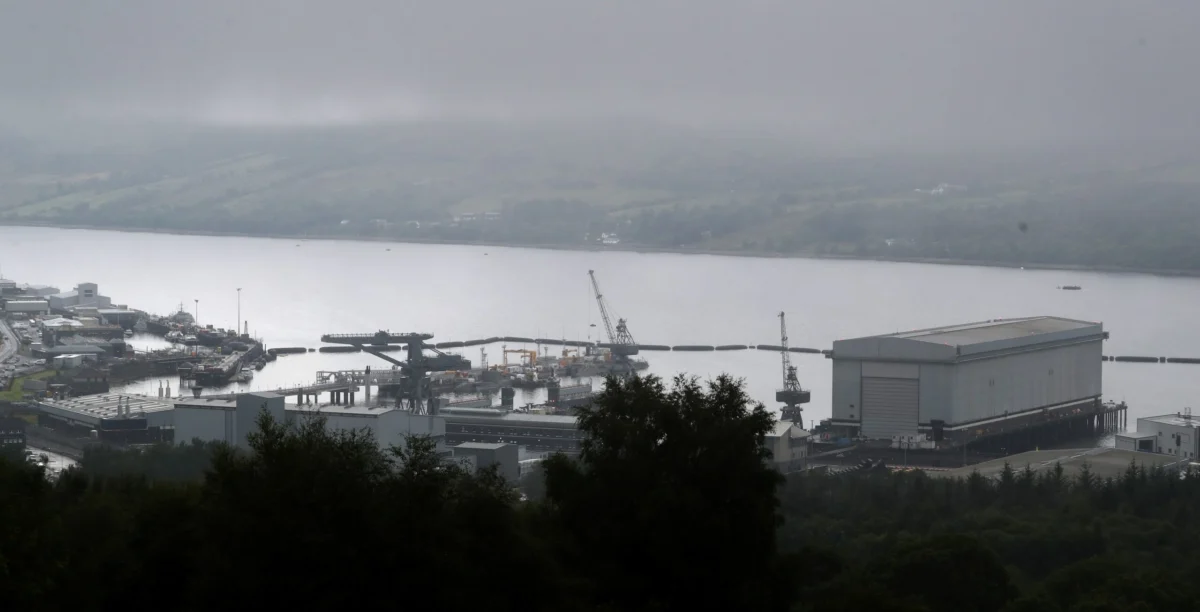
Security Breach at HM Naval Base Clyde Leads to Arrest of Suspected Iranian Intelligence Assets Amid Rising Middle East Tensions
The security perimeter of the United Kingdom’s most sensitive military installation was compromised on Thursday evening, leading to the arrest of two individuals suspected of acting on behalf of the Iranian intelligence services. At approximately 5:00 PM on March 19, 2026, Police Scotland officers, working in conjunction with Ministry of Defence (MoD) Police, detained a 34-year-old man and a 31-year-old woman as they attempted to gain unauthorized entry to HM Naval Base Clyde, the high-security home of Britain’s nuclear submarine fleet. While the specific methods used to attempt entry remain classified, the incident has triggered a high-level security review and sent ripples through the British intelligence community.
The arrests occur against a backdrop of severe international instability, coming exactly three weeks into a full-scale military conflict between a U.S.-Israeli coalition and the Islamic Republic of Iran. While the United Kingdom has officially maintained a policy of non-combatant status regarding direct strikes on Iranian soil, the Royal Navy and Royal Air Force have been actively engaged in the Gulf region, intercepting Iranian-launched drones and ballistic missiles aimed at commercial shipping and allied positions. The detention of suspected operatives on Scottish soil suggests a potential shift in Tehran’s strategy, moving from regional asymmetric warfare to direct "gray zone" operations against the domestic infrastructure of Western powers.
The Strategic Significance of HM Naval Base Clyde
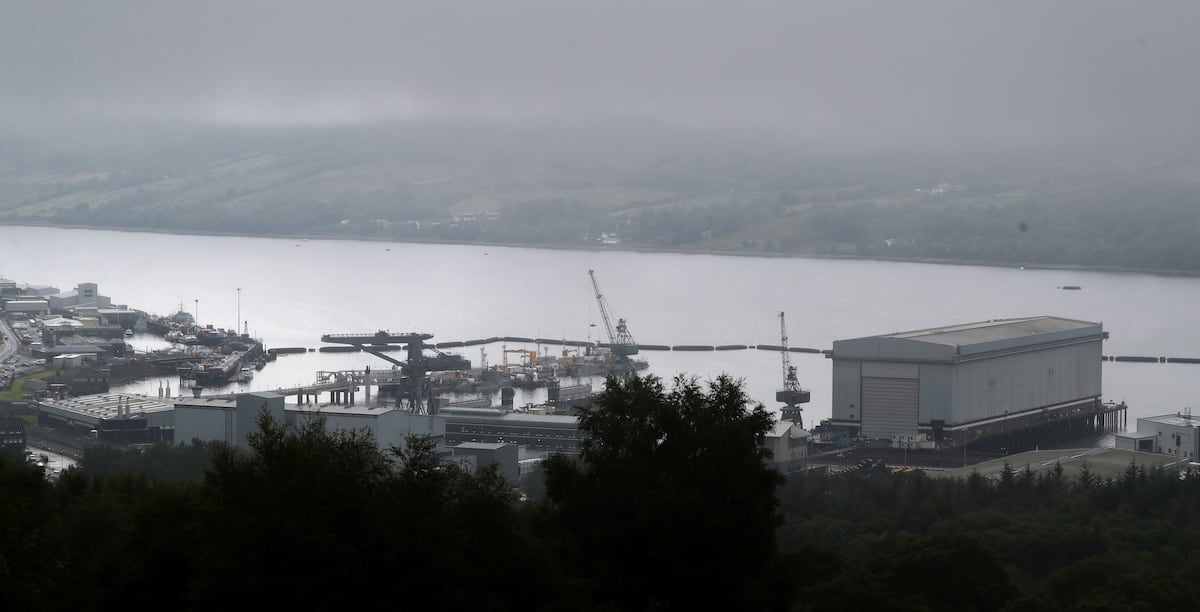
Located on the eastern shore of Gare Loch in Argyll and Bute, HM Naval Base Clyde—commonly referred to as Faslane—is the crown jewel of the United Kingdom’s defense infrastructure. It serves as the primary base for the Vanguard-class submarines, which carry the Trident II D5 nuclear missiles. These vessels represent the nation’s Continuous At-Sea Deterrent (CASD), ensuring that at least one nuclear-armed submarine is on patrol at all times.
Beyond the nuclear deterrent, Faslane is the home port for the Astute-class nuclear-powered attack submarines, the most advanced hunter-killer vessels in the Royal Navy’s inventory. The base also hosts the 43 Commando Fleet Protection Group Royal Marines, the unit specifically tasked with the physical security of the nuclear assets. Any attempt to penetrate the facility is viewed not merely as a trespass, but as a direct threat to the ultimate guarantee of British national sovereignty.
Intelligence analysts suggest that the presence of suspected Iranian operatives at the gates of Faslane may have been an attempt to gather "pattern of life" data—monitoring the movement of personnel and the deployment schedules of submarines—or to test the responsiveness of the base’s outer security cordons. Given the ongoing conflict in the Middle East, information regarding the readiness or deployment of British attack submarines, which could theoretically be used for Tomahawk missile strikes, would be of immense value to the Iranian High Command.
Details of the Arrest and Ongoing Investigation
Police Scotland confirmed the arrests in a brief statement released on Friday morning, though they remained tight-lipped regarding the specific identities of the suspects. "Around 5 PM on Thursday, 19 March, 2026, we were made aware of two people attempting to enter HM Naval Base Clyde," a spokesperson for the force stated. "A 34-year-old man and 31-year-old woman have been arrested. Inquiries are ongoing."
Sources close to the investigation, as reported by The Sun, indicate that the male suspect is an Iranian national, while the woman’s nationality is currently being verified. It is understood that the duo was intercepted at a primary vehicle checkpoint after presenting documentation that raised immediate red flags with MoD security personnel. Following their detention, the suspects were transferred to a high-security police facility for questioning by specialized counter-terrorism officers.
The investigation is expected to involve the interrogation of digital devices seized during the arrest. Forensics teams are reportedly searching for evidence of encrypted communication with the Islamic Revolutionary Guard Corps (IRGC) or the Iranian Ministry of Intelligence and Security (MOIS). Under the National Security Act 2023, British authorities have expanded powers to detain and investigate individuals suspected of state-sponsored espionage, a legal framework that is likely to be utilized extensively in this case.
Context: The Shadow War and MI5 Warnings
The incident at Faslane is not an isolated event but rather the latest escalation in what security officials describe as a "shadow war" being waged by Tehran on European soil. For the past several years, Ken McCallum, the Director General of MI5, has consistently highlighted Iran as one of the most aggressive state actors operating within the UK.
Prior to the current U.S.-Israeli-Iranian conflict, MI5 had already disrupted over 20 plots linked to Iranian intelligence involving the kidnapping or assassination of British residents perceived as "enemies of the regime." This includes journalists working for Persian-language media outlets and prominent members of the Iranian diaspora.
The current geopolitical climate has only intensified these activities. Just one day before the Faslane arrests, two other men appeared in a London court accused of conducting hostile surveillance on Jewish community centers and prominent individuals in the capital. Prosecutors alleged that these individuals were "tasked by the Iranian state" to identify potential targets for future kinetic action. The attempt to enter a nuclear submarine base represents a significant leap in ambition, moving from civilian "soft targets" to the most fortified military assets in the country.
Chronology of Recent Iranian Intelligence Activity in the UK
To understand the gravity of the Faslane breach, it is necessary to examine the timeline of Iranian operations leading up to the March 19 incident:
- Late 2024 – Early 2025: A series of cyberattacks targeting the UK’s energy grid and parliamentary email systems are attributed by GCHQ to the "Charming Kitten" advanced persistent threat group, which has documented links to the IRGC.
- August 2025: Three individuals are detained in London under the Official Secrets Act for allegedly photographing the entrances to MI6 headquarters and tracking the movements of high-ranking diplomats.
- February 2026: Following the outbreak of hostilities between the U.S. and Iran, the UK raises its domestic terror threat level. MI5 issues a private briefing to the Cabinet Office Warning of "heightened risk of state-sponsored sabotage" against critical national infrastructure.
- March 17, 2026: British intelligence intercepts communications suggesting that Tehran is seeking to retaliate against European nations that have assisted in the interception of Iranian munitions in the Gulf.
- March 18, 2026: Two suspects are charged in London with conducting surveillance on Jewish sites on behalf of the Iranian state.
- March 19, 2026: The arrest of two individuals at the gates of HM Naval Base Clyde.
Official Responses and Political Implications
The Royal Navy has maintained a cautious stance, confirming the arrests but refusing to elaborate on whether the base’s security protocols were actually breached or if the suspects were stopped at the outer perimeter. "We are aware of an incident involving the arrest of two individuals near HM Naval Base Clyde. As the matter is the subject of an ongoing police investigation, it would be inappropriate to comment further," a Navy spokesperson said.
In Westminster, the incident has sparked calls for an immediate review of security at all Tier-1 military sites. Members of the Defence Select Committee have raised concerns about the "boldness" of the attempt. There is growing pressure on the Home Office to further restrict visas for Iranian nationals and to officially designate the IRGC as a terrorist organization—a move that has been debated in Parliament for years but resisted by some in the Foreign Office who favored keeping diplomatic channels open.
The Scottish Government has also been briefed, with the First Minister expressing "deep concern" over the security of the facility. While the base is a matter of reserved UK defense policy, the policing of the surrounding area falls under the jurisdiction of Police Scotland, necessitating close cooperation between Edinburgh and London.
Technical Analysis: The Nature of the Threat
Defense analysts suggest that the attempt to enter Faslane likely falls into one of three categories of intelligence gathering. First, it could be a "dry run" or a "penetration test" designed to see how quickly the Royal Marines and Police Scotland respond to a breach. Second, it could have been an attempt to plant electronic eavesdropping equipment or "bugs" near the communication arrays used to transmit orders to the submarine fleet. Third, and perhaps most likely, it was a mission to identify specific security vulnerabilities that could be exploited by a more specialized sabotage team in the event that the UK formally enters the war against Iran.
The timing is particularly sensitive as the UK is currently in the process of transitioning from the aging Vanguard-class submarines to the new Dreadnought-class vessels. The construction and integration of these new nuclear platforms involve sensitive supply chains and technical specifications that are among the most closely guarded secrets in the NATO alliance.
Implications for Future UK-Iran Relations
The arrest of suspected spies at a nuclear base effectively ends any immediate prospect of diplomatic de-escalation between London and Tehran. If the investigation confirms that the suspects were operating under the direct orders of the Iranian state, the UK may be forced to respond with more than just diplomatic protests.
Potential retaliatory measures could include:
- Expulsion of Diplomats: The remaining Iranian diplomatic staff in London could be declared persona non grata.
- Increased Military Presence in the Gulf: The UK may deploy additional Type 45 destroyers or even a Queen Elizabeth-class aircraft carrier to the region to reinforce its commitment to regional stability.
- Cyber Counter-Operations: The National Cyber Force (NCF) could be authorized to conduct offensive operations against the infrastructure used by Iranian intelligence to coordinate European activities.
As the U.S.-Israeli war on Iran enters its fourth week, the incident at HM Naval Base Clyde serves as a stark reminder that modern conflicts are rarely confined to the battlefield. The "front line" now extends to the quiet lochs of Scotland, where the silent sentinels of Britain’s nuclear deterrent remain the focus of intense—and increasingly dangerous—foreign interest. The ongoing inquiries by Police Scotland and MI5 will be crucial in determining just how close the Iranian state came to peering into the heart of the UK’s national defense.

Related Posts
Pentagon Secures Framework Agreements for Family of Affordable Mass Missiles to Bolster Munition Inventories and Industrial Capacity

US Service Member Killed in Iraq During Ordnance Disposal as Regional Tensions with Iran Escalate