South Sudan Anti-Corruption Crackdown Leads to Detention of High-Ranking Financial and Oil Officials
The government of South Sudan has initiated a sweeping series of arrests targeting high-profile figures within the nation’s financial and petroleum sectors, signaling a significant escalation in what authorities describe as a campaign against financial malpractice. Since late February, at least six prominent current and former officials, along with a well-known businessman, have been taken into custody. While the executive branch maintains that these actions are part of a legitimate investigation into economic crimes, the involvement of elite security units and the lack of formal charges have drawn sharp scrutiny from international human rights observers and local civil society groups.
The wave of detentions began on February 24, sending shockwaves through the administrative corridors of Juba. Among those held are individuals who previously occupied the highest echelons of the state’s economic architecture, including former Ministers of Finance, the former Governor of the Bank of South Sudan, and senior leadership from the Ministry of Petroleum and the South Sudan Revenue Authority. The arrests come at a time of profound economic crisis for the world’s youngest nation, characterized by hyperinflation, a collapsing currency, and a severe shortfall in oil revenue due to the ongoing conflict in neighboring Sudan.
Profiles of the Detained Officials
The list of individuals currently in custody represents a significant cross-section of the South Sudanese elite responsible for managing the country’s wealth.
- Dr. Bak Barnaba Chol: A former Minister of Finance and Planning, Dr. Bak was once seen as a reform-minded technocrat. His arrest is particularly notable given his previous efforts to stabilize the economy and his academic background in economics. He was reportedly detained during what authorities described as an alleged attempt to flee the country, though his legal representatives have yet to issue a full rebuttal of these claims.
- Dr. Marial Dongrin Ater: Another former Minister of Finance, Dr. Ater’s tenure was marked by the difficult task of managing a budget largely dependent on fluctuating oil prices and the logistical challenges posed by regional instability.
- Moses Makur Deng Manguak: As the former Governor of the Bank of South Sudan, Manguak was central to the country’s monetary policy. His detention under house arrest suggests a focus on the management of foreign exchange reserves and the central bank’s role in currency stabilization.
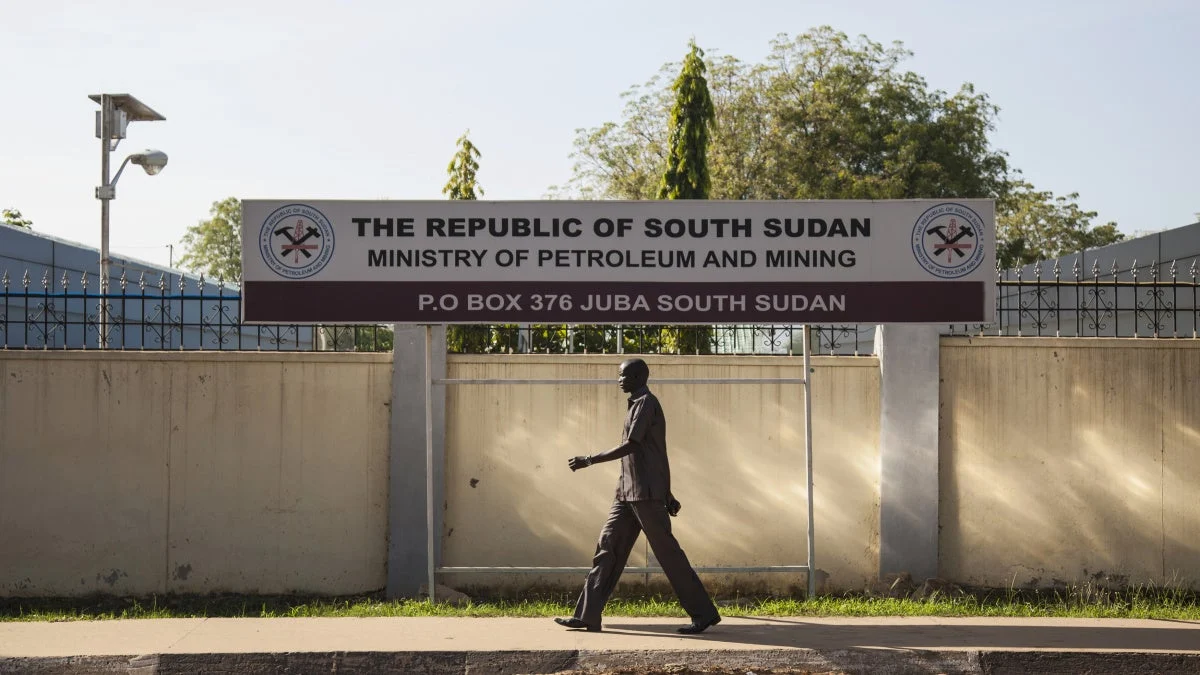
- Maj. Gen. Mannasseh Machar Bol: The former Director of Security at the Ministry of Petroleum, Bol occupied a sensitive intersection between the nation’s most valuable resource and its security apparatus. His arrest points to an investigation into the security and transparency of oil production and revenue collection.
- Deng Lual Wol: A former Undersecretary in the Ministry of Petroleum, Wol was a key figure in the technical and administrative oversight of the oil sector, which accounts for nearly 90% of South Sudan’s government revenue.
- Simon Akue: The former Commissioner General of the South Sudan Revenue Authority (SSRA). His detention follows his return to Juba, raising questions about the collection and remittance of non-oil revenues.
- Bol Kuanyin Bol: A prominent businessman whose inclusion in the sweep suggests that the investigation extends beyond the public sector into the private entities that contract with the government.
Chronology of the Crackdown
The timeline of these events suggests a coordinated effort by the presidency to consolidate control over the financial narrative. The arrests commenced on February 24, 2024, and have expanded in the weeks following.
According to reports from local sources and Human Rights Watch, the arrests were not conducted by the standard police force but by the National Security Service (NSS) and the "Tiger Division," the elite presidential guard responsible for the safety of President Salva Kiir. This involvement of top-tier military and intelligence units underscores the high stakes the administration places on these proceedings.
By early March, most of the detainees were confirmed to be held at the National Security Service headquarters in Juba, a facility known colloquially as the "Blue House." This facility has been the subject of numerous reports by international human rights organizations regarding the treatment of detainees and the lack of judicial oversight. One individual, Moses Makur Deng Manguak, remains under house arrest, though the specific reasons for this distinction in treatment have not been clarified.
Official Stance and Investigative Framework
In a public statement, Minister for Information Ateny Wek Ateny emphasized that the arrests are strictly legal and administrative rather than political. He stated that a specialized committee has been formed to investigate "financial malpractices" and that the government is committed to recovering misappropriated public funds.
However, the composition and transparency of this investigative committee remain subjects of debate. While officials from the Ministry of Justice and Constitutional Affairs and the Ministry of Interior are reportedly leading the joint committee, the roles of the constitutionally mandated oversight bodies—the Office of the Auditor General and the South Sudan Anti-Corruption Commission—are less clear. Both of these institutions have historically struggled with chronic underfunding and a perceived lack of independence from the executive branch.
Legal experts have noted that for these actions to align with international standards and South Sudan’s own constitution, all detentions, asset freezes, and confiscations must have a clear legal basis and be subject to prompt judicial review. As of the latest reports, it remains unclear whether any of the seven individuals have been formally charged in a court of law or if they have been granted access to consistent legal counsel.
Economic Context and Supporting Data
The backdrop to this crackdown is an economy in a state of near-collapse. South Sudan is currently grappling with some of the most severe economic headwinds since it gained independence in 2011.
- Oil Revenue Crisis: The war in Sudan has severely damaged the pipelines used to transport South Sudanese crude oil to international markets via Port Sudan. Specifically, a major rupture in the Jabalayn-Port Sudan pipeline in early 2024 has halted a significant portion of exports. Given that oil provides almost all of the country’s hard currency, this has led to a catastrophic shortage of foreign exchange.
- Currency Depreciation: The South Sudanese Pound (SSP) has plummeted in value. In the early months of 2024, the exchange rate on the parallel market reached historic lows, exceeding 1,600 SSP to 1 US Dollar, drastically reducing the purchasing power of ordinary citizens.
- Inflation and Cost of Living: With the depreciation of the currency, the cost of imported food and fuel has soared. Many urban households are struggling to afford basic necessities, and the government has faced significant delays in paying the salaries of civil servants and security forces—sometimes for periods exceeding six months.
- Corruption Indices: South Sudan consistently ranks near the bottom of Transparency International’s Corruption Perceptions Index. In 2023, the country was ranked 177th out of 180 countries, reflecting deep-seated systemic issues with transparency and accountability.
Human Rights and Systematic Concerns
Human rights organizations have voiced concern that the crackdown may be using the guise of anti-corruption to target political rivals or scapegoat former officials for the nation’s broader economic failings. Human Rights Watch has pointed out that while anti-corruption efforts are desperately needed, they must be conducted within a framework that respects fundamental rights.
The "Blue House" (NSS headquarters) has a documented history of detainee abuse, including reports of prolonged solitary confinement, lack of medical care, and physical mistreatment. The use of the National Security Service for financial investigations is also a point of contention, as the agency’s primary mandate is national intelligence rather than white-collar crime.
Furthermore, a report by the United Nations Commission on Human Rights in South Sudan previously detailed how "systemic government corruption" has directly fueled conflict and human rights violations. The report argued that the diversion of public funds into private pockets has not only impoverished the population but has also deprived the state of the resources needed to implement the 2018 peace agreement and provide essential services like healthcare and education.
Broader Impact and Implications
The implications of these arrests are multifaceted, affecting domestic politics, the national economy, and international relations.
Political Stability: If the arrests are perceived as a genuine attempt to clean up the government, they could bolster President Kiir’s standing ahead of long-delayed national elections. However, if they are seen as a targeted purge of specific factions, they could exacerbate tensions within the ruling Sudan People’s Liberation Movement (SPLM) and its various splinter groups.
Economic Reform: For the crackdown to have a meaningful impact on the economy, it must lead to systemic changes in how oil revenue is managed. Critics argue that simply replacing individuals without reforming the institutions—such as the Ministry of Finance and the SSRA—will do little to stop the "leakage" of funds. The international community, including the International Monetary Fund (IMF) and the World Bank, has frequently called for greater transparency in the "oil-for-infrastructure" deals that have characterized much of South Sudan’s recent spending.
Social Unrest: The government is under immense pressure to pay the back-wages of its employees. If the investigation successfully recovers significant assets, it could provide a temporary reprieve for the treasury. Conversely, if the crackdown fails to improve the daily lives of citizens, the frustration over unpaid salaries and high food prices could lead to increased social unrest.
International Relations: Foreign donors and diplomatic partners are watching the situation closely. While they support the principle of anti-corruption, they are wary of the methods used. The credibility of the South Sudanese judicial system is on trial; if the detainees are processed through a transparent and fair legal system, it could signal a new chapter for the country’s rule of law. If they remain in indefinite detention without trial, it may further isolate the Juba administration on the global stage.
As the joint investigative committee continues its work, the eyes of the nation remain fixed on the "Blue House." The outcome of this crackdown will serve as a litmus test for whether South Sudan is moving toward a future of accountability or if the cycle of systemic corruption and political maneuvering will continue to dominate the nation’s trajectory. For the millions of South Sudanese living in poverty, the hope is that these actions lead to a more equitable distribution of the country’s vast natural wealth and the restoration of essential public services.

Related Posts
Human Rights Watch Calls for Investigation into Death of Detainee Following Removal from Najaf Hospital by Iraqi Drug Police
Human Rights Watch Urges UN Security Council to Extend Lebanon Peacekeeping Mission Amid Escalating Conflict and Humanitarian Crisis