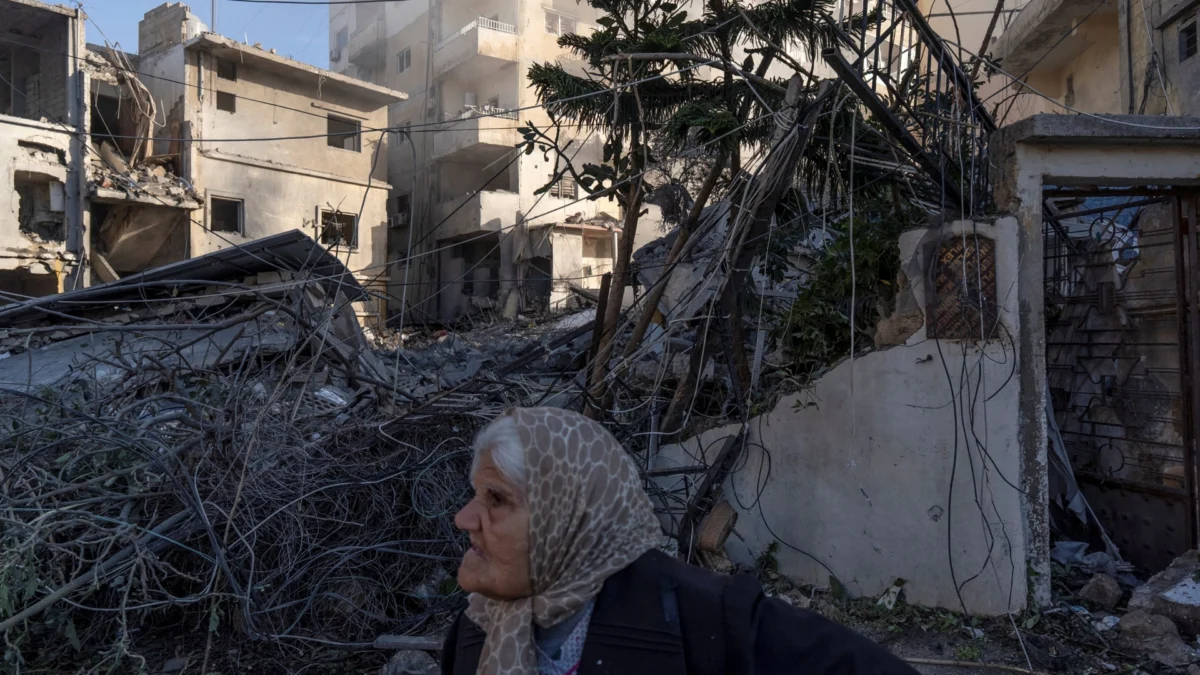
Saudi Arabia Intercepts Ballistic Missile and Drones Over Eastern Province Amid Escalating Regional Tensions.
RIYADH – Saudi Arabia’s advanced air defense systems successfully intercepted a ballistic missile and three drones targeting the Kingdom’s Eastern Province in the early hours of March 25, 2026, averting potential strikes on critical infrastructure and population centers. The Saudi Ministry of Defense confirmed the interception, stating that all aerial threats were detected and neutralized before reaching their intended targets, underscoring the Kingdom’s robust defensive capabilities amid a period of heightened regional instability often framed as the "War on Iran." This incident, reported at 00:47 GMT, marks another significant escalation in a protracted conflict that has seen a surge in cross-border attacks, primarily involving missiles and unmanned aerial vehicles (UAVs) launched by various non-state actors operating within the broader geopolitical struggle in the Middle East.
The latest assault targeted a strategically vital region of Saudi Arabia, home to key oil production facilities and industrial zones, as well as densely populated urban areas. According to an official statement released by the Saudi Press Agency (SPA) on behalf of the Ministry of Defense, the interception demonstrated the unwavering vigilance and effectiveness of the Kingdom’s integrated air defense network. "Our forces successfully engaged and destroyed one ballistic missile and three unmanned aerial vehicles over the Eastern Province," the statement read, adding, "These hostile attempts, which aim to target civilian areas and economic infrastructure, were thwarted thanks to the readiness and professionalism of our air defense personnel. We remain on high alert to safeguard our airspace, our citizens, and our vital national assets." The Ministry also shared a brief update on its official X (formerly Twitter) account, reaffirming the successful interception. The nature and origin of the launched projectiles were not immediately detailed by Saudi authorities, consistent with past incidents where specific attribution often follows a period of intelligence gathering. However, the operational patterns of such attacks frequently point to Iranian-backed militant groups in the region, including the Houthis in Yemen or various Iraqi militias, who have previously claimed responsibility for similar assaults.
The Eastern Province Incident: A Detailed Account
The interception occurred during a critical nighttime window, highlighting the 24/7 operational readiness of Saudi Arabia’s defense forces. The ballistic missile, believed to be a medium-range variant, and the three drones, likely designed for precision strikes or reconnaissance-attack missions, were detected by radar systems as they approached Saudi airspace from an unspecified direction. Military analysts suggest that the drones, often slower and with smaller radar signatures, are typically used to either overwhelm air defenses, scout targets, or serve as decoys for more potent ballistic missile attacks. The coordinated nature of the assault, involving multiple types of aerial threats, indicates a sophisticated planning effort by the perpetrators.
The Saudi Defense Ministry’s rapid response involved the deployment of its advanced Patriot missile defense systems, renowned for their capability to intercept tactical ballistic missiles, cruise missiles, and advanced aircraft. In some instances, the Kingdom also utilizes its Terminal High Altitude Area Defense (THAAD) systems for higher-altitude, longer-range ballistic missile threats, though specific system deployment for this incident was not disclosed. The successful neutralization of all incoming threats without any reported damage or casualties on the ground underscores the efficacy of these layered defense mechanisms and the proficiency of the personnel operating them. Local residents in the Eastern Province reported hearing loud explosions overhead, consistent with missile interceptors engaging incoming projectiles, followed by a period of calm. Emergency services were placed on standby, though their activation proved unnecessary due to the successful interception.
Escalating Regional Tensions: The Broader ‘War on Iran’ Context
This incident cannot be viewed in isolation; it is deeply embedded within a wider, simmering geopolitical conflict often referred to in policy circles as the "War on Iran." This term, while not denoting a declared conventional war, encapsulates a prolonged period of intense proxy conflicts, economic warfare, cyber warfare, and occasional direct military confrontations involving Iran, its regional allies, and a coalition of opposing states, including Saudi Arabia, Israel, and the United States. The roots of this conflict are multifaceted, stemming from Iran’s revolutionary ideology, its nuclear program ambitions, its expansive regional influence through a network of proxies, and deep-seated historical rivalries with Gulf Arab states.
The period leading up to March 2026 has been characterized by an escalating series of tit-for-tat actions. Iran’s perceived encroachment on Arab spheres of influence, particularly through its support for groups like the Houthis in Yemen, Hezbollah in Lebanon, and various Popular Mobilization Units in Iraq, has been a central point of contention. These groups, often equipped with Iranian-supplied or inspired weaponry, including drones and ballistic missiles, have been instrumental in projecting Iran’s power and challenging the security interests of its adversaries. Saudi Arabia, as a regional counterweight, has consistently condemned these actions as destabilizing and a direct threat to its national security and the stability of global energy markets. The "War on Iran" thus represents a complex web of overlapping conflicts, where direct military engagement is often avoided in favor of indirect, asymmetrical warfare, with missile and drone attacks being a prominent feature.
A Chronology of Recent Aggressions
The attack on March 25, 2026, follows a discernible pattern of escalating aggressions over the past several months, indicative of a deteriorating security landscape across the Arabian Peninsula and the wider Gulf region.
- February 2026: A wave of drone attacks targeted commercial shipping lanes in the Red Sea and the Strait of Hormuz. While many were intercepted by international naval forces, several vessels reported minor damage, leading to increased insurance premiums and logistical disruptions. These attacks were widely attributed to Houthi rebels in Yemen, though the sophisticated nature of some drones suggested external technical assistance.
- January 2026: Multiple reports emerged of cyberattacks targeting critical infrastructure in several Gulf Cooperation Council (GCC) states, including Saudi Arabia and the UAE. These attacks, believed to be state-sponsored, caused temporary disruptions to some public services and financial networks, though specific attribution remained elusive.
- December 2025: A series of ballistic missile strikes, again attributed to the Houthis, targeted civilian airports in southern Saudi Arabia, leading to temporary flight suspensions and minor structural damage. These incidents prompted strong condemnation from the UN and Arab League.
- November 2025: An oil tanker in the Gulf of Oman suffered an explosion, suspected to be from a limpet mine. No casualties were reported, but the incident raised concerns about the security of vital maritime trade routes.
- October 2025: Tensions flared along the Saudi-Yemen border with increased cross-border shelling and drone incursions, leading to a localized military buildup and humanitarian concerns for border communities.
- September 2025: Reports indicated an intensification of military training and arms transfers to Iranian-aligned groups in Iraq and Syria, signaling a potential for renewed offensive capabilities.
This chronology illustrates a consistent and evolving threat landscape, where the March 25th interception is merely the latest manifestation of a deeply entrenched conflict. Each incident adds pressure to an already fragile regional equilibrium, demanding constant vigilance and robust defensive measures.
Saudi Arabia’s Robust Air Defense

Saudi Arabia has invested billions in developing one of the most sophisticated and layered air defense systems in the world, a necessity given its strategic location and the persistent threats it faces. The successful interception on March 25th is a testament to these investments and the capabilities of its armed forces.
The cornerstone of Saudi air defense is the U.S.-made Patriot missile system, specifically the PAC-2 and PAC-3 variants, which provide comprehensive protection against ballistic missiles, cruise missiles, and advanced aircraft. The PAC-3, in particular, employs a "hit-to-kill" technology, directly impacting and destroying incoming threats. Complementing the Patriot system, the Kingdom also operates the Terminal High Altitude Area Defense (THAAD) system, designed to intercept short-, medium-, and intermediate-range ballistic missiles in their terminal phase, offering an additional layer of protection, particularly against more complex threats.
Beyond these high-profile systems, Saudi Arabia employs a network of advanced radar installations, early warning systems, and command-and-control centers that integrate real-time intelligence to provide rapid threat assessment and response. Indigenous capabilities and training programs further enhance the effectiveness of these systems, with Saudi military personnel undergoing rigorous training with international partners to maintain peak operational readiness. Analysts from the International Institute for Strategic Studies (IISS) estimate that Saudi Arabia’s air defense success rate against ballistic missiles and drones launched from Yemen has consistently been above 90% in recent years, a critical factor in mitigating the impact of these repeated attacks on civilian life and economic stability. This high success rate, however, does not diminish the underlying threat or the immense resource expenditure required to maintain such a defensive posture.
Official Reactions and International Responses
Following the successful interception, Saudi authorities reiterated their commitment to regional security and stability. A senior official within the Saudi Ministry of Foreign Affairs, speaking anonymously due to the sensitivity of ongoing diplomatic efforts, stated, "Saudi Arabia will continue to exercise its legitimate right to self-defense against any aggression. We urge the international community to take a firm stand against those who seek to destabilize our region and threaten global energy supplies through acts of terrorism and aggression." The official emphasized the Kingdom’s preference for diplomatic solutions but stressed that its defensive capabilities would remain paramount.
Internationally, the incident drew immediate reactions. The United Nations Secretary-General issued a statement expressing deep concern over the continued escalation of hostilities in the Gulf region, calling on all parties to exercise maximum restraint and de-escalate tensions to prevent a broader conflict. The statement reiterated the UN’s call for a comprehensive political solution to ongoing conflicts, particularly in Yemen, which is often a flashpoint for such attacks. The Arab League also condemned the attack, describing it as a "flagrant violation of international law and a direct threat to the security of Arab states." Member states expressed solidarity with Saudi Arabia and called for collective action to counter the sources of regional instability.
Key international allies of Saudi Arabia also voiced their support. The U.S. State Department issued a press release condemning the "reckless and dangerous attacks" and reaffirming Washington’s unwavering commitment to Saudi Arabia’s security and territorial integrity. It called for an immediate cessation of hostile actions and urged all regional actors to engage constructively in dialogue. European Union representatives similarly expressed concern, highlighting the impact of such attacks on global energy markets and maritime security. The lack of immediate claims of responsibility for the attack, while typical for many such incidents, complicates international efforts to attribute blame and apply pressure, allowing perpetrators a degree of plausible deniability even as operational patterns point to specific actors.
Economic and Geopolitical Ramifications
The persistent threat of missile and drone attacks in the Eastern Province, a critical hub for global oil production and export, carries significant economic and geopolitical ramifications. While the March 25th interception prevented any direct damage, the mere occurrence of such an event contributes to market volatility and investor uncertainty. Global oil prices often react sharply to news of attacks in the Gulf, given the region’s indispensable role in supplying a substantial portion of the world’s energy needs. Even thwarted attacks reinforce the perception of risk, leading to higher insurance premiums for shipping through the Strait of Hormuz and other vital waterways, ultimately increasing costs for consumers worldwide.
From a geopolitical standpoint, these attacks continuously challenge efforts toward regional de-escalation and diplomatic engagement. The "War on Iran" context has made any meaningful dialogue exceedingly difficult, as mutual distrust and security concerns dominate the agenda. The repeated assaults necessitate a constant military posture, diverting resources that could otherwise be allocated to economic development or social programs. Furthermore, the reliance on advanced foreign defense systems highlights the intricate web of international alliances and dependencies in the region, with geopolitical implications extending far beyond the Middle East. The ongoing instability also creates fertile ground for extremist groups, further complicating the security landscape and posing a long-term threat to regional stability.
The Human Cost and Future Outlook
Beyond the geopolitical and economic considerations, the persistent threat of aerial attacks takes a significant human toll. While Saudi Arabia’s advanced air defenses have largely protected its population from direct casualties, the psychological impact of living under constant threat is profound. Air raid sirens, the sound of explosions from intercepts, and the perpetual state of alert contribute to anxiety and disruption of daily life for millions of residents. Schools and businesses in vulnerable areas must maintain contingency plans, and the overall sense of security is diminished.
The future outlook for the "War on Iran" and the associated regional conflicts remains uncertain. Without a significant shift in geopolitical dynamics or a breakthrough in diplomatic efforts, analysts predict a continuation of the current pattern of proxy warfare and intermittent direct confrontations. The arms race in the region, particularly in drone and missile technology, shows no signs of abating, suggesting that the sophistication and frequency of attacks could even increase. International mediation efforts face formidable challenges, requiring sustained commitment and a willingness from all parties to compromise. The incident on March 25, 2026, serves as a stark reminder that the Middle East remains a volatile arena where peace is elusive, and the specter of wider conflict looms large, demanding unwavering vigilance and strategic fortitude from all stakeholders.

Related Posts
Over 150 Israeli Settlers Storm Al-Aqsa Compound and Perform Prayers, Violating Status Quo Under Police Protection.
UN Report Highlights Over 900 Obstacles Hampering West Bank Aid Amid Escalating Humanitarian Crisis