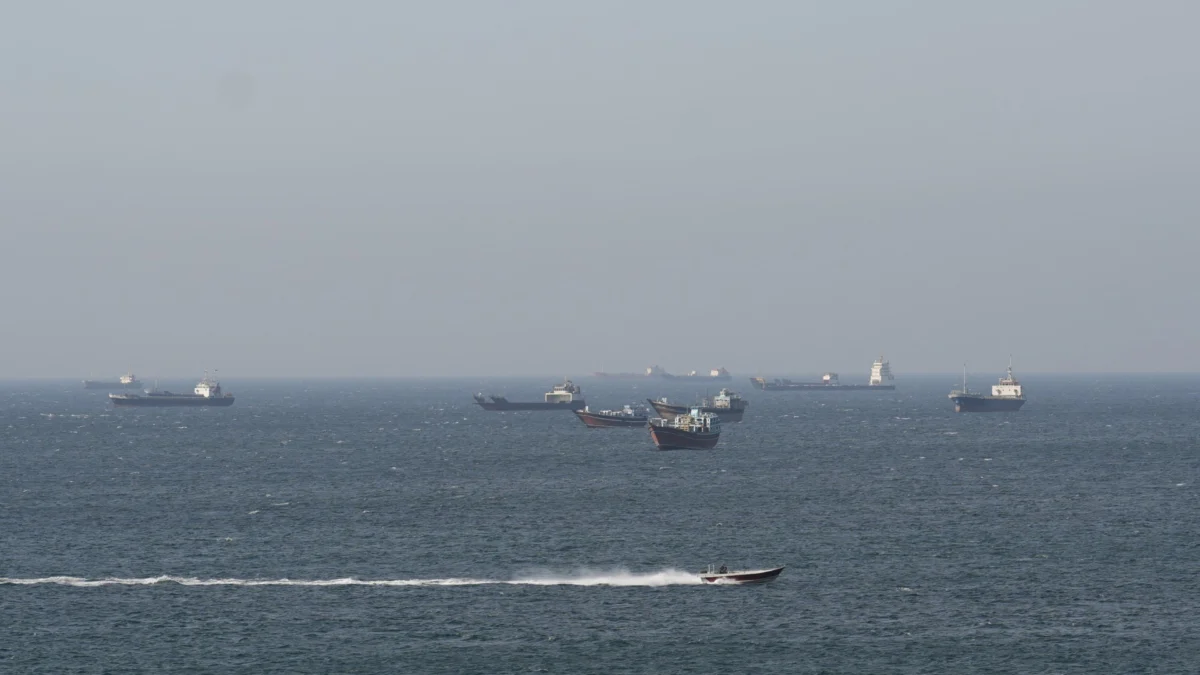
Iran Prioritizes Fee-Paying Vessels in Strait of Hormuz Amidst New Protocols and US Ceasefire Tensions
Iran has declared a new policy for maritime traffic through the strategically vital Strait of Hormuz, announcing it will prioritize vessels that promptly pay fees for security and safety services. This significant shift, confirmed by a senior Iranian official to CNN, stipulates that ships failing to comply with these new protocols and associated costs will face "postponement" of their passage. The move, framed by Tehran as a measure to manage maritime traffic under a "new order" and in response to "repeated breaches of trust" by the United States regarding a ceasefire, introduces a potentially destabilizing element to global shipping and energy markets.
The decision, which came into effect on Saturday with the reimposition of restrictions on ship movements, underscores Iran’s intent to assert greater control over the narrow waterway. The unnamed Iranian official stated, "Given the limitation on the number of vessels that will be allowed to pass, Iran has decided to give priority to those vessels that respond more quickly to the new Strait of Hormuz protocols and pay the costs of security and safety services." This policy effectively creates a two-tiered system for transit, raising immediate concerns among international shipping entities and nations reliant on the Strait for their energy supplies.
The Strategic Chokepoint: The Strait of Hormuz
The Strait of Hormuz is one of the world’s most critical maritime chokepoints, a narrow passage connecting the Persian Gulf to the Arabian Sea and beyond. At its narrowest point, the Strait is only about 21 nautical miles (39 kilometers) wide, with the shipping lanes themselves being just two miles wide in each direction, separated by a two-mile buffer zone. Its strategic importance cannot be overstated, as approximately one-fifth of the world’s total petroleum consumption and a quarter of the world’s liquefied natural gas (LNG) trade passes through it daily.
According to data from the U.S. Energy Information Administration (EIA), in 2018, an average of 21 million barrels per day (b/d) of crude oil, condensates, and refined petroleum products transited the Strait. This volume represents roughly 30% of all seaborne-traded oil globally. Key oil-producing nations such as Saudi Arabia, Iran, Iraq, Kuwait, Qatar, and the United Arab Emirates are almost entirely dependent on this waterway for their oil and gas exports. Any disruption or increased friction in the Strait has immediate and profound implications for global energy prices and supply chain stability.
Background Context: A History of Tensions and Assertions
Iran’s latest move is not an isolated incident but rather the latest development in a long history of geopolitical tensions surrounding the Strait of Hormuz. The Islamic Republic has consistently viewed the waterway as integral to its national security and a potential leverage point in its confrontations with the United States and its regional rivals.
A Brief Chronology of Key Events and Context:
- 1980-1988 Iran-Iraq War (The "Tanker War"): Both Iran and Iraq targeted each other’s oil tankers and merchant shipping in the Persian Gulf and the Strait, seeking to cripple their adversaries’ economies. This period saw significant international naval intervention, including by the U.S. Navy, to protect shipping.
- Post-Revolution Assertions: Following the 1979 Islamic Revolution, Iran has frequently asserted its sovereignty and control over the Strait, often threatening to close it in response to perceived threats or economic sanctions.
- UNCLOS and International Law: While Iran is not a signatory to the United Nations Convention on the Law of the Sea (UNCLOS), it generally respects the principle of transit passage for innocent passage through international straits. However, the imposition of fees for "security and safety services" in an international strait, particularly without clear international consensus or justification, could be interpreted by many nations as a violation of the freedom of navigation guaranteed under international maritime law.
- 2019 Gulf Crisis: This period saw a dramatic escalation of tensions, including attacks on oil tankers in the Gulf of Oman (which the U.S. blamed on Iran), the seizure of the British-flagged oil tanker Stena Impero by Iran’s Islamic Revolutionary Guard Corps (IRGC), and the downing of a U.S. surveillance drone by Iran. These incidents highlighted Iran’s capability and willingness to disrupt shipping in the region.
- US Sanctions and "Maximum Pressure": The Trump administration’s withdrawal from the Joint Comprehensive Plan of Action (JCPOA) in 2018 and subsequent imposition of "maximum pressure" sanctions severely crippled Iran’s oil exports and economy. Iran has often responded to such pressure by increasing its assertiveness in the Strait, viewing it as a strategic counter-leverage.
- The "Ceasefire" Reference: The Iranian official’s reference to "repeated breaches of trust" by the United States in a "ceasefire" is crucial. While no formal, comprehensive military ceasefire between the U.S. and Iran has been publicly declared in the context of a conventional war, the term likely refers to broader de-escalation understandings or diplomatic efforts that Iran perceives the U.S. has violated, perhaps through continued sanctions, military exercises, or other actions deemed provocative. It could also refer to implicit agreements to avoid direct military confrontation following periods of high tension. Iran often interprets continued U.S. military presence in the Gulf and ongoing sanctions as hostile acts that breach any informal de-escalation.
Economic Implications for Global Shipping and Energy Markets
The new Iranian policy carries substantial economic implications for various stakeholders:
- Increased Operating Costs for Shippers: Vessels transiting the Strait will now face additional fees, which will inevitably be passed on to consumers. These "security and safety services" fees are layered on top of already rising costs for fuel, crew, and insurance premiums, particularly "war risk" insurance for vessels operating in the region. The unpredictability of these fees and the potential for delays will complicate logistics and increase operational expenses.
- Supply Chain Disruptions: The threat of "postponement" for non-paying vessels introduces an element of uncertainty and potential for significant delays. For just-in-time supply chains, even minor delays can have cascading effects, impacting manufacturing schedules, delivery timelines, and overall efficiency.
- Impact on Global Oil and Gas Prices: Any perceived threat to the smooth flow of oil and gas through the Strait of Hormuz typically causes an immediate spike in global energy prices. Traders react to increased geopolitical risk by pushing up futures prices. While the immediate impact of fees might be incremental, the precedent of Iran imposing such charges and the potential for further disruptions could lead to sustained higher prices.
- Insurance Market Volatility: Maritime insurance providers will likely reassess their risk premiums for vessels operating in the Strait. Increased political risk and the potential for delays or seizures could lead to higher war risk premiums, further burdening shipping companies.
- Competitive Disadvantage for Affected Nations: Nations heavily reliant on oil and gas exports through the Strait, and those importing them, will face higher costs. This could make their products less competitive or increase energy costs for their industries and citizens.
- Limited Alternatives: The geographical reality of the region means there are very few viable alternatives to the Strait of Hormuz for the vast majority of Persian Gulf oil and gas exports. Pipelines such as the Abqaiq-Yanbu oil pipeline in Saudi Arabia or the UAE’s Fujairah pipeline offer some bypass capacity, but these are limited and cannot accommodate the vast volumes currently transiting the Strait. This lack of alternatives enhances Iran’s leverage.
Reactions and International Law Concerns
While specific official reactions are yet to fully materialize, the implications of Iran’s policy suggest a range of responses from various international parties:
- International Maritime Organizations: Bodies like the International Maritime Organization (IMO) and international shipping associations (e.g., BIMCO, ICS) are likely to express concern over any measure that impedes freedom of navigation or adds arbitrary costs to legitimate maritime trade. They would likely advocate for adherence to established international maritime law and conventions.
- Major Trading Nations: Countries heavily dependent on the Strait for energy imports, such as China, India, Japan, South Korea, and various European nations, will be watching closely. Their primary concern will be energy security and the stability of supply. They might engage in diplomatic efforts to de-escalate the situation and ensure unimpeded passage.
- United States and Allies: The U.S. and its allies have consistently championed freedom of navigation in international waters and straits. They are likely to condemn Iran’s move, viewing it as a potential violation of international law and a provocative act. Statements are expected to reiterate calls for adherence to UNCLOS principles and warn against any actions that could destabilize the region or impede global trade. Naval patrols and presence in the region might also be increased as a deterrent.
- Shipping Companies: Major shipping lines and tanker operators will likely express strong opposition to the new fees and protocols, citing increased operational costs, administrative burdens, and the inherent unpredictability introduced into their schedules. They may seek clarity on the exact nature of the "security and safety services" being provided and the legal basis for these charges.
- Legal Experts: Maritime law experts would likely debate the legality of Iran’s actions under international law. While coastal states have some rights to regulate passage through their territorial waters, imposing fees for transit passage through an international strait, especially under the guise of "security services" without a clear international mandate, is highly contentious and potentially in violation of the principle of free and unimpeded transit.
Broader Impact and Future Scenarios
Iran’s decision represents a significant assertion of its perceived sovereignty over the Strait of Hormuz and could be interpreted as a strategic move to generate revenue, pressure the international community, or simply manage traffic more stringently during a period of heightened regional tension.
Potential Future Scenarios:
- Diplomatic Confrontation: The policy is likely to trigger diplomatic protests from numerous nations and international bodies, leading to calls for negotiations and adherence to international maritime law.
- Increased Maritime Incidents: Should vessels refuse to pay or adhere to the new protocols, the risk of "postponement" escalating to confrontations, detentions, or even seizures cannot be ruled out, as demonstrated by past incidents.
- Escalation of Tensions: If the policy is seen as a direct challenge to freedom of navigation, it could prompt a more robust response from naval forces patrolling the region, further escalating an already fragile security situation.
- Economic Pressure: Iran’s move could be a tactic to exert economic pressure on its adversaries, forcing them to consider concessions or adjustments in their policies towards Tehran.
- Precedent Setting: If Iran successfully implements these fees, it could set a dangerous precedent for other coastal states controlling strategic chokepoints, potentially leading to a fragmentation of international maritime law and increased costs for global trade.
Ultimately, Iran’s prioritization of fee-paying vessels in the Strait of Hormuz is a multifaceted development with profound implications. It underscores the ongoing geopolitical fragility of the Middle East, the critical importance of global energy lifelines, and the delicate balance between national sovereignty and the international principles of freedom of navigation. The international community will closely monitor the implementation of these new protocols, bracing for potential economic repercussions and further diplomatic or security challenges in this vital waterway.

Related Posts
Over 150 Israeli Settlers Storm Al-Aqsa Compound and Perform Prayers, Violating Status Quo Under Police Protection.
UN Report Highlights Over 900 Obstacles Hampering West Bank Aid Amid Escalating Humanitarian Crisis