
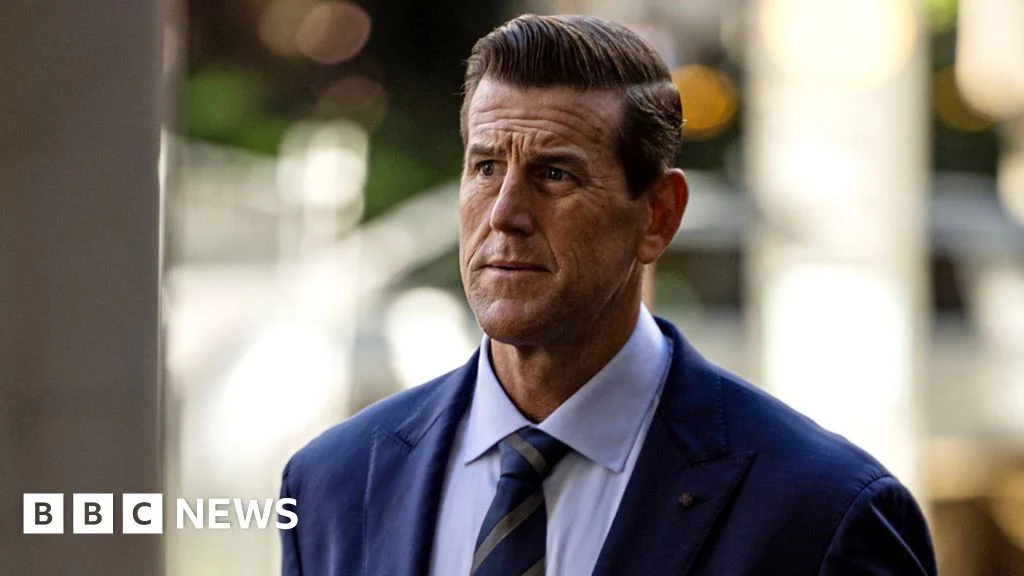
Victoria Cross Recipient Ben Roberts-Smith Vows to Clear Name as Landmark War Crimes Trial Looms
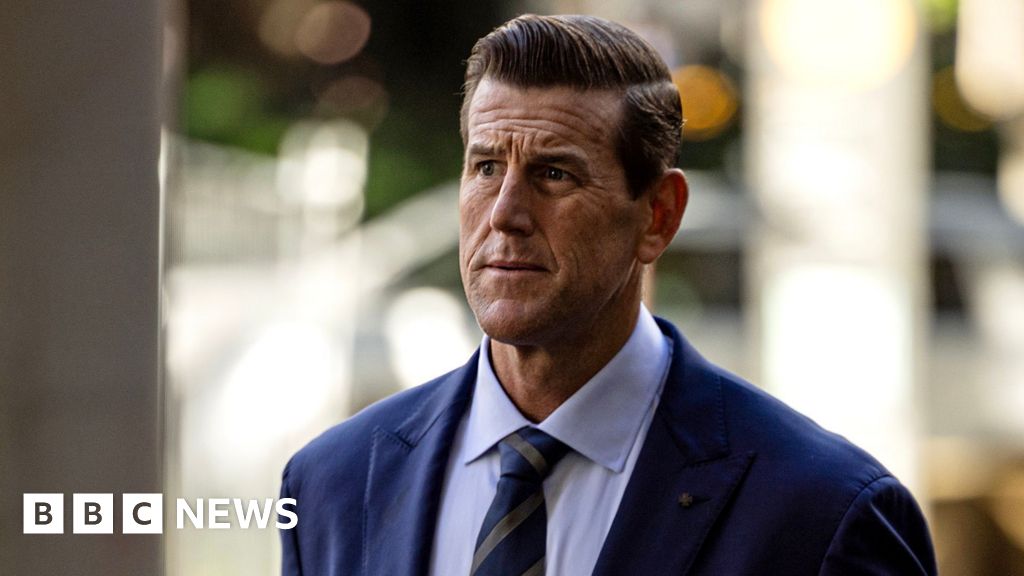
Ben Roberts-Smith, one of Australia’s most decorated soldiers, was released on bail Friday, immediately declaring his intent to leverage the criminal charges against him as an opportunity to "finally clear his name." The 47-year-old former corporal, a recipient of the prestigious Victoria Cross, stands accused of grave war crimes, including murder and complicity in the deaths of unarmed Afghan detainees during his service with the Special Air Service (SAS) Regiment between 2009 and 2012. Speaking to the media shortly after his release, Roberts-Smith maintained his innocence with defiance, stating, "I understand this journey will be difficult. But I can promise everybody that I have never run from a fight in my life." He asserted that while he would have preferred these charges not to be brought, he is prepared for the legal battle ahead, emphasizing his pride in his Afghanistan service and claiming he "always acted within my values, within my training and within the rules of engagement." He further criticized his arrest as a "sensational" and "unnecessary spectacle" before declining to answer questions from journalists. The presiding judge, in granting bail, acknowledged the "exceptional" nature of the case and the likelihood that Roberts-Smith could face "possibly years and years" in pre-trial custody if not released.
A Decorated Career Tarnished by Grave Allegations
Ben Roberts-Smith’s military career was, for many years, emblematic of Australian heroism and sacrifice. Awarded the Victoria Cross for Australia in 2011 for his actions during a battle in Afghanistan’s Shah Wali Kot district in 2010, he became a national icon. The Victoria Cross is the highest military honour awarded for valour "in the presence of the enemy" to members of the Australian armed forces, and its recipients are revered figures. His bravery in combat, which included single-handedly assaulting enemy positions, was widely celebrated, and he transitioned into a public role, often speaking on behalf of veterans and military personnel. However, this image began to unravel in 2018 when a series of investigative reports by Nine newspapers, including The Sydney Morning Herald, The Age, and The Canberra Times, published extensive allegations of misconduct, including unlawful killings, cruelty, and bullying during his deployments in Afghanistan. These allegations marked a dramatic shift in public perception, transforming a national hero into a figure at the centre of Australia’s most significant war crimes investigation. The charges now before the court—one count of the war crime of murder, one of jointly commissioning a murder, and three of aiding, abetting, counselling, or procuring a murder—strike at the core of his wartime conduct and challenge the very foundation of his decorated status.
The Brereton Report: Unveiling a Culture of Misconduct
The criminal charges against Roberts-Smith do not emerge in isolation but are a direct consequence of a wider, systemic inquiry into alleged war crimes by Australian special forces in Afghanistan. This inquiry, led by Major General Paul Brereton, a judge of the New South Wales Court of Appeal and an Army Reserve officer, culminated in the release of the "Brereton Report" in November 2020. Commissioned by the Chief of the Australian Defence Force (ADF) in 2016, the four-year investigation examined allegations of misconduct by Australian special forces personnel between 2005 and 2016.
The Brereton Report delivered a damning assessment, finding credible evidence of 39 unlawful killings of Afghan civilians and prisoners by Australian special forces soldiers, along with two instances of cruel treatment. It identified 25 perpetrators, some of whom were still serving. The report detailed a "warrior culture" and a "cover-up" within some segments of the Special Operations Task Group (SOTG), revealing patterns of behavior including the alleged practice of "blooding" junior soldiers by forcing them to execute prisoners, and planting weapons on bodies to disguise unlawful killings. The report’s findings sent shockwaves through Australia’s military and political establishments, prompting apologies from the Chief of the Defence Force and the Prime Minister, and a commitment to address the systemic issues and ensure accountability.
In response to the report’s recommendations, the Australian government established the Office of the Special Investigator (OSI) in 2020. The OSI is an independent body tasked with investigating alleged war crimes referred by the Brereton Report, gathering evidence, and preparing briefs for potential prosecution by the Commonwealth Director of Public Prosecutions (CDPP). The charges against Ben Roberts-Smith are among the first high-profile outcomes of the OSI’s work, signaling Australia’s determination to prosecute alleged war crimes under its domestic legal framework and uphold international humanitarian law.
The Precedent-Setting Civil Defamation Case
Before facing criminal charges, Roberts-Smith was embroiled in a protracted and highly public civil defamation case that spanned several years. In 2018, Nine newspapers published a series of articles alleging Roberts-Smith’s involvement in several unlawful killings in Afghanistan, along with accusations of bullying and domestic violence. Roberts-Smith vehemently denied these allegations and initiated defamation proceedings against Nine, its journalists, and editors, arguing that the articles defamed him by falsely portraying him as a murderer, war criminal, and bully.
The civil trial, which commenced in June 2021 and concluded in July 2022, was unprecedented in Australian legal history. It marked the first time any Australian court had extensively examined claims of war crimes by Australian forces. Over 100 days of hearings, the Federal Court heard explosive testimony from dozens of witnesses, including former SAS soldiers, Afghan villagers, and Roberts-Smith himself. Witnesses recounted harrowing details of alleged incidents, including claims that Roberts-Smith ordered the killing of unarmed prisoners, executed detainees, and was involved in the destruction of evidence. Roberts-Smith, in his defence, maintained that any killings occurred lawfully in the heat of combat or that the incidents simply did not happen.
In June 2023, Justice Anthony Besanko delivered a landmark judgment. Applying the civil standard of proof – the "balance of probabilities" (meaning it is more probable than not) – Justice Besanko found that Nine newspapers had established "substantial truth" to some of the most serious allegations against Roberts-Smith. Specifically, the judge found that Roberts-Smith had murdered or was complicit in the murder of four unarmed Afghan men on separate occasions, including an incident where a man with a prosthetic leg was allegedly thrown off a cliff and later shot, and another where two unarmed villagers were allegedly executed. The court also found that Roberts-Smith had committed assault. These findings, while made under a lower legal standard than criminal cases, were a devastating blow to Roberts-Smith’s reputation and provided significant corroboration for the underlying allegations of war crimes. Roberts-Smith subsequently appealed the Federal Court’s findings, but his appeal was dismissed by the Full Federal Court in December of the same year, solidifying the civil court’s judgment. This civil case effectively laid much of the groundwork and publicly aired many of the allegations that have now led to the criminal prosecution.
Navigating the Criminal Justice System
The transition from a civil defamation finding to criminal charges marks a critical escalation in the pursuit of justice. The criminal case against Ben Roberts-Smith is being led by the Office of the Special Investigator (OSI), working in conjunction with the Commonwealth Director of Public Prosecutions (CDPP). Unlike the civil trial, which operates on a "balance of probabilities," a criminal prosecution requires proof "beyond reasonable doubt" – a significantly higher legal threshold. This means prosecutors must present compelling evidence that leaves no reasonable alternative explanation for the events other than Roberts-Smith’s guilt.
Roberts-Smith faces five specific charges:
- War crime of murder: A direct accusation of personally carrying out an unlawful killing.
- Jointly commissioning a murder: This charge implies that he, along with another person, planned or facilitated a murder, making him equally culpable.
- Three charges of aiding, abetting, counselling, or procuring a murder: These charges relate to assisting, encouraging, advising, or arranging for others to commit murder, demonstrating a degree of complicity in the alleged unlawful killings.
The legal process for these charges will be arduous and complex. It will likely involve a committal hearing to determine if there is sufficient evidence for the case to proceed to trial, followed by what is anticipated to be a lengthy and intricate trial. Gathering evidence from a distant conflict zone like Afghanistan, securing witness testimony (some of whom may be protected witnesses or reside overseas), and navigating the intricacies of international humanitarian law and domestic criminal statutes will pose significant challenges for both prosecution and defence. The judge’s observation that Roberts-Smith could spend "years and years" in pre-trial custody underscores the expected duration and complexity of these proceedings, which will be meticulously scrutinized both domestically and internationally.
Statements and Public Response
Roberts-Smith’s public statements following his bail release consistently reiterate his denial of wrongdoing, his pride in his military service, and his determination to clear his name. His description of the arrest as a "sensational" and "unnecessary spectacle" reflects a narrative of being unfairly targeted or subjected to an overzealous prosecution. This stance is likely aimed at garnering support and framing the legal battle as a fight for his honour against powerful institutions.
The case has provoked a broad spectrum of reactions from various stakeholders:
- Australian Defence Force (ADF): The ADF has repeatedly affirmed its commitment to upholding the highest standards of conduct and accountability. While stressing the presumption of innocence, the ADF leadership has indicated full cooperation with the OSI and the legal process, viewing it as essential for maintaining the integrity and reputation of the armed forces, both domestically and internationally.
- Veterans’ Community: The case has been deeply divisive within the veterans’ community. Some veterans express unwavering support for Roberts-Smith, viewing him as a scapegoat or a victim of a "witch hunt" against special forces soldiers. They often highlight the immense pressures of combat and the complexities of warfare. Conversely, other veterans and veterans’ advocates have called for full accountability, emphasizing that alleged war crimes undermine the sacrifices of the vast majority of service members who uphold ethical standards. The ongoing legal proceedings add to existing mental health challenges and moral injuries within the veteran population.
- Human Rights Organisations: Groups such as Human Rights Watch and Amnesty International have consistently called for accountability for alleged war crimes committed by Australian forces. They have welcomed the criminal charges as a crucial step towards justice for the victims and their families in Afghanistan, emphasizing the importance of upholding international humanitarian law and combating impunity.
- Afghan Community/Victims’ Families: For the alleged victims and their families in Afghanistan, these legal proceedings represent a glimmer of hope for justice after years of waiting. The protracted nature of the investigations and trials can be emotionally taxing, but the prospect of accountability for alleged atrocities is paramount.
- Australian Government: The Australian government has maintained a consistent position of upholding the rule of law and respecting the independence of the judicial process. While acknowledging the difficult nature of these cases, the government has stressed its commitment to ensuring that allegations of war crimes are thoroughly investigated and prosecuted where appropriate, aligning with Australia’s international obligations.
Broader Implications for Australia and International Law
The criminal prosecution of Ben Roberts-Smith carries profound implications, not only for the individual involved but also for Australia’s national identity, its military, and its standing on the international stage.
- National Reputation: For a nation that prides itself on its commitment to human rights and adherence to international law, the allegations and subsequent prosecution of a decorated war hero present a significant challenge. The outcome of this trial will shape global perceptions of Australia’s willingness to hold its own military personnel accountable for grave breaches of international humanitarian law. It underscores the principle that no one, regardless of their decorated status, is above the law.
- Military Culture and Reform: The Brereton Report highlighted systemic issues within certain elements of the Australian Special Operations Task Group. The Roberts-Smith trial is a tangible manifestation of the ongoing efforts to address these cultural and command failures. Regardless of the trial’s outcome, the process itself is a powerful statement about the ADF’s commitment to reform, ethical leadership, and reinforcing the values that underpin legitimate military operations. It will undoubtedly influence training, oversight, and internal accountability mechanisms within the special forces and the broader ADF.
- Legal Precedent: This case will set a crucial legal precedent for future war crimes prosecutions in Australia. The complexities of gathering evidence from conflict zones, translating foreign testimonies, and applying international humanitarian law within a domestic criminal framework will test and potentially refine Australia’s legal capacity to prosecute such crimes. It will serve as a benchmark for how similar allegations against military personnel are handled in the future.
- Justice for Victims: At its core, the pursuit of justice for the alleged victims in Afghanistan is paramount. While the Australian legal system focuses on the culpability of the accused, the broader impact of these proceedings is to provide a measure of recognition and accountability for those who suffered. It reinforces the universal principle that even in the chaos of war, certain acts are unequivocally criminal and must be addressed.
The criminal trial of Ben Roberts-Smith is poised to be one of the most significant legal proceedings in Australia’s modern history. It is a testament to the enduring challenge of reconciling military heroism with the harsh realities of warfare and the imperative of upholding legal and ethical standards. As the legal process unfolds, it will continue to provoke national introspection, testing the resilience of Australia’s institutions and its commitment to justice, both at home and abroad. The journey ahead is indeed difficult, as Roberts-Smith himself noted, with the stakes exceptionally high for all parties involved.

Related Posts
Zambia on Edge: Opposition Leader Arrested Amid Allegations of Insurrection Plot and Election Tensions
Rescuers search for survivors of powerful Indonesia earthquake

