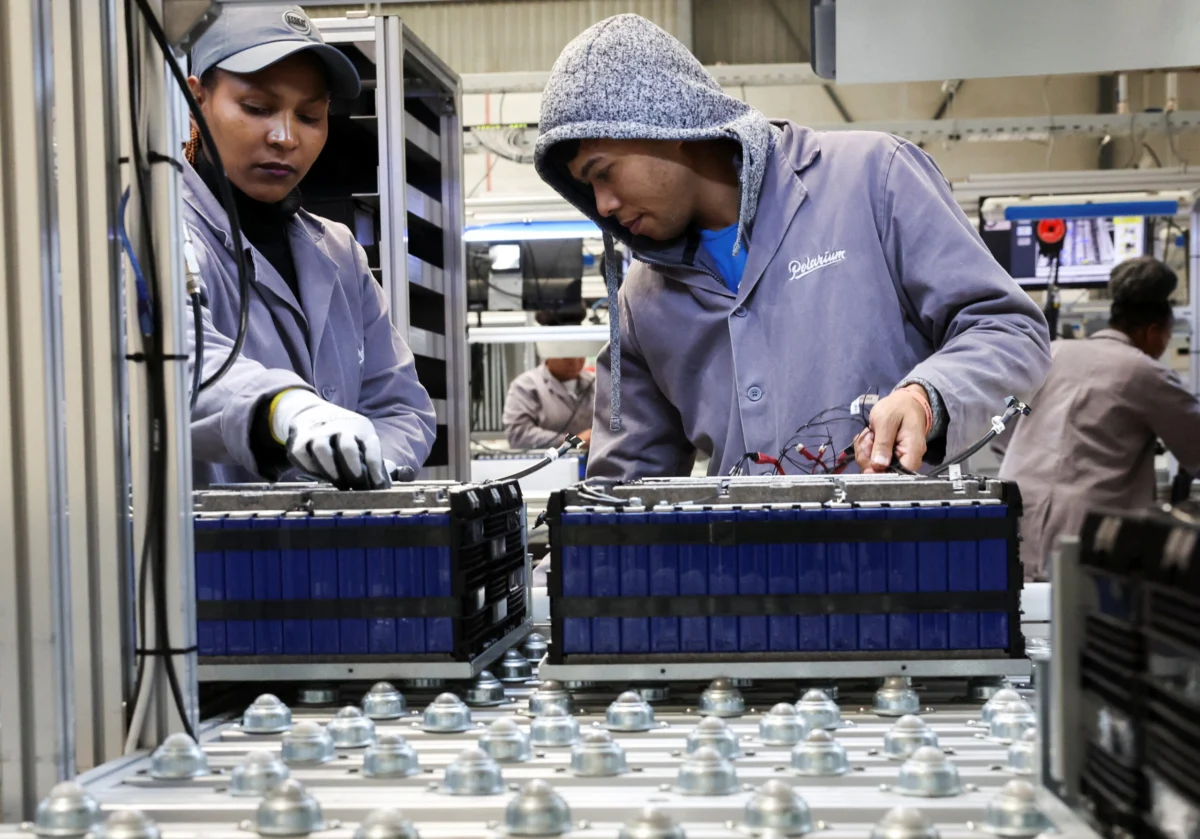
Restricting raw materials exports is well-intentioned but without other policies to foster domestic processing, they can backfire
The global transition toward renewable energy and electric vehicles (EVs) has sparked a modern-day "gold rush" for critical minerals, including lithium, cobalt, nickel, and copper. As demand for these resources surges, resource-rich nations in the Global South are increasingly moving to ensure that they do not remain mere exporters of raw ores. In an effort to capture more value within their own borders, several governments have implemented strict bans or heavy restrictions on the export of unprocessed minerals. However, as economic data and recent industrial developments suggest, these "value-addition" mandates often face a harsh reality: without the necessary infrastructure, energy stability, and investment climate, such policies risk stifling the very industries they intend to grow.
The rationale behind these restrictions is rooted in the concept of resource nationalism—a desire to break the "resource curse" where countries export low-value raw materials only to import high-value finished products. By mandating domestic processing, governments aim to create jobs, boost tax revenues, and catalyze industrialization. Yet, the transition from a mining economy to a processing hub requires more than just a legislative decree. It demands a holistic ecosystem that includes reliable power grids, advanced logistics, a skilled workforce, and massive capital expenditure.
The Zimbabwean Context: A Bold Move for Lithium
Zimbabwe, home to some of Africa’s largest lithium reserves, serves as a primary example of this policy shift. In December 2022, the Zimbabwean government invoked the Base Minerals Export Control Act to ban the export of unbeneficiated lithium. The move was designed to stop the "bleeding" of mineral wealth and force mining companies to invest in domestic processing plants. At the time, the government estimated that it was losing nearly $1.8 billion in potential revenue by exporting raw ore rather than lithium concentrate or battery-grade chemicals.
Following the ban, several major Chinese firms—including Huayou Cobalt, Sinomine Resource Group, and Chengxin Lithium Group—accelerated the construction of processing plants within Zimbabwe. By early 2024, these firms had collectively invested over $1 billion into the country’s lithium sector. However, while these investments led to the production of lithium concentrate (a partially processed product), the leap to producing battery-grade lithium carbonate or hydroxide remains elusive. The primary barriers are the lack of a consistent high-voltage electricity supply and the absence of a domestic chemical industry to provide the necessary reagents for advanced refining.
A Global Trend: From Indonesia to Namibia
Zimbabwe is not alone in this strategy. Indonesia provides the most cited "success story" for export restrictions. In 2020, Jakarta implemented a total ban on the export of nickel ore, forcing foreign investors—largely from China—to build smelters within the country. This policy successfully transformed Indonesia from a raw ore exporter into a global hub for stainless steel and battery-grade nickel chemicals. Between 2014 and 2022, the value of Indonesia’s nickel-related exports jumped from roughly $1 billion to over $30 billion.
Encouraged by Indonesia’s results, other nations have followed suit. In June 2023, Namibia banned the export of unprocessed crushed lithium, cobalt, manganese, graphite, and rare earth minerals. Similarly, Tanzania and Nigeria have introduced regulations requiring various degrees of domestic beneficiation before minerals can leave their ports.

However, analysts caution that the "Indonesian model" may not be easily replicable. Indonesia benefited from a massive, pre-existing domestic market, a strategic location along major shipping lanes, and a highly centralized government capable of coordinating large-scale industrial zones. For landlocked nations or those with smaller domestic markets and fragile power grids, the same policies can lead to unintended consequences.
The Risk of Backfiring: Stockpiles and Smuggling
When an export ban is implemented before processing facilities are operational, the immediate result is often a collapse in revenue for small-scale and artisanal miners. In Zimbabwe, the 2023 ban led to significant stockpiles of raw ore that could not be legally sold, forcing many smaller operations to shut down. This economic vacuum frequently gives rise to smuggling. Despite the ban, reports have emerged of raw lithium being illicitly trucked across borders to neighboring countries for export, depriving the state of royalties and taxes.
Furthermore, if the cost of domestic processing is significantly higher than international benchmarks due to high electricity costs or poor logistics, the policy can act as a deterrent to new exploration. Global mining firms operate on long-term cycles; if the regulatory environment is perceived as too restrictive or the infrastructure too deficient, they may shift their capital to jurisdictions with more flexible export laws, such as Australia or Canada.
The Infrastructure Gap: The Hidden Cost of Refining
The technical reality of mineral processing is energy-intensive. Refining lithium or copper requires vast amounts of reliable, 24/7 electricity. In many Sub-Saharan African nations, the national grid is already overstretched, with frequent blackouts. Forcing companies to process minerals domestically often means they must build their own power plants—frequently coal or diesel-fired—which can conflict with the very "green" credentials of the energy transition minerals they are mining.
According to data from the International Energy Agency (IEA), the energy required to refine battery minerals is significantly higher than that required for extraction. For example, converting spodumene (lithium ore) into lithium hydroxide involves high-temperature roasting and complex chemical leaching. Without a cheap and stable energy source, the "value added" by domestic processing can be negated by the high cost of production, making the final product uncompetitive on the global market.
Chronology of Key Export Restrictions (2020–2024)
- January 2020: Indonesia reinforces its ban on nickel ore exports, leading to a surge in domestic smelting investment but triggering a dispute at the World Trade Organization (WTO) with the European Union.
- December 2022: Zimbabwe bans the export of raw lithium ore to curb artisanal smuggling and encourage domestic refinery construction.
- June 2023: Namibia’s cabinet approves a ban on the export of unprocessed critical minerals, citing the need for local industrialization.
- July 2023: China, as a counter-move in the global trade war, restricts the export of gallium and germanium—metals vital for semiconductors—demonstrating that even processing giants use export controls as geopolitical leverage.
- January 2024: The Zimbabwean government clarifies that only "concentrates" can be exported, while pushing for a roadmap toward "battery-grade" refining by 2025.
International Reactions and Geopolitical Implications
The move toward export restrictions has drawn mixed reactions from the international community. The European Union and the United States, which are both seeking to diversify their supply chains away from China, have expressed concern that these bans could tighten global supply and drive up the costs of EVs. The WTO has also been a forum for these tensions; in 2022, a WTO panel ruled against Indonesia’s nickel ban, arguing it violated international trade rules. Indonesia has since appealed the decision.
Conversely, some international bodies have expressed support for the spirit of these policies. The African Development Bank (AfDB) has argued that "green minerals" represent a historic opportunity for Africa to industrialize. However, the AfDB emphasizes that export bans must be accompanied by "Special Economic Zones" and regional cooperation to create larger, more attractive markets for investors.

The United States, through the Inflation Reduction Act (IRA), offers tax credits for EVs that use minerals sourced from "free trade partners." This has created a dilemma for countries like Zimbabwe or Indonesia, which do not have such agreements with the U.S. Their export bans may force domestic processing, but their finished products might still face barriers in the lucrative American market.
Data Analysis: The Value Gap
The economic argument for value addition is supported by stark price differentials. In 2023, while raw lithium ore might sell for a few hundred dollars per tonne, lithium concentrate (6% Li2O) could fetch $2,000 to $5,000 per tonne, and battery-grade lithium carbonate could exceed $40,000 per tonne (though prices are highly volatile).
For a country like Zimbabwe, capturing even the jump from ore to concentrate is significant. However, the data also shows that the "refining" stage is where the most capital is required and where the highest environmental risks reside. A standard lithium carbonate plant can cost between $400 million and $1 billion to build. For many developing nations, the debt required to fund such projects—or the concessions given to foreign firms to build them—can sometimes outweigh the immediate tax benefits.
Conclusion: Toward a More Nuanced Policy Framework
The lesson from the past few years is that export restrictions are a tool, not a solution. For a ban on raw materials to succeed, it must be part of a broader industrial strategy. This includes:
- Infrastructure Investment: Governments must prioritize the development of reliable energy and transport corridors.
- Phased Implementation: Rather than an immediate total ban, a sliding scale of export duties on raw materials can provide a transition period for industry to adapt.
- Regional Integration: Smaller nations should look to regional processing hubs. For instance, the Democratic Republic of Congo and Zambia have signed a cooperation agreement to develop a joint supply chain for electric vehicle batteries.
- Human Capital: Investment in technical education is essential to ensure that the "domestic" processing plants are staffed by local engineers and technicians rather than imported labor.
In summary, while the desire to move up the value chain is a legitimate and necessary goal for resource-rich nations, export bans alone are insufficient. Without the supporting pillars of industrial policy, these restrictions risk leaving valuable minerals in the ground, depriving nations of revenue at a time when the global window for the energy transition is wide open but potentially fleeting. Success will be measured not by how much ore is kept within borders, but by how effectively a country can transform its natural wealth into a sustainable, competitive industrial base.

Related Posts
Constitutional Court of South Africa Bars Shell Oil Exploration in Landmark Victory for Environmental and Community Rights
The Battle for Saldanha Bay: South Africa’s Ambitious Ocean Economy Strategy Faces Legal and Environmental Reckoning