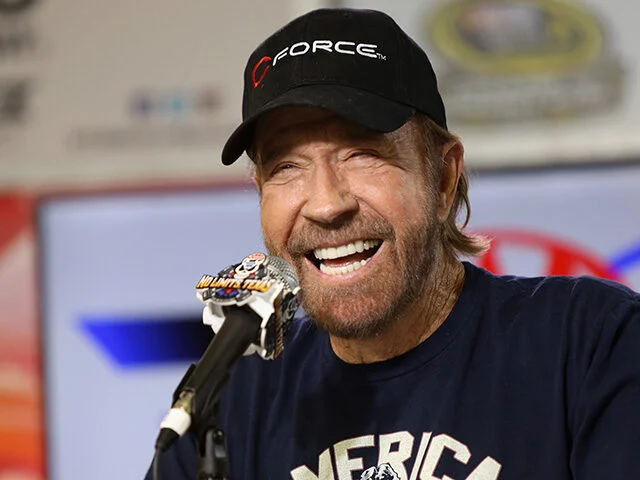
Legendary Action Star Chuck Norris Dies at 86, Tributes Pour in from Donald Trump and Family
Hollywood and the martial arts world are mourning the loss of legendary action film star and cultural icon Chuck Norris, who passed away on Friday at the age of 86. The news of his death prompted immediate reactions from prominent figures, including former President Donald Trump, who described Norris as a "tough" and "great man," while his family issued a heartfelt statement reflecting on his profound impact both professionally and personally.
President Trump’s Condolences
Former President Donald Trump, upon learning of Norris’s passing from reporters on Friday, shared his immediate condolences and admiration for the late actor. Speaking to the press, Trump stated, "He was a really good, tough cookie. You didn’t want to fight him, I can tell you. He was a tough, great guy… He was a great supporter." Trump further elaborated on his respect for Norris, adding, "He was a great guy. He was a great supporter. Tell his family highest respect. Great man." The remarks underscored a shared political alignment, as Norris had been an outspoken conservative and a visible supporter of Republican causes throughout his later life. Trump’s description of Norris as a "tough cookie" resonated with the public image Norris cultivated through decades of action films and television.
A Family’s Heartfelt Statement
In the wake of his passing, Norris’s family released a poignant statement shared on his official Instagram page, confirming the news and reflecting on his multifaceted life. "It is with heavy hearts that our family shares the sudden passing of our beloved Chuck Norris yesterday morning," the statement began. While the family requested privacy regarding the specific circumstances of his death, they assured the public that he was "surrounded by his family and was at peace."
The statement further highlighted the duality of his public persona and private life: "To the world, he was a martial artist, actor, and a symbol of strength. To us, he was a devoted husband, a loving father and grandfather, an incredible brother, and the heart of our family." This distinction painted a picture of a man who, despite his formidable on-screen presence, was deeply cherished within his personal circle. The family concluded by emphasizing his enduring legacy: "He lived his life with faith, purpose, and an unwavering commitment to the people he loved. Through his work, discipline, and kindness, he inspired millions around the world and left a lasting impact on so many lives."
The Genesis of a Legend: From Martial Arts Master to Screen Icon
Born Carlos Ray Norris on March 10, 1940, in Ryan, Oklahoma, Chuck Norris’s journey to global stardom began not in Hollywood studios, but in the rigorous discipline of martial arts. His early life was marked by challenges, including growing up in poverty. In 1958, Norris joined the United States Air Force and was stationed at Osan Air Base in South Korea. It was during his military service that he began training in Tang Soo Do, a Korean martial art, which profoundly shaped his future. He also adopted the nickname "Chuck" during this period.
After returning to the U.S., Norris continued to hone his skills, earning black belts in multiple disciplines, including Tang Soo Do, Brazilian Jiu-Jitsu, and Judo. He became a formidable competitor, winning numerous martial arts championships, including the Professional World Middleweight Karate Championship, which he held for six consecutive years. In 1968, he founded the Chun Kuk Do ("The Universal Way") style of martial arts, which incorporated elements from various disciplines he had mastered. By the late 1960s, Norris had established a chain of martial arts schools, including a notable one in Torrance, California, which attracted a diverse clientele, including several Hollywood celebrities. This exposure would prove pivotal to his transition from competitive martial artist to action star.
Pioneering the Action Genre: A Storied Film and Television Career
Norris’s entry into the entertainment industry was largely facilitated by his martial arts connections. A chance encounter and subsequent friendship with the legendary Bruce Lee led to his breakthrough role in Lee’s 1972 martial arts epic, Way of the Dragon (released as Return of the Dragon in the U.S.). In a memorable climactic battle, Norris’s character, Colt, faced off against Lee’s character in the Roman Colosseum, a sequence that remains one of the most iconic martial arts duels in cinema history. This role instantly established Norris as a formidable screen presence.
Following this impactful debut, Norris steadily built his filmography, initially in B-movies that showcased his martial arts prowess. His first starring role came in 1977’s Breaker! Breaker!, but it was 1978’s Good Guys Wear Black that truly launched him as a solo action hero, demonstrating his ability to carry a film. Throughout the 1980s, Norris became synonymous with the burgeoning action genre, often portraying stoic, justice-seeking characters. Key films from this era include The Octagon (1980), An Eye for an Eye (1981), and Silent Rage (1982), which uniquely blended martial arts action with slasher horror elements.
His film career reached a peak with the Missing in Action series, beginning in 1984. These films, which centered on American soldiers returning to Vietnam to rescue POWs, tapped into the post-Vietnam War sentiment in the United States and cemented Norris’s image as a patriotic, uncompromising hero. He also starred in other successful action features like Lone Wolf McQuade (1983) and Code of Silence (1985), which garnered critical praise for their gritty realism.
However, it was his transition to television that would introduce Chuck Norris to a new generation of fans and solidify his status as a household name. From 1993 to 2001, Norris starred as Cordell Walker in the highly popular CBS series Walker, Texas Ranger. The show, which ran for nine seasons and 203 episodes, depicted a Texas Ranger who used his martial arts skills and moral compass to fight crime. Walker, Texas Ranger became a global phenomenon, appealing to audiences with its blend of action, strong moral themes, and family-friendly storytelling. Its success spawned a TV movie, Walker, Texas Ranger: Trial by Fire, in 2005. The series not only showcased Norris’s enduring appeal but also provided a consistent platform for his values and commitment to justice.
Norris’s last major feature film appearance was in 2012’s ensemble action blockbuster, The Expendables 2, where he reprised his role as Booker, "The Lone Wolf," a cameo that was met with enthusiastic reception from fans of classic action cinema. His appearance served as a powerful homage to his enduring legacy within the genre.
Beyond the Screen: Cultural Impact and "Chuck Norris Facts"
Beyond his cinematic and television achievements, Chuck Norris transcended the role of an actor to become a significant cultural phenomenon, particularly in the digital age. In the mid-2000s, an internet meme known as "Chuck Norris facts" emerged, featuring humorous, exaggerated claims about his superhuman strength, invincibility, and general awesomeness. Examples included "Chuck Norris doesn’t do push-ups, he pushes the Earth down" or "When the Boogeyman goes to sleep, he checks under his bed for Chuck Norris."
These "facts," which often parodied his tough-guy image, spread virally across the internet, cementing his status as a mythical figure in popular culture. Far from being offended, Norris embraced the phenomenon, often incorporating the jokes into his public appearances and even releasing a book titled The Official Chuck Norris Fact Book: 101 of Chuck’s Favorite Facts and Stories. This embrace further endeared him to a new generation and highlighted his good-natured personality beneath the stoic exterior. The "Chuck Norris facts" not only showcased his unique place in the cultural zeitgeist but also demonstrated the power of internet memes to shape and amplify celebrity personas.
Philanthropy and Personal Life
Beyond his martial arts and acting careers, Chuck Norris was also known for his philanthropic efforts and strong personal convictions. He was a dedicated advocate for various causes, most notably through his "Kick Drugs Out of America" (later renamed KICKSTART KIDS) foundation. Established in 1990, the program aimed to teach martial arts to at-risk youth in schools, combining physical discipline with character-building lessons to help them resist negative influences and develop self-esteem. The program has impacted hundreds of thousands of students across multiple states.
Norris was also a devout Christian and frequently spoke about his faith, which he credited as a guiding force in his life. He was a vocal conservative and often lent his support to Republican candidates and causes, aligning with figures like Donald Trump. He was married to Dianne Holechek from 1958 to 1988, with whom he had two sons, Mike and Eric. In 1998, he married Gena O’Kelley, and they had twins, Dakota Alan and Danilee Kelly. His family life was often depicted as a central pillar of his personal strength and motivation.
The Final Chapter and Enduring Legacy
Reports from earlier in the week, initially circulated by TMZ, indicated that Norris had been hospitalized on the island of Kauai, Hawaii, though no specific details were provided, and the family subsequently requested privacy regarding the circumstances of his passing. His death at 86 marks the end of an era for many who grew up watching his films and television series.
Chuck Norris leaves behind a legacy as a true pioneer. He was not only a world-class martial artist who introduced complex fight choreography to mainstream audiences but also an actor who crafted an enduring persona of integrity, strength, and unwavering justice. His characters, often defined by their stoic resolve and formidable combat skills, resonated deeply with audiences seeking heroes who embodied traditional values. From his groundbreaking fight with Bruce Lee to his iconic role as Walker, Texas Ranger, Norris carved out a unique space in popular culture. The "Chuck Norris facts" will continue to serve as a humorous testament to the larger-than-life figure he became, a testament to a man whose influence stretched far beyond the confines of the silver screen or the dojo. His passing represents the loss of a genuine American icon, whose impact on martial arts, action cinema, and popular culture will be remembered for generations to come.

Related Posts
Democratic Candidates Must Moderate to Win General Elections, Says Rep. Greg Stanton
Lisa Demuth Secures Republican Gubernatorial Nomination in Minnesota, Defeating Trump-Endorsed Mike Lindell