Resilience in the Indus Basin: How Early Warning Systems and Community-Led Adaptation are Addressing Pakistans Climate Crisis
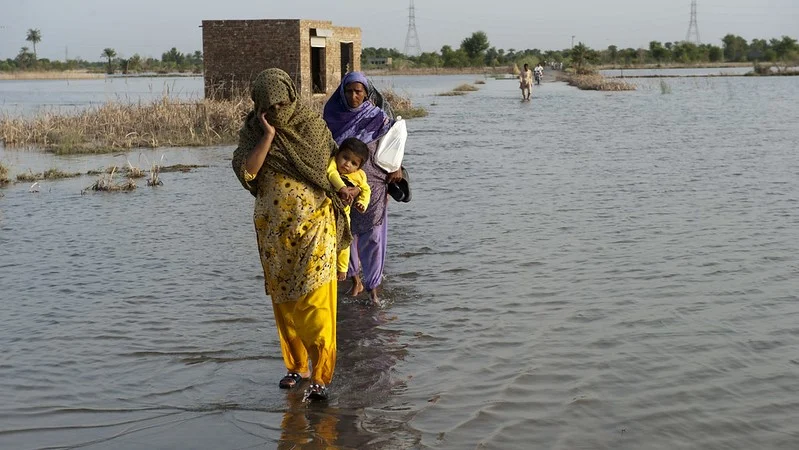
The monsoon season in Pakistan, historically a predictable cycle of life-sustaining rain, has transformed into a volatile and increasingly lethal phenomenon characterized by extreme weather events that defy traditional forecasting. For decades, the months of July and August were defined by high levels of rainfall that, while occasionally causing localized flooding, remained within manageable parameters. However, the last fifteen years have signaled a profound shift in the region’s atmospheric behavior, culminating in the catastrophic floods of 2022. During that summer, an unprecedented deluge submerged nearly one-third of the country, with the Sindh province alone recording rainfall levels 508% above its historical average. This escalation of weather intensity has moved Pakistan to the forefront of the global climate crisis, necessitating a total overhaul of the nation’s disaster management and infrastructure strategies.
The 2022 disaster was more than a localized emergency; it was a systemic failure of existing infrastructure to withstand the pressures of a warming planet. A post-disaster needs assessment produced by the Government of Pakistan, in collaboration with international partners, characterized the floods as a definitive wake-up call. The report emphasized that the underlying vulnerabilities to natural hazards—primarily the lack of climate-resilient housing, drainage, and transport networks—must be addressed through systemic changes rather than temporary relief measures. The financial toll of these recurring disasters has been staggering, with billions of dollars lost in damaged crops, destroyed livestock, and decimated infrastructure, further straining an economy already grappling with fiscal instability.
A Chronology of Escalating Climate Risks
The trajectory of Pakistan’s climate vulnerability can be traced through a series of increasingly frequent and severe disasters over the past two decades. While flooding has always been a risk in the Indus Basin, the frequency of "once-in-a-century" events has accelerated.
- 2010: The Great Flood: Often cited as the first major signal of the changing climate, the 2010 floods affected over 20 million people and resulted in nearly 2,000 deaths. It exposed the fragility of the country’s dam and levee systems.
- 2011–2015: Recurring Monsoon Deviations: During this period, the southern provinces experienced erratic rainfall patterns that led to both unexpected flash floods and prolonged droughts, complicating agricultural planning.
- 2022: The Monster Monsoon: Precipitated by a severe heatwave in April and May that accelerated glacial melt, the 2022 monsoon brought "rivers in the sky." The resulting floods displaced 33 million people and caused an estimated $30 billion in economic losses.
- 2023–Present: The Shift to Adaptation: In the wake of 2022, the focus of the Pakistani government and international NGOs has shifted from reactive aid to proactive adaptation, specifically focusing on the Indus River Basin and the northern glacial regions.
This timeline illustrates a clear trend: the intervals between major disasters are shrinking, leaving communities with less time to recover before the next shock arrives.
The Indus River: An Economic and Ecological Artery
The Indus River is the foundational element of Pakistan’s existence. Stretching approximately 2,000 kilometers from the icy peaks of the Himalayas to the warm waters of the Arabian Sea, it serves as the country’s primary economic lever. The Indus Basin supports nearly 90% of Pakistan’s food production and contributes roughly 25% to the national Gross Domestic Product (GDP). However, this reliance creates a singular point of failure. When the Indus overflows or its flow becomes unpredictable, the entire nation’s food security and economic stability are placed at risk.
The geographical diversity of the Indus Basin presents a complex set of challenges. In the northern mountainous regions of Gilgit-Baltistan and Khyber Pakhtunkhwa, the primary threat is the cryosphere—the frozen water of the Himalayas. Pakistan contains over 7,000 glaciers, more than any other location outside the polar regions. As global temperatures rise, these glaciers are melting at an accelerated rate. In the southern plains and deserts, the challenge is inverted; while the north faces too much water in the form of glacial melt, the south faces severe water scarcity and the intrusion of salt water into freshwater aquifers.
The SAFER Pakistan Project: A New Model for Adaptation
To address these multifaceted threats, a significant international intervention known as SAFER Pakistan (Sustainable Actions for Ecosystems Restoration in Pakistan) has been launched. This US$10 million initiative is led by the International Centre for Integrated Mountain Development (ICIMOD) in partnership with UNICEF and is funded by the Adaptation Fund. The project is designed to move beyond traditional "hard" infrastructure like concrete dams and instead focuses on "soft" adaptation and nature-based solutions.
The SAFER project targets six critical pillars of water security:
- Cryosphere Risk Management: Monitoring glacial health and predicting melt rates.
- Spring Restoration: Protecting drying natural springs that provide drinking water to mountain communities.
- Groundwater Management: Ensuring the sustainable extraction of water in arid regions.
- Pollution Control: Reducing the industrial and agricultural runoff that taints the Indus.
- Sustainable Water Use: Implementing high-efficiency irrigation systems for farmers.
- Community Resilience: Training local populations to manage their own resources and disaster responses.
A central component of this project is the deployment of Community Early Warning Systems (CEWS). Unlike traditional top-down weather alerts, these systems are designed to be operated and maintained by the people living in high-risk zones.
Mitigating the Threat of Glacial Lake Outburst Floods
In the northern provinces, the most acute threat is the Glacial Lake Outburst Flood (GLOF). As glaciers retreat, they often leave behind large lakes dammed by unstable piles of ice and debris called moraines. When these natural dams fail—due to earthquakes, heavy rain, or rapid melting—they release a catastrophic wall of water, mud, and boulders.
The SAFER project utilizes a combination of high-tech and "human intelligence" to combat GLOFs. Remote sensors and satellite data provide real-time monitoring of lake levels and glacial movement. However, as Mikko Ollikainen, head of the Adaptation Fund, notes, local information is often just as valuable as satellite data. Community members are trained to recognize the subtle signs of an impending outburst, such as changes in stream color or unusual sounds from the mountain. By combining this local knowledge with sensor data, the project aims to provide communities with the precious minutes or hours needed to evacuate safely.
Over 435,000 people are expected to be directly impacted by these interventions. The goal is to create a "culture of preparedness" where simulation drills and evacuation protocols become as routine as the harvest.
Lessons from Central Asia: A Regional Framework
The challenges facing Pakistan are mirrored across the high mountain regions of Central Asia. A parallel adaptation project, funded with $6.5 million from the Adaptation Fund and implemented by UNESCO, has been operating in Kazakhstan, Kyrgyzstan, Tajikistan, and Uzbekistan. This regional effort has successfully installed four major early warning systems across seven high-risk areas, protecting an estimated 100,000 people.
Diana Aripkhanova, a project officer at UNESCO based in Kazakhstan, highlights that these floods do more than just destroy homes; they wipe out critical infrastructure and livelihoods that can take decades to rebuild. The Central Asian model has also incorporated nature-based solutions, such as planting thousands of trees in valleys prone to landslides. These "green buffers" help stabilize the soil and slow the flow of debris during a flood. The success of the UNESCO project provides a proven blueprint for Pakistan, demonstrating that early warning systems combined with community preparedness can significantly reduce the loss of life.
Socio-Economic Implications and the Path Forward
The shift toward community-led adaptation represents a fundamental change in how Pakistan views its relationship with the environment. For too long, disaster management was seen as the sole responsibility of the state. However, the scale of the 2022 floods proved that the government cannot be everywhere at once. By empowering local communities, the SAFER project builds a decentralized network of resilience.
The economic argument for these systems is compelling. The cost of installing an early warning system is a fraction of the cost of rebuilding a destroyed village. Furthermore, these systems provide the stability necessary for long-term investment. Farmers are more likely to invest in better seeds and equipment if they have confidence that a single storm won’t wipe out their entire livelihood.
Ahsan Iqbal, Pakistan’s Minister for Planning, Development, and Special Initiatives, has argued that enhancing resilience is essential for the country’s future. He posits that the "monster disaster" of 2022 should be the catalyst for a new developmental paradigm—one where climate risk is factored into every bridge, school, and farm built in the Indus Basin.
As the climate continues to change, the shocks to Pakistan’s water systems will likely remain intense. However, the integration of advanced technology, regional cooperation, and deep-rooted local knowledge offers a pathway to survival. The success of initiatives like SAFER Pakistan will determine whether the Indus River remains a source of life and prosperity or becomes a recurring source of catastrophe for the millions who live along its banks. Through simple yet effective solutions like early warning systems, the blow of the changing monsoon can be softened, allowing one of the world’s most vulnerable nations to stand its ground against the rising tide of the climate crisis.

Related Posts
Constitutional Court of South Africa Bars Shell Oil Exploration in Landmark Victory for Environmental and Community Rights

The Battle for Saldanha Bay: South Africa’s Ambitious Ocean Economy Strategy Faces Legal and Environmental Reckoning