Live Blog Update| War on Iran
Early on Saturday, March 21, 2026, the Israeli military confirmed it was conducting extensive airstrikes against Hezbollah targets within Beirut, the capital of Lebanon. This significant escalation followed an explicit warning issued by a military spokesman to residents of Beirut’s southern suburbs, urging them to evacuate immediately ahead of the impending attacks. The strikes mark a severe intensification of the already volatile regional conflict, which has been broadly characterized as the "War on Iran," encompassing various proxy confrontations and direct military actions across the Middle East.
The precise targets of the Israeli operations were not immediately detailed, but the focus on Beirut’s southern suburbs, historically a stronghold for the Iran-backed Hezbollah movement, suggests an effort to dismantle key operational infrastructure, command centers, and potentially weapon storage facilities. The timing, just after midnight GMT, aimed to leverage the cover of darkness while minimizing civilian casualties through prior warnings, though the densely populated nature of the targeted areas raises profound humanitarian concerns. This latest development signals a dangerous new phase in the protracted hostilities, with direct strikes on a sovereign capital city carrying significant geopolitical ramifications.
Escalation in the War on Iran: Background and Context
The "War on Iran" is a broad term encompassing a series of escalating confrontations, proxy wars, and direct military actions that have gripped the Middle East for several years. This wider conflict involves a complex web of state and non-state actors, with Iran and its "Axis of Resistance" on one side, and Israel, the United States, and various Arab allies on the other. Key flashpoints have included the Persian Gulf, Syria, Iraq, Yemen, and increasingly, Lebanon.
Hezbollah, a powerful Lebanese political party and militant group, plays a central role in Iran’s regional strategy. Founded in the 1980s with Iranian backing, Hezbollah has evolved into a formidable military force, possessing an arsenal estimated to include tens of thousands of rockets and missiles, as well as advanced drone capabilities. Its deep integration into Lebanese society, particularly in the Shiite-majority south and Beirut’s southern suburbs (Dahiyeh), complicates any military action against it. The group’s political wing holds significant sway in the Lebanese parliament and government, further blurring the lines between state and non-state actors.
The relationship between Israel and Hezbollah has been one of perpetual hostility, punctuated by major conflicts such as the 2006 Lebanon War, which resulted in extensive destruction in Lebanon and significant casualties on both sides. Since then, a fragile truce has largely held, though cross-border skirmishes, alleged Israeli airstrikes on Hezbollah arms convoys in Syria, and intelligence operations have been frequent. The present strikes on Beirut are a drastic departure from this pattern, representing a direct and overt attack on Hezbollah’s core operational environment within Lebanon’s capital.
Lebanon itself has been grappling with an unprecedented economic crisis, political paralysis, and the lingering effects of the 2020 Beirut port explosion. The country’s infrastructure is crumbling, and its population faces severe hardship. The entry of its capital into the direct line of fire exacerbates an already dire humanitarian situation and threatens to push the fragile state further towards collapse. The international community has consistently called for the preservation of Lebanese sovereignty and stability, yet Hezbollah’s entrenched position and its role as an Iranian proxy continue to undermine these efforts.
Chronology of Events Leading to the Beirut Strikes
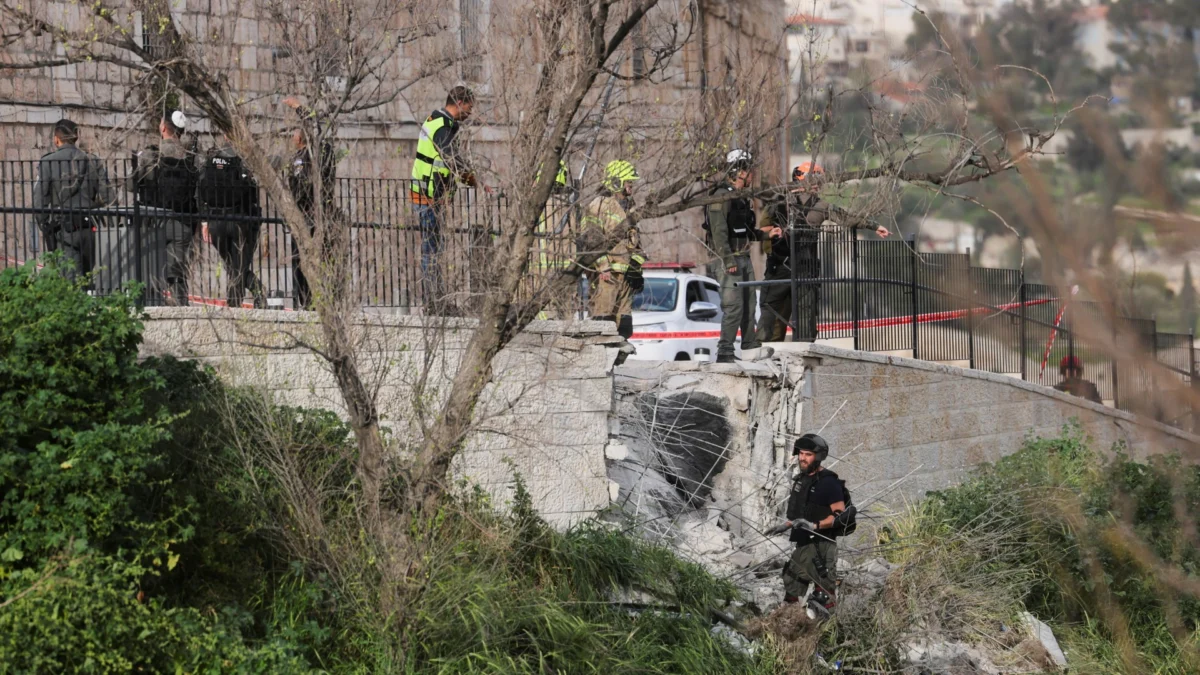
The Israeli military’s decision to strike Beirut’s southern suburbs on March 21, 2026, appears to be a direct response to a significant preceding event, likely an attack on Israeli territory. While the specific trigger was not explicitly stated in the immediate reports, the imagery accompanying the original news update depicted a "Jerusalem Old City missile." This strongly suggests that Israel was responding to a recent and serious missile attack on its capital, possibly from Hezbollah or another Iran-aligned group.
Preceding 24-48 Hours:
- March 20, 2026 (Day before strikes): Reports likely emerged of a major missile or drone attack targeting central Israel, potentially Jerusalem, causing damage and casualties. This act would represent a severe breach of any existing de-escalation understandings and necessitate a strong Israeli response. Such an attack would align with Hezbollah’s stated capabilities and intent to retaliate against Israeli actions.
- Late March 20, 2026: Israeli security cabinet convenes emergency sessions. Intelligence reports likely confirm Hezbollah’s involvement or complicity in the attack on Jerusalem, identifying specific targets within Beirut’s southern suburbs for retaliatory strikes. The decision would weigh the risks of escalation against the imperative to restore deterrence and protect Israeli citizens.
Early March 21, 2026 (Hours before strikes):
- Midnight GMT (approx.): The Israeli military activates its operational plans. Aerial assets, including advanced fighter jets and drones, are mobilized.
- 00:00 – 00:30 GMT (approx.): An Israeli military spokesman issues a public warning, urging residents of Beirut’s southern suburbs to evacuate. This warning, disseminated through various channels including social media and possibly direct communication lines, serves multiple purposes: it aims to minimize civilian casualties, provides a legal basis for the strikes under international humanitarian law, and creates psychological pressure on Hezbollah. The explicit nature of the warning underscores the gravity and precision of the impending operation.
- 00:37 GMT (Reported time of update): The Israeli military officially confirms that strikes are underway against Hezbollah targets in Beirut. Initial reports would likely be vague on damage assessment but confirm the operational scope.
The rapid succession of a significant attack on Israel, immediate high-level consultations, a clear evacuation warning, and subsequent retaliatory strikes underscores the heightened state of readiness and the swift decision-making processes characterizing the "War on Iran."
Supporting Data and Military Capabilities
The military confrontation between Israel and Hezbollah involves two highly capable and well-equipped forces.
Hezbollah’s Arsenal:
- Missile and Rocketry: Hezbollah possesses an estimated 150,000 to 200,000 rockets and missiles, ranging from short-range Katyushas to medium-range Fajr and Zelzal rockets, and potentially long-range Scud variants. Critically, Iran has significantly aided Hezbollah in developing and acquiring precision-guided munitions (PGMs), which can hit specific targets with much greater accuracy. These PGMs pose a significant threat to Israeli strategic infrastructure, military bases, and population centers.
- Drones: The group has an increasingly sophisticated drone program, including reconnaissance drones, kamikaze drones, and potentially armed drones, used for both surveillance and offensive operations.
- Underground Infrastructure: Hezbollah has invested heavily in extensive underground tunnel networks, command centers, and weapon storage facilities, particularly in southern Lebanon and the Dahiyeh region of Beirut, designed to withstand Israeli airstrikes.
- Manpower: Estimates vary, but Hezbollah’s active fighting force is believed to be in the tens of thousands, with a larger reserve force. They are battle-hardened from extensive experience in conflicts in Syria and previous confrontations with Israel.
Israeli Military (IDF) Capabilities:

- Air Superiority: The Israeli Air Force (IAF) operates advanced fighter jets (F-15s, F-16s, F-35s), known for their stealth capabilities and precision strike capacity. These aircraft are equipped with sophisticated targeting systems and a wide array of precision-guided munitions.
- Intelligence: Israel possesses highly advanced intelligence gathering capabilities, including satellite surveillance, drone reconnaissance, human intelligence, and cyber capabilities (e.g., Unit 8200). This allows for detailed target identification and real-time battle damage assessment.
- Missile Defense: While not directly involved in offensive strikes, Israel’s multi-layered missile defense system (Iron Dome, David’s Sling, Arrow systems) is crucial for defending against Hezbollah’s rocket arsenal, thereby enabling offensive operations without immediate fear of crippling retaliation against its civilian population.
- Electronic Warfare: The IDF is known for its advanced electronic warfare capabilities, which can disrupt enemy communications, radar, and command and control systems.
The targeting of Beirut’s southern suburbs is militarily significant due to its status as Hezbollah’s political and military heartland within the capital. Dahiyeh houses numerous Hezbollah institutions, media outlets, and residential areas of its leadership and cadres. Striking these areas directly impacts Hezbollah’s operational capacity and sends a strong message of Israel’s willingness to penetrate deep into enemy territory. The challenge, however, lies in executing such strikes in a densely populated urban environment while attempting to minimize civilian harm, a complex task even with prior warnings.
Official Responses and International Reactions (Inferred)
The Israeli strikes on Beirut are expected to elicit a torrent of reactions from various regional and international actors, each reflecting their respective interests and alliances within the broader "War on Iran."
Israeli Government and Military:
- Justification: Israeli officials would likely issue statements justifying the strikes as acts of self-defense and pre-emptive measures against an ongoing threat. They would emphasize the precision of the strikes, targeting only Hezbollah’s military infrastructure, and highlight the prior evacuation warnings as proof of their efforts to avoid civilian casualties.
- Deterrence: The stated goal would be to restore deterrence against Hezbollah’s aggression and send a clear message that attacks on Israeli territory, particularly Jerusalem, will not go unanswered. They would likely reiterate that responsibility for any escalation lies with Hezbollah and its Iranian patrons.
- Message to Iran: The strikes also serve as a broader message to Iran, signaling Israel’s determination to counter its regional influence and proxy forces.
Hezbollah:
- Condemnation and Vows of Retaliation: Hezbollah would undoubtedly condemn the Israeli strikes as an act of aggression and a violation of Lebanese sovereignty. Statements from its leadership, such as Secretary-General Hassan Nasrallah, would likely vow swift and decisive retaliation, potentially promising to widen the scope and intensity of their response.
- Narrative of Resistance: They would frame the strikes as part of Israel’s ongoing aggression against Lebanon and the broader "Axis of Resistance," portraying themselves as defenders of the nation against an expansionist enemy.
Lebanese Government:
- Denunciation: The official Lebanese government, distinct from Hezbollah, would likely issue strong condemnations of the Israeli violation of Lebanese airspace and sovereignty. They would call for immediate international intervention to halt the aggression and protect Lebanese civilians.
- Calls for Calm: Faced with a deepening crisis, Lebanese authorities would likely appeal for calm and restraint, while simultaneously highlighting Lebanon’s vulnerability and the severe strain on its already shattered economy and infrastructure. They might emphasize that Lebanon cannot afford another war.
Iran:
- Strong Support for Hezbollah: Iran would reiterate its unwavering support for Hezbollah, praising its "resistance" against Israeli aggression. Iranian officials would condemn Israel’s actions as state terrorism and a destabilizing force in the region.
- Blame on US: Tehran would likely accuse the United States of complicity in Israeli aggression, given Washington’s diplomatic and military support for Israel, and warn of broader regional consequences if the conflict escalates further.
International Community:
- United Nations: The UN Secretary-General and UNIFIL (United Nations Interim Force in Lebanon) would likely issue urgent calls for de-escalation, adherence to Resolution 1701 (which ended the 2006 war), and respect for Lebanon’s sovereignty. They would express deep concern over the humanitarian impact and the risk of regional contagion.
- United States: The U.S. would likely reaffirm Israel’s right to self-defense while simultaneously urging restraint and de-escalation. Washington’s primary concern would be preventing a wider regional war that could draw in American forces and disrupt global energy markets. They might engage in back-channel diplomacy with regional actors.
- European Union: EU nations would express grave concern over the humanitarian situation and the threat to regional stability. They would likely call for an immediate cessation of hostilities and support diplomatic efforts towards a peaceful resolution, emphasizing the need to protect civilian lives.
- Arab League/Regional Powers: Reactions from Arab states would be mixed, reflecting their complex relationships with Iran, Israel, and the United States. Some might issue pro-forma condemnations of Israeli aggression, while others, particularly those aligned with the U.S. or wary of Iran, might offer more muted responses or even tacitly support Israeli actions against Hezbollah.
Broader Impact and Implications
The Israeli strikes on Beirut’s southern suburbs represent a critical turning point in the "War on Iran" and carry profound implications for regional stability, humanitarian welfare, and international diplomacy.
Risk of Wider Regional Conflict:
The most immediate and severe implication is the heightened risk of a full-scale regional war. Direct strikes on a capital city, especially one intertwined with a powerful non-state actor like Hezbollah, cross a significant red line. Hezbollah’s inevitable retaliation could target deeper into Israel, potentially triggering a massive Israeli ground invasion of Lebanon. This scenario could draw in other Iranian proxies in Syria, Iraq, and Yemen, and potentially lead to more direct confrontations between Israel and Iran, or even between the U.S. and Iran. The economic consequences, particularly for global oil markets and shipping lanes through the Strait of Hormuz, would be catastrophic.
Humanitarian Crisis in Lebanon:
Lebanon, already teetering on the brink of collapse, faces an unimaginable humanitarian catastrophe. The strikes on Beirut, even with warnings, will likely cause civilian casualties, widespread displacement, and further destruction of infrastructure. The country’s healthcare system is already overwhelmed, and its economy cannot withstand the shock of renewed conflict. A large-scale exodus of refugees could destabilize neighboring countries and put immense pressure on international aid organizations.
Erosion of Lebanese Sovereignty:
The strikes underscore the severe erosion of Lebanese state sovereignty. The presence and power of Hezbollah, operating as a state within a state, leave the Lebanese government largely helpless to prevent such attacks or control its own borders and airspace. This situation further fragments Lebanese politics and society, making any path to national recovery even more arduous.
Impact on International Diplomacy:
The international community will face immense pressure to de-escalate the conflict. Diplomatic efforts, led by the UN, U.S., and European powers, would focus on negotiating a ceasefire, ensuring humanitarian access, and preventing the conflict from spreading. However, the deep-seated animosities and the involvement of multiple powerful actors make a swift diplomatic resolution highly challenging. The crisis could also expose deeper divisions within the international community regarding accountability and intervention.
Future of Regional Power Dynamics:
These strikes could fundamentally alter the balance of power in the region. If Hezbollah suffers significant setbacks, it could weaken Iran’s regional influence. Conversely, if Hezbollah manages a robust retaliation, it could bolster its image and further entrench Iran’s "Axis of Resistance." The long-term implications for the Iranian nuclear program, the Israeli-Palestinian conflict, and the future of other proxy wars (e.g., in Syria and Yemen) are immense and uncertain.
In conclusion, the Israeli military’s strikes on Hezbollah targets in Beirut represent a dangerous escalation in the broader "War on Iran." Triggered by what appears to be a significant attack on Israeli territory, these actions risk igniting a full-scale regional conflagration with devastating humanitarian, economic, and geopolitical consequences. The coming days will be critical in determining whether this dangerous chapter can be closed through intense diplomatic efforts or if the region is indeed plunging into a wider, more destructive conflict.

Related Posts
Over 150 Israeli Settlers Storm Al-Aqsa Compound and Perform Prayers, Violating Status Quo Under Police Protection.
UN Report Highlights Over 900 Obstacles Hampering West Bank Aid Amid Escalating Humanitarian Crisis