
Jerome Powell, Please Go Now!
The close of the current seven-day economic cycle brings into sharp focus a confluence of critical developments ranging from the Federal Reserve’s internal dynamics and its evolving economic outlook to escalating global energy prices and the transformative, yet debated, impact of artificial intelligence on the labor market. This week has been marked by significant shifts in economic projections, a contentious debate over leadership succession at the nation’s central bank, and a palpable rise in concerns over inflationary pressures fueled by international events. Alongside these immediate economic narratives, a historical reflection on corporate power and its eventual decline serves as a potent reminder of economic cycles and the enduring lessons of governance.
Federal Reserve’s Evolving Economic Outlook: A Subtle Shift Towards Optimism
This week, the Federal Reserve released its quarterly Summary of Economic Projections (SEP), a document closely scrutinized for insights into the central bank’s collective view on the economy. While much attention often gravitates towards interest rate forecasts, a subtle yet significant shift in the Fed’s long-run growth outlook warrants closer examination. The median forecast for the longer-run growth rate of the real economy increased from 1.8 percent to 2.0 percent in the March SEP. This seemingly minor adjustment holds considerable weight within the context of the Fed’s policy framework.
This marks the first instance since December 2020 that the forecast has risen above 1.8 percent, and the first time it has reached 2.0 percent since June 2016. Coupled with the Fed’s steadfast two percent inflation target, this implies a nominal growth rate of four percent for the economy. This shift is not merely an academic exercise in forecasting; the Fed’s longer-run expectations serve as implicit targets for economic potential and policy steering. Historically, when the Fed pegged the longer-run growth rate at 1.8 percent, it suggested that growth exceeding this level could signal an overheating economy, potentially necessitating tighter monetary policy. The upward revision suggests a recalibration of what the central bank considers sustainable, non-inflationary growth.
The impact of such a seemingly small increment compounds dramatically over time. An economy growing at two percent annually is approximately two percent larger after a decade compared to one growing at 1.8 percent. Extending this horizon, over 50 years, the difference balloons to about 10.5 percent, and over a century, the economy would be nearly 22 percent larger. These figures underscore the profound long-term implications of even slight adjustments in perceived economic potential, influencing everything from living standards to national wealth.
Monetary Policy Implications: Long-Run Federal Funds Rate Adjustment
Coinciding with the revised growth outlook, the Fed’s view on the longer-run federal funds rate also saw an uptick, moving from 3.0 percent in December to 3.1 percent in March. This particular forecast had been largely stable at 2.5 percent since 2019 before beginning a bumpy ascent in 2023. Previously, when the Fed raised the federal funds rate forecast while keeping the GDP growth forecast static at 1.8 percent, it signaled a tightening of monetary policy – higher nominal rates relative to real GDP growth, aimed at containing inflation.
However, the March SEP presented a different dynamic. The Fed’s decision to raise the growth forecast by a larger margin than the interest rate forecast suggests a loosening of policy over the long run. This indicates a potential belief that the economy can sustain a higher rate of growth without triggering excessive inflation, or that the real neutral rate of interest (the rate that neither stimulates nor constrains the economy) has subtly increased. This nuanced shift in the Fed’s projections provides a framework for understanding its future policy considerations, moving beyond short-term rate hikes to a more expansive view of the economy’s inherent capacity.
The Chairmanship Conundrum: Powell’s Succession and Legal Debate
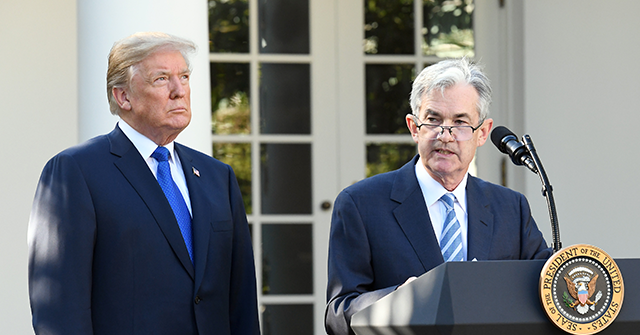
Beyond the technicalities of economic projections, the Federal Reserve found itself embroiled in a contentious debate this week concerning the future of its leadership. Federal Reserve Chairman Jerome Powell made a notable public statement asserting that he would become chairman pro tem if a successor, such as Kevin Warsh, were not confirmed by May 15. He justified this claim by referencing "the law and past practice," a characterization that has drawn significant scrutiny and disagreement among legal experts and observers.
This assertion by Chairman Powell has been widely deemed extraordinary, particularly given its implications for the independence and governance structure of the central bank. Critics argue that such a declaration should not be made without extensive consultation with the Fed’s Board of Governors and the broader Federal Open Market Committee (FOMC). The Federal Reserve Act outlines specific procedures for succession, and interpretations of "past practice" can vary. Many legal scholars contend that while a chairman may be asked to stay on in an interim capacity, it is typically at the discretion of the President to designate an acting chair from among the existing governors, or for the board itself to make such an appointment, rather than an automatic self-declaration.
The Fed employs a General Counsel, Mark E. Van Der Weide, who has served in that capacity since 2017 and is intimately familiar with the legal intricacies of succession. The absence of a clear, publicly communicated consensus from the Fed’s legal department or the Board of Governors regarding Powell’s statement has further fueled the controversy, raising questions about internal governance and the process of legal interpretation within the institution.
Nuances of Fed Leadership and Monetary Policy Control
The debate over the chairmanship extends to the nuanced roles within the Fed’s leadership structure. While the President is responsible for nominating the interim chair of the Fed board, should the need arise, the Federal Open Market Committee (FOMC) retains the authority to elect its own chairman from among its members. Historically, the FOMC has consistently elected the board chair to lead the committee, maintaining a unified leadership. However, in a scenario where the President’s choice for board chair might be contentious or face resistance, the FOMC theoretically could depart from this convention.
Nonetheless, such a departure would be highly unusual and potentially uncollegial, particularly since the President’s choice for interim board chair must come from the existing governors. More critically, under the current operational framework, the Fed’s Board of Governors exerts primary control over monetary policy through its authority to set the interest rate on reserves, which has become the effective policy rate in an era of abundant reserves. The federal funds rate, while still closely watched, has largely become symbolic in this context. Furthermore, the chairman of the board oversees the institutional aspects of the Fed, including its extensive staff and regulatory apparatus. Therefore, even if the FOMC were to elect a different chairman, the practical impact on overall monetary policy direction and institutional operations might be limited, underscoring the significant power vested in the Board Chair position. This discussion highlights the delicate balance of power and established protocols within one of the world’s most influential financial institutions.
Global Energy Markets: Oil Prices Surge, Economic Headwinds on the Horizon
The global economy is once again grappling with surging oil prices, with crude oil closing in on $110 a barrel this week. This represents a dramatic escalation from prices below $60 a barrel at the end of last year. The climb began earlier in the year, partly driven by market anticipation of geopolitical tensions, particularly the possibility of a U.S. attack on Iran, pushing prices to around $70 a barrel by late February. The current trajectory has now surpassed the three-year high of $95, a critical threshold that economist James Hamilton’s research has frequently identified as a precursor to looming recessions.
The implications of oil prices sustaining levels above $100 a barrel are significant. Such prices typically lead to "demand destruction" across other sectors of the economy. Consumers find their discretionary income squeezed as a larger portion is allocated to fuel costs, necessitating cutbacks in other areas of spending. Businesses, facing higher input costs for transportation and production, often slow output to protect profit margins against what they might initially perceive as a temporary price shock. If these elevated prices persist, the cumulative effect can dampen overall economic activity, raising the specter of a broader slowdown.
The unfortunate reality is that a sustained period of high oil prices appears increasingly plausible. Ongoing geopolitical conflicts, particularly those impacting crucial shipping lanes like the Strait of Hormuz, show no immediate signs of resolution. The Strait, a vital chokepoint for global oil transit, remains a flashpoint, contributing to market anxiety and upward price pressure.
Policy options to address this surge are limited and often prove to be short-lived in their impact. Releasing oil from strategic petroleum reserves, while a common response, tends to offer only temporary and marginal effects on global prices, as the sheer scale of global demand often quickly absorbs such releases. Similarly, proposals to suspend the Jones Act, which restricts foreign ships from transporting cargo between U.S. ports, are unlikely to have a meaningful impact on global oil prices. Such suspensions are often limited in duration (e.g., 60 days), providing insufficient incentive for international oil tankers to reroute their global operations for a brief window. The lack of easy policy fixes, combined with persistent geopolitical instability, means that the economic burden of high energy costs is likely to continue weighing on consumers and businesses, fueling public discontent over rising gas prices and contributing to broader inflationary pressures.
Artificial Intelligence and the Future of Labor: Challenging Conventional Wisdom
The advent and rapid proliferation of artificial intelligence (AI) have ignited a fervent debate about its implications for the global labor market. A prevailing consensus, shared by both technological optimists and pessimists, suggests that AI will fundamentally transform employment, primarily through job destruction. The core of the debate often revolves around the speed and specific sectors in which AI will displace human workers.
However, a historical perspective offers a counter-narrative to this widespread assumption. A compelling analogy can be drawn to the invention of the cotton gin by Eli Whitney in the late 18th century. At the time, the almost universal expectation was that this labor-saving device would reduce the demand for slave labor. Contrary to this expectation, the cotton gin made slave labor vastly more efficient and cotton cultivation exponentially more profitable across the American South. This led to an explosive increase in demand for both labor and acreage dedicated to cotton production, with devastating social consequences.
Applying this historical lesson to AI, a different scenario emerges. If AI significantly enhances labor productivity, the demand for human work might increase rather than diminish, albeit potentially in transformed roles. There are already nascent indications of this trend, with an unexpected rise in labor productivity observed in the U.S. economy, at least partly attributed to early AI adoption. When technology makes labor more productive, it often leads to new industries, expanded markets, and an overall increase in economic output, which in turn can create new forms of employment.
This perspective shifts the focus from simple job displacement to job transformation and creation. While certain tasks and even entire job categories may be automated, the overall demand for human ingenuity, problem-solving, creativity, and interpersonal skills could see a resurgence. The challenge then becomes one of adaptation, education, and reskilling to prepare the workforce for the evolving demands of an AI-augmented economy. History suggests that labor-saving technologies, rather than universally destroying labor demand, often reconfigure it in unforeseen ways, leading to net economic growth and new opportunities.
Historical Perspective: The Legacy of the Dutch East India Company
Stepping back from contemporary economic concerns, this week marks a significant historical anniversary: the chartering of the Vereenigde Oostindische Compagnie, or the Dutch East India Company (VOC), on March 20, 1602. This seminal event, orchestrated by the Dutch Republic’s States-General, was a profound act of economic nationalism. Driven by statesman Johan van Oldenbarnevelt, the merger consolidated two major trading firms, explicitly aiming to prevent disunity from ceding dominance to Spain and the newly formed English East India Company in the lucrative East Asian trade routes.
The VOC was granted an unprecedented 21-year monopoly on all Dutch trade east of the Cape of Good Hope, capitalized with a substantial 6.4 million guilders. It was not merely a trading enterprise but the world’s first truly publicly traded multinational corporation, a pioneering joint-stock company. Any Dutch citizen could purchase shares, which were freely traded on the nascent Amsterdam Stock Exchange, laying foundational elements of modern capital markets. Its governance structure comprised a board of 17 directors, meticulously balanced across the various Dutch provinces, reflecting a sophisticated approach to corporate administration for its era.
The powers bestowed upon the Dutch East India Company were staggering, effectively outsourcing empire-building to a private entity. Its charter permitted it to wage war, sign treaties, construct forts, field armies, and even mint its own coins. This unprecedented delegation of sovereign powers allowed the VOC to establish a vast trading network and colonial empire, particularly in the Indonesian archipelago. At its zenith around 1670, the Dutch East India Company was the wealthiest corporation globally, employing approximately 50,000 people and wielding a near-absolute monopoly over the highly profitable spice trade. For nearly two centuries, it delivered an impressive average annual dividend of around 18 percent to its shareholders, a testament to its economic might and operational efficiency.
However, as is often the case with immense power and unchecked ambition, hubris and mismanagement eventually caught up with the VOC. The seeds of its decline were sown through rampant smuggling, widespread corruption within its vast bureaucracy, soaring operational costs associated with maintaining its distant empire, and a stubborn commitment to paying out generous dividends even as profits began to wane. This combination of internal decay and external pressures—including increased competition and geopolitical shifts—led to an accumulating debt burden. By the 1790s, the once-unassailable Dutch East India Company declared insolvency, marking the end of an era and offering a powerful historical lesson on the fragility of even the most dominant economic entities without robust governance and sustainable practices.
In conclusion, the week’s economic landscape, marked by the Federal Reserve’s evolving outlook, the contentious debate over its leadership, the persistent surge in oil prices, and the complex implications of AI, underscores a period of significant transition and uncertainty. These contemporary challenges, when viewed through the lens of historical precedents like the Dutch East India Company, highlight the enduring themes of power, governance, and the cyclical nature of economic forces. As policymakers and markets navigate these intricate dynamics, the lessons from past triumphs and failures remain invaluable guides in shaping future prosperity.

Related Posts

Democratic Candidates Must Moderate to Win General Elections, Says Rep. Greg Stanton

Lisa Demuth Secures Republican Gubernatorial Nomination in Minnesota, Defeating Trump-Endorsed Mike Lindell