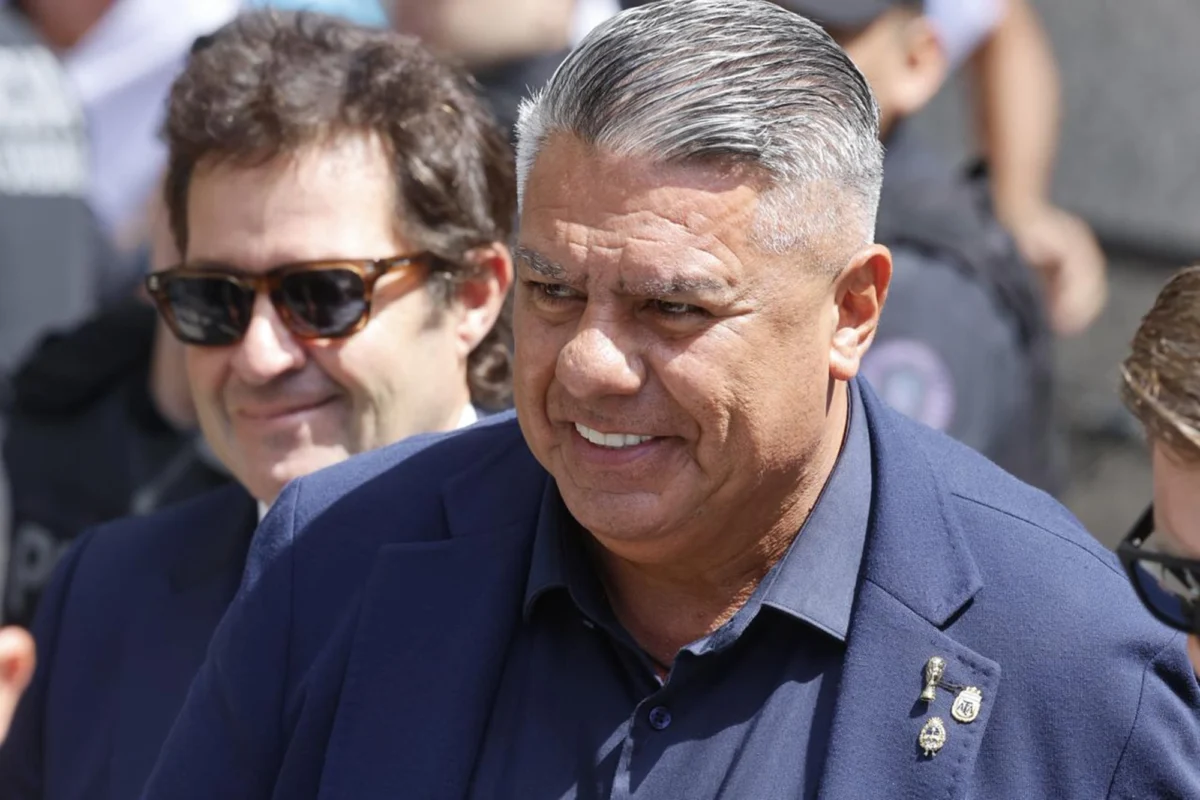
Judge Denies AFA President Claudio "Chiqui" Tapia’s Request to Leave Argentina Amidst Multi-Billion Peso Tax Fraud Investigation
A significant legal development unfolded today as Judge Diego Amarante of the Criminal Economic Court denied a request submitted by Claudio "Chiqui" Tapia, the president of the Argentine Football Association (AFA), to travel outside the country for a period of 60 days. This decision comes as Tapia and the AFA are embroiled in a complex judicial investigation concerning alleged misappropriation of social security contributions and other significant tax irregularities, with initial estimates of the illicit financial activity exceeding 19 billion Argentine pesos. Judge Amarante has already conducted interrogations of Tapia, AFA treasurer Pablo Toviggino, and several other prominent figures within Argentine football, and is currently in the process of determining the legal status of all individuals involved in the probe.
Background of the Investigation
The investigation, spearheaded by Judge Amarante, centers on serious allegations of financial misconduct within the AFA. Sources close to the judicial proceedings indicate that the core of the probe involves the alleged failure to properly remit social security contributions for both players and AFA employees. The initial complaint detailed a sum of over 7.59 billion pesos in outstanding obligations that were allegedly not deposited in a timely manner, broken down into two primary categories: tax withholdings and social security withholdings. This figure was later amplified in an expanded complaint to encompass an additional 11.76 billion pesos, bringing the total alleged evasion to a staggering sum.
This judicial scrutiny casts a long shadow over the leadership of Argentine football, a sector that holds immense cultural and economic significance within the nation. The AFA, as the governing body, plays a crucial role in the development, regulation, and promotion of football at all levels. Allegations of such magnitude raise critical questions about financial transparency and accountability within the organization.
Tapia’s Travel Request and Judicial Reasoning
Tapia’s request for an extended absence from Argentina, spanning two months, was met with judicial skepticism. According to judicial sources, Judge Amarante found the justifications provided by the AFA president to be imprecise and lacking in concrete detail. The documents submitted in support of the request were reportedly outdated, and the judge also took into account what were described as unfavorable precedents in Tapia’s past conduct regarding his adherence to judicial mandates.
In his formal resolution, Judge Amarante articulated his reasoning for denying the request. He stated, "While this court has recently granted authorizations for the aforementioned individual to leave national territory, the current request is projected under a generic modality that differs substantially from the exceptional and limited permits that were the subject of previous pronouncements." The judge further elaborated on the lack of specificity, noting, "The indeterminacy of the destinations and the lack of a finalized agenda in the request of the parties hinder the objective of ensuring the constant subjection of the accused to the jurisdiction of this tribunal." This suggests a concern that a broad, open-ended travel request could potentially undermine the court’s ability to maintain oversight of the accused.
Scrutiny of Tapia’s Public Role and Financial Discrepancies
The judge’s resolution also highlighted what he deemed to be an unusual aspect of Tapia’s travel requests, particularly in light of his public service role. Tapia holds a position within C.E.A.M.S.E. (Coordinación Ecológica, Ambiental y de Obras de la Provincia de Buenos Aires), an entity involved in environmental and public works projects. According to the judge’s statement, Tapia reportedly receives approximately 19 million pesos per month for this public service role. The judge expressed astonishment at the discrepancy between this substantial public salary and the frequency of Tapia’s international travel.
"All of this, without mentioning, certainly, how unusual it is to know about the situation of someone who holds a public office for which they receive – according to themselves in their interrogation – approximately $19,000,000 per month, and who simultaneously states that more than a third of their time is spent abroad, attending to commitments related to other activities," the resolution read. This observation points to a potential conflict between Tapia’s official responsibilities and his extensive travel, raising questions about his dedication to his public duties and the underlying motivations for his frequent international departures.
A Pattern of Travel-Related Judicial Encounters
This is not the first instance where Tapia’s international travel plans have intersected with the ongoing judicial investigation. Previously, Judge Amarante had denied Tapia permission to travel to Caracas, Venezuela. While this specific travel motive was not formally presented to the court as the primary reason for the request, it has been reported that Tapia may have intended to travel to Venezuela to return on the same flight as Nahuel Gallo, a gendarme who had been detained in Venezuela since December 2024 and was subsequently released on March 1st.
The judicial denial of this Venezuelan trip was attributed to several factors, including the strained diplomatic relations between Argentina and Venezuela at the time. Furthermore, the judge noted that Tapia had not formally requested "permission" for this specific travel, but rather had merely "informed" the court of his intention to travel as part of a previously authorized itinerary. This distinction between informing and seeking permission underscores the court’s expectation of explicit authorization for any deviations or additions to approved travel plans.
Judge Amarante recalled a previous instance where Tapia had unilaterally altered his travel itinerary after having already departed the country, stating, "On a previous occasion, having been granted permission for specific destinations, the accused attempted to unilaterally modify his itinerary once he was outside of national territory." This historical precedent appears to have further influenced the judge’s cautious approach to granting any further travel authorizations.
Allegations and Defense Strategies
The core legal accusation against Tapia and Toviggino is the crime of omission of payment of social security contributions. The defense, as presented by Tapia, has centered on the argument that the AFA did not commit any offense because an administrative resolution from the Ministry of Economy was in effect at the time, which suspended fiscal executions. This, he argued, meant that the AFA could not be considered to have committed a crime.
Both Tapia and Toviggino have also asserted that a significant portion of the alleged debt had already been settled. This claim has reportedly been corroborated by judicial investigations, which are now examining whether the delay in these payments could still constitute the crime of misappropriation of taxes, an offense punishable by prison sentences ranging from two to six years. The legal team representing Tapia and the AFA likely aims to demonstrate that while there may have been administrative delays or procedural issues, the intent to evade taxes or misappropriate funds was absent, or that any financial irregularities were subsequently rectified.
Broader Implications and Future Outlook
The denial of Tapia’s travel request has significant immediate implications. It signals the judiciary’s intent to maintain close oversight of the AFA president throughout the ongoing investigation. This move could be interpreted as a sign that Judge Amarante is preparing to advance the case towards a definitive resolution, potentially including indictments or further restrictive measures.
The repercussions of this investigation extend beyond the individuals directly implicated. The AFA’s reputation, its financial stability, and its ability to operate effectively could all be impacted. Furthermore, the integrity of Argentine football as a whole is under scrutiny. The outcome of this case could lead to reforms aimed at enhancing financial governance and transparency within sports federations.
The legal battle ahead is likely to be complex, involving intricate financial analysis and legal arguments concerning the interpretation of tax laws and administrative resolutions. The judge’s decision to deny the travel request underscores the seriousness with which the court is treating these allegations and the commitment to ensuring that justice is pursued rigorously. As the investigation progresses, further details are expected to emerge, shedding more light on the alleged financial irregularities and their potential consequences for the leadership of Argentine football. The coming weeks and months will be critical in determining the future course of this high-profile judicial inquiry.

Related Posts

The Electric Vehicle Battery Health Debate Emerges as Argentina’s EV Market Accelerates

President Donald Trump Confirms Secret Departure from Turkey Amidst Assassination Threat