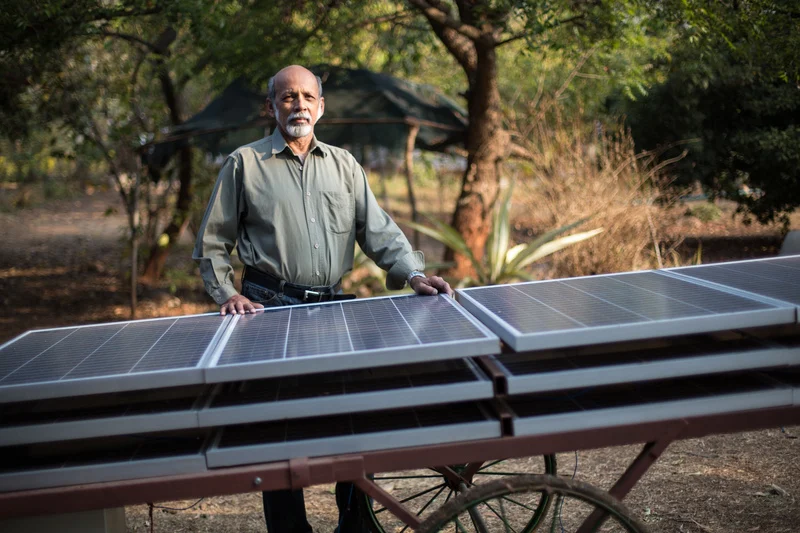
India’s 2035 climate goals draw mixed reactions as analysts question level of ambition
The Government of India has formally submitted its updated Nationally Determined Contributions (NDCs) for the 2035 horizon to the United Nations Framework Convention on Climate Change (UNFCCC), outlining a roadmap that seeks to balance aggressive industrial growth with the global imperative of decarbonization. While the new targets have been characterized by government officials as a "bold leap forward," a significant contingent of climate analysts and policy experts argue that the goals are overly conservative. These critics suggest that the targets may already be within reach based on India’s current trajectory in renewable energy deployment, potentially rendering the 2035 pledges a "business-as-usual" scenario rather than a catalyst for transformative change.

The 2035 NDCs represent a critical middle step toward India’s ultimate goal of achieving net-zero emissions by 2070, a pledge made by Prime Minister Narendra Modi at the COP26 summit in Glasgow. However, the debate surrounding this latest submission highlights the tension between India’s domestic developmental needs and the international pressure to accelerate the phase-down of fossil fuels, particularly coal, which remains the backbone of the nation’s power grid.
The Core Pledges: A Breakdown of the 2035 Targets
India’s 2035 submission focuses on three primary pillars: the reduction of emissions intensity, the expansion of non-fossil fuel-based energy capacity, and the creation of an additional carbon sink through forest and tree cover.

According to the official document, India aims to reduce the emissions intensity of its Gross Domestic Product (GDP) by 65% by 2035, compared to 2005 levels. This is an escalation from the 2030 target of a 45% reduction. Furthermore, the government has pledged that 60% of its cumulative electric power installed capacity will come from non-fossil fuel energy sources by 2035. This includes solar, wind, biomass, hydropower, and nuclear energy.
To support these efforts, the government has reiterated its commitment to the "LiFE" (Lifestyle for Environment) movement, a pro-planet initiative designed to nudge individual and community behavior toward sustainable consumption. The 2035 plan also includes a renewed focus on the National Green Hydrogen Mission, aiming to make India a global hub for the production and export of green hydrogen, which is seen as essential for decarbonizing "hard-to-abate" sectors such as steel, cement, and heavy shipping.

Chronology of India’s Climate Commitments
The 2035 goals are the latest evolution in a decade-long policy shift. To understand the significance of these targets, one must look at the timeline of India’s climate diplomacy:
- 2015 (COP21, Paris): India commits to reducing emissions intensity by 33-35% by 2030 and achieving 40% non-fossil power capacity.
- 2021 (COP26, Glasgow): Prime Minister Modi announces the "Panchamrit" (five nectar elements) plan, including a 500 GW non-fossil capacity target by 2030 and a 2070 net-zero deadline.
- 2022 (Updated NDCs): India formally updates its 2030 targets to a 45% emissions intensity reduction and 50% non-fossil capacity.
- 2024-2025 (The Lead-up): Extensive internal modeling by the Central Electricity Authority (CEA) and the Ministry of New and Renewable Energy (MNRE) informs the 2035 projections.
- March 2026: India submits its 2035 NDCs, setting the stage for the next decade of domestic policy and international negotiation.
The "Ambition Gap": Why Analysts Are Skeptical
Despite the upward revision of the numbers, many experts believe the 2035 targets are "low-hanging fruit." Data from the Central Electricity Authority (CEA) indicates that India is already on track to surpass its 2030 non-fossil fuel target ahead of schedule. As of early 2026, the combined capacity of solar and wind energy has seen an exponential growth rate of approximately 18% annually over the last five years.

"If we continue at our current pace of solar auctions and grid integration, we will likely hit the 60% non-fossil capacity mark by 2031 or 2032," said a senior researcher at a New Delhi-based climate think tank. "Setting a 2035 target at 60% suggests that the government is building in a massive cushion. While this provides policy certainty, it doesn’t represent the ‘highest possible ambition’ that the Paris Agreement calls for."
Supporting this view is the rapid decline in the cost of Battery Energy Storage Systems (BESS). In 2024 and 2025, several large-scale tenders for round-the-clock (RTC) renewable energy were settled at prices competitive with new coal-fired power. Analysts argue that with the falling costs of storage, India could comfortably aim for 70% or even 75% non-fossil capacity by 2035.

Economic and Geopolitical Influences
The timing of India’s 2035 goals is also influenced by a volatile global energy market. The ongoing conflict in the Middle East and tensions involving Iran have underscored the fragility of fossil fuel supply chains. For a country that imports over 80% of its crude oil, energy security is synonymous with national security.
Irene Vélez Torres, a prominent voice in global energy transition circles, recently noted that regional conflicts often serve as a "wake-up call" for fossil-fuel-reliant food and energy systems. In India’s case, the high cost of imported gas and the threat of oil price spikes have provided a powerful economic incentive to accelerate the shift to domestic renewables.

However, the transition is not without its domestic hurdles. The Indian government continues to defend the use of coal as a necessary "base load" power source to prevent blackouts and support the "Make in India" manufacturing push. Officials argue that while renewables are expanding, the variability of solar and wind requires a stable backup that, at present, only coal and large hydro can provide at scale.
Sectoral Implications: From Agriculture to Industry
The 2035 NDCs will necessitate deep structural changes across various sectors of the Indian economy:

1. Agriculture and Solar Pumping
The PM-KUSUM scheme, which aims to solarize millions of irrigation pumps, is a cornerstone of the rural climate strategy. By 2035, the government expects the majority of agricultural power demand to be met during the day via decentralized solar arrays, reducing the subsidy burden on state-run utilities and lowering the carbon footprint of the food supply chain.
2. Transport and Electrification
The 2035 roadmap leans heavily on the Faster Adoption and Manufacturing of Electric Vehicles (FAME) scheme. The target is to have 30% of all private cars, 70% of commercial vehicles, and 80% of two-and-three-wheelers be electric by 2035. This transition is expected to drastically reduce urban air pollution and decrease the nation’s oil import bill.

3. Heavy Industry and Green Hydrogen
The industrial sector accounts for a quarter of India’s emissions. The 2035 goals anticipate a significant "fuel switch" where green hydrogen replaces coking coal in steel production and natural gas in fertilizer manufacturing. However, the commercial viability of green hydrogen remains dependent on achieving a price point of below $2 per kilogram, a milestone analysts expect to be reached only in the early 2030s.
The Financial Challenge: Bridging the Investment Gap
One of the most significant barriers to achieving or exceeding the 2035 goals is the sheer volume of capital required. Estimates from the Ministry of Finance suggest that India will need approximately $2.5 trillion in investment between now and 2035 to meet its climate pledges.

The 2035 NDC submission explicitly mentions the need for "predictable and scaled-up" international climate finance. India has consistently argued at COP summits that developed nations have failed to fulfill their promise of providing $100 billion annually to the Global South. The document notes that while India is doing its part using domestic resources, a lack of low-cost international technology transfer and concessional financing could slow the pace of the transition.
"India is essentially telling the world: ‘We have a plan, but its speed is contingent on your support,’" says an international trade analyst. "The 2035 goals are a signal to global investors that the market is ready, but the cost of capital in India remains a major deterrent compared to Europe or North America."

Official Responses and International Standing
The response from the international community has been cautiously optimistic. UN officials have praised India for being one of the few G20 nations to consistently meet its previous NDC targets. However, representatives from the Alliance of Small Island States (AOSIS) and other climate-vulnerable blocs have urged India, as the world’s third-largest emitter, to show more leadership by committing to a definitive peak in coal consumption before 2035.
Domestically, the political opposition has raised concerns about the impact of the transition on coal-bearing states like Jharkhand, Odisha, and Chhattisgarh. They argue that a "Just Transition" framework is missing from the 2035 goals, leaving millions of workers in the coal value chain at risk of economic displacement.

Broader Impact and Future Outlook
The 2035 NDCs will serve as the primary policy anchor for India’s Five-Year Plans and state-level climate action strategies for the next decade. While the debate over "ambition" continues, the direction of travel is unmistakable. India is decoupling its economic growth from carbon emissions at a rate faster than many of its peers in the emerging world.
The real test for India will not just be in meeting the 60% non-fossil capacity target, but in managing the complexity of a hybrid grid, ensuring the minerals for the battery revolution are sourced ethically, and maintaining economic competitiveness in a world where "carbon border adjustments" are becoming a reality.

As the world looks toward COP30, India’s 2035 goals will be scrutinized as a barometer for the Global South’s commitment to the Paris Agreement. Whether these goals are viewed as a "safe bet" or a "strategic floor," they undeniably solidify India’s role as a central player in the global effort to avert catastrophic climate change. The coming decade will determine if India can move beyond these conservative estimates to become the world’s first major economy to industrialize without following the high-carbon path of the West.

Related Posts
Constitutional Court of South Africa Bars Shell Oil Exploration in Landmark Victory for Environmental and Community Rights

The Battle for Saldanha Bay: South Africa’s Ambitious Ocean Economy Strategy Faces Legal and Environmental Reckoning