Internal Emails Reveal Coordination Between Conservative Legal Group and FCC Leadership to Target Network Media
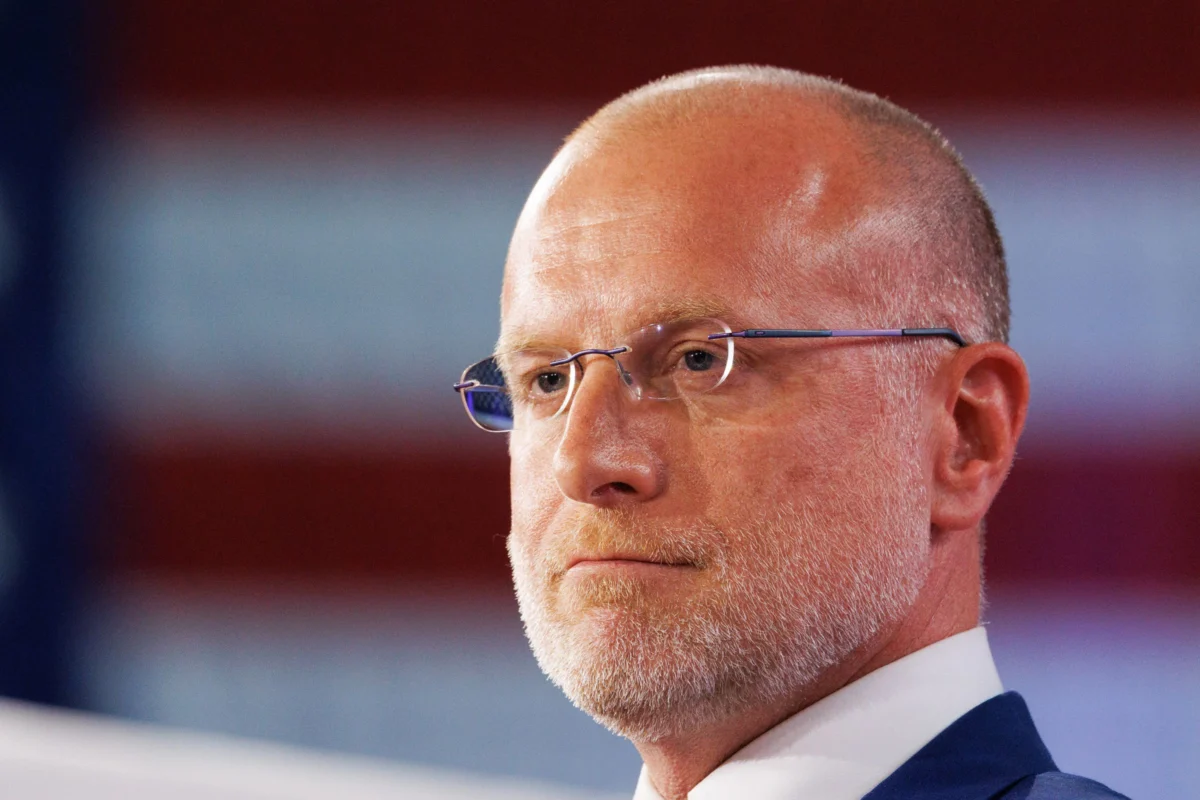
A small but influential conservative legal advocacy group, the Center for American Rights (CAR), leveraged direct access to the office of Federal Communications Commission Chairman Brendan Carr last September to fast-track a regulatory complaint against ABC and late-night host Jimmy Kimmel. Internal communications obtained by WIRED illustrate a sophisticated pipeline between external advocacy organizations and federal regulators, wherein administrative processes typically reserved for public grievances were bypassed to advance specific ideological objectives. The documents reveal that CAR, led by Daniel Suhr, maintained a privileged communication channel with the FCC’s top legal advisers, allowing the group to bypass the career staff traditionally tasked with vetting such complaints.
The correspondence provides a granular look at the intersection of political strategy and broadcast regulation. The complaints, which often mirror the rhetoric of President Donald Trump regarding the integrity of mainstream media, have been instrumental in applying pressure on major broadcast networks. The September action against Kimmel, which resulted in a brief suspension, drew sharp rebukes from First Amendment scholars and press freedom advocates who characterized the move as a state-sanctioned encroachment on editorial independence.
The Anatomy of an Administrative Shortcut
The mechanism by which CAR influenced the FCC’s agenda involved more than simple petitioning; it required a structural bypass of standard agency protocol. According to the internal emails, Suhr sent a formal complaint against Kimmel directly to Erin Boone, the chairman’s senior counsel for media and enforcement, and Katie McAuliffe, a senior policy adviser, on September 4. The communication was not merely an informal heads-up; it provided the specific ticket number for a submission already filed through the FCC’s public portal, ensuring the chairman’s office could immediately locate and prioritize the document.
The instructions for this bypass were not informal, either. Emails indicate that FCC staff operated under standing directives to route CAR-originated complaints directly to Boone. This is particularly significant given that Boone simultaneously held the role of acting chief of the Media Bureau, the agency division with primary jurisdiction over broadcast licensing and enforcement. By funneling these arguments directly to the bureau’s head, CAR successfully circumvented the objective, multi-layered review process that typically serves as a buffer between the agency’s political leadership and its enforcement actions.
A Chronology of Regulatory Friction
The campaign against broadcast networks under Chairman Carr represents a sharp departure from the policies of his predecessor, Jessica Rosenworcel. During her tenure, the commission had formally dismissed three separate complaints filed by CAR against ABC, CBS, and NBC, with the agency noting that the arguments were fundamentally incompatible with the protections afforded by the First Amendment.
Upon ascending to the chairmanship, Carr took immediate steps to reverse these decisions. The timeline of this reversal highlights the speed with which the agency’s posture shifted:
- Pre-2025: CAR files a series of complaints against major networks regarding "news distortion." These are dismissed by the Rosenworcel-led FCC.
- Early 2025: Carr assumes the chairmanship and reinstates the previously dismissed complaints, signaling a new era of aggressive regulatory scrutiny for broadcasters.
- July 2025: The FCC approves the Paramount-Skydance merger. The approval is contingent on the appointment of a conservative ombudsman at CBS News, a condition that critics argue was influenced by CAR’s earlier complaints regarding a 60 Minutes interview with Kamala Harris.
- September 2025: During a conservative podcast, Carr publicly warns that networks face regulatory consequences if they fail to address "distortions" in their programming. He explicitly mentions the Jimmy Kimmel monologue concerning the death of Charlie Kirk.
- September 4, 2025: CAR files a supplemental complaint regarding Kimmel, routing it directly to senior FCC leadership.
- Late September 2025: Following public pressure and the looming threat of FCC scrutiny, ABC briefly suspends Kimmel, marking a high-water mark for the impact of the CAR-FCC coordination pipeline.
The Public Interest Standard and Legal Ambiguity
At the heart of this controversy is the "public interest" standard under the Communications Act of 1934. The FCC is empowered to ensure that broadcast licensees operate in the public interest, a term that historically granted the agency broad latitude but was traditionally interpreted with extreme caution to avoid the appearance of censorship.
Daniel Suhr argues that CAR’s actions are simply a demand for "evenhanded enforcement." Suhr, who served as a policy director to former Wisconsin Governor Scott Walker, contends that the news distortion standard—which prohibits the deliberate falsification of news—should be interpreted to include the broader concept of misleading viewers.
"We are asking for the FCC to enforce the law as it is written," Suhr said in an interview. He pointed to a 2018 letter from Senate Democrats, who had similarly urged the FCC to investigate the Sinclair Broadcast Group for alleged news distortion, as evidence that the public interest standard is a tool that should be utilized by both sides of the political spectrum. However, when pressed on the ultimate objective of these filings, Suhr was candid. Asked in February whether he sought a landscape defined by conservative dominance in broadcasting, Suhr replied, "Yes, I’d be thrilled with that outcome."
Implications for Media Regulation and the First Amendment
The collaboration between CAR and the FCC leadership raises profound questions regarding the future of administrative law and the independence of broadcast media. Legal analysts suggest that the strategy of using the FCC’s licensing power to extract concessions—such as the appointment of an ombudsman at CBS—represents a "backdoor" regulatory mechanism. By threatening the stability of a broadcaster’s license, the agency can influence editorial policy without ever having to pass a formal regulation or face a court challenge on First Amendment grounds.
This approach is characterized by some observers as "regulation by intimidation." When a regulator suggests that companies "can find ways to take action" on their talent or face "additional work for the FCC," it creates a chilling effect that is difficult to quantify but impossible to ignore. For media organizations, the cost of fighting a federal agency—even when the legal basis is thin—is often higher than the cost of self-censorship.
The broader impact on the media ecosystem is significant. As the FCC moves toward a more interventionist stance, the definition of "news distortion" risks becoming a political variable rather than a legal one. If the agency’s enforcement priorities are driven by the litigation strategies of ideologically aligned private groups, the consistency and fairness of broadcast regulation may erode.
Looking Ahead
The FCC has yet to provide a formal response to requests for comment regarding the internal communication practices of Chairman Carr’s office. Meanwhile, the legal community remains divided. Supporters of the current FCC trajectory argue that the commission has been too passive for decades, allowing media consolidation and bias to undermine the public trust. Conversely, civil libertarians warn that the precedent being set—wherein political actors can direct the power of the federal bureaucracy to punish specific journalists and networks—is a dangerous escalation.
As the agency continues to navigate the complexities of modern media regulation, the records obtained by WIRED underscore a critical shift in how federal power is exercised. The reliance on private groups like the Center for American Rights to supply both the legal theories and the political momentum for enforcement actions marks a transition from a staff-driven, expert-led regulatory model to a political, grievance-driven model. Whether this transition holds under future legal scrutiny remains the central, unresolved question of the current broadcast regulatory climate. With the industry bracing for further shifts in licensing requirements and potential content reviews, the tension between regulatory oversight and the freedom of the press is likely to define the discourse for the remainder of the decade.

Related Posts
The Las Vegas Cybersecurity Summit and the Escalating Threat of Autonomous Digital Exploitation

New York City Council members and privacy advocates launch legislative campaign to ban biometric facial recognition at public entertainment venues