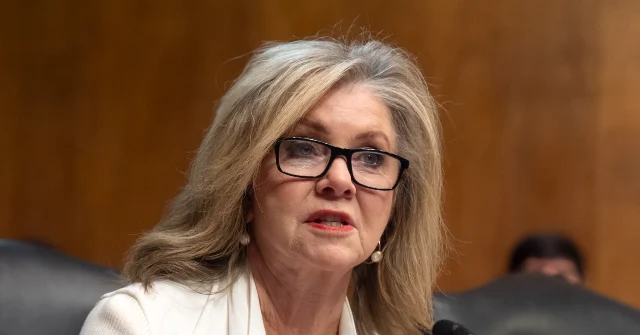
Exclusive: Blackburn to Introduce Bill Banning Grants to Abortion Orgs
Senators Marsha Blackburn (R-TN) and Bill Cassidy (R-LA) have spearheaded the introduction of new legislation, the "Title X Abortion Provider Prohibition Act," which aims to prevent federal Title X family planning grants from being allocated to organizations that perform abortions or provide abortion referrals, a move that could significantly reshape the landscape of reproductive healthcare funding in the United States. The bill, introduced on Thursday, has garnered the support of 17 additional Republican co-sponsors, intensifying the long-standing debate over the federal government’s role in funding family planning services and its intersection with abortion access.
The Proposed Legislation: "Title X Abortion Provider Prohibition Act"
At its core, the Title X Abortion Provider Prohibition Act seeks to amend the Public Health Service Act to explicitly prohibit the Department of Health and Human Services (HHS) from distributing Title X grants or any other federal funds to entities that perform abortions. This legislative effort is framed by its proponents as a critical step to close perceived "loopholes" in existing federal law that, they argue, allow taxpayer dollars to indirectly support abortion services.
Senator Blackburn articulated the bill’s foundational principle, stating, "Taxpayers should not have to spend a penny on abortions. The Title X Abortion Provider Prohibition Act would protect life and stop federal funds from going to entities that perform abortions by closing loopholes in federal law." Echoing this sentiment, Senator Cassidy, who chairs the Senate Health, Education, Labor, and Pensions (HELP) Committee, added, "Louisiana families want their tax dollars to support families, not abortion businesses that kill unborn babies and hurt mothers. I’m proud to co-lead this bill to end a policy that subsidizes Planned Parenthood on the taxpayers’ dime."
The bill’s provisions extend beyond a simple prohibition, also mandating that HHS submit annual reports to Congress detailing any grantees who perform abortions under the narrow exceptions for rape, incest, or serious physical injury to the mother. This reporting requirement aims to enhance transparency and oversight regarding the application of federal funds in sensitive areas of healthcare. Proponents assert that the legislation would redirect substantial taxpayer funding from major abortion organizations like Planned Parenthood towards what they describe as "comprehensive healthcare alternatives," implying a shift towards providers that do not offer abortion services.
Background: The Title X Family Planning Program
To understand the full scope and implications of the proposed legislation, it is crucial to examine the history and purpose of the Title X Family Planning Program. Established in 1970 under President Richard Nixon, Title X is the only federal program dedicated solely to providing comprehensive family planning and related preventive health services to low-income and uninsured individuals. Its original intent was to reduce unintended pregnancies by ensuring access to contraception, STI testing and treatment, cancer screenings (like Pap tests and mammogram referrals), and basic fertility services, irrespective of a patient’s ability to pay.
The program serves millions of Americans annually, with an estimated 3.7 million patients receiving care in 2022 through a network of roughly 3,900 clinics nationwide. These clinics are diverse, including state and local health departments, hospitals, community health centers, and non-profit organizations, with Planned Parenthood being one of the most prominent recipients, historically receiving a significant portion of the total Title X funding, though this share has fluctuated. For fiscal year 2023, the program was appropriated approximately $286 million.
Crucially, federal law, specifically the Hyde Amendment (first enacted in 1976), explicitly prohibits the use of federal funds to pay for abortions, except in cases of rape, incest, or to save the life of the pregnant person. However, the interpretation and enforcement of this prohibition within the Title X framework have been subjects of persistent legal and political contention.
The "Loopholes" and Evolving Regulations
The current debate largely revolves around what the bill’s sponsors refer to as "loopholes" in federal law, particularly a "Clinton-era rule" stemming from the Public Health Service Act. This rule, which reversed a previous "gag rule" implemented by the Reagan and George H.W. Bush administrations, requires all Title X grantees to offer referrals for abortion services upon request and allows abortion facilities to be co-located with Title X clinics.
Senator Blackburn’s office highlighted that this arrangement permits Planned Parenthood clinics receiving federal family planning funds to share facilities, staff, and waiting rooms with abortion clinics, frequently leading to referrals for on-site abortions. Critics of the current system argue that this co-location and mandatory referral policy effectively creates an indirect subsidy for abortion providers, even if Title X funds are not directly used to pay for the abortion procedure itself. They contend that by funding the infrastructure and administrative costs of organizations that also perform abortions, the federal government is implicitly supporting the abortion industry.
This is not the first time regulations governing Title X have been contentious. In 2019, the Trump administration implemented a "domestic gag rule" that prohibited Title X clinics from referring patients for abortions and required physical and financial separation between Title X services and abortion services. This rule led to a significant number of Title X grantees, including Planned Parenthood, withdrawing from the program, citing their inability to comply with what they viewed as restrictions on comprehensive patient care and ethical obligations. The Biden administration subsequently reversed this rule in 2021, reinstating the 2000 regulations that mandated abortion referrals and permitted co-location, thereby bringing the program back to its pre-Trump era operational guidelines. The "Title X Abortion Provider Prohibition Act" seeks to permanently codify restrictions similar in spirit to the Trump-era rules, albeit through legislative rather than administrative action.
Stakeholder Reactions and Endorsements
The introduction of the bill has been met with strong endorsement from leading pro-life organizations. National Right to Life and Susan B. Anthony Pro-Life America have publicly voiced their support, framing the legislation as a crucial step towards ensuring federal funds align with their values.
Carol Tobias, President of National Right to Life, stated, "Taxpayer dollars should never be used to subsidize the abortion industry. Senator Blackburn’s Title X Abortion Provider Prohibition Act restores a clear and commonsense boundary by ensuring that family planning funds are directed to providers that offer genuine, life-affirming care. For too long, abortion providers have received federal support while continuing to profit from abortion. National Right to Life is proud to support Senator Blackburn’s leadership on this important measure."
Similarly, the Hon. Marilyn Musgrave, VP of Government Affairs at Susan B. Anthony Pro-Life America, characterized Title X as a "slush fund for the Big Abortion industry, led by Planned Parenthood," citing an estimated 1.1 million unborn babies whose lives were ended in 2024. She extended gratitude to Senator Blackburn for "championing this important legislation to permanently stop Title X dollars from going to these bad actors and protect American taxpayers from being forced to fund the abortion industry." These statements underscore the pro-life movement’s long-standing objective to defund organizations that provide abortion services, regardless of whether federal funds directly pay for abortions.
Anticipated Opposition and Broader Implications
While proponents celebrate the bill, its passage would undoubtedly face significant opposition from reproductive rights advocates, medical associations, and organizations like Planned Parenthood. Critics of such measures typically argue that restricting Title X funding for comprehensive reproductive health providers would severely limit access to essential healthcare services, particularly for low-income and marginalized communities who rely on these clinics for contraception, STI prevention, and cancer screenings.
Organizations like Planned Parenthood have consistently maintained that Title X funds are already strictly segregated and do not pay for abortion services. They argue that defunding providers simply because they also offer abortion services would decimate the network of care for millions, forcing clinics to close or reduce services, thereby increasing unintended pregnancies and negative health outcomes. They also contend that mandating referrals is a standard of medical care, ensuring patients receive all relevant information about their healthcare options.
The American College of Obstetricians and Gynecologists (ACOG) and other medical bodies have historically emphasized the importance of comprehensive, unbiased information and referrals for all patient options, including abortion, as part of ethical medical practice. They would likely view restrictions on referrals as an infringement on patient-provider relationships and medical autonomy.
Political Landscape and Legislative Outlook
The introduction of the Title X Abortion Provider Prohibition Act comes at a politically charged time, ahead of a pivotal election year. The issue of abortion and reproductive rights remains a deeply divisive topic in American politics, particularly following the Supreme Court’s decision to overturn Roe v. Wade.
The bill’s success in Congress is far from guaranteed. While it enjoys strong Republican backing, with co-sponsors including Sens. James Lankford (R-OK), Steve Daines (R-MT), Jim Risch (R-ID), Ted Cruz (R-TX), Thom Tillis (R-NC), Cynthia Lummis (R-WY), Josh Hawley (R-MO), Cindy Hyde-Smith (R-MS), Bill Hagerty (R-TN), Katie Britt (R-AL), Mike Crapo (R-ID), Deb Fischer (R-NE), Roger Wicker (R-MS), Todd Young (R-IN), John Barrasso (R-WY), Roger Marshall (R-KS), and Kevin Cramer (R-ND), it would face significant hurdles in the Democratic-controlled Senate, where a filibuster would likely prevent it from reaching a vote without substantial bipartisan support. Even if it were to pass both chambers, it would almost certainly face a veto from President Biden, whose administration has actively worked to restore and protect access to reproductive healthcare services.
The legislation, therefore, serves not only as a policy proposal but also as a political statement, signaling the continued efforts of conservative lawmakers to restrict abortion access and reshape federal funding priorities in healthcare. It keeps the debate over taxpayer funding for reproductive health services at the forefront of national discourse, ensuring that the intersection of federal programs and abortion provision remains a contentious battleground.
In conclusion, the Title X Abortion Provider Prohibition Act represents a significant legislative push by Republican senators to redefine the scope and recipients of federal family planning funds. By seeking to explicitly exclude abortion providers from Title X grants, the bill aims to dismantle what its sponsors describe as indirect subsidies for the abortion industry. While lauded by pro-life advocates as a necessary step to protect taxpayer money and promote life-affirming care, the legislation is poised to ignite fierce opposition from reproductive rights groups and could have profound implications for the accessibility of comprehensive family planning services for millions of Americans, particularly those with limited financial resources. The ultimate fate of this bill will be closely watched as the nation continues to grapple with the complex and deeply personal issues surrounding reproductive healthcare.

Related Posts

Democratic Candidates Must Moderate to Win General Elections, Says Rep. Greg Stanton

Lisa Demuth Secures Republican Gubernatorial Nomination in Minnesota, Defeating Trump-Endorsed Mike Lindell