Historic Direct Diplomacy in Washington: Israel and Lebanon Convene for High-Stakes Border Negotiations Amid Escalating Conflict
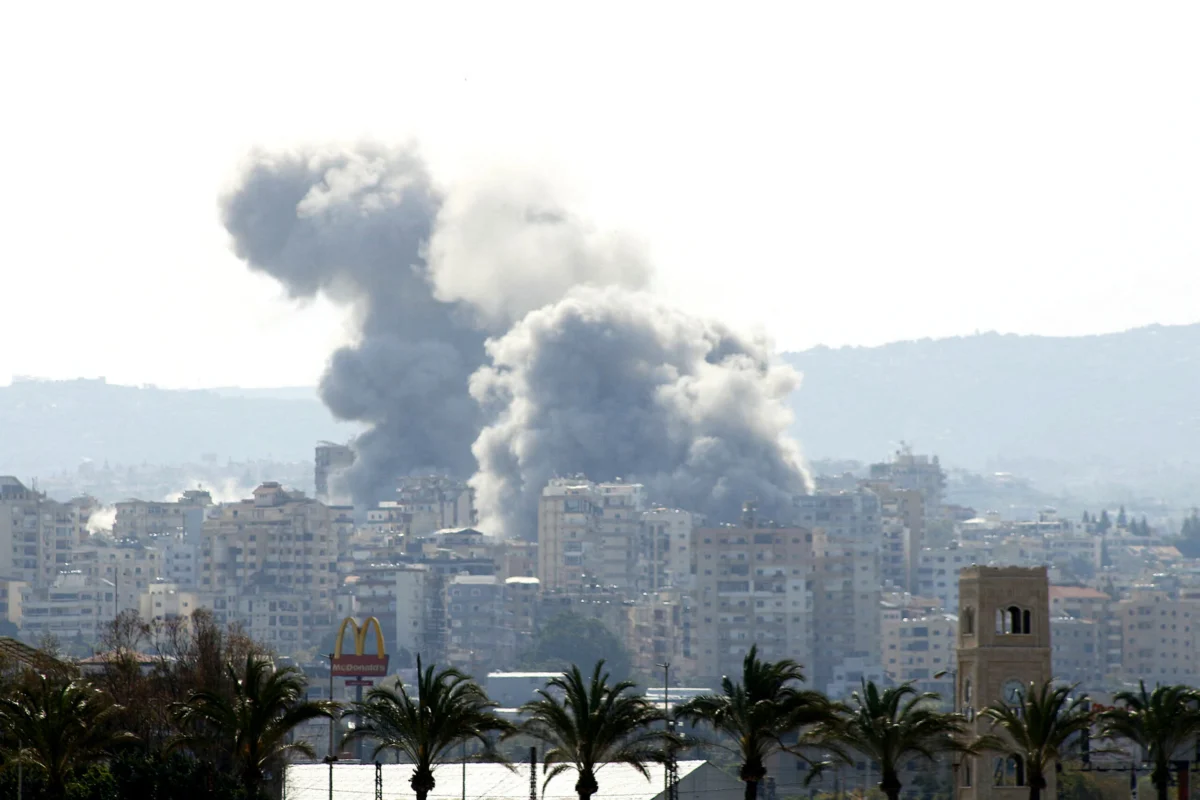
The first direct talks between Israel and Lebanon are set to begin today in Washington, D.C., marking a watershed moment in Middle Eastern diplomacy between two nations that have remained technically at war for more than seven decades. Mediated by the United States government, the high-level discussions will be facilitated through the respective ambassadors of both countries. This diplomatic engagement represents the most significant attempt to date to halt the devastating cycle of violence and Israeli bombardment that has gripped Lebanon in recent months. While the talks are being hailed as a potential breakthrough, they occur against a backdrop of intense military operations and a mounting humanitarian crisis that has seen over 2,000 fatalities in Lebanon since the latest escalation began.
The convening of these talks follows a period of intense American shuttle diplomacy. Lebanon had consistently advocated for direct negotiations since the early stages of the Israeli military surge, seeking an international platform to address the sovereignty of its borders and the protection of its civilian population. Conversely, the Israeli government initially maintained a stance of refusal, opting for military pressure to achieve its security objectives. However, following the collapse of indirect communications between the United States and Iran, and the presentation of a two-week ceasefire proposal that failed to gain immediate traction, the Israeli Cabinet shifted its position to allow for this direct diplomatic channel in the U.S. capital.
A Legacy of Conflict: The Historical Context
To understand the gravity of today’s meeting, one must look at the protracted history of animosity between the two states. Lebanon and Israel have had no formal diplomatic relations since the founding of the State of Israel in 1948. The ensuing Arab-Israeli War led to the displacement of hundreds of thousands of Palestinians, many of whom sought refuge in Lebanon, fundamentally altering the country’s demographic and political landscape. For 78 years, the border—known as the Blue Line—has been a site of frequent skirmishes, invasions, and protracted occupations.
The current crisis is the latest chapter in a series of major military confrontations, including the 1978 South Lebanon conflict, the 1982 invasion, and the 34-day war in 2006. Unlike previous engagements, however, the present situation involves a complex interplay of non-state actors and sovereign state interests. The 2006 conflict concluded with UN Security Council Resolution 1701, which called for a buffer zone free of "any armed personnel, assets and weapons other than those of the Government of Lebanon and of UNIFIL" between the Blue Line and the Litani River. The failure to fully implement this resolution remains a primary driver of the current hostilities.
Military Operations and the Strategic Push for the Litani
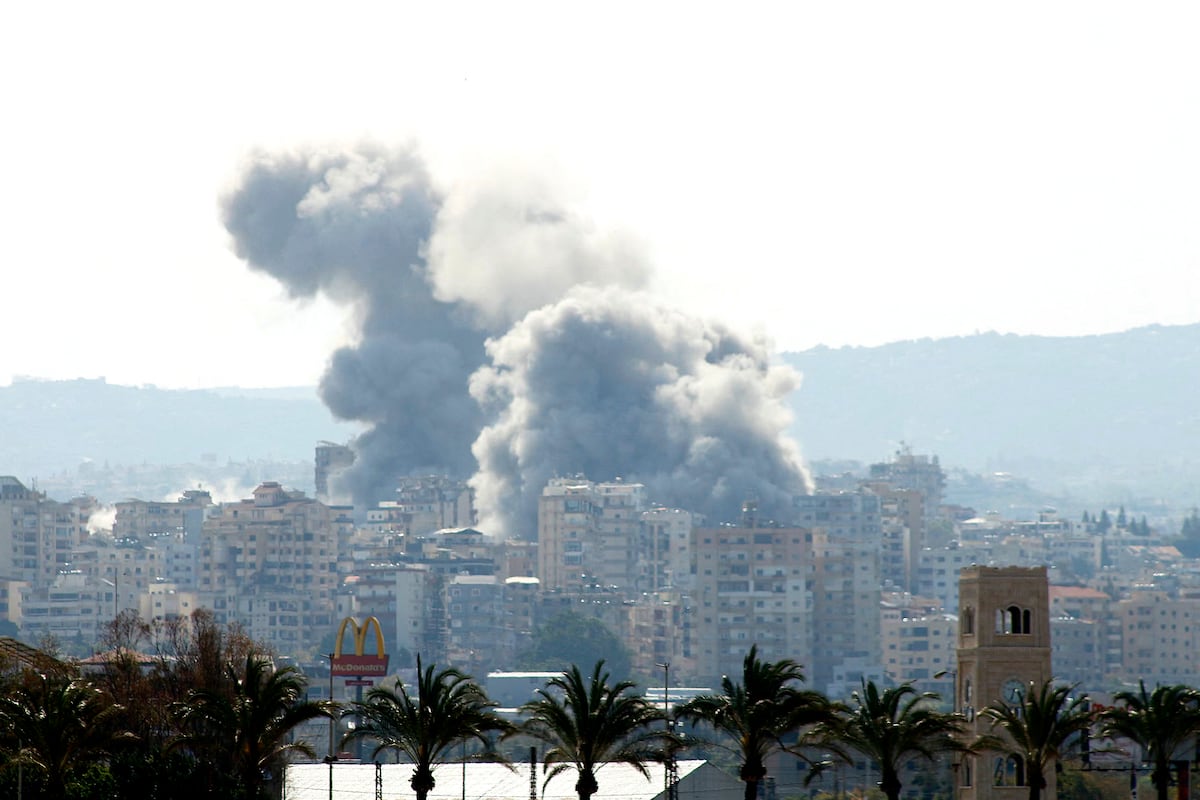
Despite the commencement of talks in Washington, the tactical situation on the ground remains volatile. At the request of the Biden administration, Israeli leadership has reportedly instructed the Israel Defense Forces (IDF) to scale back the intensity of airstrikes on Beirut. This shift followed a massive, coordinated multi-front operation that targeted over 100 locations within a 10-minute window, resulting in more than 350 deaths in a single afternoon. While the capital has seen a relative decrease in aerial activity, the southern regions of Lebanon remain a theater of heavy combat.
The focus of the Israeli ground campaign has centered on the strategic village of Bint Jbeil. Known historically as a stronghold of resistance, the village is viewed by the IDF as a critical node for consolidating positions in the south. Hezbollah fighters have countered the advance with persistent rocket fire into northern Israel and localized ambushes designed to inflict maximum casualties on advancing Israeli units.
The strategic endgame for Israel appears to be the establishment of a "security belt" that extends to the Litani River, approximately 30 kilometers north of the border. Several members of Israel’s security cabinet have publicly advocated for redrawing the functional northern border to this geographic marker, arguing that it is the only way to ensure the safety of Israeli citizens in Galilee from Hezbollah’s short-range rocket and anti-tank missile fire.
The Lebanese State’s Delicate Balancing Act
For the Lebanese government, the Washington talks are about more than just a ceasefire; they are an attempt to reclaim state authority. In recent years, Lebanon has faced a catastrophic economic collapse and political paralysis, leaving the central government in Beirut weakened and often overshadowed by Hezbollah’s military and social infrastructure.
Lebanese President Joseph Aoun has been vocal about the need for a "sustainable solution" that does not merely return the region to a precarious status quo. In a significant policy shift, the Lebanese government has reiterated its theoretical commitment to disarming Hezbollah and ensuring that the Lebanese Armed Forces (LAF) are the sole military authority in the country. However, government officials have been pragmatic, acknowledging that the disarmament of a group as entrenched as Hezbollah would be a multi-year process requiring significant international support and internal consensus.
A key point of contention in the lead-up to today’s meeting has been the role of third parties. Beirut has explicitly stated that no external entities—specifically referencing Iran and Hezbollah—should represent Lebanese interests at the negotiating table. This move is seen as an effort to decouple Lebanon’s national sovereignty from the broader regional "Axis of Resistance."
Internal Dissent and Hezbollah’s Stance
The decision to enter direct talks has not been met with universal approval within Lebanon. Hezbollah has officially opposed the negotiations, characterizing them as a "free concession" to Israel. The group’s leadership argues that negotiating while under fire weakens Lebanon’s leverage and that no talks should occur until a total and unconditional ceasefire is implemented.
This internal divergence poses a significant risk to Lebanon’s fragile domestic stability. If the government in Beirut reaches an agreement that Hezbollah deems unacceptable, it could lead to internal civil strife or a further breakdown of the state’s already limited control over the southern regions. Analysts suggest that Hezbollah’s opposition is also a signal to Tehran, ensuring that the group remains a relevant factor in any regional security architecture.
Data and Human Impact of the 2026 Escalation
The human cost of the conflict provides a grim backdrop to the diplomatic efforts in Washington. According to data compiled by regional health ministries and international NGOs:
- Casualties: Over 2,000 people have been killed in Lebanon since the escalation began, with an estimated 45% being civilians.
- Displacement: Approximately 600,000 Lebanese citizens have been internally displaced, fleeing the southern border regions and the suburbs of Beirut.
- Infrastructure: Over 15,000 residential units in southern Lebanon have been destroyed or severely damaged, alongside critical water and electrical infrastructure.
- Economic Loss: Early estimates suggest the conflict has cost the Lebanese economy upwards of $4 billion in lost productivity and infrastructure damage, a staggering blow to a nation already suffering from hyperinflation.
On the Israeli side, northern communities remain largely evacuated, with tens of thousands of residents living in hotels and temporary housing for months. The economic toll of maintaining a high state of military readiness and the loss of agricultural output in the Galilee has also placed significant strain on the Israeli treasury.
Implications for Regional Stability
The outcome of the Washington talks will have far-reaching implications for the Middle East. For the United States, a successful framework for a ceasefire would represent a major foreign policy victory and a step toward de-escalating the broader regional tension that has persisted since late 2023. It would also serve to validate the strategy of using direct diplomacy to solve long-standing "frozen" conflicts.
However, the path to a lasting peace is fraught with obstacles. Israeli officials have signaled that they are not expected to agree to an immediate ceasefire during today’s session. Instead, the focus is on establishing a "framework and timeline." This suggests a phased approach:
- Phase One: De-escalation of strikes on civilian infrastructure and a halt to the expansion of ground operations.
- Phase Two: The establishment of a monitored buffer zone between the border and the Litani River.
- Phase Three: Long-term negotiations regarding the disputed border points (the 13 points of contention) and the Shebaa Farms.
Conclusion and Outlook
As the ambassadors meet today, the world watches to see if diplomacy can succeed where decades of military intervention have failed. The stakes could not be higher for the people of Lebanon, who are caught between the military objectives of Israel and the strategic interests of Hezbollah and Iran.
While the "one-sided" efforts cautioned against by President Joseph Aoun remain a risk, the very fact that representatives of Israel and Lebanon are sitting in the same city to discuss a peaceful settlement is a historic anomaly. If a timeline for a ceasefire can be established, it may provide the necessary breathing room for the Lebanese state to begin the arduous task of reconstruction and the reassertion of its sovereignty. For now, however, the sound of artillery in Bint Jbeil serves as a reminder that the transition from the battlefield to the negotiating table is often the most dangerous period of any war.

Related Posts
Pentagon Forges Landmark Seven-Year Agreements with Boeing and RTX to Accelerate Standard Missile-3 Production and Stabilize Defense Supply Chains
Boeing Unveils Ultra Low-Cost Seeker to Enhance Missile Inventory and Combat Cost Challenges in Modern Warfare