Germany and Singapore Strengthen Maritime Defense Ties Through Joint Submarine Maintenance Hub and Strategic Cooperation
In a move that underscores the deepening defense industrial relationship between Europe and Southeast Asia, Germany’s ThyssenKrupp Marine Systems (TKMS) and Singapore’s ST Engineering have formally entered into a memorandum of understanding to establish a dedicated submarine maintenance, repair, and overhaul (MRO) center in Singapore. The agreement, signed on Tuesday, marks a pivotal shift in the regional security architecture, positioning Singapore as a central logistics and technical node for German-made naval technology in the Indo-Pacific. The planned facility is designed to provide life-cycle support for the Republic of Singapore Navy’s (RSN) new fleet of Type 218SG submarines and potentially serve other international operators of TKMS-built vessels navigating the strategically vital waters of the region.
The signing ceremony took place against the backdrop of an official visit by German Defense Minister Boris Pistorius, whose presence signaled the high-level political backing for the initiative. The partnership between TKMS, a global leader in conventional submarine design, and ST Engineering, Singapore’s premier defense and engineering conglomerate, represents a fusion of German maritime engineering excellence with Singapore’s advanced industrial infrastructure and strategic location. This collaboration is expected to enhance the operational readiness of the RSN while fostering a closer technological bond between the two nations.
Strategic Framework of the Maintenance Hub
The proposed maintenance center is envisioned as more than a local service shop; it is being framed as a regional "hub" with global implications. According to statements from both companies, the facility will be equipped to handle the complex requirements of the Type 218SG Invincible-class submarines, which are among the most advanced diesel-electric boats in the world. By establishing these capabilities in-country, Singapore ensures greater strategic autonomy, reducing the need to send critical assets back to Europe for major overhauls or specialized repairs.
Minister Pistorius highlighted the broader strategic value of the hub, noting that it could eventually service submarines from other allied nations. This "hub" concept aligns with Germany’s broader Indo-Pacific guidelines, which emphasize the protection of maritime trade routes and the maintenance of a rules-based international order. As more nations in the region look to modernize their underwater capabilities, a centralized German-certified MRO center in Singapore offers a compelling logistical solution for navies operating TKMS platforms, such as the Type 214 or Type 209 variants used by various regional partners.
The Type 218SG: A New Standard for Singaporean Naval Power
To understand the significance of the new maintenance agreement, one must look at the specific platforms it is designed to support. The Type 218SG Invincible-class is a bespoke design tailored specifically to the unique operational requirements of the Republic of Singapore Navy. These vessels are optimized for operations in the shallow and high-salinity waters of the Singapore Strait and the South China Sea, featuring advanced automation and a high degree of digitalization.
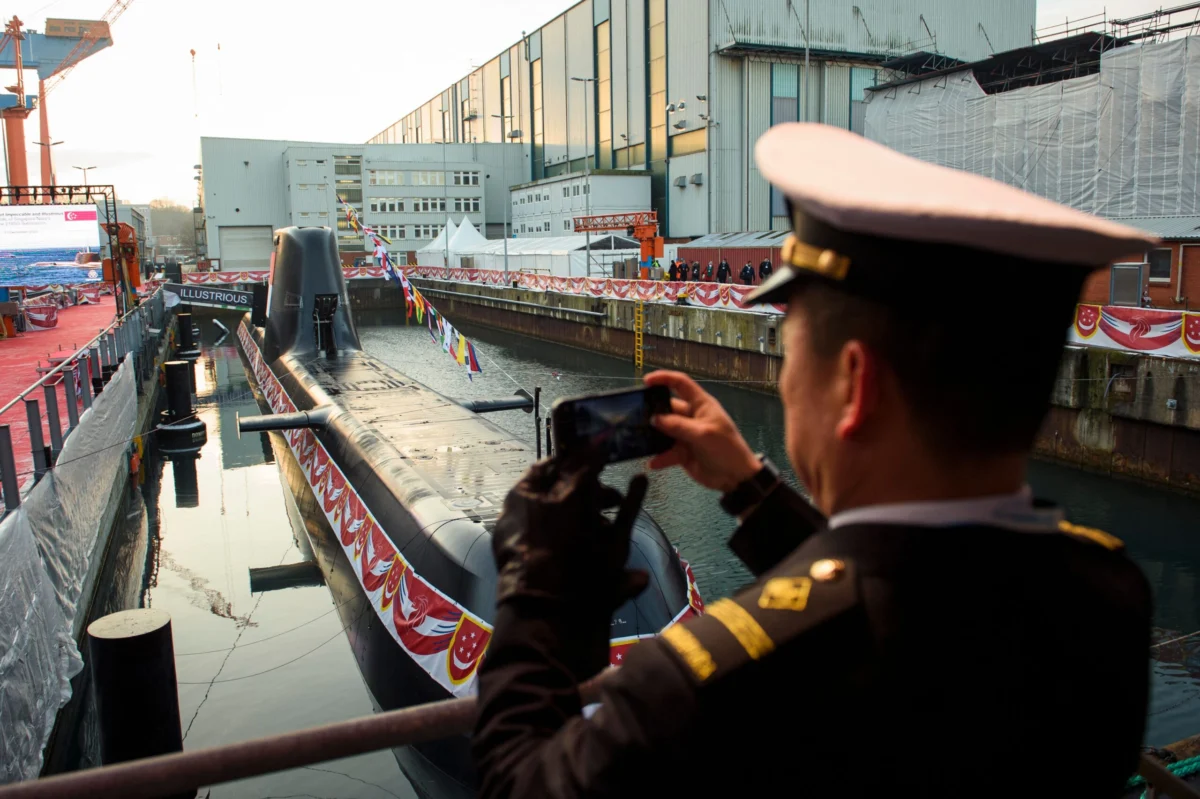
Singapore has ordered a total of six of these submarines from TKMS. The first of these, the Invincible, was launched in 2019, followed by the Impeccable and Illustrious in late 2022. As of mid-2024, three of the vessels have been delivered, with the remaining three at various stages of construction and sea trials in Kiel, Germany. The Type 218SG features an Air-Independent Propulsion (AIP) system based on fuel cell technology, allowing it to remain submerged for significantly longer periods than traditional diesel-electric submarines. This stealth capability is a critical deterrent in the crowded and contested waters of Southeast Asia.
The maintenance hub will focus on the highly specialized systems of these boats, including the AIP modules, combat management systems, and X-rudder configurations that provide enhanced maneuverability in confined waters. The transfer of technical know-how from TKMS to ST Engineering is expected to build a local workforce capable of sustaining these high-tech platforms for decades.
Chronology of Germany-Singapore Defense Cooperation
The relationship between Berlin and Singapore has evolved over several decades, transitioning from a buyer-seller dynamic to a deep strategic partnership. This evolution can be traced through several key milestones:
- 2005: Singapore and Germany sign their first Defense Cooperation Agreement (DCA), providing a formal framework for military exchanges, personnel training, and technology collaboration.
- 2013: The Singapore Ministry of Defence (MINDEF) announces the initial order for two Type 218SG submarines to replace its aging Archer-class and Challenger-class boats.
- 2017: Recognizing the success of the program and the growing need for maritime security, Singapore exercises an option for two additional Type 218SG submarines.
- 2018: The two nations sign an enhanced DCA, further deepening cooperation in areas like cybersecurity and chemical, biological, and radiological defense.
- 2022: A major milestone is reached with the double-christening of the Impeccable and Illustrious in Kiel, attended by Singapore’s Prime Minister Lee Hsien Loong and German Chancellor Olaf Scholz.
- 2023-2024: Singapore expands its commitment to German land and air platforms, including the continued modernization of its Leopard 2 tank fleet and discussions regarding maritime surveillance aircraft.
Expanding the Arsenal: Leopard 2 Tanks and P-8 Poseidon Interests
While the submarine hub was the focal point of the recent agreement, Minister Pistorius also emphasized the breadth of the bilateral defense relationship. Singapore has long been a significant operator of German-made land systems. The Singapore Army maintains a robust fleet of Leopard 2 main battle tanks, which have been extensively upgraded by ST Engineering into the Leopard 2SG variant. Although official figures are often withheld for security reasons, defense analysts and international registries estimate the fleet at approximately 170 units or more.
The Leopard 2SG features improved armor packages, advanced electronics, and specialized cooling systems to adapt the European-designed tank to the tropical climate of Southeast Asia. This successful adaptation serves as a precedent for the submarine MRO center, demonstrating ST Engineering’s ability to take German platforms and optimize them for local conditions.
In addition to naval and land systems, the conversation has recently turned toward the skies. Pistorius expressed optimism regarding Singapore’s potential interest in the Boeing P-8 Poseidon maritime-surveillance aircraft. While the P-8 is an American platform, Germany has recently integrated it into its own fleet, receiving its first of eight aircraft earlier this year. Pistorius noted that the P-8 has already seen service in the Indo-Pacific, and if Singapore were to acquire the platform, it would create a "commonality of armament" that would facilitate easier intelligence sharing and joint training between the German Bundeswehr and the Singapore Armed Forces.
Economic and Technical Implications for the Region
The establishment of the MRO center is expected to yield significant economic dividends for Singapore’s defense industrial base. As a global maritime center, Singapore already possesses world-class shipyards and engineering talent. By integrating TKMS’s proprietary submarine technologies, ST Engineering moves up the value chain, transitioning from general naval repair to high-end underwater system sustainment.
For TKMS, the deal secures a permanent footprint in one of the world’s fastest-growing defense markets. With the rise of regional tensions and the modernization of neighboring navies, the demand for high-end European naval technology is increasing. By having a certified maintenance base in Singapore, TKMS can offer a more attractive total-package proposal to other prospective buyers in the region, promising localized support that many competitors cannot match.
Furthermore, the "hub" model addresses a major pain point for European defense contractors: the distance from their home bases. By decentralizing their maintenance operations, German firms can ensure that their platforms remain operational in the Indo-Pacific without the logistical nightmare of transporting heavy components across the globe.
Geopolitical Analysis: The Indo-Pacific Tilt
The timing of this agreement is not coincidental. It reflects Germany’s "Zeitenwende" (historic turning point) in its foreign and security policy, which includes a more assertive role in the Indo-Pacific. Germany has increasingly recognized that the security of European trade is inextricably linked to the stability of the South China Sea and the Malacca Strait.
By empowering Singapore as a maintenance hub, Germany is indirectly contributing to the regional balance of power. A well-maintained and operationally ready Singaporean submarine fleet acts as a stabilizing force, ensuring that one of the world’s busiest maritime chokepoints remains open and secure. This partnership also signals to other regional actors that Germany is a reliable long-term partner committed to more than just "drive-by" diplomacy or occasional naval transits.
The collaboration also highlights the trend of "minilateralism," where smaller, highly capable nations like Singapore partner with European powers to enhance their security without necessarily joining formal, large-scale military alliances. This allows Singapore to maintain its policy of strategic neutrality while ensuring it has the technological edge required to defend its sovereignty.
Official Responses and Future Outlook
In his remarks, Minister Pistorius emphasized the shared values and long-standing trust between the two nations. "Singapore is our most important partner in the region, not just in terms of trade, but increasingly in terms of security and defense technology," he stated. He further noted that the submarine hub is a "natural extension" of a relationship built on decades of successful cooperation.
Representatives from ST Engineering echoed this sentiment, noting that the MOU is a testament to the engineering capabilities of Singapore’s workforce. They emphasized that the goal is to create a "resilient and sustainable" support ecosystem for the RSN, ensuring that the Invincible-class submarines remain at the cutting edge of naval technology throughout their service lives.
Looking ahead, the success of the MRO center will likely pave the way for further joint ventures. As the first Type 218SG submarines enter full operational service, the focus will shift from construction to long-term sustainment. If the hub succeeds in attracting other international TKMS customers, it could become the primary node for German naval technology in the Eastern Hemisphere, further cementing the bond between Berlin and Singapore for the next half-century.

Related Posts
Pentagon Forges Landmark Seven-Year Agreements with Boeing and RTX to Accelerate Standard Missile-3 Production and Stabilize Defense Supply Chains
Boeing Unveils Ultra Low-Cost Seeker to Enhance Missile Inventory and Combat Cost Challenges in Modern Warfare