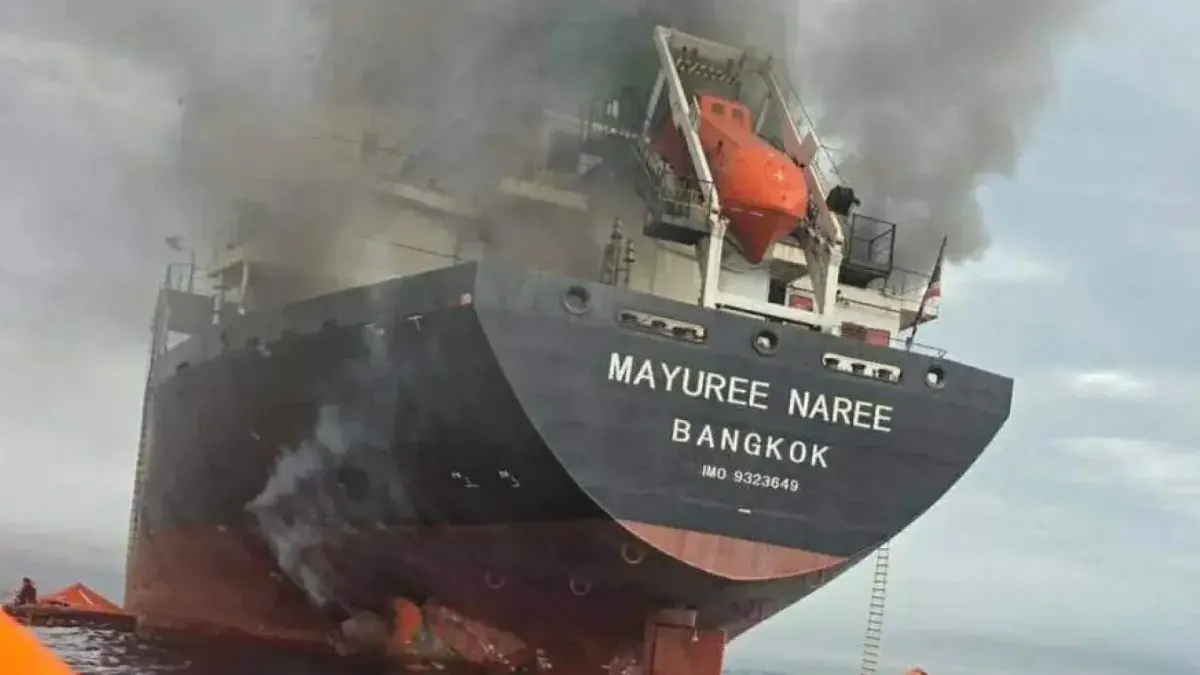
Iranian Military Strikes on Civilian Vessels in Strait of Hormuz Constitute Potential War Crimes Says Human Rights Watch
The deliberate targeting of at least two civilian commercial vessels in and around the Strait of Hormuz by Iranian forces on March 11, 2026, represents a grave violation of international humanitarian law and amounts to war crimes, according to a comprehensive report released today by Human Rights Watch. These attacks, occurring within a broader context of escalating regional hostilities involving the United States and Israel, have not only resulted in the loss of life among seafarers but have also triggered a 40 percent surge in global crude oil prices, threatening the food security and economic rights of millions of people worldwide.
Niku Jafarnia, a Middle East and North Africa researcher at Human Rights Watch, emphasized the gravity of the situation, stating that the intentional targeting of civilian vessels and their crews is a clear-cut war crime. Jafarnia noted that while Iran has framed these actions as responses to external aggression, international law does not permit the commission of war crimes as a retaliatory measure. Human Rights Watch has called on Iran, the United States, and Israel to immediately cease all unlawful attacks on civilians and civilian infrastructure, urging all parties to stop attempting to redefine commercial objects as legitimate military targets.
The Escalation of Maritime Conflict: A Chronology of Hostilities
The maritime crisis began to intensify on March 1, 2026, when Iranian forces reportedly initiated a series of strikes against commercial shipping in the Persian Gulf and the Gulf of Oman. According to data provided by the International Maritime Organization (IMO), a United Nations agency, these actions were characterized by Iranian officials as a direct response to prior US and Israeli military operations targeting Iranian territory.
The timeline of the conflict reflects a rapid deterioration of safety for international shipping:
- March 1–10, 2026: A series of sporadic attacks and harassment of commercial vessels were reported. The International Maritime Organization noted that the region, which facilitates approximately one-quarter of the world’s seaborne oil trade, became increasingly hazardous for civilian crews.
- March 4, 2026: Mohammad Akbarzadeh, an official within the Islamic Revolutionary Guard Corps (IRGC) Navy, declared that the Strait of Hormuz was under the "complete control" of the Islamic Republic, signaling a shift toward more aggressive interdiction of traffic.
- March 11, 2026: The most severe escalation occurred with the targeted strikes on the Safesea Vishnu and the Mayuree Naree. On the same day, Ebrahim Zofaghari, a spokesperson for Iran’s armed forces, delivered a speech warning that if US and Israeli attacks continued, Iran would prevent even "one liter of oil" from passing through the strait.
- March 12, 2026: High-ranking Iranian figures, including what appears to be the social media account of the newly appointed Supreme Leader, Mojtaba Khamenei, advocated for the continued use of the Strait of Hormuz as a strategic lever against "aggressor enemies."
- March 16, 2026: Brigadier General Ali Mohammad Naini, an IRGC spokesman, stated that Iranian forces would target any vessel with US or Israeli commercial associations, regardless of the flag the vessel flew.
- March 20, 2026: General Naini was reportedly killed in an Israeli strike, further complicating the diplomatic and military landscape.
By March 17, the IMO had confirmed 17 incidents of damage to commercial vessels resulting from 16 distinct attacks. The human cost of this two-week window was devastating: eight deaths, including seven seafarers and one shipyard worker; four missing persons; and ten injuries, half of which were classified as severe.
Detailed Investigation into the March 11 Attacks
Human Rights Watch conducted a forensic analysis of the attacks on March 11, focusing specifically on the Safesea Vishnu and the Mayuree Naree. The investigation utilized vessel-tracking data, satellite imagery, and verified video footage posted to social media platforms.
The Safesea Vishnu, an oil tanker, was struck by projectiles in the northern Persian Gulf while positioned within Iraqi territorial waters, approximately 50 nautical miles southeast of Basra. Verified video footage shows two massive explosions on the vessel, occurring seconds apart. The footage, filmed from a nearby IRGC Navy boat, captures Iranian forces claiming to have destroyed a "US ship." The attack resulted in the death of one crew member and caused a secondary fire on a neighboring tanker, the Zefyros. Despite Iranian claims that the ship was a military target, Iraqi oil export authorities confirmed that both vessels were being used for legitimate Iraqi oil transport, though the Safesea Vishnu was owned by an American company.
Simultaneously, the Mayuree Naree, a Thai-flagged bulk carrier, was struck as it entered the Strait of Hormuz after departing from the United Arab Emirates. The Royal Thai Navy reported that two projectiles hit the ship, forcing the evacuation of 20 of its 23 crew members by the Omani Navy. Three crew members remain aboard the heavily damaged vessel, which has since been moved into Iranian territorial waters. Iranian state media and IRGC commanders claimed the ship was "caught" and "shelled" for ignoring warnings, asserting that any vessel intending to pass through the strait must obtain explicit permission from Tehran.
Legal Analysis and the Definition of War Crimes
Under the principles of International Humanitarian Law (IHL), the distinction between military and civilian objects is absolute. Warring parties are under a strict obligation to verify that their targets are military objectives. Commercial vessels, even those with ownership ties to an adversary nation, retain their status as civilian objects unless they are being used for military purposes, such as transporting troops or weaponry.
Human Rights Watch noted that Iranian authorities have failed to provide any evidence that the Safesea Vishnu or the Mayuree Naree were carrying military cargo or contributing to military operations. The report clarifies that carrying out direct attacks against civilians or civilian objects with criminal intent—defined as doing so intentionally or recklessly—constitutes a war crime. Furthermore, individuals who order, assist, or facilitate these attacks can be held criminally liable under international law.
The IMO Council, in a decision adopted on March 19, "strongly condemned" the threats and attacks, emphasizing that the purported closure of the Strait of Hormuz by the Islamic Republic of Iran violates the freedom of navigation and endangers the lives of over 20,000 seafarers currently operating in the region.
Global Economic Shocks and Food Security Risks
The geopolitical instability in the Strait of Hormuz has sent shockwaves through the global economy. As one of the world’s most vital maritime chokepoints, the disruption of the strait has immediate consequences for the price of energy and food.
The International Energy Agency (IEA) has labeled the current conflict as the "largest supply disruption in the history of the global oil market." Since the onset of the attacks on March 1, the price of crude oil has risen by 40 percent. Analysts warn that if the conflict persists, prices could reach $200 per barrel, a figure explicitly cited by Iranian spokesperson Ebrahim Zofaghari as a potential outcome of the regional destabilization.
The impact extends far beyond the gas pump. Rising energy costs drive up the price of transportation and industrial production, which in turn leads to a "global food shock." This is particularly critical regarding the fertilizer industry. Significant portions of the raw materials required for global fertilizer production are exported through the Strait of Hormuz. Experts interviewed by the Financial Times suggest that a collapse in these exports could trigger a food crisis more severe than the one caused by the 2022 invasion of Ukraine.
Carl Skau, Deputy Executive Director of the World Food Programme, informed reporters on March 17 that the ongoing conflict and subsequent price hikes could push an additional 45 million people into acute hunger. Human Rights Watch argues that these economic consequences represent a direct threat to the fundamental human rights of socioeconomically disadvantaged populations across the globe.
Environmental Damage and Long-term Consequences
The military operations in the Persian Gulf have also resulted in significant environmental degradation. While Iranian forces have targeted commercial ships, the United States has conducted strikes against Iranian military vessels. US Central Command reported destroying 43 Iranian ships in the first week of "Operation Epic Fury."
These naval engagements have led to multiple oil spills. On March 4, a US strike on an Iranian vessel near Sri Lanka created a 20-kilometer-long oil slick. More recently, on March 18, a strike on an Iranian drone carrier near Bandar Abbas resulted in a 25-kilometer slick threatening the Hara Biosphere and the Khuran Strait Wetlands.
International humanitarian law prohibits the use of warfare methods intended to cause widespread, long-term, and severe damage to the natural environment. While some cleanup efforts have been initiated, the cumulative impact of multiple spills in a concentrated area poses a long-term threat to marine ecosystems and coastal livelihoods.
Conclusion and Recommendations
The report by Human Rights Watch underscores the urgent need for a de-escalation of hostilities in the Strait of Hormuz. The organization calls for an immediate end to the targeting of commercial shipping and the release of all detained seafarers, including a Nepali national reportedly taken into custody on March 20.
"Iranian forces’ attacks on civilian ships in the Strait of Hormuz will result in harm to some of the most socioeconomically disadvantaged people across the globe," said Niku Jafarnia. The findings suggest that the current crisis is not merely a regional military dispute but a global humanitarian emergency that requires immediate intervention from the international community.
Beyond the immediate cessation of violence, Human Rights Watch advocates for a global transition to renewable energy to reduce the geopolitical leverage held by authoritarian governments over fossil fuel supplies. The organization argues that a just transition to green energy is an environmental and geopolitical necessity to safeguard human rights and ensure global stability in the face of concentrated corporate and state power.

Related Posts
Human Rights Watch Calls for Investigation into Death of Detainee Following Removal from Najaf Hospital by Iraqi Drug Police
Human Rights Watch Urges UN Security Council to Extend Lebanon Peacekeeping Mission Amid Escalating Conflict and Humanitarian Crisis