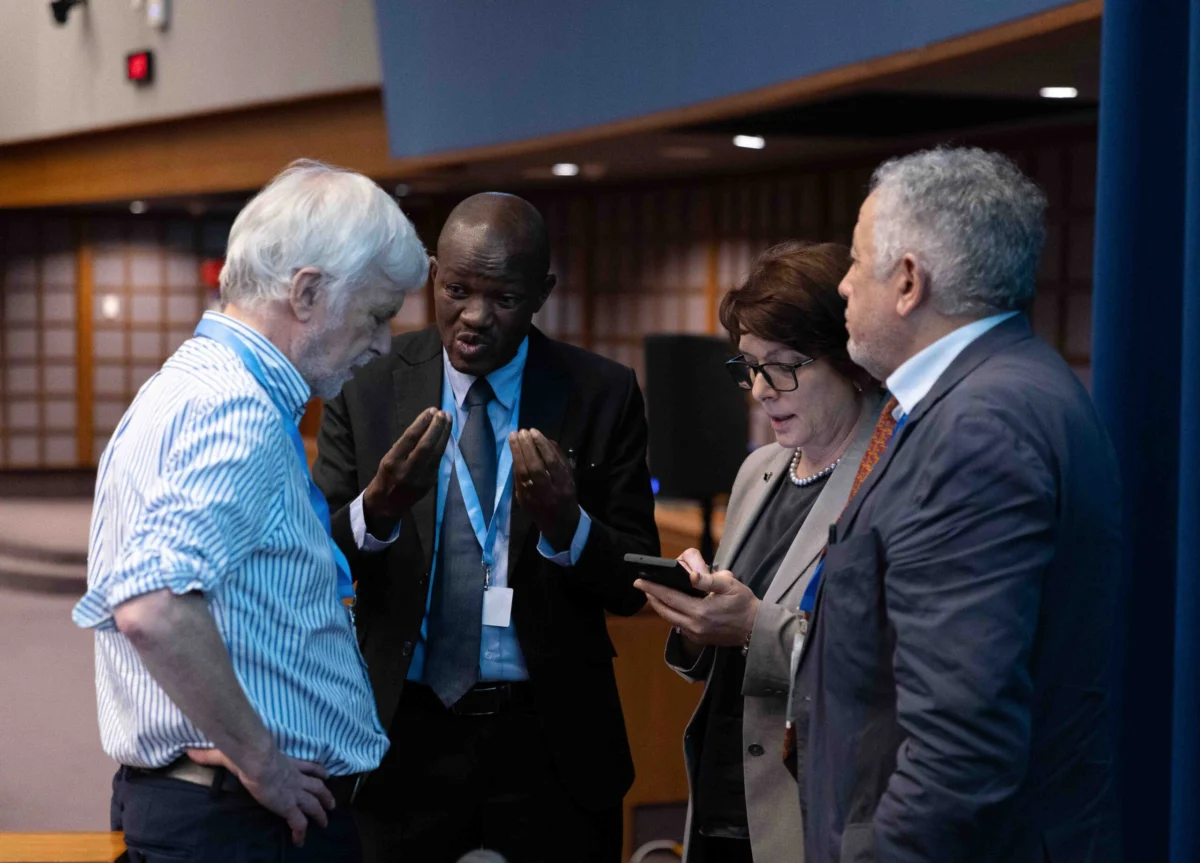
Funding gap threatens next round of IPCC climate science reports, chair warns
At the heart of the deadlock is a fundamental disagreement over the timing of the Seventh Assessment Report (AR7) Synthesis Report and its alignment with the United Nations Framework Convention on Climate Change (UNFCCC) Global Stocktake. Under the Paris Agreement, the second Global Stocktake (GST) is scheduled for 2028, a process designed to assess the world’s collective progress toward limiting global warming. Many developed nations and climate-vulnerable states argue that the IPCC must deliver its most comprehensive findings before this deadline to ensure that national climate commitments—known as Nationally Determined Contributions (NDCs)—are informed by the latest peer-reviewed science. Conversely, several other delegations, including some large developing economies, have expressed concerns that an accelerated timeline would compromise the scientific rigor of the reports and place an undue burden on the volunteer scientists who author them.
The Struggle for Alignment with the Global Stocktake
The synchronization of IPCC outputs with the UNFCCC political calendar has become one of the most contentious administrative hurdles in the organization’s 38-year history. During the Bangkok session, Chair Jim Skea, alongside Vice-chair Ladislaus Chang’a and Secretary Abdalah Mokssit, attempted to broker a compromise that would see the three main Working Group reports released in a staggered fashion, culminating in a Synthesis Report by late 2027 or early 2028.
Proponents of this "fast-track" approach argue that science loses its utility if it arrives after major policy decisions have already been codified. The 2028 Global Stocktake is viewed as a pivotal moment for the international community to "correct course" if emissions trajectories remain too high. "We cannot afford to be flying blind in 2028," noted one European delegate during a closed-door session. "If the IPCC’s findings on mitigation and adaptation are not finalized until 2029 or 2030, we will have missed the most critical window for policy intervention in this decade."
However, the "slow-track" faction emphasizes that the volume of climate literature has grown exponentially since the Sixth Assessment Cycle (AR6). Forcing a 2028 deadline could lead to "author burnout" and the potential omission of critical regional studies, particularly those from the Global South, which often take longer to pass through the peer-review process. These nations argue that a rushed report risks being Eurocentric and may fail to capture the nuances of climate impacts in developing regions.
Financial Crisis and the IPCC Trust Fund
Compounding the scheduling disputes is a looming financial crisis within the IPCC Secretariat. The Bangkok session saw the introduction of several controversial cost-cutting proposals aimed at addressing a significant deficit in the IPCC Trust Fund. The fund, which relies on voluntary contributions from member governments, has seen a decline in real-term funding as global economic pressures and competing geopolitical priorities divert resources elsewhere.
Budgetary documents discussed in Bangkok reveal that the cost of conducting a full assessment cycle has risen significantly due to inflation, the need for more diverse geographical representation, and the increasing complexity of data modeling. To bridge the gap, the Secretariat proposed several measures that met with immediate resistance:

- Reduction in Translation Services: A proposal to limit the translation of technical summaries into all six official UN languages was met with fierce opposition from Spanish, French, and Arabic-speaking delegations, who argued that such a move would undermine the inclusivity and global authority of the IPCC.
- Shift to Hybrid and Virtual Meetings: While intended to reduce travel costs and the carbon footprint of the organization, many delegates argued that virtual negotiations hinder the consensus-building process, which often relies on informal "huddle" discussions in the margins of plenary sessions.
- Smaller Scoping Meetings: Proposals to limit the number of experts invited to scoping meetings—where the outlines of future reports are decided—raised fears that certain scientific disciplines or regional perspectives would be sidelined.
Financial data indicates that while a handful of countries, including the United States, Germany, and Norway, remain the largest contributors, many other member states have either reduced their contributions or failed to meet their pledges. The IPCC’s annual budget typically hovers around 20 to 25 million Swiss Francs, but officials warned in Bangkok that without a stabilized funding mechanism, the AR7 cycle may have to be scaled back in terms of the number of "Special Reports" it can produce.
Chronology of the AR7 Planning Process
To understand the gravity of the Bangkok deadlock, it is necessary to look at the timeline of the Seventh Assessment Cycle thus far:
- July 2023: Jim Skea is elected IPCC Chair in Nairobi, Kenya, succeeding Hoesung Lee. The mandate for AR7 begins with a call for greater speed and policy relevance.
- January 2024: The IPCC holds its 60th session in Istanbul, where the initial scope of the AR7 cycle is debated. No firm agreement is reached on the delivery dates for the Synthesis Report.
- Early 2025: Expert meetings highlight the "literature deluge," with scientists warning that the sheer volume of new papers (estimated at over 300,000 since the last cycle) makes a rapid assessment difficult.
- March 2026: Pre-session documents for Bangkok reveal deep divisions between the "Technical Support Units" of the three Working Groups regarding their respective timelines.
- April 1, 2026: The Bangkok session concludes without a finalized "Strategic Planning Schedule," deferring the decision to a subsequent meeting later in the year.
Official Reactions and Diplomatic Friction
The lack of a clear resolution in Bangkok has drawn mixed reactions from the international community. Environmental NGOs and scientific advocacy groups expressed disappointment, warning that procedural delays are a luxury the planet does not have.
"The IPCC is the gold standard of climate science, but that gold standard is being tarnished by bureaucratic inertia and a lack of financial commitment from wealthy nations," said a spokesperson for a leading climate think tank. "The science is clear that we are in a decade of ‘now or never.’ It is deeply concerning that the administrative machinery for delivering that science is stalling."
Inside the plenary, the atmosphere was described by attendees as "tense" and "exhausting." Jim Skea, known for his diplomatic tact, urged delegates to remember the organization’s core mission. "Our task is to provide the world with the best available science to navigate a crisis of unprecedented proportions," Skea reportedly told the assembly. "While we must be prudent with our resources and mindful of our authors’ workloads, we cannot lose sight of the urgency that the climate system itself is dictating."
The role of the IPCC Bureau—the 34-member body that provides guidance on the scientific and technical aspects of the assessments—is now under scrutiny. There are calls for the Bureau to take a more assertive role in streamlining the assessment process, potentially by moving away from the traditional three-volume structure in favor of more frequent, targeted "modular" updates.
Analysis of Implications: What Happens Next?
The failure to reach a consensus in Bangkok has several immediate and long-term implications for global climate policy.

First, the uncertainty regarding the 2028 deadline creates a "science gap" for the second Global Stocktake. Without a fresh Synthesis Report, the GST will have to rely on the AR6 findings (which are increasingly dated) or a patchwork of individual studies that lack the comprehensive "consensus" status of an IPCC report. This could weaken the political leverage needed to push countries toward more ambitious NDCs.
Second, the financial strain on the IPCC reflects a broader trend of "multilateral fatigue." As climate impacts become more severe and costly, the international institutions tasked with managing the crisis are finding themselves underfunded and overstretched. If the IPCC is forced to cut translation or participation from developing world scientists, it risks a "legitimacy crisis," where its findings are seen as a product of the Global North rather than a truly global consensus.
Third, the debate over "author burnout" highlights a growing sustainability issue within the scientific community. The IPCC relies on thousands of hours of unpaid labor from researchers who are often already managing full-time academic or institutional roles. If the IPCC does not reform its processes to be more efficient, it may find it increasingly difficult to recruit the world’s top scientific talent for future cycles.
Looking Toward the Next Plenary
The IPCC is expected to convene again in late 2026 to attempt to finalize the AR7 schedule. Between now and then, the Secretariat will likely engage in "shuttle diplomacy," meeting with key regional blocs to find a middle path. One possible solution being discussed is the "enhanced summary" approach, where the IPCC would produce a high-level technical update specifically for the 2028 Global Stocktake, while the full, detailed volumes of the AR7 are released later in 2029.
However, even this compromise requires funding and a level of cooperation that was conspicuously absent in Bangkok. As the planet continues to experience record-breaking temperatures and extreme weather events, the pressure on the IPCC to resolve its internal disputes has never been higher. The organization finds itself in a difficult position: it must maintain the slow, methodical pace required for scientific accuracy while operating within the fast-paced, high-stakes environment of international climate politics.
In the final analysis, the Bangkok session serves as a stark reminder that the challenges of addressing climate change are not only physical and economic but also deeply institutional. The "cloud" that hung over the Bangkok session is a reflection of a world that knows what needs to be done but is struggling to fund and organize the scientific roadmap necessary to do it. The coming months will be a critical test of Jim Skea’s leadership and the collective will of the 195 member states to ensure that the IPCC remains a relevant and robust guide for a warming world.

Related Posts
Constitutional Court of South Africa Bars Shell Oil Exploration in Landmark Victory for Environmental and Community Rights
The Battle for Saldanha Bay: South Africa’s Ambitious Ocean Economy Strategy Faces Legal and Environmental Reckoning