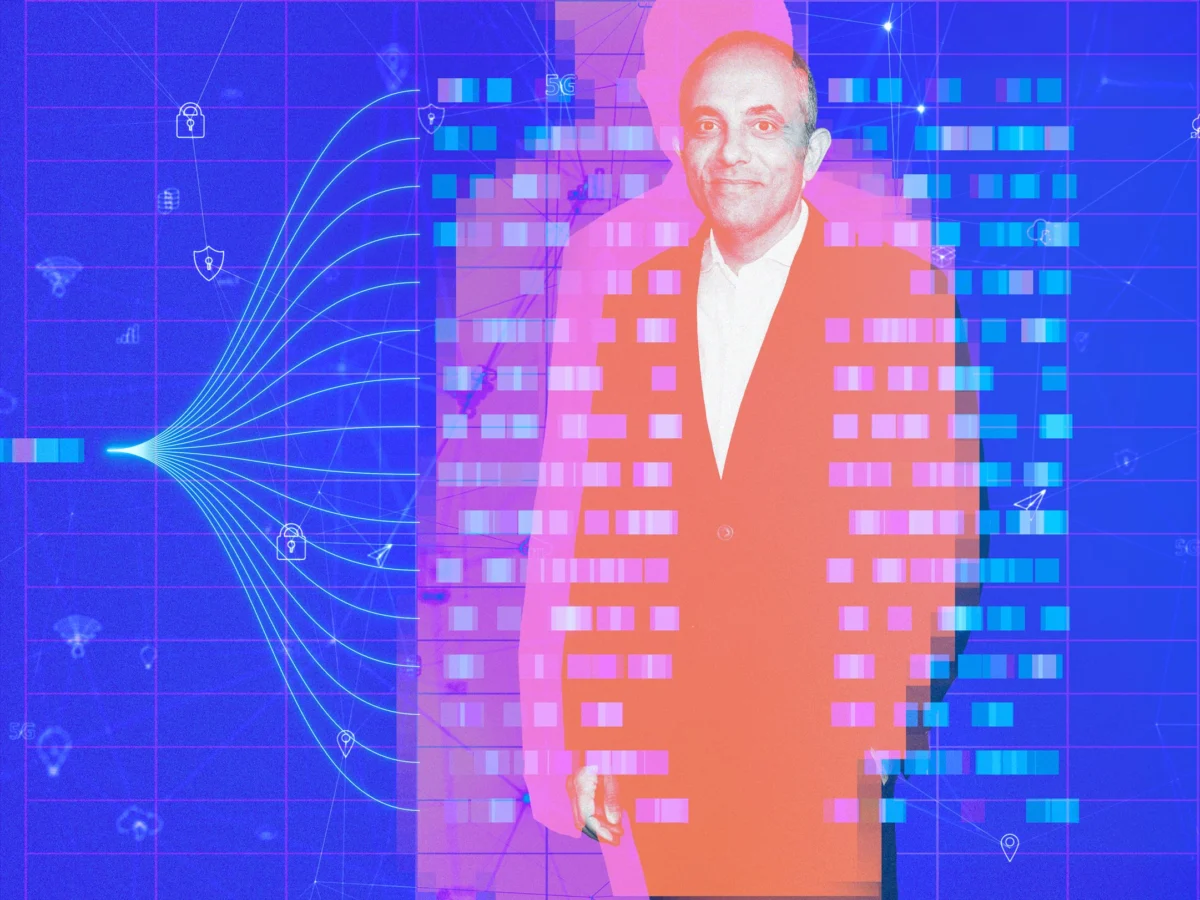
From Music Streaming CEO to Real-Time Geopolitical Analyst: The Rise of World Monitor
Elie Habib, best known as the cofounder and CEO of the prominent Middle Eastern music streaming giant Anghami, has transitioned from managing licensing agreements and digital audio metrics to overseeing an unexpected, high-stakes technological endeavor. As geopolitical tensions flared across the Middle East earlier this year, a side project Habib initially coded as a weekend experiment—a dashboard known as World Monitor—evolved into a critical open-source utility for tracking global military and political developments in real time.
What began as a personal effort to organize the chaotic flow of global headlines has transformed into a sophisticated data-processing engine. By aggregating over 100 disparate data streams, including military transponder data, maritime logistics, and satellite imagery, the platform has gained traction among a global audience seeking clarity in an era of rapid-fire conflict and disinformation.
The Genesis of a Digital Intelligence Tool
Habib’s motivation for building World Monitor was rooted in a fundamental frustration with the current state of digital news consumption. As he observed a convergence of volatile events—ranging from shifting diplomatic relations and presidential policy decisions to the fluctuation of critical mineral markets—he found traditional news aggregation services insufficient. The information was too fragmented to provide a cohesive picture of how these events were causally linked.
While elite geopolitical intelligence platforms exist, they are typically proprietary and cost tens of thousands of dollars, making them inaccessible to the general public. Habib leveraged his background as an engineer to bridge this gap. Using principles honed through years of scaling data-heavy systems for Anghami and OSN+, he designed an architecture capable of processing massive volumes of streaming data. The platform was built to ingest information from diverse sources, normalize it, and render it on a WebGL-based globe that can handle thousands of data points simultaneously without performance degradation.
.jpg)
Chronology of Escalation and Adoption
The platform’s growth trajectory shifted significantly in late February. Before this period, the user base consisted primarily of analysts, logistics professionals tracking cargo ship movements, and hobbyists monitoring infrastructure. However, the onset of joint US-Israeli military strikes in Iran served as a catalyst for a massive surge in public interest.
The timeline of the platform’s viral growth follows the escalation of these regional hostilities:
- Early February: The platform recorded its first 1 million unique visitors, largely comprised of niche professionals and tech enthusiasts.
- Late February: Following the announcement of military strikes, traffic spiked as the site transitioned from a curiosities dashboard to a live, real-time threat monitor.
- March 3: Within days of the escalation, the platform crossed the 2 million unique visitor threshold.
- Peak Traffic: At the height of the crisis, the system successfully managed over 216,000 unique visitors in a single 24-hour period, a testament to the robustness of the infrastructure Habib built.
As the conflict intensified, Habib responded by rapidly iterating on the code, adding layers for Hebrew-to-English siren alerts, GPS-jamming detection, and embassy risk advisories. These additions were deployed under extreme time pressure, reflecting the agility of a lean, open-source development model compared to traditional institutional tools.
Architecture and Data Verification: The "Zero-Human" Approach
A defining characteristic of World Monitor is its reliance on automation to eliminate human bias. In an environment where the "fog of war" is often exacerbated by editorial slant or social media misinformation, Habib opted to remove human intervention from the news-surfacing process.
The system operates on a hierarchical source logic. Top-tier sources—including Reuters, the Associated Press, the Pentagon, and the United Nations—are granted higher confidence weightings. These are augmented by secondary sources such as the BBC, Al Jazeera, and specialist investigative groups like Bellingcat. The software continuously scans these 190-plus sources for emerging patterns.
.jpg)
To verify claims, the platform employs a "convergence algorithm." Rather than relying on a single report, the system looks for physical corroboration on the ground. For instance, if an internet outage is reported in the same geographic region as a series of diverted military aircraft and a fire detected by satellite imagery, the system registers this cluster as a high-confidence event. By requiring multiple distinct signal types to overlap, the platform filters out the "noise" that often plagues traditional news feeds.
Global Reach and User Demographics
The platform’s reach has been remarkably global, reflecting the interconnected nature of modern conflict. Data analysis of the platform’s traffic reveals a geographically diverse user base:
- Asia: 35% of the total traffic.
- Europe: 20% of the total traffic.
- Middle East and North Africa: 18% of the total traffic.
- United States: 10% of the total traffic.
The remaining traffic is distributed globally, highlighting the universal demand for transparent, data-driven geopolitical insights. Habib notes that managing this diverse audience presents significant challenges, as users from different regions hold different expectations regarding the type of intelligence they seek.
Broader Implications and Future Trajectory
The rise of World Monitor reflects a broader trend toward the democratization of open-source intelligence (OSINT). As citizens become increasingly skeptical of traditional media narratives, there is a growing desire for raw, verifiable data that allows for independent analysis.
However, the shift away from human editorial judgment raises valid concerns. Habib himself acknowledges the risk of "architectural blind spots"—scenarios that lack a historical baseline or involve complex, non-linear developments that a deterministic algorithm might fail to interpret correctly. The reliance on source-credibility hierarchies also assumes that primary sources remain consistently reliable during a crisis, a premise that can be challenged during periods of intense information warfare.
.jpg)
Despite these risks, the project has evolved beyond a personal learning exercise. With contributions from a global community of developers, World Monitor is pivoting toward a more ambitious objective: predictive signaling. Instead of merely mapping events as they occur, the team is working on architectural updates that could potentially identify patterns leading up to an event before it becomes a headline.
The success of World Monitor serves as a case study in the power of applying high-scale engineering to the domain of public information. By applying the same data-processing rigor used to serve millions of music streams to the complexities of international conflict, Habib has created a tool that bridges the gap between private intelligence and public knowledge. Whether or not this becomes a permanent fixture in the global information landscape remains to be seen, but the rapid adoption of the platform underscores a significant shift in how the public engages with the realities of a volatile world. As the project moves into its next phase, the focus remains on enhancing the accuracy of its convergence algorithms and expanding the breadth of its data inputs, effectively turning the world into a real-time, transparent data stream for anyone with an internet connection.

Related Posts

The Las Vegas Cybersecurity Summit and the Escalating Threat of Autonomous Digital Exploitation

New York City Council members and privacy advocates launch legislative campaign to ban biometric facial recognition at public entertainment venues